Guides
Spinach, Bok Choy, and Minari: Pairing Korean Greens with Extra Virgin Olive Oil
Three everyday Korean greens — spinach, bok choy, and minari — share a quiet affinity with extra virgin olive oil. This guide matches each vegetable to the right intensity of EVOO and offers practical cooking tips to bring the combination to the table.
Translated from the Korean edition, originally published July 15, 2026 · read the original
Why Green Vegetables and EVOO Belong Together
Spinach namul, stir-fried bok choy, and minari salad are fixtures on the Korean table. What these greens share — beyond their color — is a significant concentration of fat-soluble compounds. According to materials published by the Harvard T.H. Chan School of Public Health, fat-soluble carotenoids in vegetables are reported to be absorbed at meaningfully higher rates when eaten alongside dietary fats.
Extra virgin olive oil (EVOO) is well suited to that role. According to International Olive Council (IOC) technical guidelines, oleic acid — a monounsaturated fatty acid — accounts for approximately 70–80% of EVOO's total fat content, and the cold-pressing process preserves polyphenols that give each oil its distinctive character. Those same polyphenols, with their bitter and peppery edge, turn out to harmonize surprisingly well with the earthy, faintly astringent notes common to Korean greens. If Mediterranean dressings have ever felt out of place on a Korean plate, the pairings below are designed to close that gap.
Spinach — Grassy EVOO to Match the Green
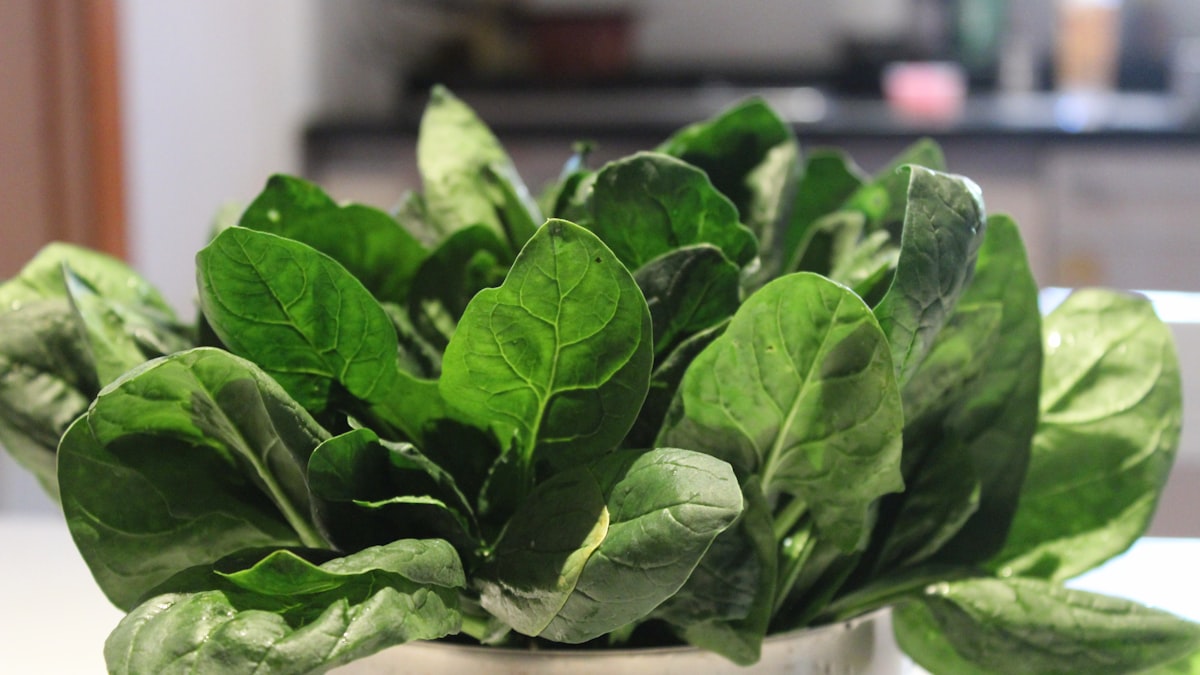
The most familiar Korean preparation for spinach is a blanched and seasoned dish dressed with sesame oil and garlic. Substituting or supplementing with EVOO opens an entirely different flavor register. Spinach's characteristic grassy sweetness pairs naturally with an early-harvest EVOO that leads with grassy or artichoke notes. A Tuscan-style Italian oil with strong herb character, or a Spanish Picual with its vivid green-olive intensity, are the obvious starting points.
The technique is straightforward: blanch spinach in boiling water for 20–30 seconds, transfer to cold water, then squeeze out as much moisture as possible. Season with a pinch of salt and two tablespoons of EVOO. A few drops of lemon juice added at the end soften the oil's bitterness and lift the whole dish. The result is lighter and more herb-forward than the sesame-oil version. For a salad application, toss raw spinach leaves in a dressing of EVOO, lemon juice, and soy sauce in a 2:1:0.5 ratio — the boundary between Korean and Mediterranean cooking quietly disappears.
Bok Choy — Medium-Intensity EVOO for a High-Heat Sauté
Bok choy's crunch and mild sweetness make it a natural fit for quick sautéing, traditionally done with oyster sauce and garlic. It adapts well to EVOO at high heat. Although EVOO has a lower smoke point than refined oils, research published in the journal Food Chemistry in 2020 reported that its polyphenol and tocopherol content makes it sufficiently stable for stir-frying at medium heat — around 160–180 °C.
For this application, an EVOO that is too assertive will compete with the vegetable; a medium-intensity oil works better. Spanish Ojiblanca, with its gentle sweetness and faint nuttiness, or a Ligurian-style Italian oil, adds a pleasant sheen to the finished dish without masking bok choy's delicate flavor. The method: heat the pan, add 1.5 tablespoons of EVOO, sauté sliced garlic until fragrant, then add the bok choy and stir-fry over high heat for no more than one minute. Season minimally with oyster sauce or soy sauce so the vegetable's own taste comes through.
Minari — Robust EVOO to Meet a Bold Green
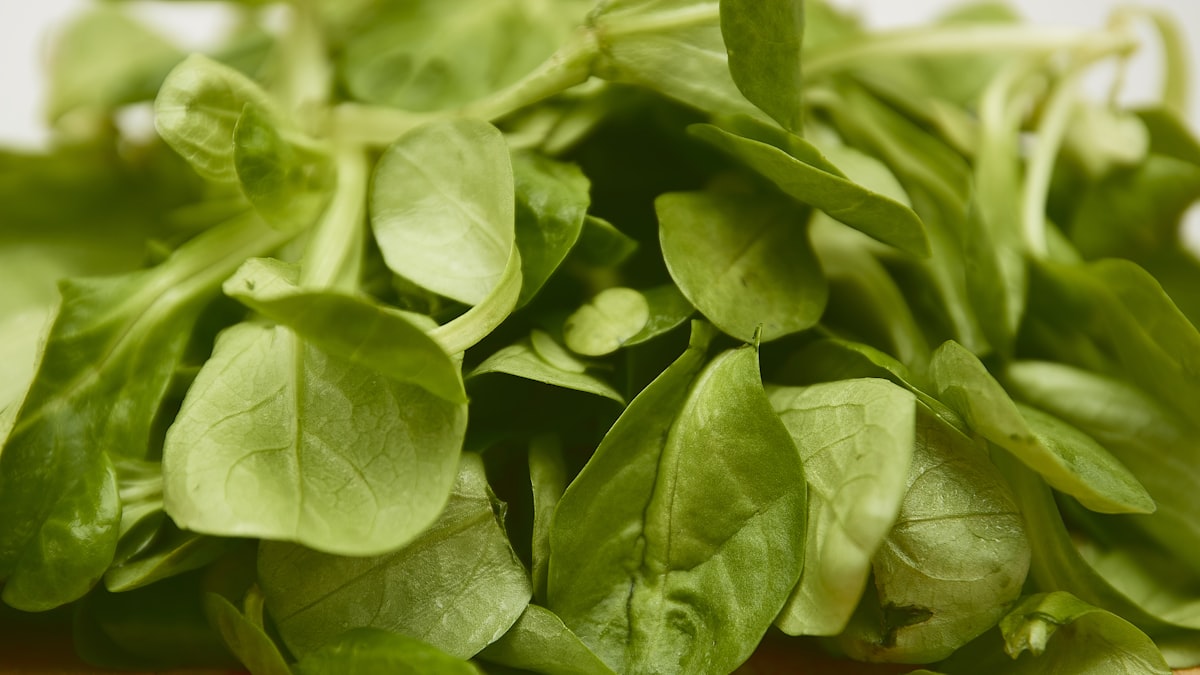
Minari (water parsley) is the most distinctive of the three. Its sharp herbal fragrance, pleasantly bitter finish, and cool, crisp stems give it a personality closer to an herb than a standard salad green. To hold its own against that intensity, the olive oil needs character of its own. A robust, high-polyphenol EVOO — particularly Picual or Coratina, both known for pronounced pepper and bitterness — does not get lost beneath minari's assertiveness; instead, the two strong flavors find a working balance.
For a minari salad, cut the stems into 4–5 cm lengths, soak briefly in ice water, drain, then toss lightly in a dressing of EVOO, apple cider vinegar, honey, and salt. When minari is used as a finishing garnish in broth-based dishes such as doenjang jjigae or fish cake soup, a finishing drizzle of EVOO just before serving allows the oil to carry the herb's aroma more vividly to the palate. And when minari is blanched and dressed, replacing sesame oil with EVOO keeps the calorie count roughly comparable while shifting the fat profile toward a higher proportion of monounsaturated fatty acids.
Principles That Apply to All Three Greens
Check acidity and freshness. Extra virgin grade requires a free fatty acid content (acidity) of 0.8% or below. A lower acidity generally indicates the olives were pressed while fresh, which translates to a cleaner flavor that enhances rather than overwhelms the vegetable.
Finish raw; minimize heat exposure. Multiple studies have reported that polyphenol levels can decrease with prolonged high-heat exposure. Even when EVOO is used for cooking, adding a small finishing drizzle of the same oil just before serving restores both aroma and polyphenol content to the dish — a technique worth making a habit.
Store correctly. After opening, keep the bottle away from direct light and heat sources in a cool, dark spot, and aim to finish it within 60 days for the best flavor. Refrigeration may cause oleic acid to crystallize, turning the oil cloudy, but the oil returns to its normal state at room temperature with no loss of quality.
All three greens are available year-round and are among the most affordable vegetables on the market. When a single bottle of EVOO meets the spinach, bok choy, and minari already in the kitchen, the distance between Seoul and the Mediterranean turns out to be shorter than expected.
Frequently asked questions
- Does olive oil go well with Korean vegetable dishes?
- Yes. Korean greens such as spinach, bok choy, and minari all contain fat-soluble compounds. According to materials published by the Harvard T.H. Chan School of Public Health, fat-soluble carotenoids in vegetables are reported to be absorbed more readily when consumed alongside dietary fats — making extra virgin olive oil a practical and flavor-compatible partner.
- Which type of EVOO works best for blanched spinach?
- An early-harvest EVOO with grassy or artichoke notes suits spinach well. Spanish Picual or Tuscan-style Italian oils with strong green-herb character complement spinach's natural sweetness and fresh, vegetal aroma without overpowering it.
- Can you stir-fry bok choy in extra virgin olive oil without damaging it?
- Research published in the journal Food Chemistry in 2020 reported that EVOO's polyphenol and tocopherol content makes it sufficiently stable for stir-frying at medium heat — roughly 160–180 °C. A medium-intensity EVOO such as Ojiblanca adds a light nuttiness without masking bok choy's natural sweetness.
- Why does minari pair better with a robust EVOO than a delicate one?
- Minari has an assertive herbal aroma and a pleasantly bitter finish. A robust, high-polyphenol EVOO — such as Picual or Coratina, which carry pronounced pepper and bitterness — has enough character to stand alongside minari rather than being lost beneath it, ultimately creating balance rather than competition.
- What is the finishing drizzle technique and why does it matter?
- A finishing drizzle means adding a small amount of raw EVOO to a dish just before serving, even if the same oil was used during cooking. Multiple studies have reported that polyphenol levels can decrease with prolonged high-heat exposure, so finishing with fresh EVOO restores both the aromatic profile and the polyphenol content of the dish.
Related reading
- Dietary Fat, Magnesium, and the Mediterranean Table: What the Research Shows So Far
Evidence is accumulating that the type of dietary fat consumed alongside magnesium-rich foods may influence how well that mineral is absorbed. This guide surveys current research on olive oil, fatty acid composition, and mineral metabolism.
- Beyond BMI: Dietary Fat Quality, Olive Oil, and Metabolic Health Research
Two people can share the same BMI and yet show markedly different blood lipid profiles, insulin sensitivity, and visceral fat distribution. A growing body of clinical research suggests that the type of fat consumed — not just total calories — may be a meaningful variable in metabolic health.
- Heat, Smoke, and Polar Compounds: The Chemistry of Cooking with Olive Oil
Heating olive oil triggers a cascade of hydrolysis, oxidation, and polymerization reactions that accelerate past the smoke point. This guide traces the science of polar compound formation and explains why high-polyphenol EVOO tends to hold up better under heat.
- Does Olive Oil You Eat Reach Your Skin? A Clinical Research Roundup
A growing body of clinical research is examining whether regular dietary intake of olive oil is associated with measurable changes in skin hydration and elasticity. This guide summarizes the current evidence, its limits, and how the findings sit within the broader context of Mediterranean eating patterns.
- Senescent Cells, Senolytics, and the Question of Olive Oil Polyphenols
The senolytic diet hypothesis has drawn attention to plant polyphenols as potential allies against aging cells. This guide maps where extra virgin olive oil's oleocanthal and related phenolic compounds currently sit in that research — and what the evidence cannot yet support.
- Burning Groves: How Wildfire and Air Pollution Are Reshaping Olive Oil Country
The Mediterranean produces around 95% of the world's olive oil — and it is heating up faster than almost anywhere else on earth. From scorched root systems to smoke-tainted harvests, environmental disaster is leaving marks on olive groves that last far longer than the flames.
Tags
- pairing guide
- korean greens
- extra virgin olive oil
- spinach
- cooking with evoo