Guides
Fasting Lipids, LDL Particle Size, and the Case for Olive Oil at Breakfast
Research into fasting blood lipid profiles is shifting attention from total LDL numbers toward particle size and quality — and olive oil's monounsaturated fats and polyphenols are central to that conversation.
Translated from the Korean edition, originally published October 10, 2026 · read the original

Why Fasting Lipids and Breakfast Composition Are Linked
Blood lipid panels are conventionally measured after 8–12 hours of fasting. Yet growing evidence suggests that fasting-state readings are shaped not only by the previous evening's meal but also by habitual breakfast patterns. In particular, several studies have reported that the type of fat consumed at breakfast can influence the lipid markers recorded at the subsequent blood draw.
The PREDIMED (Prevención con Dieta Mediterránea) study — one of the most authoritative accumulated datasets in Mediterranean diet research — reported that participants who consistently followed an olive-oil-centered dietary pattern showed meaningful differences not only in LDL cholesterol levels but in the qualitative composition of LDL particles themselves. This has helped move scientific discussion beyond simple LDL totals toward particle size and density as more nuanced markers of lipid metabolism.
LDL Particle Size: The Context Behind the Number
LDL (low-density lipoprotein) cholesterol is not a single, uniform substance. It can be broadly classified into large, buoyant particles — sometimes called Pattern A — and small, dense LDL particles (sdLDL, Pattern B). According to data from the American Heart Association (AHA) and the European Atherosclerosis Society (EAS), small dense LDL is reported to penetrate arterial walls more readily and is more vulnerable to oxidation than its larger counterpart.
Multiple clinical studies have reported that dietary fat type can influence this LDL particle distribution. Diets with a high proportion of saturated fat have been associated with an increase in small dense LDL, while diets rich in monounsaturated fatty acids (MUFAs) have been reported to maintain or increase the proportion of larger LDL particles. Extra virgin olive oil (EVOO), with oleic acid as its principal fatty acid, is one of the best-known MUFA sources in the food supply.

Olive Oil Polyphenols and Lipid Metabolism: More Than Just Fat
One of the key distinctions between extra virgin olive oil and refined olive oil — or other vegetable oils — is polyphenol content. Phenolic compounds including oleocanthal, oleuropein aglycone, and hydroxytyrosol have been reported in numerous studies to contribute to the inhibition of LDL oxidation.
In 2011, the European Food Safety Authority (EFSA) approved a health claim for olive oil polyphenols stating that daily intake of at least 5 mg of hydroxytyrosol and its derivatives from 20 g of olive oil may contribute to the protection of LDL cholesterol from oxidative stress. It is important to note that this approved wording is confined to oxidation protection and does not imply the prevention or treatment of any disease.
Polyphenol content varies considerably depending on olive oil grade, cultivar, and harvest timing. According to International Olive Council (IOC) data, early-harvest extra virgin olive oils tend to show higher polyphenol concentrations — a point worth bearing in mind when selecting a product.
Breakfast Composition and Fasting Lipid Levels: The Connection
Researchers have continued to explore differences in fasting lipid readings depending on whether breakfast is skipped, carbohydrate-heavy, or built around healthy fats. A study published in the Journal of Nutrition reported that participants who consumed a MUFA-rich breakfast showed a relatively smaller rise in postprandial triglyceride levels compared with other groups. The same study noted, however, that responses may differ according to individual genetic makeup and metabolic status, and that it is too early to draw universal conclusions.
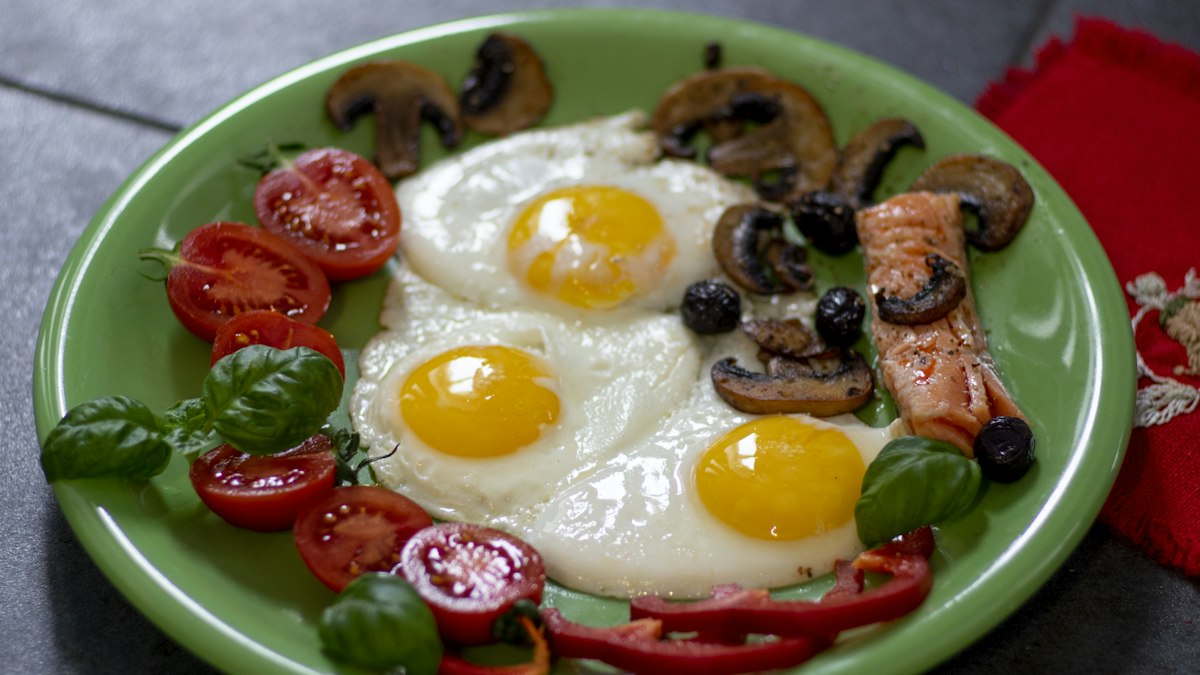
From a practical standpoint, there are several traditional Mediterranean ways to incorporate olive oil into the morning meal: dipping whole-grain bread into extra virgin olive oil, using olive oil to cook a vegetable omelette, or drizzling a small amount over yogurt and fruit. These approaches have long been common in olive-growing regions of southern Europe.
Cultivar and Acidity: Useful Markers When Choosing an Olive Oil
The objective quality indicators for olive oil include free fatty acid content (acidity), polyphenol concentration, and peroxide value (freshness). The extra virgin grade requires acidity no higher than 0.8%, but genuinely high-quality products typically register well below that threshold.
Polyphenol profiles also differ by cultivar. Picual, native to Andalusia in southern Spain, is widely reported to carry elevated concentrations of oleocanthal and oleuropein aglycone. Ojiblanca is noted for a balanced polyphenol composition alongside delicate aromatics. Sibarita is characterised by low acidity and a mild, approachable flavour.
When selecting an olive oil with lipid-related dietary goals in mind, looking for products that declare their polyphenol content, state the harvest year, and specify the extraction method (cold press or low-temperature extraction) are practical ways to verify quality before purchase.
Questions the Research Leaves Open
The relationship between olive oil and fasting blood lipid profiles is supported by a considerable body of evidence, much of it centred on Mediterranean diet research. Isolating olive oil's individual contribution, however, remains methodologically challenging: overall dietary pattern, total intake volume, individual genetic polymorphisms, and gut microbiome composition all act as compounding variables.
A 2023 meta-analysis published in Nutrients found that multiple studies including EVOO-intervention diets reported statistically meaningful changes in LDL cholesterol levels compared with control groups, but the authors also stated that heterogeneity in study design and participant populations means additional research is needed before results can be generalised.
Olive oil occupies a genuinely positive position in dietary strategies discussed in relation to lipid metabolism. It is, however, too early to characterise it as a guaranteed solution or a single determining factor. The role any individual food plays in health is most accurately evaluated within the context of an overall dietary pattern.
Frequently asked questions
- Does olive oil affect LDL cholesterol particle size?
- Several clinical studies have reported that diets high in monounsaturated fatty acids — of which extra virgin olive oil is a primary source — are associated with a shift toward larger, less dense LDL particles compared with high-saturated-fat diets. The PREDIMED study observed meaningful differences in LDL particle composition among participants who followed an olive-oil-centered Mediterranean diet, though olive oil's isolated effect is difficult to separate from overall dietary patterns.
- What is small dense LDL and why does it matter?
- LDL cholesterol is not a single uniform particle. According to data from the American Heart Association (AHA) and the European Atherosclerosis Society (EAS), LDL can be classified as large, buoyant particles (Pattern A) or small, dense particles (sdLDL, Pattern B). Small dense LDL is reported to penetrate arterial walls more readily and is more susceptible to oxidation than its larger counterpart, making the particle distribution — not just the total LDL number — a subject of growing clinical interest.
- How much polyphenol does olive oil need to have for an effect on LDL oxidation?
- In 2011, the European Food Safety Authority (EFSA) approved a health claim stating that consuming at least 5 mg of hydroxytyrosol and its derivatives from 20 g of olive oil daily may contribute to the protection of LDL cholesterol from oxidative stress. This claim is limited specifically to oxidation protection and does not imply the prevention or treatment of any disease.
- Does what you eat for breakfast change your fasting lipid results?
- Fasting lipid panels are typically drawn after 8–12 hours without food, but researchers have noted that habitual breakfast composition may influence those readings over time. A study published in the Journal of Nutrition reported that participants who consumed a breakfast rich in monounsaturated fatty acids showed a relatively smaller rise in postprandial triglyceride levels than those on lower-MUFA diets. The researchers also noted, however, that individual genetic makeup and metabolic status can produce varying responses, so it is too early to draw universal conclusions.
- Which olive oil cultivars have the highest polyphenol content?
- Polyphenol profiles vary meaningfully by cultivar, harvest timing, and processing. Picual, native to Andalusia in southern Spain, is widely reported to have elevated levels of oleocanthal and oleuropein aglycone. Ojiblanca is noted for a balanced polyphenol composition alongside delicate aromatics, while Sibarita is characterised by low acidity and a mild flavour profile. According to International Olive Council (IOC) data, early-harvest extra virgin olive oils — regardless of cultivar — tend to show higher polyphenol concentrations.
Related reading
- Fat Quality, Not Quantity: Olive Oil's Place in a CKD Diet
Chronic kidney disease management has long focused on restricting protein, potassium, and phosphorus — but researchers are now turning attention to the type of fat patients consume. Here is what the current evidence says about unsaturated fats, olive oil polyphenols, and kidney function.
- Olive Oil During Pregnancy: The Omega Fatty Acid and Fetal Brain Research, Explained
Dietary fat quality during pregnancy is closely linked to fetal nervous system development, according to accumulating research. Here is where the science currently stands on olive oil's role—through its omega-9 and omega-3 context—in a pregnancy diet.
- Olive Oil, the Mediterranean Diet, and Mental Health: What the Clinical Research Shows
A growing body of clinical research is examining how Mediterranean diet patterns — with extra virgin olive oil at their center — may be associated with mood and cognitive well-being. From polyphenols and oleic acid to the gut-brain axis, here is where the science currently stands.
- Bone Health on the Table: What the Osteoblast and Calcitriol Research Says About Olive Oil
From oleic acid's reported role in osteoblast differentiation to calcitriol absorption and polyphenol activity, a growing body of cell and animal research links extra virgin olive oil to bone metabolism — though the clinical picture is still forming.
- Olive Oil and IBS: The Role of Fat in a Low-FODMAP Diet
Extra virgin olive oil sits comfortably within low-FODMAP guidelines, yet fat's effect on gut sensitivity is more nuanced than a simple approved/not-approved label. Here is what the current research says.
- Olive Oil and Constipation: Separating the Clinical Evidence from the Folk Remedy
A spoonful on an empty stomach has long been said to ease constipation. Here is how far the clinical research actually goes — and where the folk wisdom ends.