Guides
Olive Oil and IBS: The Role of Fat in a Low-FODMAP Diet
Extra virgin olive oil sits comfortably within low-FODMAP guidelines, yet fat's effect on gut sensitivity is more nuanced than a simple approved/not-approved label. Here is what the current research says.
Translated from the Korean edition, originally published September 13, 2026 · read the original

Where Diet Management Meets IBS
Irritable Bowel Syndrome (IBS) is a functional gastrointestinal disorder characterized by abdominal pain, bloating, and changes in bowel habits. According to data from the World Gastroenterology Organisation (WGO), an estimated 10–15% of the global population experiences IBS symptoms. Dietary modification has become a cornerstone management strategy alongside pharmacological treatment, and the low-FODMAP diet — which restricts Fermentable Oligosaccharides, Disaccharides, Monosaccharides and Polyols — has been extensively studied in international gastroenterology research.
FODMAPs are specific carbohydrate types that are poorly absorbed in the small intestine and rapidly fermented in the large intestine. Wheat, garlic, onion, lactose, and fructose are among the foods most commonly cited as high-FODMAP. Dietary fat, by contrast, does not belong to the FODMAP classification system at all. So what role does fat actually play in an IBS-conscious diet?

Fat's Place in the Low-FODMAP Framework
According to guidelines from the Monash University research team that developed and validated the low-FODMAP protocol, pure plant-based oils contain no FODMAP components and are classified as unrestricted foods. Extra virgin olive oil (EVOO) sits firmly in that category.
Being FODMAP-free does not, however, automatically make a fat unconditionally beneficial for IBS management. Fat is a macronutrient capable of influencing gut motility and visceral sensory signaling. A literature review published by researchers at King's College London reported that high-fat meals may increase visceral hypersensitivity in some IBS patients. This places the type of fat and the way it is consumed at the center of the conversation.
Olive Oil's Fatty Acid Profile and Gut Sensitivity Research
The dominant component of extra virgin olive oil is oleic acid, a monounsaturated fatty acid that accounts for 55–83% of total fat content. Oleic acid is generally considered to produce a comparatively moderate stimulus on gut motility relative to saturated fatty acids.
EVOO also contains phenolic compounds including oleocanthal and hydroxytyrosol. Cell and animal studies by researchers at the Universidad de Córdoba have reported that these phenolic compounds may interact with intestinal inflammatory pathways. Researchers are careful to note, however, that extrapolating these findings directly to IBS patients is premature and that clinical evidence remains insufficient to draw firm conclusions.
A systematic review published in Nutrients in 2022 reported accumulating preliminary evidence that the Mediterranean dietary pattern may be associated with IBS symptom relief, with olive oil serving as the primary fat source within that pattern. That said, large-scale clinical trials isolating olive oil's independent contribution have yet to be conducted.
Practical Considerations for Everyday Use
There are several practical points worth noting for anyone following a low-FODMAP plan who wants to incorporate olive oil.
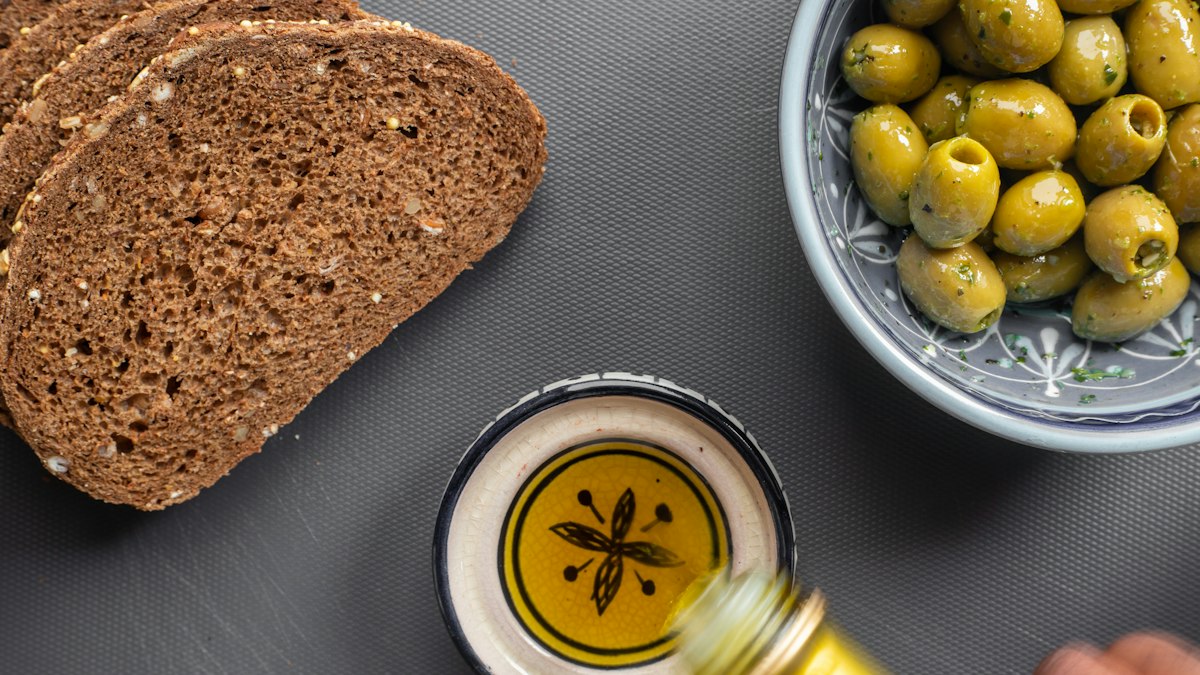
First, olive oil functions well as a flavor-delivery vehicle in place of high-FODMAP aromatics like garlic and onion. Garlic's problematic compounds are water-soluble and do not leach into oil. Heating garlic cloves in olive oil and then removing them — a method referred to as garlic-infused oil — is an approach discussed in the low-FODMAP community and referenced in the Monash University app database as a way to carry garlic flavor without the oligosaccharides.
Second, cooking temperature and oil quality are linked. Extra virgin olive oil contains significantly higher levels of polyphenols than refined oils and is generally recommended for use in room-temperature dressings or lower-heat applications. Food science research has reported that extended high-heat cooking can cause some loss of phenolic compounds.
Third, individual response varies considerably. IBS presents across subtypes — IBS-C, IBS-D, IBS-M, and others — with triggers that differ from person to person. Clinical nutrition specialists commonly recommend keeping a detailed food diary to monitor individual reactions, since the same food can produce different outcomes depending on the person and context.
Limitations in the Research and the Road Ahead
The intersection of IBS and dietary fat is an active area of research, but important limitations remain. Most clinical trials conducted to date have involved small sample sizes and short follow-up periods, making it difficult to draw conclusions about long-term effects. The pathophysiology of IBS itself is entangled with complex, overlapping factors — the gut-brain axis, the intestinal microbiome, and visceral hypersensitivity among them — which makes isolating the effect of any single food genuinely difficult.
A 2023 review published in Alimentary Pharmacology & Therapeutics noted growing researcher interest in a hybrid approach that combines elements of the Mediterranean diet and the low-FODMAP diet, reporting that this combination may contribute to improved quality-of-life measures in IBS patients. In that framework, olive oil is described as a fat source that integrates naturally into both dietary patterns.
Researchers consistently emphasize that building an individual dietary plan in consultation with a registered dietitian or gastroenterologist is the most important step. Dietary modification is a complementary component of IBS management, and no single food — olive oil included — is considered a treatment.
Frequently asked questions
- Is olive oil allowed on a low-FODMAP diet?
- Yes. According to guidelines developed by the Monash University research team that established the low-FODMAP protocol, pure plant-based oils contain no FODMAP components and are classified as unrestricted foods. Extra virgin olive oil falls into this category.
- Can olive oil make IBS symptoms worse?
- Fat in general can influence gut motility and visceral sensitivity signals. A literature review published by researchers at King's College London reported that high-fat meals may increase visceral hypersensitivity in some IBS patients. The type and amount of fat consumed, as well as individual IBS subtype, are all variables worth monitoring through a food diary.
- What makes extra virgin olive oil different from other fats for someone with IBS?
- EVOO is dominated by oleic acid, a monounsaturated fatty acid that accounts for 55–83% of its fat content and is considered to produce a comparatively moderate effect on gut motility relative to saturated fats. EVOO also contains phenolic compounds such as oleocanthal and hydroxytyrosol, which researchers at the Universidad de Córdoba have reported may interact with intestinal inflammatory pathways in cell and animal studies — though direct clinical evidence in IBS patients remains limited.
- Can I use garlic-infused olive oil on a low-FODMAP diet?
- This technique is commonly discussed in low-FODMAP communities and is referenced in the Monash University app database. Garlic's FODMAP compounds are water-soluble and do not transfer into oil, so heating garlic in oil and then removing the cloves is considered a way to carry garlic flavor without the problematic oligosaccharides. However, individual responses vary and a registered dietitian should be consulted before adding it to a structured elimination plan.
- Is there clinical evidence that the Mediterranean diet helps with IBS?
- A 2023 review published in Alimentary Pharmacology & Therapeutics noted growing researcher interest in combining Mediterranean and low-FODMAP dietary patterns as a hybrid approach that may contribute to improved quality-of-life outcomes in IBS patients. A 2022 systematic review in Nutrients also reported accumulating preliminary evidence that a Mediterranean dietary pattern may be associated with IBS symptom relief, with olive oil as the primary fat source in that pattern. Large-scale clinical trials isolating olive oil's independent effect are still lacking.
Related reading
- Olive Oil in a Gout-Friendly Diet: Purines, Uric Acid, and What the Fat Research Shows
Dietary fat is drawing fresh attention in gout management. This guide reviews the published evidence on how olive oil relates to purine metabolism and uric acid levels.
- 120 Calories a Tablespoon — So Why Does Olive Oil Keep Appearing in Weight-Management Diets?
Extra virgin olive oil is a high-calorie fat by any measure, yet clinical data and dietary-pattern research consistently tell a more nuanced story about weight management.
- Fat Quality, Not Quantity: Olive Oil's Place in a CKD Diet
Chronic kidney disease management has long focused on restricting protein, potassium, and phosphorus — but researchers are now turning attention to the type of fat patients consume. Here is what the current evidence says about unsaturated fats, olive oil polyphenols, and kidney function.
- Olive Oil During Pregnancy: The Omega Fatty Acid and Fetal Brain Research, Explained
Dietary fat quality during pregnancy is closely linked to fetal nervous system development, according to accumulating research. Here is where the science currently stands on olive oil's role—through its omega-9 and omega-3 context—in a pregnancy diet.
- Olive Oil, the Mediterranean Diet, and Mental Health: What the Clinical Research Shows
A growing body of clinical research is examining how Mediterranean diet patterns — with extra virgin olive oil at their center — may be associated with mood and cognitive well-being. From polyphenols and oleic acid to the gut-brain axis, here is where the science currently stands.
- Olive Oil and Constipation: Separating the Clinical Evidence from the Folk Remedy
A spoonful on an empty stomach has long been said to ease constipation. Here is how far the clinical research actually goes — and where the folk wisdom ends.