Guides
120 Calories a Tablespoon — So Why Does Olive Oil Keep Appearing in Weight-Management Diets?
Extra virgin olive oil is a high-calorie fat by any measure, yet clinical data and dietary-pattern research consistently tell a more nuanced story about weight management.
Translated from the Korean edition, originally published June 25, 2024 · read the original

One fact is non-negotiable: extra virgin olive oil (EVOO) is a fat, delivering 9 kcal per gram. A single tablespoon adds roughly 120 kcal to a meal. Yet EVOO appears regularly in weight-management diets — not because the calorie count is wrong, but because the relevant research is about whole dietary patterns rather than individual spoonfuls.
What the Clinical Evidence Points To
The most frequently cited data come from the PREDIMED trial, which tracked 7,447 high-cardiovascular-risk participants in Spain. Researchers reported that the group following a Mediterranean diet supplemented with EVOO showed no meaningfully greater increase in body weight or waist circumference than the low-fat control group. In other words, the clinical data do not support the assumption that an EVOO-rich diet is automatically a weight-gain diet. Broader meta-analyses of nutrition research have similarly failed to produce a consistent finding that high-fat Mediterranean eating patterns cause greater weight gain than low-fat alternatives.
The Dietary-Pattern Paradox
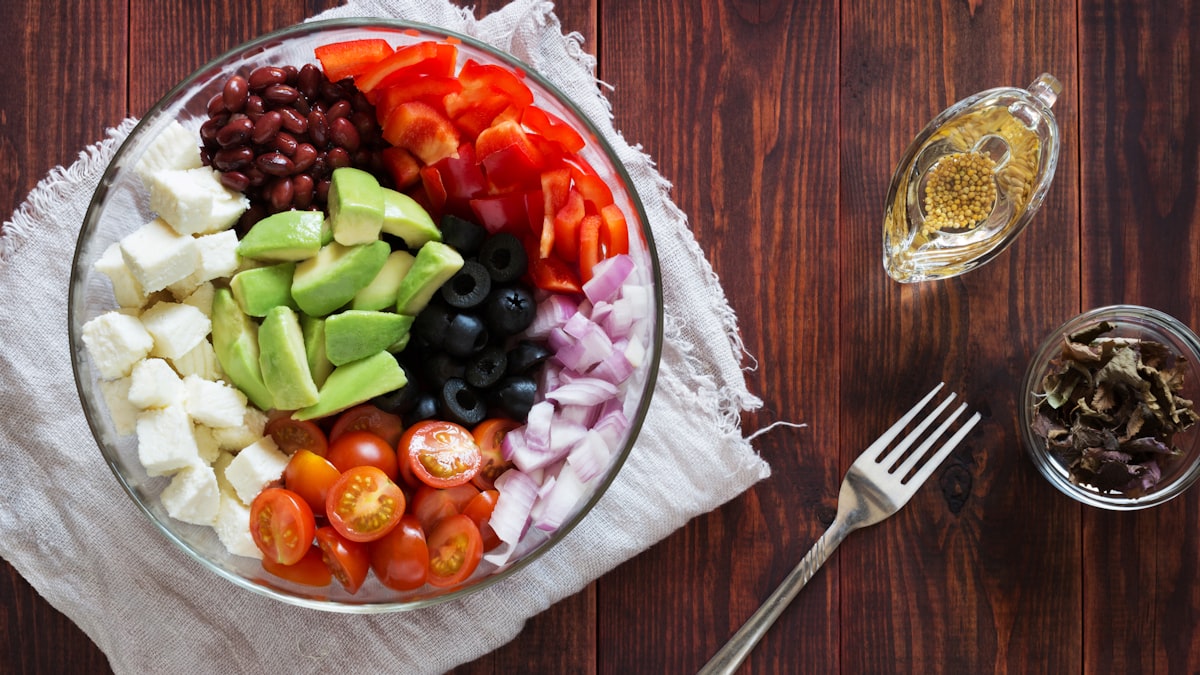
The more meaningful variable in weight management is the architecture of the overall diet, not any single ingredient. Within a pattern built around vegetables, whole grains, legumes, fish, and nuts, EVOO may contribute to satiety and naturally displace simple sugars and processed fats. Researchers have reported that, even at identical calorie counts, a diet centered on whole Mediterranean foods produces different hormonal and appetite responses than one based on processed foods — though it is too early to draw firm conclusions about the precise mechanisms involved.
Where the Claims Overreach
Phrases such as "EVOO burns body fat" or "one tablespoon is the cornerstone of any diet" are not supported by clinical evidence and should be read with skepticism. The calorie content of olive oil does not change. If total energy intake across a meal or a day significantly exceeds individual needs, any surplus — whether from EVOO or any other food — will accumulate. No quality or polyphenol content alters that basic arithmetic.
How to Work with It Day to Day
The most practical approach is substitution rather than addition: replacing saturated or heavily processed fats with EVOO, within the broader structure of a Mediterranean-style diet. Keeping an eye on daily intake and overall calorie balance makes kitchen use clearer. For anyone monitoring portions closely, a measuring spoon is the simplest tool available — one tablespoon is a concrete, countable quantity.
The case for EVOO in weight-conscious eating rests on dietary structure, not caloric magic. How a meal is composed matters more than whether it contains olive oil.
Frequently asked questions
- How many calories are in a tablespoon of extra virgin olive oil?
- One tablespoon of extra virgin olive oil contains approximately 120 kcal, reflecting the standard 9 kcal per gram of fat. That figure does not change regardless of the oil's quality or origin.
- Does olive oil help with weight loss?
- No single food causes or prevents weight loss on its own. The PREDIMED trial, which followed 7,447 high-cardiovascular-risk participants in Spain, reported that a Mediterranean diet supplemented with EVOO did not produce meaningfully greater weight or waist-circumference gain than a low-fat control diet. The benefit appears to lie in overall dietary pattern, not in any property of the oil in isolation.
- Is a high-fat Mediterranean diet more fattening than a low-fat diet?
- Meta-analyses of nutrition research have not consistently found that a high-fat Mediterranean diet leads to greater weight gain than a low-fat diet. The quality and structure of the overall eating pattern — vegetables, whole grains, legumes, fish, nuts — appears to matter more than the fat percentage alone.
- What is the most practical way to use olive oil when watching calories?
- The most straightforward approach is to substitute EVOO for saturated or processed fats rather than adding it on top of an existing diet. Using a measuring spoon keeps portions in check and makes calorie accounting more accurate.
- Are claims that olive oil 'burns body fat' supported by evidence?
- No. Statements such as 'EVOO burns body fat' or 'one tablespoon is the key to dieting' are not supported by clinical evidence. Calorie surplus is calorie surplus regardless of the source; if total energy intake consistently exceeds needs, any food — including EVOO — will contribute to weight gain.
Related reading
- Olive Oil and IBS: The Role of Fat in a Low-FODMAP Diet
Extra virgin olive oil sits comfortably within low-FODMAP guidelines, yet fat's effect on gut sensitivity is more nuanced than a simple approved/not-approved label. Here is what the current research says.
- Olive Oil in a Gout-Friendly Diet: Purines, Uric Acid, and What the Fat Research Shows
Dietary fat is drawing fresh attention in gout management. This guide reviews the published evidence on how olive oil relates to purine metabolism and uric acid levels.
- Fat Quality, Not Quantity: Olive Oil's Place in a CKD Diet
Chronic kidney disease management has long focused on restricting protein, potassium, and phosphorus — but researchers are now turning attention to the type of fat patients consume. Here is what the current evidence says about unsaturated fats, olive oil polyphenols, and kidney function.
- Olive Oil During Pregnancy: The Omega Fatty Acid and Fetal Brain Research, Explained
Dietary fat quality during pregnancy is closely linked to fetal nervous system development, according to accumulating research. Here is where the science currently stands on olive oil's role—through its omega-9 and omega-3 context—in a pregnancy diet.
- Olive Oil, the Mediterranean Diet, and Mental Health: What the Clinical Research Shows
A growing body of clinical research is examining how Mediterranean diet patterns — with extra virgin olive oil at their center — may be associated with mood and cognitive well-being. From polyphenols and oleic acid to the gut-brain axis, here is where the science currently stands.
- Olive Oil and Constipation: Separating the Clinical Evidence from the Folk Remedy
A spoonful on an empty stomach has long been said to ease constipation. Here is how far the clinical research actually goes — and where the folk wisdom ends.