Guides
Senescent Cells, Senolytics, and the Question of Olive Oil Polyphenols
The senolytic diet hypothesis has drawn attention to plant polyphenols as potential allies against aging cells. This guide maps where extra virgin olive oil's oleocanthal and related phenolic compounds currently sit in that research — and what the evidence cannot yet support.
Translated from the Korean edition, originally published October 4, 2026 · read the original

Senescent Cells and the Concept of Senolytics
The body harbors cells that have stopped dividing but refuse to disappear. Scientists call them senescent cells. In a landmark 2011 study published in Nature, a research team at the Mayo Clinic reported that selectively removing senescent cells in mice delayed the onset of aging-related phenotypes. That paper gave the field a name: agents capable of selectively eliminating or suppressing senescent cells are now called senolytics.
Early senolytic research centered on drug combinations such as dasatinib and quercetin. Researchers soon began exploring whether plant-derived phytochemicals — particularly flavonoids and phenolic compounds — might engage similar pathways. That is roughly when extra virgin olive oil (EVOO) entered the conversation.

Why Olive Oil Polyphenols Attract Attention
Extra virgin olive oil contains a range of phenolic compounds: oleocanthal, oleuropein aglycon, hydroxytyrosol, and others. Oleocanthal is best known for inhibiting COX-1 and COX-2 enzyme activity in a manner reported to resemble that of ibuprofen. According to a 2005 report from the Monell Chemical Senses Center in Philadelphia, the characteristic throat-sting sensation produced by fresh olive oil was first confirmed to originate from oleocanthal.
The reason oleocanthal draws particular interest in polyphenol-and-aging discussions is its reported connection to the apoptosis pathway. Some in vitro studies have reported that oleocanthal may alter lysosomal membrane permeability in senescent cells in ways that could promote selective cell death. A 2018 paper by a joint team from Rutgers University and the University of Virginia, published in Molecular and Cellular Biology, observed that oleocanthal promoted cell death via the lysosomal pathway in cancer cell lines. The researchers raised the hypothesis — explicitly at the hypothesis level — that this mechanism might apply to senescent cells, while also noting that extending these findings to human clinical evidence is not yet warranted.
Indirect Clues from Mediterranean Diet Cohorts
Direct senolytic clinical evidence remains sparse, but cohort studies of the Mediterranean diet offer indirect signals. The PREDIMED trial (2013, New England Journal of Medicine), funded by the European Union, found that participants who maintained a Mediterranean diet rich in extra virgin olive oil for five years showed lower rates of a cardiovascular composite endpoint than the control group. PREDIMED does not demonstrate the mechanism of any individual compound, but it is frequently cited as data suggesting that polyphenol-rich dietary patterns may contribute to a favorable long-term cellular environment.
Hydroxytyrosol occupies a specific regulatory milestone in this discussion. In its 2011 scientific opinion, the European Food Safety Authority (EFSA) formally recognized the antioxidant properties of olive oil phenolic compounds and stated that a daily intake of at least 5 mg of hydroxytyrosol and its derivatives may contribute to the protection of LDL particles from oxidative damage. EFSA was explicit, however, that this health claim does not extend to anti-aging or senolytic effects.

Where the Oleocanthal Senolytic Hypothesis Currently Stands
Within the research community, the senolytic potential of oleocanthal remains an intriguing hypothesis. Preclinical data from in vitro and animal models have accumulated, but randomized controlled trials (RCTs) in humans are exceptionally rare. A review of dietary senolytics published in Ageing Research Reviews in 2023 noted that plant polyphenols — including quercetin, fisetin, resveratrol, and oleocanthal — show preclinical evidence of reducing markers of cellular senescence, but that significant uncertainty surrounds human bioavailability and the effective intake concentrations required.
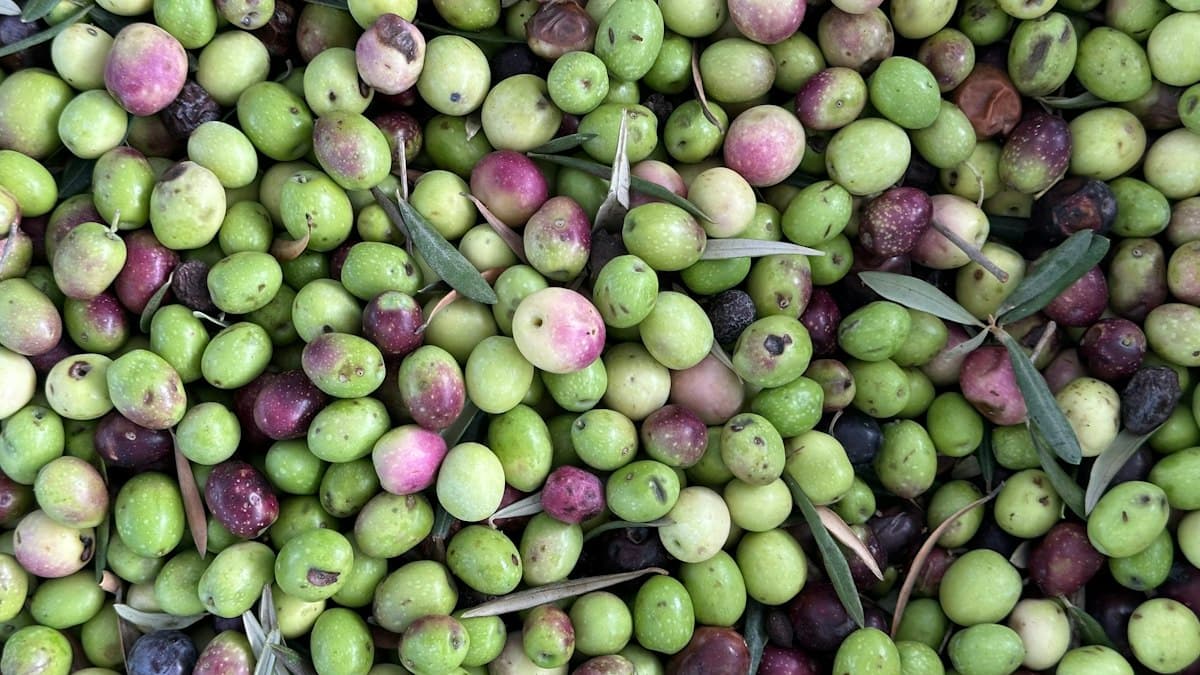
Olive oil's polyphenol content is itself highly variable. Depending on cultivar, harvest date, milling technique, and storage conditions, levels can range from a few dozen to several hundred mg/kg. Early-harvest oils pressed from green, under-ripe olives have been reported to tend toward higher concentrations of oleocanthal and oleuropein aglycon. Applying the label "olive oil" as a blanket term in senolytic diet discussions therefore risks considerable oversimplification.
What the Evidence Does and Does Not Support
The way olive oil polyphenols appear in the senolytic diet hypothesis can be usefully separated into three tiers. First, in vitro data indicate that oleocanthal may engage lysosomal-pathway cell death — this is the most specific, and also the most preliminary, layer of evidence. Second, Mediterranean diet cohort data, most prominently PREDIMED, provide indirect support for the idea that polyphenol-rich dietary patterns may contribute positively to long-term cellular environment. Third, EFSA-recognized antioxidant data for hydroxytyrosol exist at a regulatory level, but interpreting that recognition as evidence of senolytic activity goes beyond what the current body of evidence supports.
Cellular aging is not explained by a single cause or a single pathway. Dietary factors represent one variable among many — genetics, lifestyle, and environment among others — and researchers are in broad agreement that it is too early to conclude that consuming olive oil can "clear" senescent cells. What is consistently reported, however, is that including high-quality, polyphenol-rich extra virgin olive oil as part of a varied diet may contribute to overall antioxidant intake — a more modest claim, but one grounded in evidence that has passed regulatory review.
Frequently asked questions
- What is a senolytic and why does diet matter?
- A senolytic is an agent — drug or dietary compound — studied for its ability to selectively clear or suppress senescent ('zombie') cells that stop dividing but persist in tissue. Diet matters because plant-derived phytochemicals, including polyphenols found in extra virgin olive oil, have been explored in preclinical studies for activity in related cellular pathways. However, the clinical evidence in humans remains very limited.
- Does oleocanthal in olive oil target aging cells?
- In laboratory (in vitro) settings, oleocanthal has been reported to influence lysosomal membrane permeability in ways that may promote selective cell death. A 2018 study by researchers at Rutgers and the University of Virginia, published in Molecular and Cellular Biology, observed this effect in cancer cell lines and hypothesized it might extend to senescent cells. The researchers themselves noted that extrapolating these findings to a clinical human context is premature.
- How much polyphenol is actually in extra virgin olive oil?
- Polyphenol content varies enormously — from a few dozen to several hundred mg/kg — depending on cultivar, harvest timing, milling method, and storage conditions. Early-harvest oils pressed from green, unripe olives tend to contain higher concentrations of oleocanthal and oleuropein aglycon, according to published literature. Treating all olive oil as equivalent in polyphenol discussions is an oversimplification.
- Has the European Food Safety Authority approved anti-aging claims for olive oil?
- No. In its 2011 scientific opinion, EFSA recognized the antioxidant properties of olive oil phenolic compounds and noted that an intake of at least 5 mg per day of hydroxytyrosol and its derivatives may contribute to the protection of LDL particles from oxidative damage. EFSA explicitly drew the line there: this health claim does not imply anti-aging or senolytic effects.
- What does the Mediterranean diet evidence actually show about cellular aging?
- The PREDIMED trial (2013, New England Journal of Medicine), funded by the European Union, found that a Mediterranean diet rich in extra virgin olive oil was associated with lower rates of cardiovascular composite endpoints over five years compared with a control diet. PREDIMED does not prove a mechanism for any single compound, but it is frequently cited as indirect evidence that polyphenol-rich dietary patterns may contribute positively to long-term cellular environment. The distinction between association and mechanism is important.
Related reading
- Olive Oil, Antioxidants, and Fatigue: A Guide to the Emerging Clinical Research
Extra virgin olive oil is drawing growing attention in oxidative stress and chronic fatigue research, with its polyphenols and oleic acid studied for potential roles in cellular energy metabolism. Here is what the current clinical evidence actually shows.
- Olive Oil in Post-Exercise Recovery Diets: A Guide to the Polyphenol and Muscle-Damage Research
Studies in sports nutrition are examining whether the polyphenols in extra virgin olive oil are associated with lower oxidative-stress markers after intense exercise. Here is a summary of where the research currently stands.
- Olive Oil and Inflammation: What Two Decades of Research Have Found
From oleocanthal's proposed COX-inhibiting mechanism to EFSA's conditional polyphenol claim, this guide traces what peer-reviewed research has — and has not — established about EVOO's role in an anti-inflammatory diet.
- Olive Oil, Cortisol, and Dietary Fat: Where the Research Actually Stands
Chronic stress and elevated cortisol have become defining health concerns of our time. A growing body of research is examining whether the type of dietary fat we consume — extra virgin olive oil in particular — may be linked to how the body regulates its stress response.
- Olive Oil and Cognitive Health: The Dietary Pattern Researchers Keep Coming Back To
Extra virgin olive oil has emerged as a recurring subject in aging and cognition research, largely through its role in the Mediterranean diet. Here is what the current evidence says — and where important caveats remain.
- Oleocanthal: The Molecule Behind That Peppery Throat Sting in Fresh EVOO
Polyphenols are the defining variable that separates extra virgin olive oil from ordinary fat — and oleocanthal is the most talked-about molecule among them. Here is how it was discovered, what has been demonstrated, and where the science draws the line.