Guides
Oleocanthal: The Molecule Behind That Peppery Throat Sting in Fresh EVOO
Polyphenols are the defining variable that separates extra virgin olive oil from ordinary fat — and oleocanthal is the most talked-about molecule among them. Here is how it was discovered, what has been demonstrated, and where the science draws the line.
Translated from the Korean edition, originally published September 16, 2025 · read the original
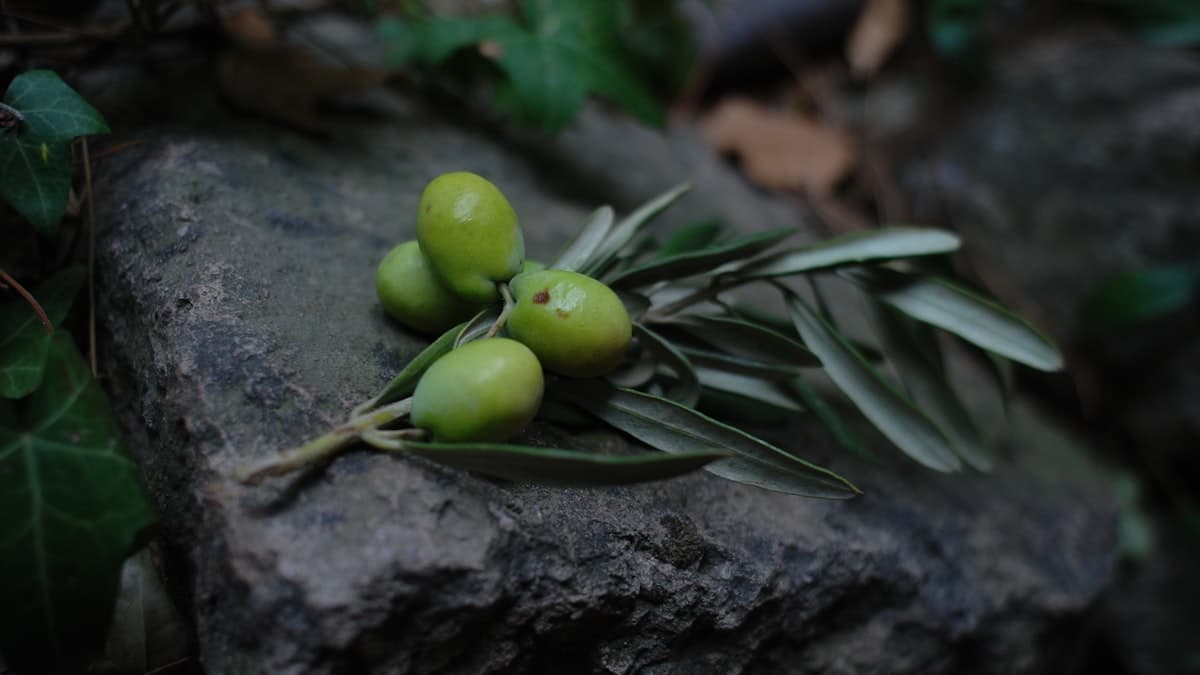
Take a sip of freshly pressed extra virgin olive oil (EVOO) and you will feel a sharp, almost one-sided catch at the back of the throat. It is not quite heat and not quite bitterness — it is something more precise. That sensation traces back to a single molecule: oleocanthal, the most frequently cited polyphenol in EVOO.
The Moment of Discovery
Oleocanthal was first isolated and brought to wider scientific attention in 2005, in a brief report published in Nature by Gary Beauchamp and colleagues at the Monell Chemical Senses Center in the United States. Beauchamp was tasting freshly pressed EVOO in Sicily when he noticed that its throat irritation was nearly identical to the sensation produced by liquid ibuprofen — a compound he had been studying separately. Follow-up experiments reported that oleocanthal inhibits the cyclooxygenase enzymes COX-1 and COX-2 in a concentration-dependent manner — the same molecular targets as ibuprofen.
The scientific community was quick to add an important qualification, however. The amount of oleocanthal obtainable from a single tablespoon of commercial EVOO is nowhere near the quantity required to expect a pharmaceutical-level analgesic effect. The same research team noted that consuming 50 g of EVOO provides approximately 10 mg of oleocanthal, which they compared to roughly 10% of a low analgesic dose. The accurate reading, then, is not that oleocanthal "works like ibuprofen" but rather that it is a naturally occurring molecule that shares ibuprofen's molecular targets — a meaningful distinction.
The One Sentence the EU Approved
The most conservative — and arguably the most precise — official recognition of olive oil polyphenols comes from the European Food Safety Authority (EFSA). EU Regulation EC 432/2012 permits the following claim when an olive oil contains at least 5 mg of hydroxytyrosol and its derivatives (oleuropein complexes, tyrosol, and related compounds) per 20 g — equivalent to approximately 250 mg/kg of polyphenols: that olive oil polyphenols "contribute to the protection of blood lipids from oxidative stress."
A detailed breakdown of how to read that threshold appears in the guide to polyphenol labelling standards. The essential point is that EFSA's assessment is confined to that specific oxidative-protection wording. Broader claims — around cancer, detoxification, or anti-ageing — fall outside the scope of this evaluation. It is too early to conclude that the evidence supports such assertions.

The Variables That Erode Polyphenols
Polyphenols are a diminishing asset from the moment the oil is pressed. Storage conditions after pressing, light exposure, heat treatment, and the simple passage of time all act as variables. As discussed in the guide to cold-pressing and early-harvest practices, two oils from the same farm and the same harvest year can differ substantially in their polyphenol content depending on processing choices. When a label carries both a press date and a certified lab figure, that single line of data functions as the most practical freshness indicator available to a buyer.
The peppery sting of oleocanthal is itself a signal that the oil is alive. But the message that emerges most consistently from the research is a measured one: treat EVOO as a food, not a supplement, and evaluate its value across the whole diet rather than in any single spoonful.
Frequently asked questions
- What is oleocanthal in olive oil?
- Oleocanthal is a naturally occurring polyphenol in extra virgin olive oil responsible for the characteristic peppery sting felt at the back of the throat. It was first isolated and described in a 2005 Nature report by Gary Beauchamp and colleagues at the Monell Chemical Senses Center, who noted that it shares a molecular target — the COX-1 and COX-2 enzymes — with ibuprofen.
- Does oleocanthal work like ibuprofen?
- Oleocanthal and ibuprofen do share the same enzymatic targets (COX-1 and COX-2), but the research team itself noted that 50 g of EVOO provides roughly 10 mg of oleocanthal — equivalent to about 10% of a low analgesic dose. The accurate framing is that oleocanthal is a natural molecule with the same molecular target as ibuprofen, not that consuming olive oil produces a drug-equivalent anti-inflammatory effect.
- What is the EU 250 mg/kg polyphenol threshold for olive oil?
- Under EU Regulation EC 432/2012, olive oil containing at least 5 mg of hydroxytyrosol and its derivatives per 20 g — equivalent to roughly 250 mg/kg of polyphenols — may carry the claim that its polyphenols 'contribute to the protection of blood lipids from oxidative stress.' The European Food Safety Authority (EFSA) assessed the evidence; the permitted claim is limited to that specific oxidative-protection wording.
- Why do polyphenols decrease in olive oil over time?
- Polyphenols degrade progressively after pressing. Light exposure, heat, oxygen contact, and time all accelerate the loss. Even oils from the same farm and harvest year can differ significantly depending on processing choices such as cold-pressing and early-harvest timing. A bottle that displays both a press date and a certified lab polyphenol figure gives the most reliable indication of freshness.
- How can I tell if an olive oil is high in polyphenols?
- The most reliable indicator is a third-party lab report showing a measured polyphenol figure (mg/kg), ideally alongside a press date. Sensory cues — a pronounced peppery sting and bitter finish — are associated with higher polyphenol content, but cannot substitute for a certified measurement.
Related reading
- Senescent Cells, Senolytics, and the Question of Olive Oil Polyphenols
The senolytic diet hypothesis has drawn attention to plant polyphenols as potential allies against aging cells. This guide maps where extra virgin olive oil's oleocanthal and related phenolic compounds currently sit in that research — and what the evidence cannot yet support.
- Olive Oil in Post-Exercise Recovery Diets: A Guide to the Polyphenol and Muscle-Damage Research
Studies in sports nutrition are examining whether the polyphenols in extra virgin olive oil are associated with lower oxidative-stress markers after intense exercise. Here is a summary of where the research currently stands.
- Olive Oil and Skin Aging: What Polyphenol and Antioxidant Research Actually Shows
Extra virgin olive oil contains hundreds of phenolic compounds — including oleocanthal and hydroxytyrosol — that researchers have linked to oxidative stress reduction and collagen-related pathways. Here is what the key studies say, and what remains to be proven.
- Does Olive Oil You Eat Reach Your Skin? A Clinical Research Roundup
A growing body of clinical research is examining whether regular dietary intake of olive oil is associated with measurable changes in skin hydration and elasticity. This guide summarizes the current evidence, its limits, and how the findings sit within the broader context of Mediterranean eating patterns.
- Olive Oil, Antioxidants, and Fatigue: A Guide to the Emerging Clinical Research
Extra virgin olive oil is drawing growing attention in oxidative stress and chronic fatigue research, with its polyphenols and oleic acid studied for potential roles in cellular energy metabolism. Here is what the current clinical evidence actually shows.
- Bitter, Pungent, and Perfectly Fine: How Oleocanthal and Oleacein Work on Your Palate
The sharp bitterness and throat-catching sting in a great extra virgin olive oil are not defects — they are the fingerprint of two polyphenol compounds, oleocanthal and oleacein, binding to distinct receptors in your mouth and throat.