Guides
Dark Bottle, 14–18 °C, Minimal Headspace: The Science Behind Storing EVOO Right
Light, heat, and oxygen are the three forces that degrade extra virgin olive oil from the moment it leaves the mill. ORO CELESTE's storage recommendations address each one with a clear scientific rationale.
Translated from the Korean edition, originally published July 24, 2026 · read the original
Three Pathways to Rancidity
The oxidation clock on extra virgin olive oil (EVOO) starts running the moment it leaves the mill. There are three main routes by which it degrades. First, photo-oxidation: UV and visible light convert chlorophyll into a photocatalyst that generates reactive oxygen species. Second, auto-oxidation: oxygen remaining in the air space inside the bottle reacts with unsaturated fatty acids. Third, thermal oxidation: elevated temperatures accelerate both enzymatic and chemical reaction rates. According to International Olive Council (IOC) guidelines, as oxidation progresses, free fatty acid content rises, polyphenols are lost, and the oil becomes increasingly difficult to hold below the 0.8% acidity ceiling required for extra virgin classification.
Blocking all three pathways simultaneously is the core objective of good storage. ORO CELESTE's three principles — dark bottle, 14–18 °C, minimal headspace — each correspond directly to one of these pathways.
Why the Color of the Bottle Matters
Clear glass and plastic transmit UV and visible light without meaningful filtering. A study by a research team at the University of Bologna found that EVOO stored in clear glass under fluorescent lighting lost polyphenols approximately 40% faster over 30 days compared with oil kept in dark glass. The implication is significant: photo-oxidation can be largely suppressed simply by keeping oil in a dark container and away from direct light sources.
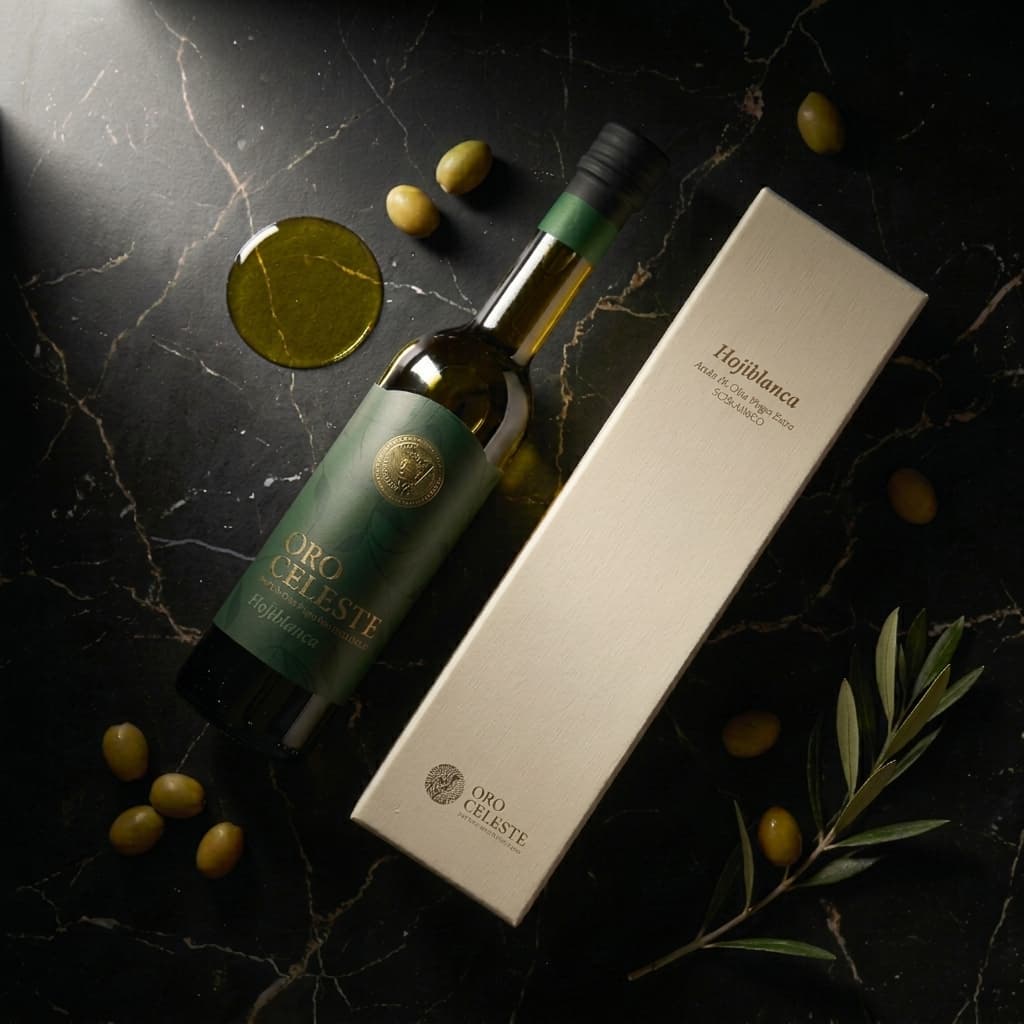
All three ORO CELESTE single-cultivar oils — Ojiblanca (0.16% acidity, 600+ mg/kg polyphenols), Sibarita (0.14% acidity, 500+ mg/kg polyphenols), and Picual (0.20% acidity, 800+ mg/kg polyphenols) — are bottled in deeply tinted glass. For Picual in particular, which carries the highest polyphenol load of the three, avoiding direct sunlight and overhead fluorescent exposure both before and after opening is recommended to preserve the quality achieved at harvest.
For storage location, a cabinet below the sink or a closed pantry shelf is preferable to an open kitchen counter. If the bottle must sit on a shelf, wrapping it in paper or cloth is reported to meaningfully slow photo-oxidation even without a dedicated dark container.
14–18 °C: The Logic Behind the Range
Temperature is directly linked to oxidation rate. The Arrhenius equation from chemical reaction kinetics shows that a 10 °C rise in temperature roughly doubles the rate of oxidative reactions. IOC quality-preservation guidelines specify 14–18 °C as the optimal storage range for EVOO, identifying this band as the point where the competing risks of oxidation and crystallization are best balanced.
What about the refrigerator? At 4–6 °C, olive oil turns cloudy or semi-solid as monounsaturated fatty acids — primarily oleic acid — crystallize. This is a natural, reversible phenomenon: clarity returns when the oil warms to room temperature and the change does not indicate quality degradation. However, repeatedly cycling oil between refrigerator cold and kitchen warmth can introduce condensation inside the bottle, and that moisture may promote microbial activity or hydrolysis — reasons why routine refrigeration tends not to be recommended in storage guidance.
In a typical kitchen, maintaining 14–18 °C in practice means keeping oil away from the stovetop, oven, and microwave, and in summer choosing a lower cabinet in an air-conditioned room rather than a shelf near a window.
Minimizing Headspace — the Simplest Way to Limit Oxygen Contact
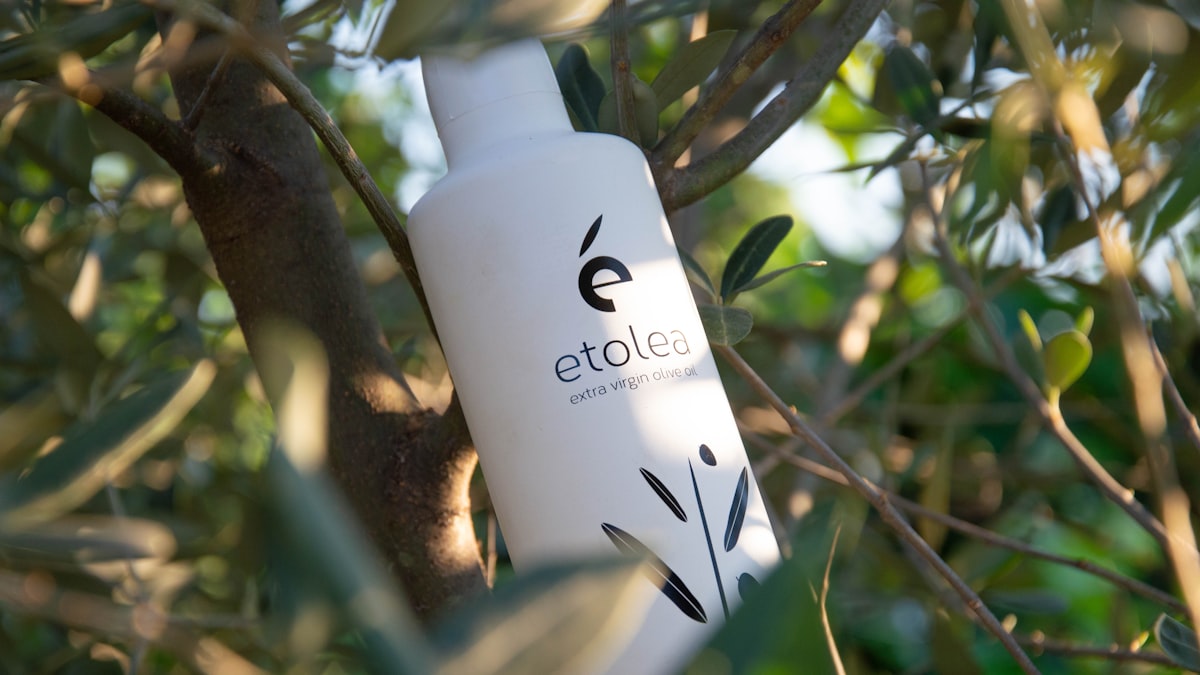
Headspace is the empty gap between the surface of the oil and the bottle's cap. Oxygen trapped in that space contacts the oil continuously and drives auto-oxidation. Research reported by the University of Córdoba found that, under otherwise identical conditions, a larger headspace corresponded with a faster rise in peroxide value after opening.
The practical solutions are straightforward. Decanting a large bottle into several smaller ones keeps each container nearly full and headspace minimal. Food-grade inert gas sprays — nitrogen or argon — are increasingly used at home to displace residual oxygen after each pour. Some dedicated EVOO enthusiasts have even used glass marbles placed in the bottle to raise the oil level, applying the same headspace-reduction logic.
Cultivars with high polyphenol content, such as ORO CELESTE Picual, have been reported to show relatively greater resistance to oxidation owing to their abundance of antioxidant compounds. That advantage, however, does not justify inattentive storage. Rapid consumption after opening, combined with active headspace management, is what keeps flavor and composition as close as possible to their state at harvest.
A Cultivar-by-Cultivar Storage Checklist
The three ORO CELESTE cultivars have distinct characteristics, and those differences carry slightly different storage priorities.
Ojiblanca (0.16% acidity, 600+ mg/kg polyphenols) is defined by delicate fruit aromas. The aldehydes responsible for that character are sensitive to both heat and light, making temperature control especially important. Consumption within approximately six weeks of opening is recommended.
Sibarita (0.14% acidity, 500+ mg/kg polyphenols) has the lowest acidity of the three, giving it a precise, balanced flavor profile. While lower acidity generally indicates more quality headroom, any oxidative shift may be more perceptible precisely because the starting profile is so finely tuned. Storing in small, nearly full containers is particularly effective for this cultivar.
Picual (0.20% acidity, 800+ mg/kg polyphenols) has been reported to have comparatively strong oxidative resistance, attributed to its exceptionally high polyphenol content. Even so, it is advisable not to exceed eight weeks after opening, and tasting periodically for the gradual softening of the characteristic peppery, grassy notes is a reliable way to monitor freshness in real time.
Storage Comes Down to Three Blocks
A dark bottle to block light, a 14–18 °C environment to slow reaction rates, and headspace management to limit oxygen exposure — these three principles rest on clear scientific evidence and can be put into practice at home without any additional expense. Choosing a high-quality extra virgin olive oil is only half the equation; keeping that quality intact through to the last drop depends equally on how the oil is stored.
Frequently asked questions
- What is the best temperature to store olive oil?
- According to IOC quality-preservation guidelines, the ideal storage range for extra virgin olive oil is 14–18 °C. At this range, oxidation is slowed without triggering the crystallization that occurs in a refrigerator. Keeping oil near a stove, oven, or sunny windowsill — where temperatures regularly exceed this band — is associated with faster quality loss.
- Does refrigerating olive oil damage it?
- Refrigeration (4–6 °C) causes olive oil to turn cloudy or semi-solid as monounsaturated fatty acids such as oleic acid crystallize — a natural, reversible process. Clarity returns at room temperature and quality is not directly harmed. However, repeatedly moving oil between refrigerator and warm kitchen can cause condensation inside the bottle, which may promote hydrolysis, so most storage guidance advises against routine refrigeration.
- Why does the color of the bottle matter for olive oil?
- Clear glass and plastic transmit UV and visible light, which converts chlorophyll into a photocatalyst that generates free radicals — a process known as photo-oxidation. A study by a research team at the University of Bologna found that EVOO stored in clear glass under fluorescent light lost polyphenols roughly 40% faster over 30 days than oil stored in dark glass. A dark bottle, or simply keeping the bottle away from direct light, is enough to suppress most photo-oxidation.
- What is headspace in an olive oil bottle, and why does it matter?
- Headspace is the empty air gap between the oil's surface and the bottle's cap. Oxygen trapped in that space reacts continuously with unsaturated fatty acids in a process called auto-oxidation. Research reported by the University of Córdoba found that a larger headspace correlates with a faster rise in peroxide value after opening. Practical countermeasures include decanting into smaller bottles so each one is nearly full, or displacing the remaining oxygen with a food-grade inert gas spray (nitrogen or argon).
- How long does an open bottle of extra virgin olive oil stay fresh?
- The answer depends on the cultivar and storage conditions. As a general guide, ORO CELESTE recommends consuming Ojiblanca (0.16% acidity, 600+ mg/kg polyphenols) within about six weeks of opening, and Picual (0.20% acidity, 800+ mg/kg polyphenols) within eight weeks. Picual has been reported to have relatively stronger oxidative resistance due to its high polyphenol content, but that advantage does not substitute for proper storage. Monitoring the peppery, grassy aroma over time is a practical way to track freshness.
Related reading
- Dark Glass Bottle or Aluminum Can: Which Container Actually Protects Your EVOO?
The container holding your extra virgin olive oil determines how much light, oxygen, and heat it absorbs from the moment it is filled to the moment it reaches your table. A close look at the science behind dark glass and aluminum cans.
- Heat, Smoke, and Polar Compounds: The Chemistry of Cooking with Olive Oil
Heating olive oil triggers a cascade of hydrolysis, oxidation, and polymerization reactions that accelerate past the smoke point. This guide traces the science of polar compound formation and explains why high-polyphenol EVOO tends to hold up better under heat.
- Light, Heat, Time: The Three Forces Draining Your EVOO's Flavor
Extra virgin olive oil's polyphenols and aroma compounds degrade faster than most cooks realize, driven by light exposure, temperature, and time. Here is what the research says about keeping them intact at home.
- Extra Virgin Olive Oils Under 0.2% Acidity: A Guide by Origin
The IOC sets the acidity ceiling for extra virgin olive oil at 0.8%, but narrowing the field to 0.2% and below opens a noticeably different tier of freshness, flavor clarity, and heat stability. Here is how the leading low-acidity lines stack up by origin.
- Does Olive Oil You Eat Reach Your Skin? A Clinical Research Roundup
A growing body of clinical research is examining whether regular dietary intake of olive oil is associated with measurable changes in skin hydration and elasticity. This guide summarizes the current evidence, its limits, and how the findings sit within the broader context of Mediterranean eating patterns.
- Senescent Cells, Senolytics, and the Question of Olive Oil Polyphenols
The senolytic diet hypothesis has drawn attention to plant polyphenols as potential allies against aging cells. This guide maps where extra virgin olive oil's oleocanthal and related phenolic compounds currently sit in that research — and what the evidence cannot yet support.