Guides
Your EVOO Survived the Delivery Truck — Now What? A Summer Storage Guide
When outdoor temperatures climb above 30 °C, the inside of a delivery vehicle can reach conditions that degrade olive oil faster than most buyers realize. This guide walks through the science of heat, light, and oxygen damage — and what to do the moment your bottle arrives.
Translated from the Korean edition, originally published July 3, 2026 · read the original

How Hot Does It Really Get Inside a Delivery Box?
It is well established that the trunk of a car parked in direct summer sunlight can reach 60–80 °C. According to data published by South Korea's Traffic Safety Authority (under the Ministry of Land, Infrastructure and Transport), a sealed vehicle interior can exceed 60 °C within 30 minutes when the outside air temperature is 35 °C. The cargo areas of delivery trucks — with air conditioning off — face comparable conditions. Corrugated cardboard provides some insulation, but the cumulative heat stress over a long-distance journey is considerable.
The two defining quality indicators for olive oil are acidity (free fatty acid content) and polyphenol concentration. Under International Olive Council (IOC) standards, extra virgin grade requires acidity no higher than 0.8%. The problem is that elevated temperatures accelerate hydrolysis reactions, generating additional free fatty acids and pushing acidity upward. Researchers at the University of Córdoba reported that extra virgin olive oil held above 40 °C for more than two weeks showed polyphenol concentrations reduced by up to 30%. Because polyphenols serve as the oil's internal antioxidant defense, that reduction accelerates quality decline for the remainder of the oil's life.

Three Factors That Degrade EVOO in Transit
Heat is the most direct driver of accelerated oxidation. According to the Arrhenius equation — a foundational principle of chemical reaction kinetics — reaction rate roughly doubles for every 10 °C rise in temperature. This means olive oil sitting in a 45 °C cargo hold may oxidize approximately four times faster than oil held at 25 °C.
Light promotes photo-oxidation. Pigments such as chlorophyll absorb light energy and generate reactive oxygen species that attack fatty acid chains. Clear PET or glass bottles are particularly vulnerable. The IOC packaging guidelines recommend opaque containers, noting that dark-tinted glass and tin cans are effective at blocking light.
Oxygen is already present in the headspace at the neck of an unopened bottle. During delivery, repeated vibration and temperature fluctuations cause pressure changes inside the bottle that can gradually loosen cap seals, increasing the risk of oxygen ingress. Products packaged under nitrogen flush have an advantage here.
A Checklist for the Moment Your Order Arrives
Quality management begins the instant the package is in your hands. Work through these steps in order to catch problems early.
First, inspect the container. Look for dents, signs of leakage, or cap deformation. On metal tins in particular, bulging or concave dents can indicate abnormal internal pressure.
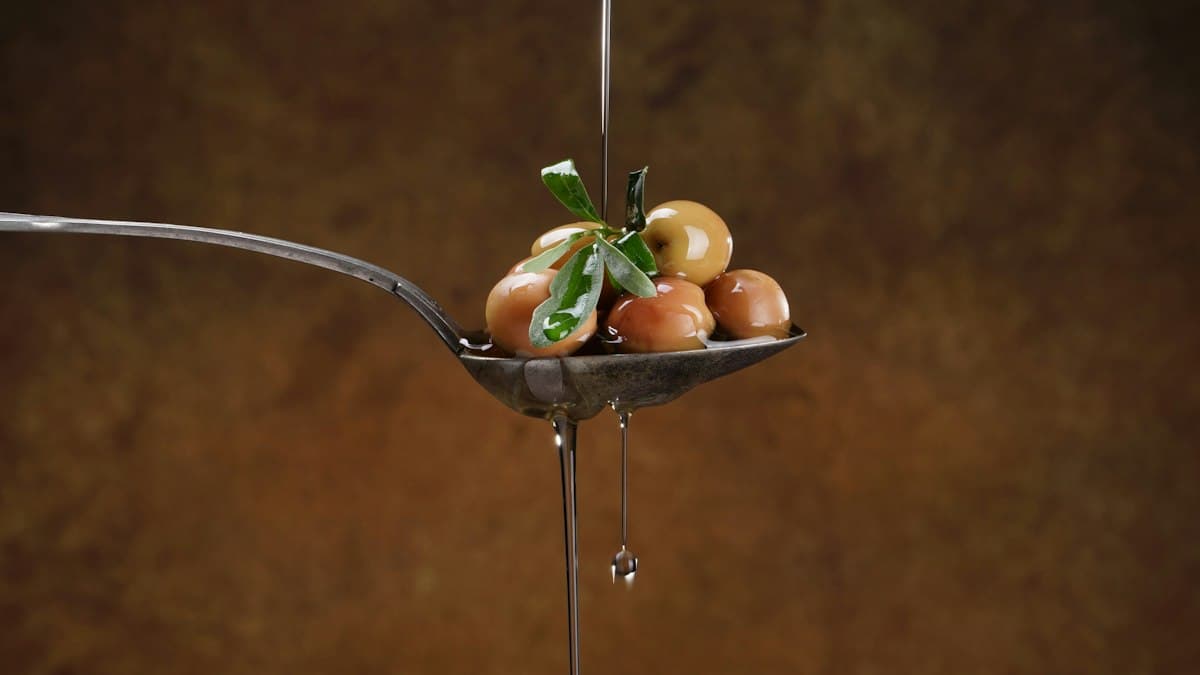
Second, check color and clarity. Fresh extra virgin olive oil ranges from golden yellow to pale green and flows clearly when swirled. A pronounced brown cast or unusually heavy cloudiness may indicate heat damage or oxidation.
Third, smell before you pour. Fresh EVOO should suggest green apple, artichoke, or black pepper. If you detect crayon, old walnuts, or a stale, musty note, aldehyde compounds associated with rancidity may already be present.
Fourth, taste for the hallmark sensations. The peppery finish at the back of the throat (pungency) and the bitter note on the palate are signs that polyphenols are intact. If both are absent and the oil tastes flat or simply greasy, its key aromatic compounds have likely already volatilized or oxidized.
The Core Principles of Home Storage
Ideal conditions for storing olive oil are 14–18 °C, shielded from direct light, and kept tightly sealed. Refrigeration below 14 °C causes wax compounds to solidify, turning the oil hazy — a purely physical change that reverses once the bottle returns to room temperature. The real concern with refrigeration is repeatedly cycling between cold and ambient temperatures, which can introduce condensation moisture into the bottle; a consistent temperature is preferable.
A consumer survey on cooking-oil storage habits published by the Korea Consumer Agency found that roughly 40% of households store olive oil next to the stovetop or on a windowsill — both among the worst possible locations, given constant exposure to heat and light. A cabinet under the sink or the interior of a pantry, where temperatures stay cool and stable, is far more suitable.
After opening, re-capping immediately after each use is one of the simplest ways to limit air contact. For large-format containers (3–5 L), decanting only what you need for a few days into a smaller opaque or dark-glass vessel slows oxidation in the main supply. Any small decanting bottle should be made of light-blocking glass or stainless steel.
Packaging and Delivery Conditions Worth Looking for in Summer
There are practical steps buyers can take before an order is even placed. Choosing a retailer that offers early-morning or overnight delivery avoids the midday hours when vehicle cargo areas heat up most severely. Selecting a seller that ships with ice packs and insulated packaging — or requesting it explicitly — also helps; data reported by multiple packaging material suppliers suggests a single ice pack can lower the internal temperature of a shipping box by 5–10 °C.
Where the parcel ends up waiting matters too. Shared-building parcel lockers installed in direct sunlight can reach internal temperatures above 50 °C in summer. Arranging doorstep delivery or having parcels held at a staffed reception desk is the safer option when possible.
Finally, consider timing your purchase to sidestep summer shipping risk altogether. Fresh-harvest extra virgin olive oil from southern Spain is typically produced between November and January. Buying during or shortly after that window and storing the oil in a cool, dark location means you build up a supply before the high-heat months arrive. The IOC recommends consuming extra virgin olive oil within 18–24 months of production, but actual flavor retention depends heavily on how the oil has been stored — unopened or not.
Frequently asked questions
- How hot does it get inside a delivery box in summer?
- According to data from South Korea's Traffic Safety Authority, the interior of a sealed vehicle can exceed 60 °C within 30 minutes when the outside temperature is 35 °C. Cargo areas of delivery trucks face similar conditions, and while corrugated cardboard provides some insulation, cumulative heat stress over a long-distance journey can be substantial.
- Does heat actually change the polyphenol count in olive oil?
- Yes. Researchers at the University of Córdoba reported that extra virgin olive oil exposed to temperatures above 40 °C for more than two weeks showed polyphenol concentrations reduced by up to 30%. Because polyphenols act as an internal antioxidant barrier, that loss accelerates further quality decline throughout the rest of the oil's shelf life.
- How can I tell if my olive oil was damaged in transit?
- Check four things immediately: look for dents, leaks, or cap deformation on the container; inspect the color (golden to light green is normal — pronounced brown or excessive cloudiness may suggest heat damage or oxidation); smell for freshness (fresh EVOO should evoke green apple, artichoke, or pepper, not crayon, old walnuts, or mustiness); and taste for the characteristic peppery and bitter finish that signals active polyphenols.
- Should I refrigerate olive oil in summer?
- Refrigeration is not harmful, but it comes with a trade-off. Below 14 °C, wax compounds naturally present in olive oil solidify and turn the oil cloudy — a purely physical change that reverses at room temperature. The bigger risk is repeatedly cycling the oil between cold and warm environments, which can introduce condensation moisture. A consistently cool, dark cupboard at 14–18 °C is generally the most practical solution.
- What is the best time of year to order high-quality EVOO to avoid summer shipping risks?
- Fresh-harvest extra virgin olive oil from southern Spain is typically produced between November and January. Buying during or shortly after that window and storing it in a cool, dark location means you can avoid the high-risk summer shipping period altogether. According to IOC recommendations, unopened EVOO has a shelf life of 18–24 months from production, though actual flavor retention depends heavily on storage conditions.
Related reading
- Light, Heat, Time: The Three Forces Draining Your EVOO's Flavor
Extra virgin olive oil's polyphenols and aroma compounds degrade faster than most cooks realize, driven by light exposure, temperature, and time. Here is what the research says about keeping them intact at home.
- Dark Glass Bottle or Aluminum Can: Which Container Actually Protects Your EVOO?
The container holding your extra virgin olive oil determines how much light, oxygen, and heat it absorbs from the moment it is filled to the moment it reaches your table. A close look at the science behind dark glass and aluminum cans.
- Dark Bottle, 14–18 °C, Minimal Headspace: The Science Behind Storing EVOO Right
Light, heat, and oxygen are the three forces that degrade extra virgin olive oil from the moment it leaves the mill. ORO CELESTE's storage recommendations address each one with a clear scientific rationale.
- Dietary Fat, Magnesium, and the Mediterranean Table: What the Research Shows So Far
Evidence is accumulating that the type of dietary fat consumed alongside magnesium-rich foods may influence how well that mineral is absorbed. This guide surveys current research on olive oil, fatty acid composition, and mineral metabolism.
- Beyond BMI: Dietary Fat Quality, Olive Oil, and Metabolic Health Research
Two people can share the same BMI and yet show markedly different blood lipid profiles, insulin sensitivity, and visceral fat distribution. A growing body of clinical research suggests that the type of fat consumed — not just total calories — may be a meaningful variable in metabolic health.
- Heat, Smoke, and Polar Compounds: The Chemistry of Cooking with Olive Oil
Heating olive oil triggers a cascade of hydrolysis, oxidation, and polymerization reactions that accelerate past the smoke point. This guide traces the science of polar compound formation and explains why high-polyphenol EVOO tends to hold up better under heat.
Tags
- storage
- extra virgin olive oil
- quality
- summer
- delivery