Guides
Arbequina: From Catalonia to Andalusia's Super-High-Density Groves
The most common single-cultivar extra virgin olive oil on global shelves did not originate in Andalusia. This guide traces Arbequina from its Catalan home village to the intensive groves that now define its commercial reach.
Translated from the Korean edition, originally published May 22, 2024 · read the original
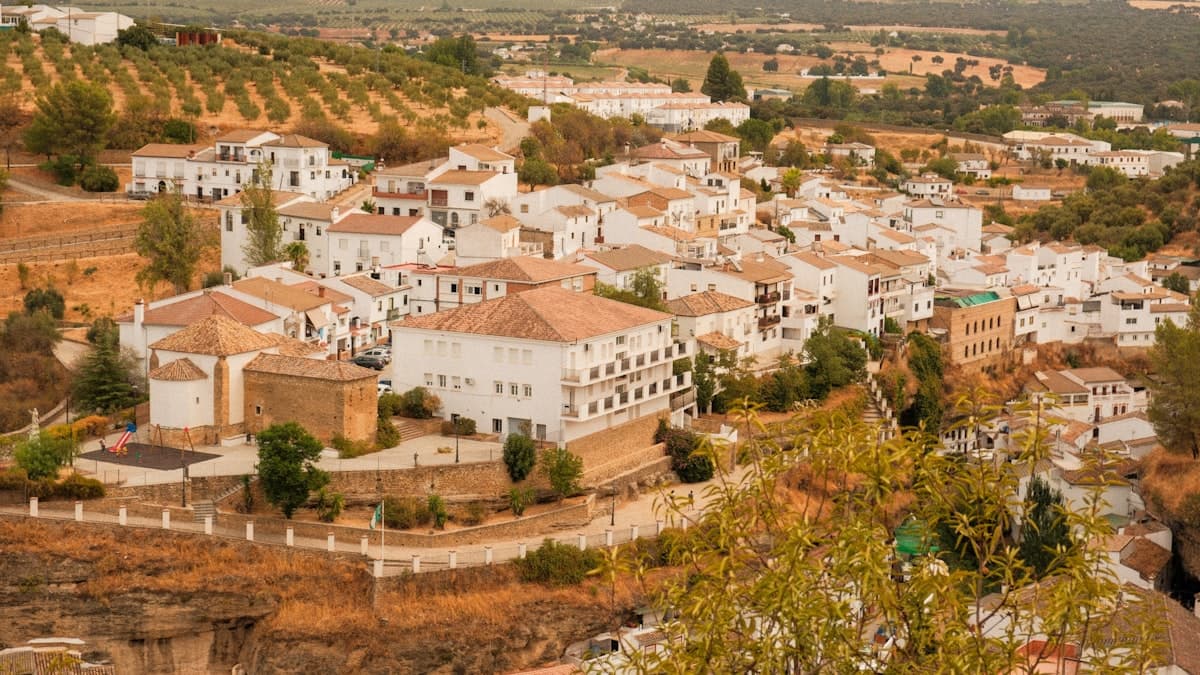
Nearly half of Spain's extra virgin olive oil production comes from Andalusia, yet the single cultivar that appears most often on international shelves did not originate there. It comes from southern Catalonia. This guide traces Arbequina from its home village to the intensive groves that have turned it into the world's most commercially ubiquitous single-variety EVOO.
Catalonia — the Cultivar's Home
The name Arbequina derives from Arbeca, a village in the Tarragona province of southern Catalonia. The cultivar became established there around the 18th century, and the region is still home to more than 55,000 hectares of Arbequina plantings. Catalonia's two flagship protected designations — DOP Siurana and DOP Les Garrigues — both designate Arbequina as their foundational cultivar, anchoring it firmly to the region's identity.
Expansion into Andalusia's Intensive Groves
What happened next is where the story becomes commercially significant. Arbequina did not stay in Catalonia. It expanded rapidly into Andalusia's intensive and super-high-density (SHD) farming systems. According to data from the International Olive Council (IOC), more than 20,000 new hectares were reported planted in Andalusia alone. The agronomic reasons are straightforward: Arbequina trees are compact, begin fruiting just three to four years after planting, and tolerate planting densities of 1,500 to 2,000 trees per hectare — the figures that make SHD harvesting by straddle machine economically viable at scale.
Flavor Profile
Among Spain's three principal cultivars, Arbequina occupies the mildest position. It is known for sweet, fruit-forward aromas — green apple, banana, and almond are the most commonly cited notes — with only a gentle peppery finish and low bitterness. Its color tends toward a pale yellow-green. Placed alongside Picual's pronounced bitter intensity or Ojiblanca's vivid green and herbaceous character, Arbequina reads as distinctly approachable.
The Most Common Cultivar on Global EVOO Shelves
The convergence of large-scale intensive farming, a mild and widely appealing flavor profile, and rapid production cycles has made Arbequina the most frequently encountered single-variety EVOO in international retail. A significant share of the Spanish EVOO labels positioned as entry-level choices — in markets from North America to East Asia — are either 100% Arbequina or Arbequina-dominant blends.
It is worth noting that Arbequina sits on the lower end of the polyphenol spectrum. For cooks who want a finishing drizzle with a bold, peppery punch and higher polyphenol concentration, keeping a bottle of Picual or Coratina alongside is a practical complement.
On the label, look for '100% Arbequina' or a declaration naming Arbequina as the lead cultivar, then check whether the stated origin is Catalonia or Andalusia. That single detail gives a reliable starting point for anticipating the oil's flavor and the farming system behind it.
Frequently asked questions
- Where does Arbequina olive oil originally come from?
- Arbequina takes its name from the village of Arbeca in the Tarragona province of southern Catalonia, Spain, where it became established around the 18th century. Two protected designations of origin — DOP Siurana and DOP Les Garrigues — both designate Arbequina as their base cultivar.
- Why is Arbequina so common in supermarkets?
- Arbequina trees are compact, begin bearing fruit just three to four years after planting, and can be planted at densities of 1,500 to 2,000 trees per hectare in super-high-density (SHD) systems. According to the International Olive Council (IOC), more than 20,000 new hectares were reported planted in Andalusia alone, making large-scale, cost-efficient production straightforward. Its mild, approachable flavor also makes it a natural entry point for first-time EVOO buyers.
- What does Arbequina olive oil taste like?
- Arbequina is generally considered the mildest of Spain's three major cultivars. It is characterized by notes of green apple, banana, and almond, with only gentle bitterness and peppery finish. Its color tends toward a pale yellow-green. Compared with Picual's pronounced bitterness or Ojiblanca's vivid green character, Arbequina is noticeably softer.
- How does Arbequina compare to Picual in polyphenol content?
- Arbequina is on the lower end of the polyphenol spectrum relative to cultivars such as Picual or Coratina. For finishing drizzles where a robust, peppery kick and higher polyphenol concentration are priorities, those cultivars are generally better suited. Arbequina excels where a lighter, fruitier character is preferred.
- How can I tell on the label whether an Arbequina oil is from Catalonia or Andalusia?
- Look for '100% Arbequina' or a declaration naming Arbequina as the primary cultivar, then check the origin statement. Catalan oils may carry DOP Siurana or DOP Les Garrigues certification. Andalusian oils will indicate a southern Spanish region of origin. The region gives a useful starting point for anticipating flavor profile and farming system.
Related reading
- Andalusia: How One Region Came to Produce a Third of the World's Olive Oil
From Phoenician traders to single-estate pressing, Spain's Andalusia has held its place at the center of global olive oil production for more than a thousand years. A look at the history behind the world's largest EVOO-producing region.
- Koroneiki: The Cultivar Behind More Than Half of All Greek EVOO
One cultivar accounts for the majority of Greece's extra virgin olive oil output. Here is why Koroneiki became the country's industry standard — and what to look for on the label.
- Spain, Italy, Greece: How the Three EVOO Heartlands Taste Different
Spain, Italy, and Greece together account for more than 80 percent of the world's extra virgin olive oil, according to the International Olive Council — yet the flavors they produce could hardly be more distinct.
- Tunisia's Olive Oil Is No Longer Just a Bulk Story
Tunisia has reclaimed its position as the world's second-largest EVOO producer and is steadily expanding single-cultivar labelling — a shift that is reframing a country long associated with anonymous bulk supply.
- Italy's Four EVOO Regions: Why the Label Needs to Say More Than 'Product of Italy'
A bottle labeled simply 'Product of Italy' tells you almost nothing about flavor. Here is a region-by-region guide to the four Italian areas—Tuscany, Puglia, Sicily, and Liguria—whose cultivars and sensory profiles could not be more different.
- California and Australia: The New-World EVOO Producers Now Setting Their Own Standards
In roughly thirty years, California and Australia have built industrialized EVOO sectors complete with their own certification bodies. A look at what COOC and AOOA seals mean, and why Cobram Estate now presses about 65 percent of Australia's annual crop.
Tags