Guides
Tunisia's Olive Oil Is No Longer Just a Bulk Story
Tunisia has reclaimed its position as the world's second-largest EVOO producer and is steadily expanding single-cultivar labelling — a shift that is reframing a country long associated with anonymous bulk supply.
Translated from the Korean edition, originally published July 15, 2024 · read the original
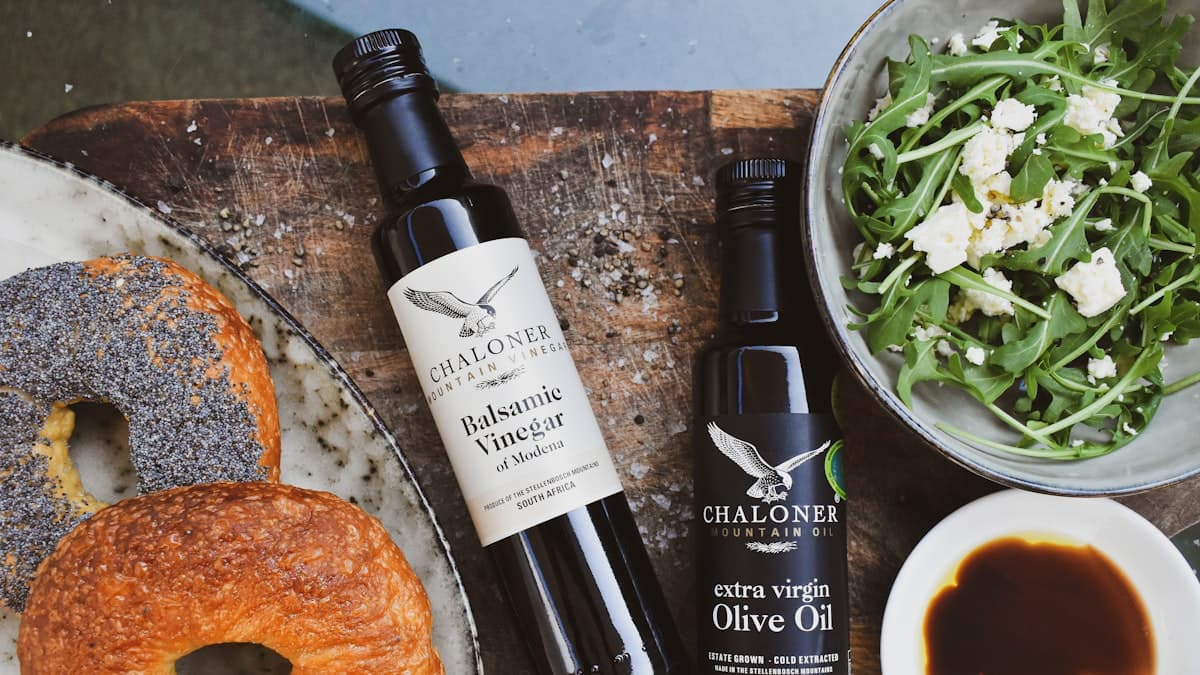
Tunisia was, for a long time, a quiet name in the olive oil aisle. Bottles carrying its name were never entirely absent, but a persistent association with anonymous North African bulk oil — much of it re-labelled under Italian or Spanish origins before reaching retail — made the country easy to overlook. Evidence accumulated over the past five years suggests that picture deserves a second look.
Reclaiming the Number-Two Spot
Figures from the International Olive Council (IOC) and Tunisia's National Olive Oil Office (ONH) point to a clear trajectory. In the 2024/25 season, Tunisian production reached approximately 288,000 tonnes — a 41 percent increase on the previous year. Subsequent seasons have seen output recover to around 340,000 tonnes, re-establishing Tunisia as the world's second-largest olive oil producer. Some forecasts for the 2025/26 season place potential output as high as 500,000 tonnes; if confirmed, researchers note that would represent a record harvest for the country.
Export performance has moved in step. According to ONH figures, exports in the 2024/25 season totalled roughly 300,000 tonnes, of which approximately 77.7 percent cleared customs as extra virgin grade. The shift in composition — from bulk-dominated to grade-certified — is widely read as a structural change rather than a seasonal fluctuation.
A New Record in International Competition
For retail buyers, one of the more tangible signals of quality comes from blind tasting competitions. At the 2024 NYIOOC World Olive Oil Competition — widely cited as the largest EVOO contest of its kind — Tunisian producers received 26 medals, a result consistent with the 2023/24 harvest being a strong recovery season. The 2025 edition told a more complicated story: drought and heat events across North Africa meant Tunisia, Morocco and Egypt combined accounted for just 16 medals, a reminder that production quality in this region remains sensitive to climate variability.
Chetoui and Chemlali: Tunisia's Two Native Cultivars
Two names appear most frequently when Tunisian EVOO is discussed at a cultivar level. Chetoui is grown primarily in the north, harvested relatively early in the campaign, and is associated with higher polyphenol content and a clearly bitter, pungent sensory profile. Chemlali is cultivated across the central and southern regions; it typically produces a softer, rounder oil and accounts for the largest share of Tunisia's total olive-growing area. The appearance of monovarietal labels — bottles that name one of these cultivars as the sole variety — is broadly regarded as the starting point of Tunisia's repositioning as a quality-defined origin rather than a volume supplier.
What to Look For on the Label
Single-cultivar Tunisian EVOOs are still uncommon on mainstream shelves in many markets, though analysts expect their share to grow from the next season onward. When evaluating a bottle, the most useful label details are the cultivar declaration (Chetoui or Chemlali, stated as monovarietal) and the harvest or pressing date. Tunisia's pressing campaign typically runs from late October through January, so a dated bottle gives a reliable gauge of freshness.
The broader geography of EVOO is already more complex than the Spain–Italy–Greece triangle most buyers encounter first — as explored in OLEA's earlier guide to Spanish, Italian and Greek EVOO. A North African coordinate is quietly being added to that map.
Five years on, Tunisia is too visible to be called a hidden origin any longer. The recovery of its world number-two ranking, a double-digit medal count at the NYIOOC, and the proliferation of monovarietal labels have arrived at roughly the same moment. If a bottle with the word Chetoui on it appears on a shelf near you, it is a small but concrete marker of that larger shift.
Frequently asked questions
- Is Tunisian olive oil good quality?
- Tunisia's EVOO quality has improved markedly in recent years. According to IOC and ONH data, around 77.7% of Tunisia's 2024/25 export volume was certified extra virgin grade, and Tunisian producers took 26 medals at the 2024 NYIOOC — one of the world's largest olive oil competitions.
- What are Chetoui and Chemlali olive oils?
- Chetoui and Chemlali are Tunisia's two most prominent native cultivars. Chetoui is grown in the north, tends toward early harvest, and produces oils with higher polyphenols and a pronounced bitter-pungent profile. Chemlali dominates the central and southern regions and typically yields a softer, rounder oil. It covers the largest share of Tunisia's total olive-growing area.
- Why was Tunisian olive oil associated with bulk supply?
- For many years, the majority of Tunisia's olive oil was exported in bulk and often re-labelled under other countries' origins — most notably Italy — before reaching retail shelves. The recent shift toward grade-certified export and single-cultivar labelling represents a departure from that model.
- When is Tunisian olive oil harvested and pressed?
- Tunisia's pressing campaign typically runs from late October through January. When buying, look for a harvest or pressing date on the label to gauge freshness.
- Where can I buy single-cultivar Tunisian EVOO?
- Single-cultivar Tunisian EVOOs — labelled Chetoui or Chemlali — are still relatively uncommon on retail shelves outside Europe, but availability is expected to grow as more producers adopt origin and variety labelling. Specialty food importers and online EVOO retailers are currently the most reliable source.
Related reading
- Spain, Italy, Greece: How the Three EVOO Heartlands Taste Different
Spain, Italy, and Greece together account for more than 80 percent of the world's extra virgin olive oil, according to the International Olive Council — yet the flavors they produce could hardly be more distinct.
- Italy's Four EVOO Regions: Why the Label Needs to Say More Than 'Product of Italy'
A bottle labeled simply 'Product of Italy' tells you almost nothing about flavor. Here is a region-by-region guide to the four Italian areas—Tuscany, Puglia, Sicily, and Liguria—whose cultivars and sensory profiles could not be more different.
- Koroneiki: The Cultivar Behind More Than Half of All Greek EVOO
One cultivar accounts for the majority of Greece's extra virgin olive oil output. Here is why Koroneiki became the country's industry standard — and what to look for on the label.
- Andalusia: How One Region Came to Produce a Third of the World's Olive Oil
From Phoenician traders to single-estate pressing, Spain's Andalusia has held its place at the center of global olive oil production for more than a thousand years. A look at the history behind the world's largest EVOO-producing region.
- California and Australia: The New-World EVOO Producers Now Setting Their Own Standards
In roughly thirty years, California and Australia have built industrialized EVOO sectors complete with their own certification bodies. A look at what COOC and AOOA seals mean, and why Cobram Estate now presses about 65 percent of Australia's annual crop.
- Arbequina: From Catalonia to Andalusia's Super-High-Density Groves
The most common single-cultivar extra virgin olive oil on global shelves did not originate in Andalusia. This guide traces Arbequina from its Catalan home village to the intensive groves that now define its commercial reach.