Guides
Expiry Date, Best Before, Harvest Year: Three Numbers That Tell the Full Story
Two dates printed on an olive oil label carry very different messages — and neither one alone tells you whether what's in the bottle is still worth using. Understanding the difference is the first step toward getting every drop right.
Translated from the Korean edition, originally published September 9, 2026 · read the original
Two Dates on the Back of the Bottle — Why the Confusion Is Understandable
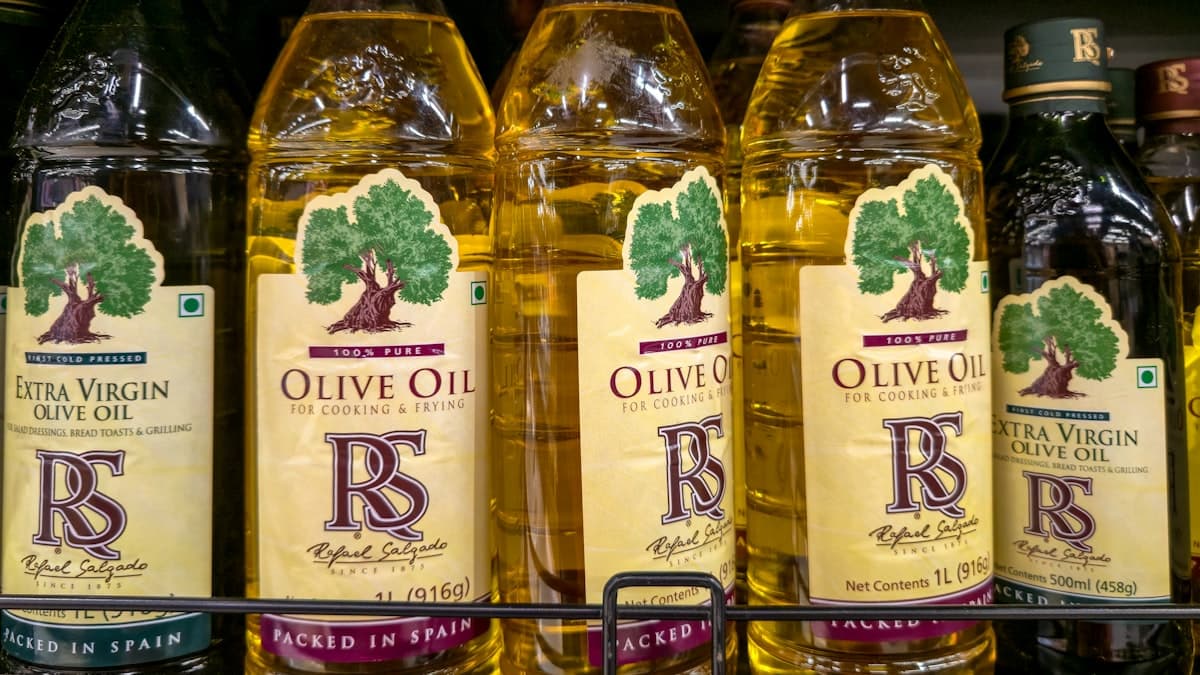
Pick up an olive oil bottle and read the label carefully and you may find two different date markings. One is the expiration date — a legally mandated cut-off that defines how long a product may be sold. The other, common on imported bottles, is the best before date: a producer's recommendation for the window during which the oil's flavour, aroma, colour and quality characteristics are at their fullest.
The two marks look similar but send fundamentally different messages. The expiration date is a legal safety line — products cannot be sold once it passes. The best before date is a quality promise — a signal that says "drink this while it's at its best." Conflating the two leads to real-world problems: people discard perfectly usable oil because a date has passed, or assume an oil is fine simply because it is still technically within its legal sell-by window.
For olive oil — and for extra virgin olive oil in particular — the gap between these two dates has a direct effect on what ends up in the glass. Because olive oil is sensitive to the chemical process of rancidity, making decisions based on dates alone, without understanding what each one means, can result in unnecessary waste or quiet disappointment at the table.
The Quality Clock on Extra Virgin Olive Oil
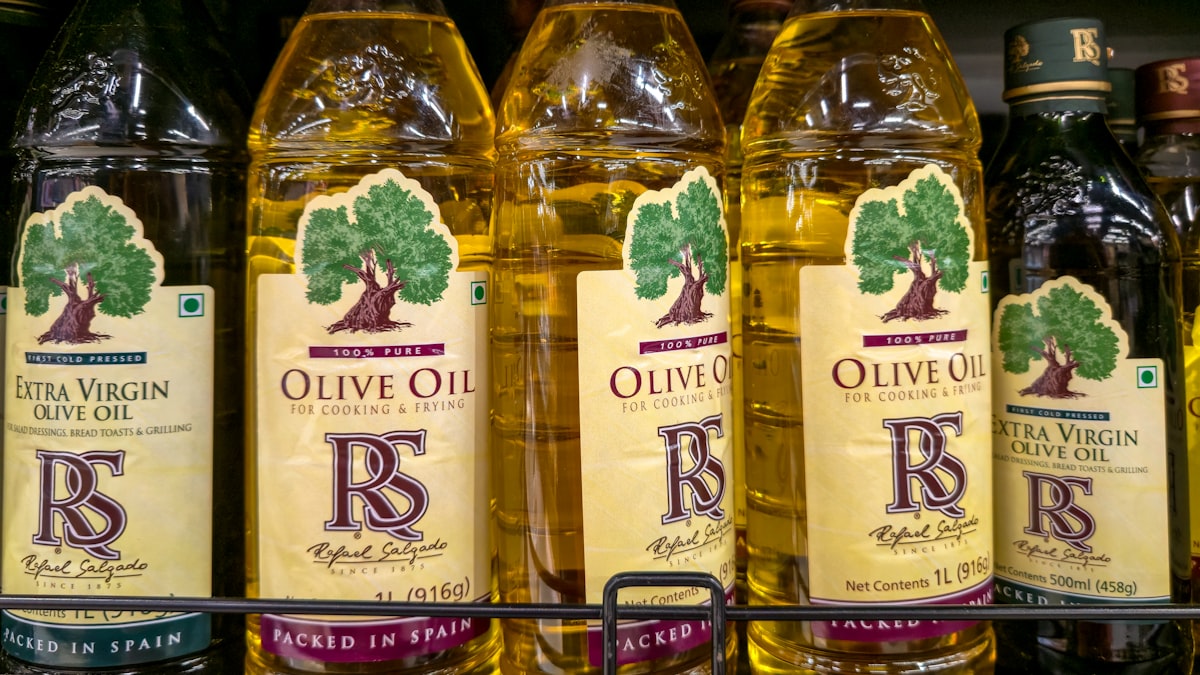
Extra virgin olive oil (EVOO) begins to change from the moment the olives are pressed. According to the International Olive Council (IOC), the extra virgin grade requires a free acidity of no more than 0.8% and a peroxide value no higher than 20 meq O₂/kg. Once either threshold is exceeded, the oil can no longer be labelled extra virgin.
This is why producers typically set their best before date at 18 to 24 months from bottling. Data from the IOC and related research institutions indicate that properly stored extra virgin olive oil shows a measurable decline in flavour characteristics after roughly 18 to 24 months from the bottling date. That decline is not a safety alert: the bitterness fades, the peppery finish softens, the aroma grows quieter — but in most cases, experts agree, the oil presents no food-safety concern.
It is also worth noting that quality standards and best before windows are set on the assumption that the bottle is still sealed. The moment a bottle is opened, the quality clock begins running considerably faster.
Three Reasons Quality Falls Faster After Opening
The three factors that degrade olive oil most quickly are oxygen, heat and light — each damaging on its own, and more destructive in combination.
First, oxygen reacts with the monounsaturated fatty acids in olive oil and drives rancidity. Every time a bottle is opened, air enters the headspace; as the oil level drops with use, the proportion of air inside grows. Research published by a team at the University of Bologna reported that olive oil exposed to light and oxygen after opening oxidised at a significantly faster rate than oil kept sealed under the same conditions.
Second, heat acts as a catalyst for oxidation. Storing a bottle next to a gas hob or on a sunlit windowsill accelerates quality loss regardless of what either date on the label says. The ideal storage temperature is generally cited as between 14 °C and 18 °C.
Third, light — ultraviolet light in particular — breaks down chlorophyll compounds, altering the oil's colour and flavour. This is why quality-focused producers choose dark glass or opaque tin packaging as a matter of course.
Control these three variables and an opened bottle can stay close to its best for a meaningful stretch of time. Experts generally recommend finishing an opened bottle within 30 to 60 days to enjoy the oil's flavour at its most complete.
How to Actually Read the Label — Add the Harvest Year
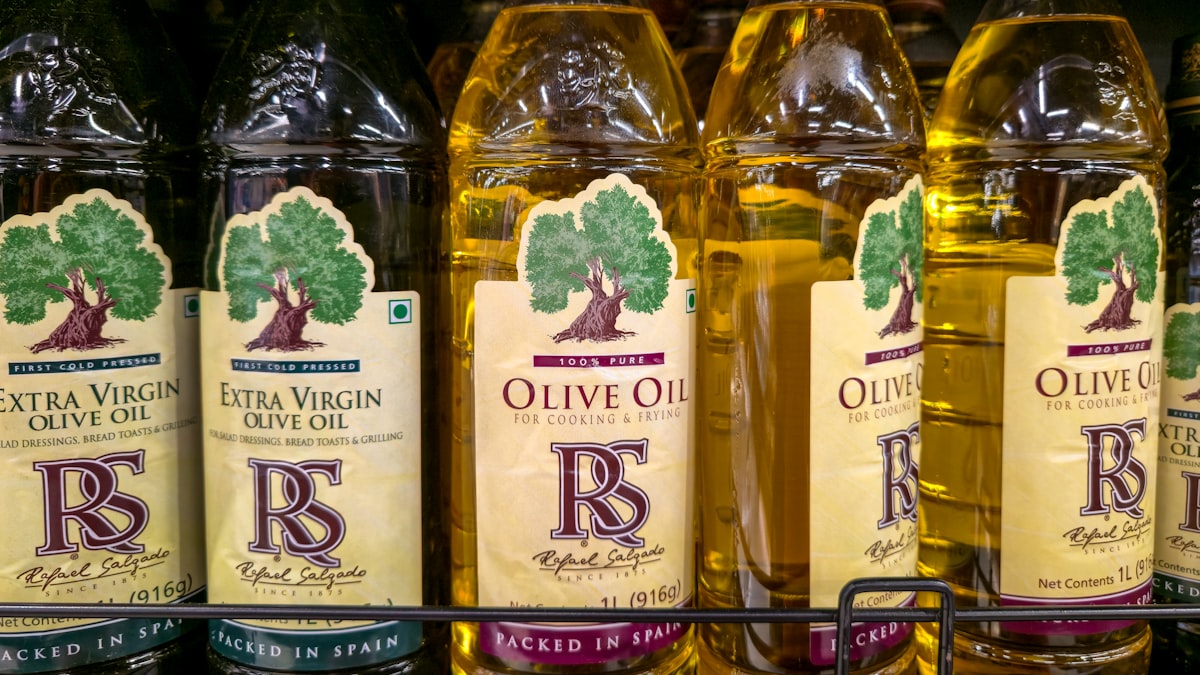
There is a third piece of information on many labels that matters as much as either date: the harvest year (sometimes labelled "crop year"). A best before date of March 2026 sounds reassuring until you notice the harvest year is 2022 — meaning the oil has already been sitting for three years or more. Conversely, a best before of December 2025 paired with an autumn 2024 harvest means the oil is still genuinely fresh.
Quality-focused producers often include the harvest year voluntarily, and developing the habit of checking it gives a more reliable read on actual freshness than either printed date on its own. The IOC emphasises that milling the olives as quickly as possible after harvest, and bottling promptly after milling, are critical steps in preserving quality.
If a bottle carries no harvest year, it is possible to estimate the bottling date by working backwards from the best before date. A producer using an 18-month shelf life: subtract 18 months from the best before date for a rough bottling estimate. A producer using 24 months: subtract 24 months. It is an approximation, but a useful one when harvest year information is absent.
A Practical Checklist for Buying and Storing
Putting the above together into actionable habits — both at the point of purchase and once the bottle is home.
At the point of purchase: Choose a bottle with at least six months remaining on the best before date. Where possible, check the harvest year and confirm the oil is from a recent crop. Dark glass or opaque packaging is preferable; it limits light-driven oxidation before the bottle even reaches your kitchen.
During storage: Keep the bottle in a cool, dark spot away from direct sunlight and heat sources such as stovetops and ovens. Seal the cap tightly after every use. Opting for smaller bottles that you can finish in a shorter time is one of the most practical ways to limit oxidation after opening — a large bottle that sits half-empty for months will deteriorate faster than a series of smaller ones used in rotation.
If a date has passed: An oil past its best before date is not automatically the same as an unsafe oil. The best approach is to assess it directly — smell it and taste a small amount. An unpleasant crayon-like, musty or heavy rancid odour, or a noticeably cloudy, dull appearance accompanied by a stale smell, are signals to discard rather than use. An oil that smells flat but not offensive has simply lost its freshness; it is no longer ideal as a finishing or dressing oil, but can reasonably be used for moderate-heat cooking while it lasts.
The two dates are complementary pieces of information, not competing ones. The expiration date is a legal safety framework; the best before date is the producer's quality commitment to the consumer. Reading both carefully — and adding the harvest year whenever it is available — is the most reliable way to enjoy a bottle of olive oil at its best from the first pour to the last.
Frequently asked questions
- What is the difference between an expiry date and a best before date on olive oil?
- An expiry date (or expiration date) is a legal sales cut-off: retailers cannot sell the product after that point. A best before date is the producer's quality recommendation — the window during which the oil's flavour, aroma and nutritional character are at their best. Passing the best before date does not automatically make the oil unsafe; it signals that quality may have declined.
- How long does extra virgin olive oil stay good after opening?
- Once a bottle is opened, oxygen enters and the oxidation clock accelerates. Experts generally recommend consuming opened extra virgin olive oil within 30 to 60 days for the best flavour. Keeping the cap tightly sealed, storing the bottle away from heat and light, and choosing smaller bottles you can finish quickly are the most practical ways to slow deterioration.
- Can I still use olive oil after the best before date has passed?
- Passing the best before date does not equal an immediate safety risk in most cases — it means the oil's freshness and distinctive character have likely faded. Check the oil yourself: a crayon-like, musty or heavy rancid smell, or a noticeably dull appearance, are signs it should be discarded. Oil that smells flat but not offensive can still be used for cooking at moderate heat, though it is no longer suitable as a finishing or dressing oil.
- Why does the harvest year matter more than the best before date?
- The best before date tells you when quality is expected to peak out, but not when the olives were actually picked. A bottle stamped 'best before March 2026' could reflect a 2022 harvest — meaning the oil is already three-plus years old — or a 2024 harvest, meaning it is still genuinely fresh. Reading the harvest year gives you a far more accurate picture of the oil's actual age than either printed date alone.
- What is the ideal way to store olive oil at home?
- According to producers and quality guides, the ideal storage temperature for olive oil is between 14 °C and 18 °C. The bottle should be kept away from direct sunlight, stovetops and ovens. Dark glass or opaque tin packaging helps because UV light degrades chlorophyll and accelerates flavour loss. After each use, seal the cap firmly to limit oxygen exposure.
Related reading
- The Countdown Starts When You Break the Seal: An Olive Oil Oxidation Timeline
The moment you open a bottle of extra virgin olive oil, oxygen, light, and heat begin working against it. This guide maps freshness changes at one week, one month, and three months after opening — and lays out the storage habits that slow the decline.
- The Right Container Makes or Breaks a Bulk Olive Oil Purchase
Decanting a large tin or bottle of extra virgin olive oil into a smaller vessel sounds simple — but the container you choose determines how much of that quality actually survives. A practical guide to material, light-blocking, and seal performance.
- Beyond Tuscany: The Italian EVOO Estates Worth Knowing in Umbria and Sicily
Premium Italian extra virgin olive oil extends well beyond a Tuscany IGP label. From Carmignano to Palma di Montechiaro, three regions and their benchmark estates mapped out.
- DOP and IGP on Olive Oil Labels: What the EU Protection Marks Actually Guarantee
The European Union's DOP and IGP marks protect where a food comes from and how it is made. Here is how those designations work when you find them on an olive oil label.
- Used Olive Oil: When to Keep It, When to Toss It
Leftover olive oil from a sauté or shallow fry does not have to go straight down the drain — but it cannot be reused indefinitely either. This guide breaks down the oxidation markers that matter and gives practical signals any home cook can spot.
- Peroxide Value on an Olive Oil Label: The Number Next to Acidity, Explained
Peroxide value (PV) is the quality figure that appears alongside acidity on premium olive oil labels, measuring how far oxidation has progressed. Read together, PV and free fatty acids tell a fuller story about freshness than either number alone.