Guides
Andalusia: How One Region Came to Produce a Third of the World's Olive Oil
From Phoenician traders to single-estate pressing, Spain's Andalusia has held its place at the center of global olive oil production for more than a thousand years. A look at the history behind the world's largest EVOO-producing region.
Translated from the Korean edition, originally published July 22, 2025 · read the original
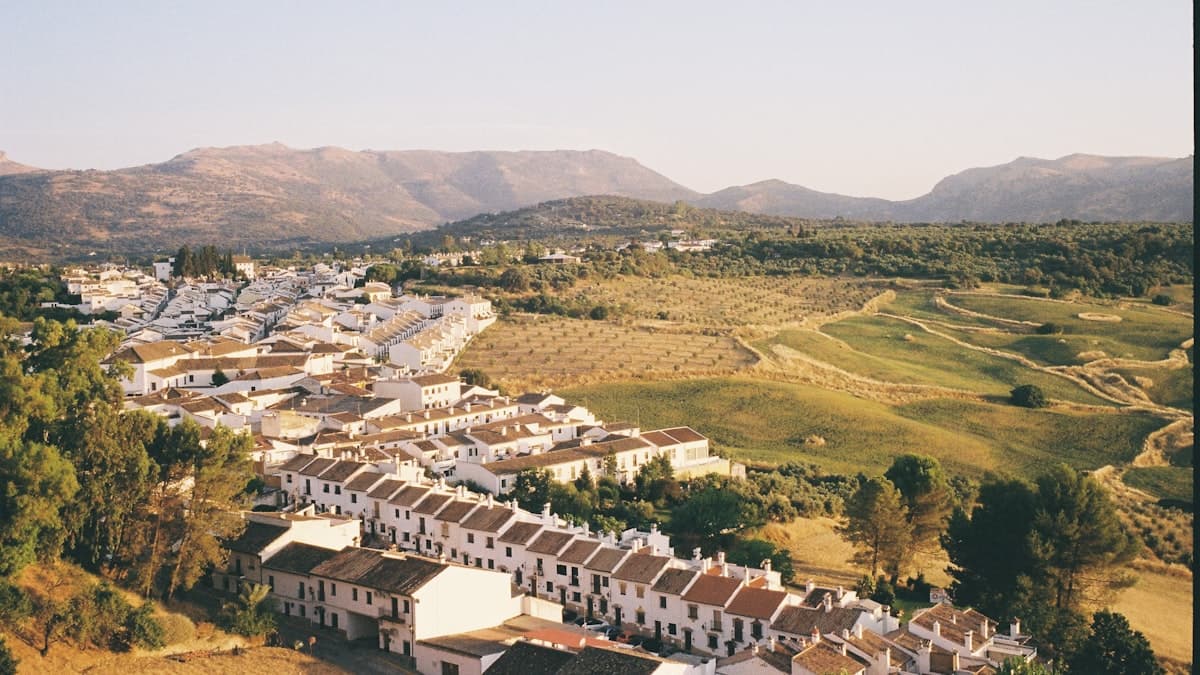
The world's single largest source of extra virgin olive oil is Andalusia, in southern Spain. According to the International Olive Council (IOC), approximately 30–40% of global EVOO production comes from this one region. What follows is a look at how a stretch of southern Iberia maintained that position for well over a thousand years.
The Phoenician and Roman Foundation
Olive cultivation took root on the Iberian Peninsula in earnest when Phoenician traders carried olive stock across the Mediterranean basin in the pre-Christian era. By the time of the Roman Empire, the region then known as Baetica—the ancient name for Andalusia—had become a primary supplier of olive oil to the Roman heartland. Historical records indicate that prices in Roman markets could be materially affected by the harvest conditions in Baetica alone, a measure of how central the region had already become to Mediterranean trade.

Moorish Rule, Irrigation, and the Settling of Key Varieties
During the roughly seven centuries of Moorish governance, from the 8th century through the 15th, Andalusian agriculture became considerably more sophisticated. Irrigation networks were expanded and systematized, cultivation techniques were refined, and the varieties most closely associated with modern Andalusian production—among them Picual and Ojiblanca—are understood to have become established during this period.
The Return to Single-Origin After Industrialization
In the latter half of the 20th century, Andalusia's output shifted toward high-volume, blending-oriented production. Over the past two decades, however, a premium segment emphasizing single-origin provenance, single-variety expression, and label transparency has expanded rapidly. Jaén, widely regarded as the heartland of Picual, sits at the center of this movement alongside Córdoba, the main territory for Ojiblanca and Sibarita, and Málaga, home to a growing number of independent single-farm operations.
The Finishing-Oil Consensus
Running through Andalusian olive oil culture—largely unchanged across nearly a millennium—is one shared understanding: EVOO is not merely a cooking medium but a finishing oil, the final element that completes a dish. For anyone approaching single-estate Andalusian oils for the first time, that culinary logic is perhaps the most useful starting point.
Frequently asked questions
- Why is Andalusia the world's largest olive oil producing region?
- According to the International Olive Council (IOC), Andalusia accounts for approximately 30–40% of global EVOO production as a single region. That dominance traces back to Phoenician-era cultivation, Roman-period commercialization, and centuries of agricultural refinement under Moorish rule—all of which established the varieties, irrigation systems, and farming culture that persist today.
- Which olive varieties are most associated with Andalusia?
- Picual and Ojiblanca are the most closely identified with Andalusia. Picual is centered in the province of Jaén, while Ojiblanca and Sibarita are associated with Córdoba. Both varieties are thought to have become established during the Moorish period, between the 8th and 15th centuries.
- How is extra virgin olive oil traditionally used in Andalusian food culture?
- A long-standing culinary consensus within Andalusia treats EVOO primarily as a finishing oil—added at the end of a dish rather than used solely as a cooking medium. This tradition, rooted in centuries of local practice, is one of the most useful reference points for understanding how single-estate Andalusian oils are intended to be experienced.
Related reading
- Arbequina: From Catalonia to Andalusia's Super-High-Density Groves
The most common single-cultivar extra virgin olive oil on global shelves did not originate in Andalusia. This guide traces Arbequina from its Catalan home village to the intensive groves that now define its commercial reach.
- Spain, Italy, Greece: How the Three EVOO Heartlands Taste Different
Spain, Italy, and Greece together account for more than 80 percent of the world's extra virgin olive oil, according to the International Olive Council — yet the flavors they produce could hardly be more distinct.
- Koroneiki: The Cultivar Behind More Than Half of All Greek EVOO
One cultivar accounts for the majority of Greece's extra virgin olive oil output. Here is why Koroneiki became the country's industry standard — and what to look for on the label.
- Tunisia's Olive Oil Is No Longer Just a Bulk Story
Tunisia has reclaimed its position as the world's second-largest EVOO producer and is steadily expanding single-cultivar labelling — a shift that is reframing a country long associated with anonymous bulk supply.
- Italy's Four EVOO Regions: Why the Label Needs to Say More Than 'Product of Italy'
A bottle labeled simply 'Product of Italy' tells you almost nothing about flavor. Here is a region-by-region guide to the four Italian areas—Tuscany, Puglia, Sicily, and Liguria—whose cultivars and sensory profiles could not be more different.
- California and Australia: The New-World EVOO Producers Now Setting Their Own Standards
In roughly thirty years, California and Australia have built industrialized EVOO sectors complete with their own certification bodies. A look at what COOC and AOOA seals mean, and why Cobram Estate now presses about 65 percent of Australia's annual crop.
Tags
- andalusia
- evoo
- olive oil history
- spanish olive oil
- picual
- ojiblanca