Guides
Chlorophyll Is Why Green Olive Oil Oxidizes Faster in Light
The vivid green color of freshly pressed extra virgin olive oil comes from chlorophyll — a pigment that doubles as a photosensitizer, generating highly reactive singlet oxygen when exposed to light. Understanding this mechanism makes light-blocking storage a matter of chemistry, not convention.
Translated from the Korean edition, originally published September 1, 2026 · read the original
What Gives Olive Oil Its Green Color — and What Chlorophyll Actually Is
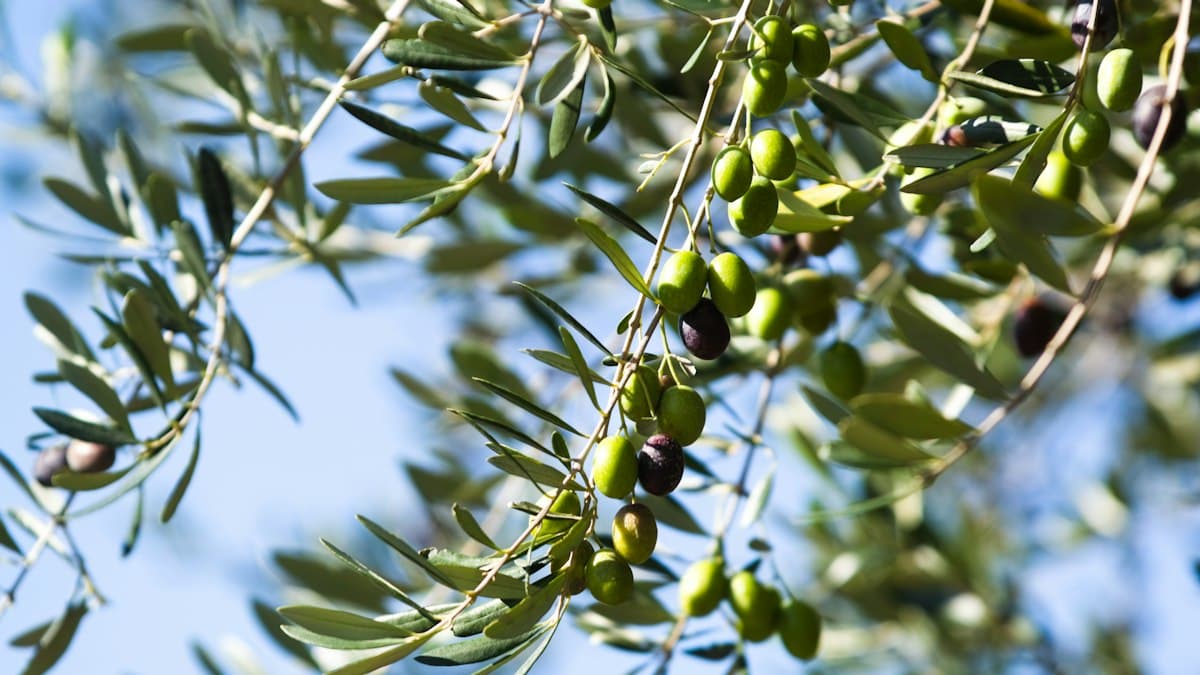
Pour a freshly pressed extra virgin olive oil into a glass and you often see a striking yellow-green or deep green hue. That color comes from chlorophyll, the photosynthetic pigment found in olive flesh and skin. Earlier harvests — when the fruit is still unripe — yield oils with the highest chlorophyll concentrations; as olives ripen, carotenoid pigments take over and the oil shifts toward gold. Cold-pressed, mechanically extracted high-quality EVOO preserves chlorophyll most completely, which is part of why early-harvest oils tend to be the most intensely green.
Chlorophyll exists in two main forms: type a, which absorbs blue-green wavelengths, and type b. Olive oil contains primarily chlorophyll a alongside its breakdown product pheophytin. Under EU Regulation 2568/91 and its subsequent amendments governing olive oil grades, chlorophyll-group pigment levels in extra virgin oils vary from a few mg/kg to several tens of mg/kg depending on origin, cultivar, and harvest timing.
Why Chlorophyll Triggers Photooxidation
The issue is that chlorophyll is far more than a pigment. In the presence of light, it acts as a photosensitizer — a molecule that absorbs light energy and transfers it to neighboring molecules, driving chemical reactions.
The mechanism works as follows. When a chlorophyll molecule absorbs visible light — particularly blue wavelengths around 400–500 nm and red wavelengths around 600–700 nm — it enters an excited state. That energy is then transferred to surrounding triplet oxygen molecules (³O₂), converting them into singlet oxygen (¹O₂). Singlet oxygen has been reported to be roughly 1,500 times more reactive than ordinary triplet oxygen, according to studies published in the journal Food Chemistry. This highly reactive species then attacks the double bonds in olive oil's principal fatty acids — oleic acid and linoleic acid — in a process called photooxidation.
Photooxidation follows a different pathway from the autoxidation caused by heat and air exposure. Autoxidation proceeds as a slow chain reaction; photooxidation is driven by singlet oxygen binding directly to fatty acid double bonds and advances considerably faster. Research published in the Journal of Agricultural and Food Chemistry found that olive oil exposed to light showed meaningfully higher peroxide values — a standard oxidation indicator — than oil stored in darkness.
The Relationship Between Chlorophyll Content and Oxidation Rate
The higher the chlorophyll content, the stronger the photosensitizing effect. This means deeper green oils can deteriorate more rapidly than paler ones when exposed to the same light conditions. According to findings reported by the Instituto de la Grasa, part of Spain's National Research Council (CSIC), olive oil samples with elevated chlorophyll levels stored under fluorescent lighting showed oxidation indicators approaching established grade thresholds within just a few days.
The paradox here is real: in dark conditions, chlorophyll is reported to function as an antioxidant, capable of scavenging oxygen radicals. The same molecule that accelerates degradation under light acts as a stabilizer in its absence. This dual behavior makes the case for light-blocking storage more dramatic than most storage guidelines suggest.
Polyphenols and tocopherols present in the oil can neutralize some of the reactive oxygen generated by photooxidation, researchers have reported — but their protective capacity has limits under sustained light exposure. This is partly because polyphenols themselves break down under light and heat, eroding the oil's natural defenses over time.
Light Wavelengths and Packaging — Which Light Does the Most Damage
Not all light poses an equal threat. Chlorophyll absorbs most efficiently in the blue band (around 430 nm) and the red band (around 680 nm). Standard household LED and fluorescent lighting both emit energy across these ranges. The most unfavorable storage scenario — frequently encountered in supermarkets — is a clear glass bottle or uncolored plastic container sitting under bright fluorescent or LED shelf lighting, where both relevant wavelength bands hit the oil continuously.
On packaging, research published in European Food Research and Technology reports that dark green or amber glass bottles are significantly more effective at suppressing photooxidation than clear glass. Tin containers offer complete light exclusion and represent the strongest protection against light-driven degradation. The trade-off after opening, however, is that a tin's restricted resealability increases air contact, making autoxidation the next variable to manage.
Storing Olive Oil Away from Light — A Practical Guide
Understanding the chlorophyll–photooxidation relationship gives the standard storage rules a clear scientific rationale. Three principles matter most.
Block direct sunlight entirely. A kitchen windowsill or a bright countertop in direct sun is the worst location for a bottle of olive oil. Sunlight carries both UV and visible wavelengths, and light that passes through glass is sufficient to trigger the photosensitizing reaction.
Take indoor lighting seriously too. A dark pantry, a closed cupboard, or a space like a refrigerator where light is excluded is ideal. If the bottle lives on an open shelf, choosing tin or an opaque container reduces ongoing exposure.
Use an open bottle promptly. Minimizing light exposure matters before opening, but once the seal is broken, autoxidation from air contact proceeds alongside any light-driven degradation. Consuming an opened bottle within 30 to 60 days is a widely recommended guideline.
If you have specifically chosen an early-harvest oil or one with a pronounced deep green color — both signs of higher chlorophyll content, as well as of freshness and polyphenol richness — these storage principles apply with greater urgency. The vivid green is a genuine quality signal, and also a reminder that the oil inside requires more careful handling than its golden counterpart.
Frequently asked questions
- Why is green olive oil more sensitive to light than golden olive oil?
- Green olive oil contains higher levels of chlorophyll, which acts as a photosensitizer when exposed to light. It absorbs light energy and transfers it to surrounding oxygen molecules, generating singlet oxygen — a highly reactive species that attacks the fatty acid double bonds in the oil. Higher chlorophyll content means a stronger photosensitizing effect and faster quality degradation under light.
- What is photooxidation in olive oil and how is it different from regular oxidation?
- Regular autoxidation is a slow chain reaction triggered by heat and air exposure. Photooxidation, by contrast, is driven by singlet oxygen generated when chlorophyll absorbs light — particularly blue wavelengths around 430 nm and red wavelengths around 680 nm. Singlet oxygen reacts directly with fatty acid double bonds and has been reported to be roughly 1,500 times more reactive than ordinary triplet oxygen, according to studies published in Food Chemistry, making the process considerably faster.
- Does chlorophyll have any antioxidant properties in olive oil?
- Yes — and this is the paradox. In the dark, chlorophyll is reported to act as an antioxidant by scavenging oxygen radicals. In the presence of light, the same molecule flips into a pro-oxidant role, generating singlet oxygen that accelerates degradation. This dual behavior makes light-blocking storage especially critical: remove the light, and chlorophyll's harmful side effectively disappears.
- What type of container best protects olive oil from light oxidation?
- Research published in European Food Research and Technology reports that dark green or amber glass bottles are significantly more effective at inhibiting photooxidation than clear glass. Tin containers offer complete light exclusion and are the most protective option for storage, though once opened they introduce increased air contact, making autoxidation the next concern. Clear glass or uncolored plastic on bright retail shelves represents the most unfavorable condition for the oil.
- How quickly can light damage olive oil?
- According to findings reported by the Instituto de la Grasa (CSIC, Spain), olive oil samples with high chlorophyll content stored under fluorescent lighting showed oxidation indicators approaching grade threshold limits within just a few days. Polyphenols and tocopherols can neutralize some of the reactive oxygen produced, but sustained light exposure exhausts those defenses — in part because polyphenols themselves degrade under light and heat.
Related reading
- Heat, Smoke, and Polar Compounds: The Chemistry of Cooking with Olive Oil
Heating olive oil triggers a cascade of hydrolysis, oxidation, and polymerization reactions that accelerate past the smoke point. This guide traces the science of polar compound formation and explains why high-polyphenol EVOO tends to hold up better under heat.
- Burning Groves: How Wildfire and Air Pollution Are Reshaping Olive Oil Country
The Mediterranean produces around 95% of the world's olive oil — and it is heating up faster than almost anywhere else on earth. From scorched root systems to smoke-tainted harvests, environmental disaster is leaving marks on olive groves that last far longer than the flames.
- Six Supermarket EVOOs, Ranked by Acidity and Origin
From a sub-1% acidity Spanish single-estate to entry-level Korean-imported blends, six widely available extra virgin olive oils are compared on the facts that actually matter at the shelf.
- The Farms That Keep Winning: A Guide to NYIOOC and Olive Japan Award Names
The world's two leading EVOO competitions honor hundreds of brands each year, yet Gold and Best in Class medals cluster around a surprisingly small circle of estates. A look at the 2024 results reveals which producers are setting the global standard.
- Organic EVOO Certifications Decoded: Euro-leaf, USDA, and Demeter
Three certification marks — the EU Euro-leaf, USDA Organic, and Demeter — divide the organic EVOO shelf into meaningfully different tiers. Understanding what each one actually requires makes it far easier to judge whether the premium is worth paying.
- Kirkland, No Brand, Signature: A Guide to Superstore Private-Label EVOO
Costco's Kirkland Signature, E-Mart's No Brand, and Homeplus Signature all offer private-label extra virgin olive oil at prices below comparable global brands. Here is how each line positions itself — and what the label does and does not tell you.
Tags
- chlorophyll
- light oxidation
- evoo storage
- photooxidation
- olive oil quality