Guides
Six Supermarket EVOOs, Ranked by Acidity and Origin
From a sub-1% acidity Spanish single-estate to entry-level Korean-imported blends, six widely available extra virgin olive oils are compared on the facts that actually matter at the shelf.
Translated from the Korean edition, originally published December 5, 2023 · read the original
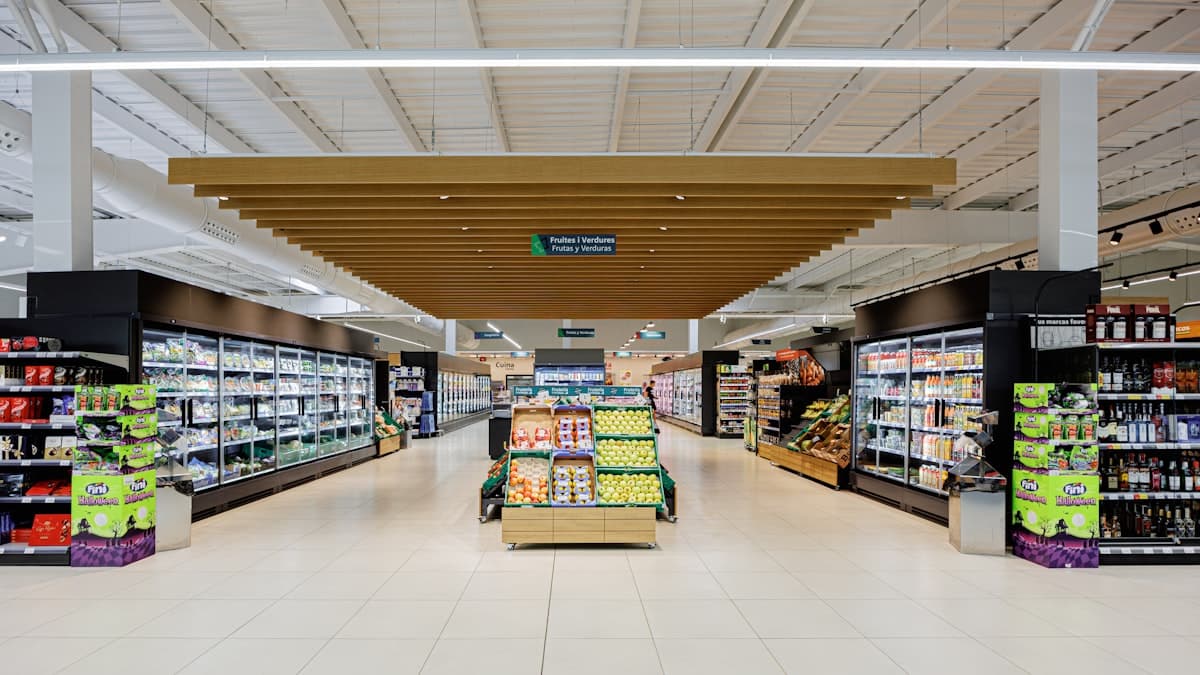
The extra virgin olive oil aisle looks deceptively uniform until you read the labels — and then origin, acidity, and operating model all diverge. On the same shelf, a 1-litre PET bottle can sit next to a 500 ml dark-glass bottle at more than three times the price, both labelled "extra virgin." Below is a fact-focused comparison of six lines that appear most consistently in major supermarkets.
The two pillars of Italian Classico
At the Italian end of the shelf, Olitalia and Colavita occupy the most visible positions. Olitalia is an Italian co-operative brand distributed in roughly 100 countries; publicly available batch data places its acidity typically in the 0.2–0.4% range. Colavita built a strong presence in the North American market on a 100% Italian origin positioning, and its extra virgin line generally reports a similar acidity band on publicly available data.
Both brands draw on blends from southern Italian regions — principally Puglia, Sicily, and Calabria — which gives them a broadly comparable flavour register: mild, buttery, and well-suited to everyday cooking.
De Cecco, best known internationally for pasta, also runs an EVOO line. Its Classico, labelled with cold extraction, is reported at 0.3% acidity or below in publicly available data. Flavour assessments generally describe it as light, placing it firmly in the daily cooking register rather than the finishing-oil category.
Spain: where the daily and the premium diverge
On the Spanish side of the shelf, Borges holds the entry-level position. The brand is based in Catalonia and sources from a blend that includes Andalusia; its labelled acidity is stated at below 0.5% on publicly available documentation.
La Chinata occupies a different tier entirely. A family-run operation based in the Sierra de Gata area of Cáceres, it markets a line with a labelled acidity of around 0.1% in dark glass — the lowest figure of the six reviewed here. That acidity level, combined with the dark-glass packaging, signals a bottle positioned for finishing and cold use rather than high-heat frying.
Entry-level imported and locally packed lines
Large supermarket chains also carry lines imported and repackaged by domestic food companies. These occupy the lowest price tier on the shelf. Labels in this category sometimes carry mixed grade terminology alongside "extra virgin" — terms such as "pure" or "pressed" — and do not always print a measured acidity figure. The IOC defines extra virgin as requiring free acidity at or below 0.8% and no sensory defects, so it is worth cross-checking the label against those two criteria before purchase. For a step-by-step guide to reading an olive oil label, see Five Lines on the Label.
Same shelf, three distinct positions
The six lines effectively occupy three price and use positions: an entry-level daily PET tier, a mid-range Italian-blend Classico tier, and a premium dark-glass Spanish tier at the top. None of these positions is inherently wrong — the right answer depends on use frequency and purpose.
A bottle used for daily high-heat cooking and a bottle kept for finishing share the same grade label but do not belong in the same part of the buying decision. That is precisely why acidity, origin, and operating model — even within the single extra virgin grade — diverge so sharply across these six lines.
The most reliable information at the shelf is still the label itself. Three details are worth checking: whether the origin is named to the regional level (not just the country), whether a measured acidity figure is printed, and whether a harvest year or pressing date appears. Bottles that carry all three remain relatively rare in mass-market retail — which is exactly what makes them worth identifying when they do appear.
Frequently asked questions
- What acidity level should I look for in extra virgin olive oil?
- According to the International Olive Council (IOC), extra virgin olive oil must have a free acidity of no more than 0.8%. In practice, most well-regarded bottles sit below 0.5%, and premium single-estate oils are often labelled at 0.1–0.3%.
- Is La Chinata a good everyday olive oil?
- La Chinata is a family-run brand based in the Sierra de Gata area of Cáceres, Spain. The line available internationally carries a labelled acidity of around 0.1%, which places it at the high end of the supermarket spectrum. It is better suited as a finishing oil than a high-heat cooking oil.
- What is the difference between Colavita and Olitalia?
- Both are Italian-origin blends drawing largely from southern regions such as Puglia, Sicily, and Calabria, giving them a broadly similar flavour profile. Olitalia is an Italian co-operative brand distributed in roughly 100 countries; Colavita built much of its reputation in the North American market and markets a 100% Italian origin line. Both typically report acidity in the 0.2–0.4% range on publicly available batch data.
- How do I pick the right EVOO at the supermarket?
- Three label details are the most reliable guides: whether the origin is named to the region (not just the country), whether the actual acidity figure is printed on the label, and whether a harvest year or pressing date is shown. Bottles that carry all three are relatively uncommon on mass-market shelves, which is precisely what makes them useful to identify.
- Can I use the same bottle of EVOO for cooking and finishing?
- You can, but it is not ideal. A daily cooking bottle and a finishing bottle serve different roles and are drawn from different parts of the shelf. Entry-level blends in large PET bottles are suited for everyday heat cooking; lower-acidity oils in dark glass are better reserved for drizzling where their flavour and polyphenol content are not driven off by heat.
Related reading
- Organic EVOO Certifications Decoded: Euro-leaf, USDA, and Demeter
Three certification marks — the EU Euro-leaf, USDA Organic, and Demeter — divide the organic EVOO shelf into meaningfully different tiers. Understanding what each one actually requires makes it far easier to judge whether the premium is worth paying.
- Daily EVOO Under $20: How to Read the Shelf and Pick the Right Bottle
Two bottles labeled 'extra virgin' can sit side by side at very different prices — and both can be the right choice, depending on how fast you cook through them. Here is how to read the signals that matter in the budget tier.
- Kirkland, No Brand, Signature: A Guide to Superstore Private-Label EVOO
Costco's Kirkland Signature, E-Mart's No Brand, and Homeplus Signature all offer private-label extra virgin olive oil at prices below comparable global brands. Here is how each line positions itself — and what the label does and does not tell you.
- Four Price Tiers of Extra Virgin Olive Oil — and What Each One Actually Buys You
From entry-level PET-bottle blends to single-estate premiums, the EVOO shelf divides into four distinct tiers. Knowing what separates them makes it easier to shop with intention.
- Single Estate, Finca, Tenuta: How One Phrase Became a Global Transparency Standard
From Spain's finca to Italy's tenuta and beyond, the single-estate designation has spent three decades shaping what premium EVOO transparency actually looks like — and what separates the producers who can prove their claims from those who cannot.
- Beyond Tuscany: The Italian EVOO Estates Worth Knowing in Umbria and Sicily
Premium Italian extra virgin olive oil extends well beyond a Tuscany IGP label. From Carmignano to Palma di Montechiaro, three regions and their benchmark estates mapped out.