Guides
How Michelin-Kitchen Chefs Actually Choose an Olive Oil
From acidity thresholds to polyphenol counts, the criteria professional chefs use to select EVOO are more systematic than most home cooks realize — and surprisingly easy to borrow.
Translated from the Korean edition, originally published July 2, 2026 · read the original
The Ingredient Nobody Sees on the Plate
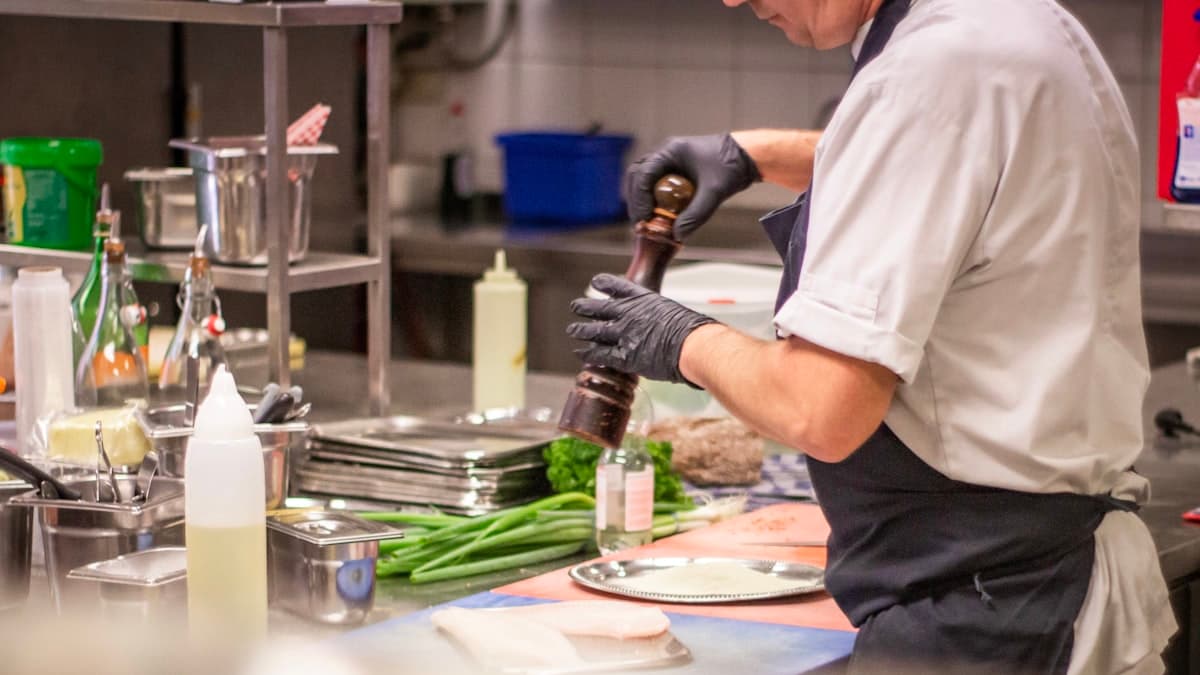
Walk into a Michelin-starred restaurant and your attention goes straight to the dish in front of you. Yet extra virgin olive oil (EVOO) is often there in the background — the last touch before a plate leaves the pass, the thread running through a sauce or dressing. Chefs stopped treating olive oil as a generic cooking fat a long time ago; for many, it is a seasoning and a flavor layer in its own right. According to the International Olive Council (IOC), the cultivar combinations used to produce EVOO across the major growing regions — Spain, Italy, and Greece among them — number more than 1,000, and professional chefs navigate that landscape with a clear set of criteria.
Understanding what those criteria are turns out to be useful well beyond a professional kitchen. The same checklist that a Michelin-level chef applies at a trade tasting translates directly into a practical guide for buying EVOO at home.
What Acidity Actually Tells You
The first number chefs look for on an EVOO label is the free fatty acid (FFA) content — commonly called acidity. The international standard for extra virgin grade, as set by the IOC, allows up to 0.8%. In Michelin-level kitchens, however, 0.3% or below is the working preference, with 0.2% or lower considered ideal. A low acidity figure means the olives were pressed quickly and without damage, leaving the oil clean-tasting and unlikely to compete with other ingredients on the plate.
According to a report by the European Food Safety Authority (EFSA), EVOO cold-pressed within 24 hours of harvest tends to maintain lower acidity. This is why high-end restaurants often source directly from individual producers or small farms: the smaller the operation, the shorter the window between picking and pressing.
Polyphenols — Where Flavor Meets Function
The second figure chefs reach for is polyphenol content. Polyphenols are responsible for EVOO's characteristic bitterness and peppery finish (the quality sometimes called piccante), and they are also tied to the oil's oxidative stability — higher polyphenol levels are associated with slower degradation under heat, which broadens an oil's usefulness in cooking.
Under European Commission food-labeling regulations, an EVOO may carry a health claim when it contains 5 mg or more of specific phenolic compounds — including oleocanthal and oleacein — per 20 g of oil. According to IOC measurement standards, polyphenol content is expressed in mg/kg: typical supermarket EVOOs cluster between 100 and 200 mg/kg, while premium oils can record 400–800 mg/kg or above. The pronounced peppery sensation at the back of the throat that high-polyphenol oils produce is something chefs describe as a marker of a "live" oil — one whose character has not been diminished by age or poor handling.
Cultivar Is Style
Just as a winemaker's grape variety sets the direction of a wine, an olive cultivar sets the direction of an oil. The difference between varieties is not subtle, and chefs choose accordingly.
Picual, native to the Jaén region of southern Spain, is characterized by an intense herbal aroma, a firm bitter note, and high polyphenol content. Its structure holds up to high heat, and chefs who work with grilled meats or assertive sauces tend to reach for it. Hojiblanca offers a gentler profile — notes of fresh nuts and green apple, lower acidity, and a softer finish — making it a natural companion to white fish, seafood crudo, and cold pasta. Sibarita, with its exceptionally low acidity and refined flavor, is used primarily as a finishing oil: drizzled over a completed dish, spooned onto carpaccio, or incorporated into ceviche.
The reason many professional chefs favor single-cultivar (monovarietal) EVOOs over blends is reproducibility. A blend's formula can shift from vintage to vintage as the producer adjusts for seasonal variation. A monovarietal from the same farm and the same harvest year maintains a near-consistent flavor profile — which matters when a dish on a tasting menu has to taste exactly the same on the hundredth service as on the first.
A Chef's Label-Reading Checklist
Here is what chefs actually check when buying from a supplier or browsing a specialty shelf.
Harvest date. For EVOO, the harvest date is more informative than a bottling date. Oil used within 18 months of harvest is generally considered to be at its expressive best. Some premium producers print the exact harvest date alongside the bottling date.
Extraction method. Look for "First Cold Press" or "Cold Extraction" — the latter specifying that processing temperatures stayed at or below 27°C. Either designation indicates that the volatile aromatic compounds and polyphenols were less likely to be driven off during milling.
Acidity and polyphenol figures. Not every brand prints both numbers, but when they appear, 0.3% acidity or below and 400 mg/kg polyphenols or above serve as useful reference points.
Certification marks. IOC approval, PDO (Protected Designation of Origin), and PGI (Protected Geographical Indication) all indicate that the oil's origin and production method have been verified by a third party — not just declared on the label.
Bringing the Chef's Standard to a Home Kitchen
None of this requires a professional kitchen to put into practice. The most realistic starting point is what some chefs call the two-bottle approach: one moderately priced, dependable EVOO for everyday cooking, and a second — higher-polyphenol, lower-acidity, single-cultivar — reserved for finishing. That second bottle earns its place the moment it is poured over a finished pasta, offered alongside bread, or used as the base of a salad dressing. Its character comes through precisely because it is not asked to survive high heat.
When chefs pay a premium for a particular EVOO, they are not simply buying an ingredient — they are deciding how the last sentence of a dish will read. Knowing one acidity figure, recognizing one cultivar name, is enough to begin reading those labels differently. The kitchen at home shifts a little in the same direction.
Frequently asked questions
- What acidity level do Michelin-star chefs prefer in olive oil?
- While the international extra virgin standard allows up to 0.8% free fatty acids, professional kitchens at the Michelin level are reported to prefer oils at 0.3% or below — and ideally 0.2% or lower. Lower acidity generally indicates that the olives were pressed quickly and cleanly, leaving the oil's own flavors unobscured.
- How much polyphenol should a high-quality EVOO contain?
- According to International Olive Council (IOC) standards, polyphenol content is measured in mg/kg. Typical supermarket EVOOs fall in the 100–200 mg/kg range, while premium bottles can reach 400–800 mg/kg or more. The European Commission permits a health claim on the label when specific phenolic compounds — including oleocanthal and oleacein — are present at 5 mg or more per 20 g of oil.
- Which olive oil cultivar is best for cooking versus finishing?
- It depends on what you're cooking. Picual, with its high polyphenol content and robust herbal bitterness, holds up well to high-heat cooking and pairs naturally with grilled meats. Hojiblanca's nutty, apple-like character and gentler profile suit seafood, crudo, and cold pasta dishes. Sibarita, with its exceptionally low acidity and delicate flavor, is favored as a finishing oil over carpaccio or ceviche.
- Why do chefs prefer single-cultivar (monovarietal) EVOO?
- Monovarietal oils offer consistency. From the same farm and the same vintage, a single-cultivar EVOO tends to maintain a predictable flavor profile from bottle to bottle. Blended oils can shift in proportion season to season, which makes it harder to achieve repeatable results in a professional kitchen.
- What should I look for on an olive oil label at the store?
- Chefs check four things: the harvest date (not just the bottling date — aim for oil used within 18 months of harvest); the extraction method ('First Cold Press' or 'Cold Extraction at or below 27°C'); acidity and polyphenol figures when printed (0.3% acidity or below, 400 mg/kg polyphenols or above as a benchmark); and third-party certifications such as IOC approval, PDO (Protected Designation of Origin), or PGI (Protected Geographical Indication).
Related reading
- Heat, Smoke, and Polar Compounds: The Chemistry of Cooking with Olive Oil
Heating olive oil triggers a cascade of hydrolysis, oxidation, and polymerization reactions that accelerate past the smoke point. This guide traces the science of polar compound formation and explains why high-polyphenol EVOO tends to hold up better under heat.
- Does Olive Oil You Eat Reach Your Skin? A Clinical Research Roundup
A growing body of clinical research is examining whether regular dietary intake of olive oil is associated with measurable changes in skin hydration and elasticity. This guide summarizes the current evidence, its limits, and how the findings sit within the broader context of Mediterranean eating patterns.
- Senescent Cells, Senolytics, and the Question of Olive Oil Polyphenols
The senolytic diet hypothesis has drawn attention to plant polyphenols as potential allies against aging cells. This guide maps where extra virgin olive oil's oleocanthal and related phenolic compounds currently sit in that research — and what the evidence cannot yet support.
- Olive Oil, Antioxidants, and Fatigue: A Guide to the Emerging Clinical Research
Extra virgin olive oil is drawing growing attention in oxidative stress and chronic fatigue research, with its polyphenols and oleic acid studied for potential roles in cellular energy metabolism. Here is what the current clinical evidence actually shows.
- Bone Health on the Table: What the Osteoblast and Calcitriol Research Says About Olive Oil
From oleic acid's reported role in osteoblast differentiation to calcitriol absorption and polyphenol activity, a growing body of cell and animal research links extra virgin olive oil to bone metabolism — though the clinical picture is still forming.
- Bitter, Pungent, and Perfectly Fine: How Oleocanthal and Oleacein Work on Your Palate
The sharp bitterness and throat-catching sting in a great extra virgin olive oil are not defects — they are the fingerprint of two polyphenol compounds, oleocanthal and oleacein, binding to distinct receptors in your mouth and throat.
Tags
- extra virgin olive oil
- michelin restaurant
- evoo buying guide
- polyphenols
- olive oil cultivars