Guides
Five Label Checks That Take Three Minutes at the Supermarket Shelf
From bottle color to harvest date to acidity figures, the information needed to judge an olive oil's quality is printed right on the label — if you know where to look.
Translated from the Korean edition, originally published July 30, 2026 · read the original
Why Choosing Olive Oil Feels Harder Than It Should
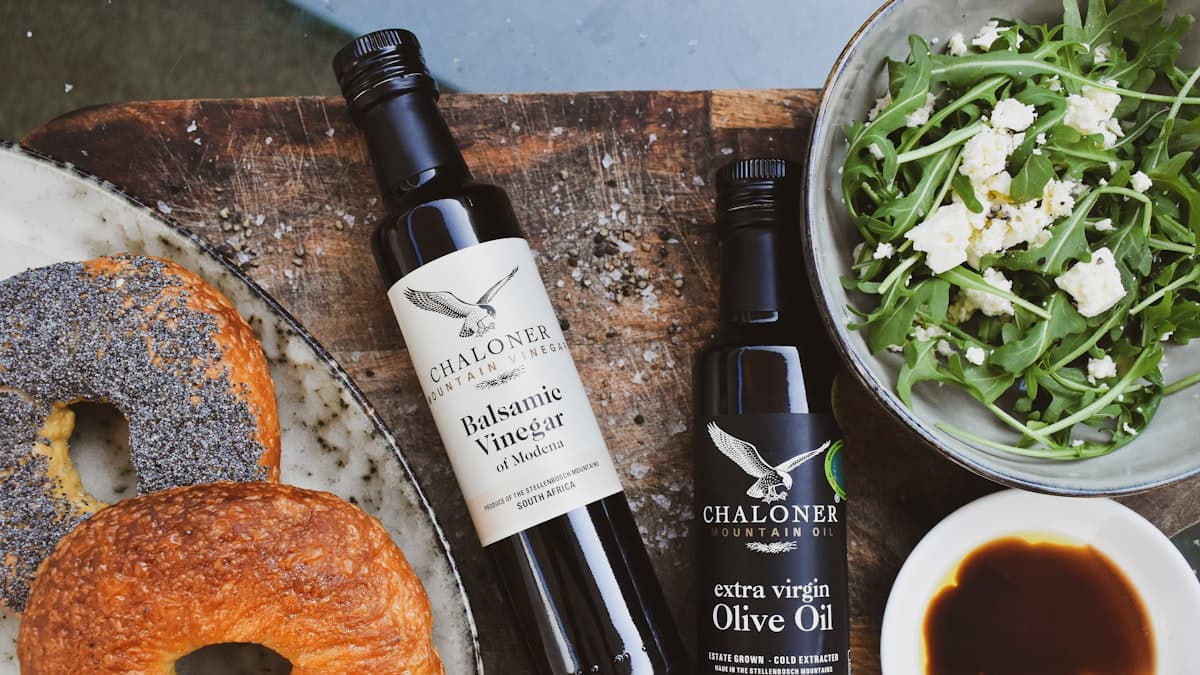
Stand in the olive oil aisle of any supermarket and you will find dozens of bottles that look almost identical, differentiated mostly by size and price. Yet according to the International Olive Council (IOC) quality standards, olive oil is divided into distinct grades — Extra Virgin, Virgin, refined Olive Oil (sometimes labeled 'Pure'), and Pomace Oil — and only Extra Virgin is suitable for enjoying raw at the table as the top-tier category. The complication is that some products blend a significant proportion of refined oil behind a name that sits visually close to extra virgin on the shelf. Read the label carefully for three minutes, however, and the difference becomes clear.
Check One: Confirm the Grade on the Front Label
Before picking up a bottle, the first words to find on the front label are Extra Virgin Olive Oil. Descriptions such as 'Pure Olive Oil', 'Light Olive Oil', or '100% Olive Oil' can sound reassuring but often refer to lower grades in which refined oil makes up most of the blend. Under IOC quality specifications, extra virgin olive oil must be extracted by mechanical means alone — no chemical refining — and its free fatty acid content must be no higher than 0.8%, expressed as oleic acid. The lower that figure, the fresher the source olives and the more precise the processing.
Check Two: Acidity Figures and Polyphenol Information
Once the grade is confirmed, look for the stated acidity. Within the extra virgin ceiling of 0.8%, anything below 0.3% is generally regarded as high quality. Some premium producers print acidity to two decimal places on the label or the back-panel specification block — that level of transparency is itself a signal of confidence in the product.
Polyphenol content is also worth noting. Under a 2011 European Food Safety Authority (EFSA) regulation, phenolic compounds in olive oil — including oleocanthal and oleuropein — have attracted sustained research interest, and studies on high-polyphenol olive oils continue to be published. Polyphenol figures are not mandatory on standard retail labels in most markets, so checking the producer's website or a Certificate of Analysis (COA) is the most reliable way to verify them.
Check Three: Harvest Date and Best-Before Date
Unlike wine, olive oil does not improve with age — quality declines over time. According to analysis published by Olive Oil Times, extra virgin olive oil is ideally consumed within 18 to 24 months of harvest (before opening), and within 30 to 60 days after the bottle is opened. A label that shows only a best-before date without a harvest date makes it impossible to calculate how old the oil actually is. When a harvest date is printed, you can do the arithmetic yourself at the shelf.
Best-before dates are commonly set 24 months from pressing, but a bottle that has been sitting on the shelf for some time may have less of that window remaining than it appears. It is worth reaching to the back of the shelf, where stock tends to be newer than what is placed at the front.
Check Four: Bottle Color and Storage Conditions
Light and heat are the two main factors that degrade olive oil quality. The Codex Alimentarius Commission recommends storing olive oil in opaque or dark-colored containers to minimize oxidation. Clear PET plastic bottles that show the oil's color vividly may look attractive, but oil stored in them can undergo photo-oxidation during extended shelf display. Dark green glass bottles and tin cans offer meaningfully better protection.
The shelf position matters too. A bottle stored directly under bright fluorescent lighting for a prolonged period is more exposed to oxidative stress than one kept further back on a shelf with less direct light.
Check Five: Origin and Variety Transparency
A label reading 'Product of Italy' — or any other country — does not necessarily mean the olives were grown there. EU regulations allow the bottling country to be listed as the country of origin. For more precise information, look for a separate 'Origin of Olives' declaration, or choose products carrying a DOP (Protected Designation of Origin) or IGP (Protected Geographical Indication) certification mark, both of which impose stricter geographical traceability requirements.
Whether the oil is single-variety is another useful data point. A label that names the cultivar — Picual, Arbequina, Ojiblanca, or another — indicates that raw-material traceability is high. A blended oil is not automatically inferior, but when no variety information appears at all, assessing the provenance of the olives becomes difficult.
The Three-Minute Checklist, Summarized
Worked through in order, these five checks take well under three minutes at the shelf. First, confirm 'Extra Virgin Olive Oil' on the front label. Second, if acidity is stated, verify it is below 0.8% — and ideally below 0.3%. Third, look for a harvest date and choose the most recent one available. Fourth, prefer dark glass or tin over clear plastic. Fifth, treat specific origin and variety information as a positive indicator of traceability.
Low price does not automatically mean poor quality, and a high price is no guarantee of excellence. The most practical tool for choosing well is simply the ability to read what is already printed on the bottle.
Frequently asked questions
- What does 'Pure Olive Oil' or 'Light Olive Oil' mean on a label?
- These terms typically indicate a lower-grade product made by blending refined olive oil with a small proportion of virgin oil. According to IOC quality standards, only 'Extra Virgin Olive Oil' guarantees mechanical extraction without chemical refining.
- What acidity level should I look for in extra virgin olive oil?
- The IOC sets the maximum free fatty acid content for extra virgin olive oil at 0.8% (expressed as oleic acid). Within that limit, oils below 0.3% are generally considered high quality. A label that states acidity to two decimal places usually signals a producer confident in their product.
- How long does extra virgin olive oil stay fresh?
- According to analysis by Olive Oil Times, extra virgin olive oil is ideally consumed within 18 to 24 months of harvest (unopened), and within 30 to 60 days once opened. A label that shows a harvest date lets you calculate the oil's age directly; a best-before date alone makes that harder to work out.
- Does the country printed on the bottle tell me where the olives were grown?
- Not necessarily. EU regulations permit the bottling country to be listed as the country of origin. For more precise information, look for a separate 'Origin of Olives' declaration on the label, or choose a product carrying a DOP (Protected Designation of Origin) or IGP certification.
- Is a single-variety olive oil better than a blend?
- Not automatically — a well-made blend can be excellent. However, a label that names the cultivar (Picual, Arbequina, Ojiblanca, and so on) indicates higher traceability of the raw material. When no variety information appears at all, it is harder to assess where the olives came from.
Related reading
- Six Supermarket EVOOs, Ranked by Acidity and Origin
From a sub-1% acidity Spanish single-estate to entry-level Korean-imported blends, six widely available extra virgin olive oils are compared on the facts that actually matter at the shelf.
- The Farms That Keep Winning: A Guide to NYIOOC and Olive Japan Award Names
The world's two leading EVOO competitions honor hundreds of brands each year, yet Gold and Best in Class medals cluster around a surprisingly small circle of estates. A look at the 2024 results reveals which producers are setting the global standard.
- Daily EVOO Under $20: How to Read the Shelf and Pick the Right Bottle
Two bottles labeled 'extra virgin' can sit side by side at very different prices — and both can be the right choice, depending on how fast you cook through them. Here is how to read the signals that matter in the budget tier.
- Organic EVOO Certifications Decoded: Euro-leaf, USDA, and Demeter
Three certification marks — the EU Euro-leaf, USDA Organic, and Demeter — divide the organic EVOO shelf into meaningfully different tiers. Understanding what each one actually requires makes it far easier to judge whether the premium is worth paying.
- Kirkland, No Brand, Signature: A Guide to Superstore Private-Label EVOO
Costco's Kirkland Signature, E-Mart's No Brand, and Homeplus Signature all offer private-label extra virgin olive oil at prices below comparable global brands. Here is how each line positions itself — and what the label does and does not tell you.
- Four Price Tiers of Extra Virgin Olive Oil — and What Each One Actually Buys You
From entry-level PET-bottle blends to single-estate premiums, the EVOO shelf divides into four distinct tiers. Knowing what separates them makes it easier to shop with intention.
Tags