Guides
Your First EVOO Home Tasting: Cups, Temperature, and Sequence
From the ISO-standard blue glass used at professional panels to the exact 28 °C warm-up, this step-by-step guide brings expert olive oil tasting technique into the home kitchen.
Translated from the Korean edition, originally published July 2, 2026 · read the original
Why Bother Learning to Taste EVOO
Like wine, extra virgin olive oil shifts dramatically in aroma and flavor depending on cultivar, origin, and harvest timing — yet most people consume it without ever developing a vocabulary for what they are experiencing. According to the International Olive Council (IOC), an extra virgin olive oil must display all three positive attributes — fruitiness, bitterness, and pungency — and the balance among these three elements is the defining criterion of quality grade. Learning to perceive that balance in your own palate is the whole point of tasting practice.
Home tasting is not simply a matter of deciding whether you like an oil. It is a structured sensory exercise that uses both smell and taste to distinguish defects — rancidity, mustiness, off-notes — from positive attributes. Even beginners find that following the correct sequence reveals far more than casual sampling ever does.
The Tasting Glass: The ISO Standard as Benchmark
At professional tasting events, panels use the IOC-specified ISO standard blue glass: approximately 130 mL capacity, a 50 mm rim diameter, and 90 mm in height. The blue tint exists for a specific reason — to prevent the oil's visual color from biasing the evaluator's judgment. If that glass is not available at home, a narrow-mouthed white-wine glass is the next best alternative. Wide, flat glasses allow aromas to escape quickly, making any meaningful aroma evaluation difficult.
Pour 15–20 mL per tasting. More than that makes temperature control harder; less reduces aroma concentration.

Temperature: 28 °C Is the Number
According to the IOC panel test protocol, the official tasting temperature is 28 °C (±2 °C). At this temperature, volatile aromatic compounds evaporate most actively and reach the olfactory receptors. Tasting an oil straight from the refrigerator suppresses aroma and can cause you to miss both defects and subtle fruit notes.
A simple method: pour the oil into the glass, cup both hands around the base, and transfer warmth for about two to three minutes. Then cover the rim with a small piece of aluminum foil or a lid to trap the aromas until you are ready to evaluate.
Sequence Step 1 — Visual and Olfactory Evaluation
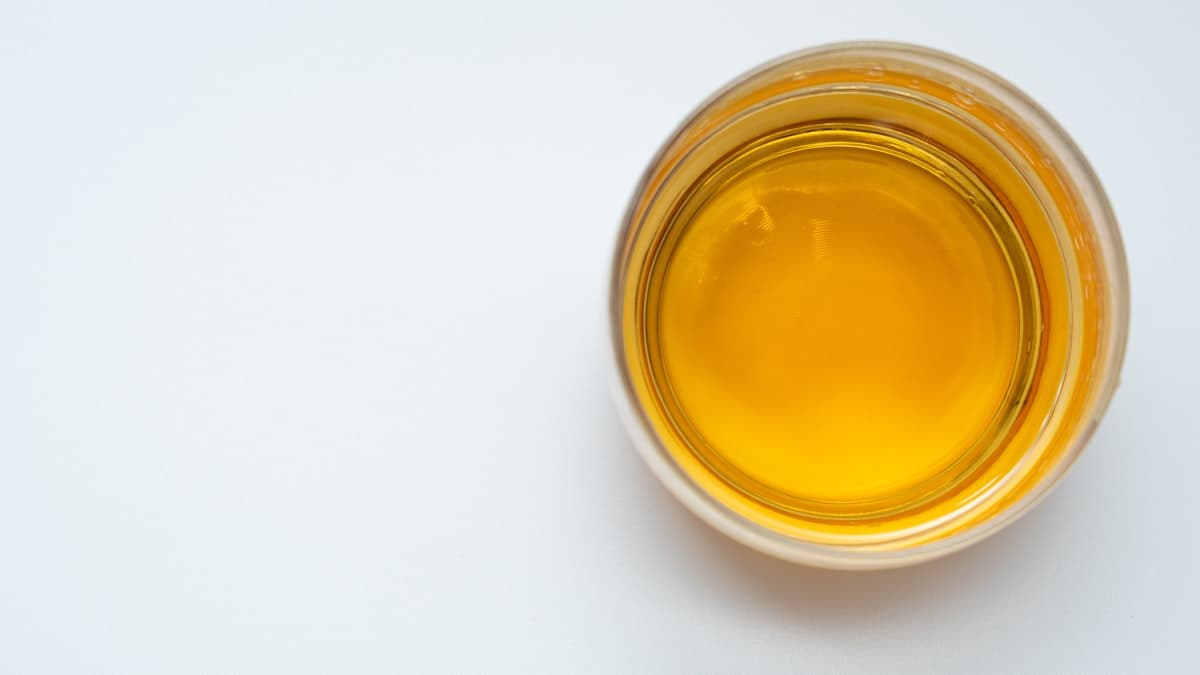
Before removing the cover, tilt the glass gently and observe the oil's viscosity and clarity. Fresh EVOO can range from golden to greenish; any haziness simply reflects whether the oil was filtered, and is unrelated to quality.
Remove the cover, bring the glass to your nose, and take the first impression. This is called orthonasal olfaction. Try to sort what you detect into three broad groups.
Positive aromas: fresh grass or herbs, almond, fresh fruit such as apple, tomato, or banana, artichoke. Neutral aromas: a generally oily character without any distinct note. Defect aromas: a vinegary or wine-like fermented note (rancidity), mold or damp earth (mustiness), or a stale grease smell (oxidation).
If a defect aroma is detectable, the oil is likely to fall below EVOO grade under formal evaluation criteria.
Sequence Step 2 — Taste Evaluation
Take a small sip — about 5 mL — and perform the technique known as stroping: part your lips slightly and draw in a short breath. This carries aromatic compounds from the back of the mouth into the nasal cavity, a process called retronasal olfaction, revealing aromas that orthonasal sniffing alone may not capture.
Then assess the three taste attributes in turn.
Fruitiness: the fresh, olive-characteristic flavor perceived across the whole tongue. Higher intensity generally signals a fresher oil.
Bitterness: the sharp, slightly astringent sensation felt at the center and back of the tongue. It derives from polyphenol-class compounds including oleuropein. Intensity alone is not a defect. According to guidelines from international olive oil competition panels, oils in which bitterness and pungency are well balanced have been reported to score more highly.
Pungency: the stinging, peppery sensation felt at the back of the throat after swallowing. It is associated with the compound oleocanthal. Among professionals, a "one-cough" response is an informal shorthand for medium intensity, while a "double cough" indicates high intensity.

Comparing Multiple Cultivars: Sequence Matters
When tasting two or more oils side by side, order is critical. Begin with the most delicate, lowest-intensity oil and move toward the most robust. Experiencing strong bitterness and pungency first can overwhelm the palate and obscure the nuances of a lighter oil that follows.
Cleanse between samples with apple slices or water; this is the standard approach. Bread is not recommended in professional tasting because wheat aroma can interfere with oil evaluation.
Developing a note-taking habit pays off quickly. Jotting down the aroma, bitterness, and pungency intensity on a simple 1–5 scale for each oil means you can compare an oil tasted today with one tried weeks earlier — even without tasting them side by side.
A Practical Defect Checklist
One of the most practical goals of home tasting is filtering out oils that have degraded. If any of the following signals appears, the oil's grade and freshness are worth reconsidering.
Rancid: a crayon, lead pencil, or oxidized-nut smell. The most common defect. Musty-humid: mold or damp earth. May indicate that fungi were present on the olives before harvest. Winey-vinegary: a sign of improper fermentation during processing. Heated: detected in oils extracted at excessive temperatures or stored in heat.
According to IOC official panel evaluation criteria, any one of the above defects detected at medium intensity or above disqualifies an oil from extra virgin grade, placing it in the Virgin or lower category.
Putting Together a Home Tasting Kit
For a first session, minimal equipment is enough: two or three narrow-mouthed glass tumblers, a kitchen thermometer, apple slices, water, and a small notepad. Adding two or three oils whose acidity and polyphenol content are stated on the label makes the flavor differences considerably easier to articulate.
For an introduction to cultivar comparison, choosing oils from opposite ends of the flavor spectrum is the most effective approach. Placing a delicate, buttery, fruit-forward style alongside a high-bitterness, high-pungency style makes the character of each stand out far more clearly than tasting either one alone.
Frequently asked questions
- What temperature should olive oil be for tasting?
- According to the IOC panel test protocol, the official tasting temperature is 28 °C (±2 °C). At this temperature, volatile aromatic compounds evaporate most actively and reach the olfactory receptors. If you are working with oil stored in the refrigerator, cup it in both hands for two to three minutes before evaluating.
- What glass should I use to taste olive oil at home?
- Professional panels use the IOC-specified ISO standard blue glass — approximately 130 mL capacity, 50 mm rim diameter, 90 mm tall. The blue tint prevents color from influencing the taster's judgment. At home, a narrow-mouthed white-wine glass is the next best option; wide, shallow glasses allow aromas to dissipate too quickly.
- What are the three positive attributes of extra virgin olive oil?
- According to the International Olive Council (IOC), an extra virgin olive oil must display all three positive sensory attributes: fruitiness, bitterness, and pungency. Their balance is the core criterion that determines quality grade.
- How do I know if an olive oil has gone bad?
- The most common defects to look for during tasting are rancidity (a crayon or oxidized-nut smell), mustiness (damp earth or mold), a winey-vinegary fermentation note, and a cooked or heated character. According to IOC official panel evaluation criteria, any one of these defects detected at medium intensity or above disqualifies an oil from extra virgin grade.
- What order should I taste multiple olive oils in?
- Start with the most delicate, lowest-intensity oil and work toward the most robust. Experiencing strong bitterness and pungency first can mask the subtler flavors of a lighter oil. Cleanse your palate between samples with apple slices or water; bread is not recommended in professional tasting because its flour aroma can interfere with evaluation.
Related reading
- Bitter, Pungent, and Perfectly Fine: How Oleocanthal and Oleacein Work on Your Palate
The sharp bitterness and throat-catching sting in a great extra virgin olive oil are not defects — they are the fingerprint of two polyphenol compounds, oleocanthal and oleacein, binding to distinct receptors in your mouth and throat.
- Oil Pulling with Olive Oil: The Trend, the Clinical Evidence, and the Limits
A social media revival has influencers swapping coconut oil for extra virgin olive oil in the oil-pulling routine. OLEA looks at what the clinical record actually supports — and where the claims outrun it.
- Beyond Tuscany: The Italian EVOO Estates Worth Knowing in Umbria and Sicily
Premium Italian extra virgin olive oil extends well beyond a Tuscany IGP label. From Carmignano to Palma di Montechiaro, three regions and their benchmark estates mapped out.
- Expiry Date, Best Before, Harvest Year: Three Numbers That Tell the Full Story
Two dates printed on an olive oil label carry very different messages — and neither one alone tells you whether what's in the bottle is still worth using. Understanding the difference is the first step toward getting every drop right.
- DOP and IGP on Olive Oil Labels: What the EU Protection Marks Actually Guarantee
The European Union's DOP and IGP marks protect where a food comes from and how it is made. Here is how those designations work when you find them on an olive oil label.
- Korea's Cooking Oil Aisle Is Making Room for EVOO
Extra virgin olive oil is claiming a growing share of South Korea's cooking oil shelves, driven by single-person households, the home-cooking surge, and a wider wellness conversation. Here is how the shift is taking shape.
Tags
- evoo tasting
- olive oil guide
- sensory evaluation
- cultivar comparison
- extra virgin olive oil