Guides
A Daily Spoonful: How Much Olive Oil to Use, and When
From the right amount per day to the best moment in a meal to add it, this guide covers practical intake habits for ORO CELESTE's three single-cultivar extra virgin olive oils.
Translated from the Korean edition, originally published August 9, 2026 · read the original
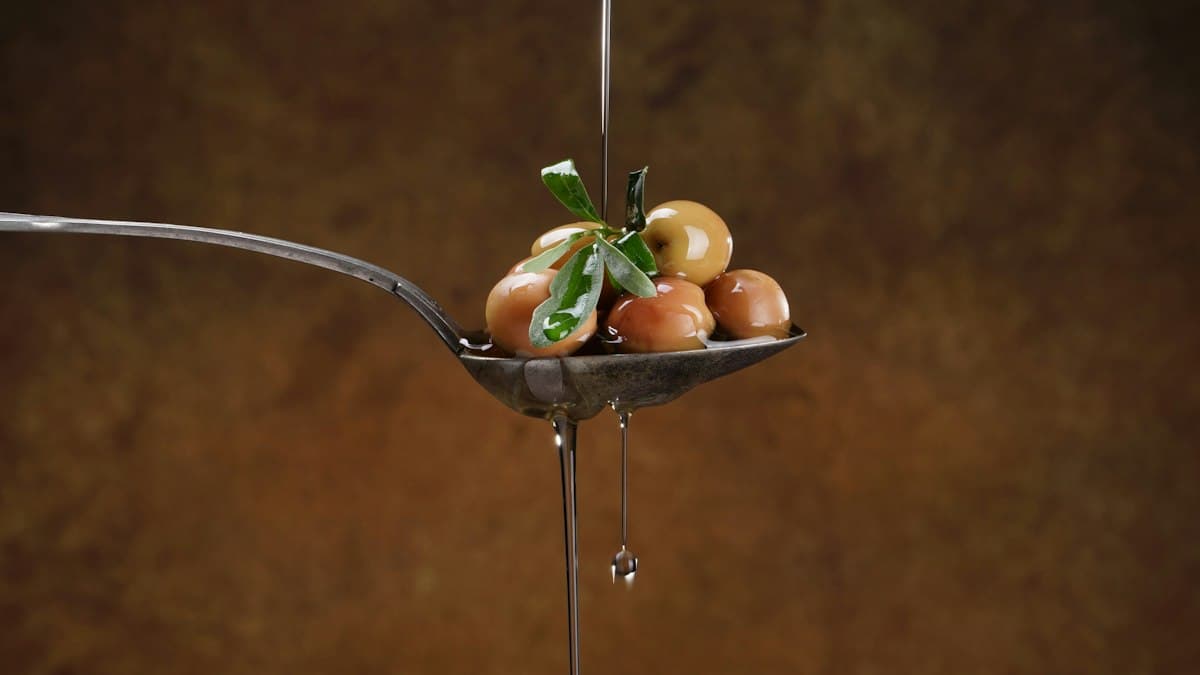
One Spoonful Makes a Difference
For anyone new to keeping olive oil on the table, the first question is usually the most straightforward: how much should I actually be using? The answer differs depending on whether the oil goes into the pan or onto the plate, and what it is eaten with. The instinct to simply use more of something considered healthful can backfire — extra virgin olive oil is a high-fat food that provides roughly 119 kcal per tablespoon (approximately 13–14 g).
The Mediterranean Diet guidelines published by Spain's Foundation for Nutrition and Food Research (FINUT) recommend 2 to 4 tablespoons (30–55 ml) of extra virgin olive oil per day as a total figure that includes oil used in cooking. Distributing that amount across all three meals — a modest pour at breakfast, a drizzle finishing a lunch dish, a tablespoon worked into the evening meal — is considered easier to sustain and gentler on digestion than consuming it all at one sitting.
Three Cultivars, Three Occasions
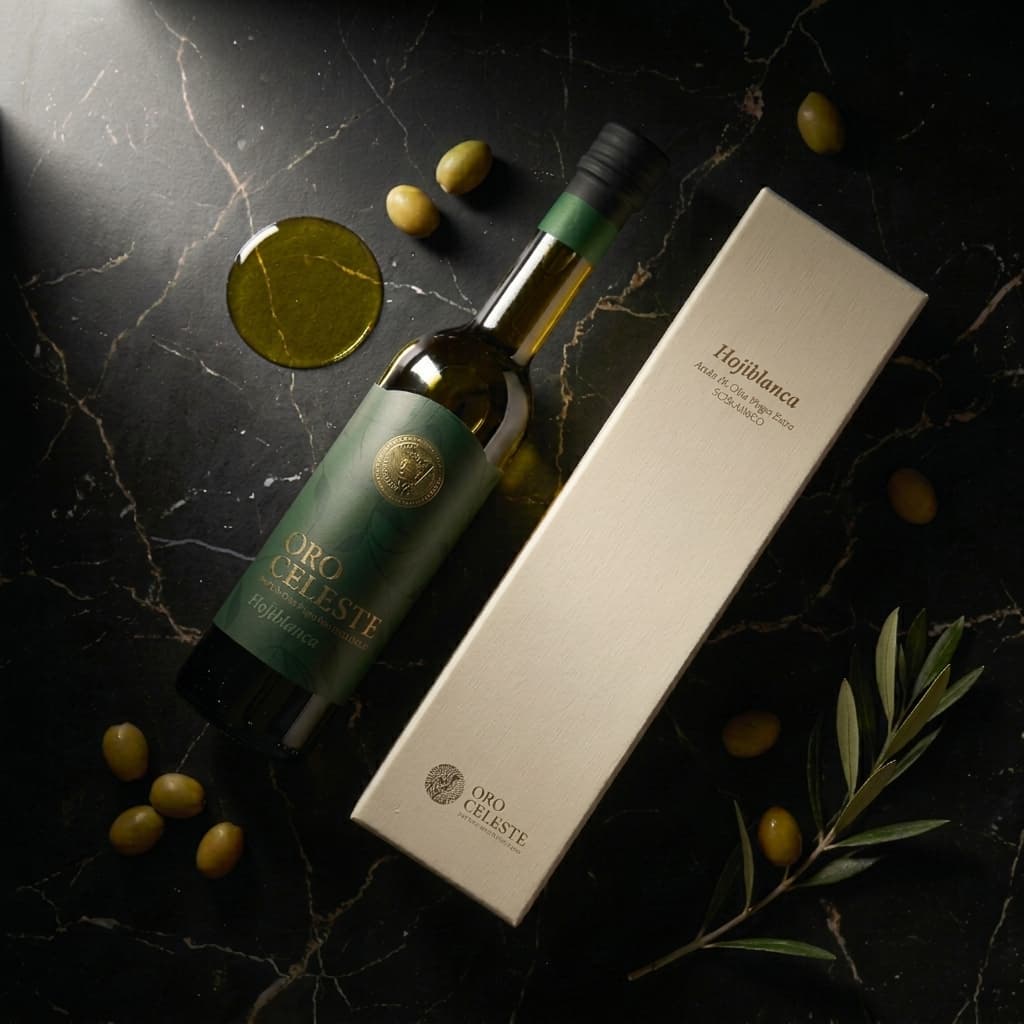
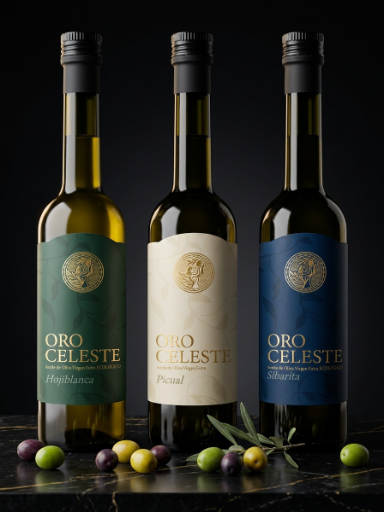
ORO CELESTE produces three single-cultivar extra virgin olive oils: Ojiblanca, Sibarita, and Picual. Because acidity and polyphenol content differ between cultivars, choosing by occasion makes each bottle more useful.
Ojiblanca registers an acidity of 0.16% and a polyphenol content above 600 mg/kg. Its mild notes of apple and almond suit applications where heat is absent — salad dressings, raw-vegetable dips, a drizzle over a slice of bread at breakfast, or a teaspoon stirred into plain yogurt.
Sibarita has the lowest acidity of the three at 0.14%, with polyphenols above 500 mg/kg. Delicate grassy and herbal notes make it a natural finishing oil for egg dishes, pasta, and soups. Its low acidity is an indicator of overall freshness, and its approachable flavor profile suits everyday cooking at the final stage.
Picual records an acidity of 0.20% and polyphenols above 800 mg/kg — the highest polyphenol density of the three. Its characteristic bitterness and peppery finish are associated with compounds including oleocanthal and oleacein, both of which have been the subject of olive polyphenol research at the University of California, Davis (UC Davis). Bold-flavored dishes — roasted vegetables, gratin, a steak finished at the table — pair well with Picual's intensity.
Timing Within the Day
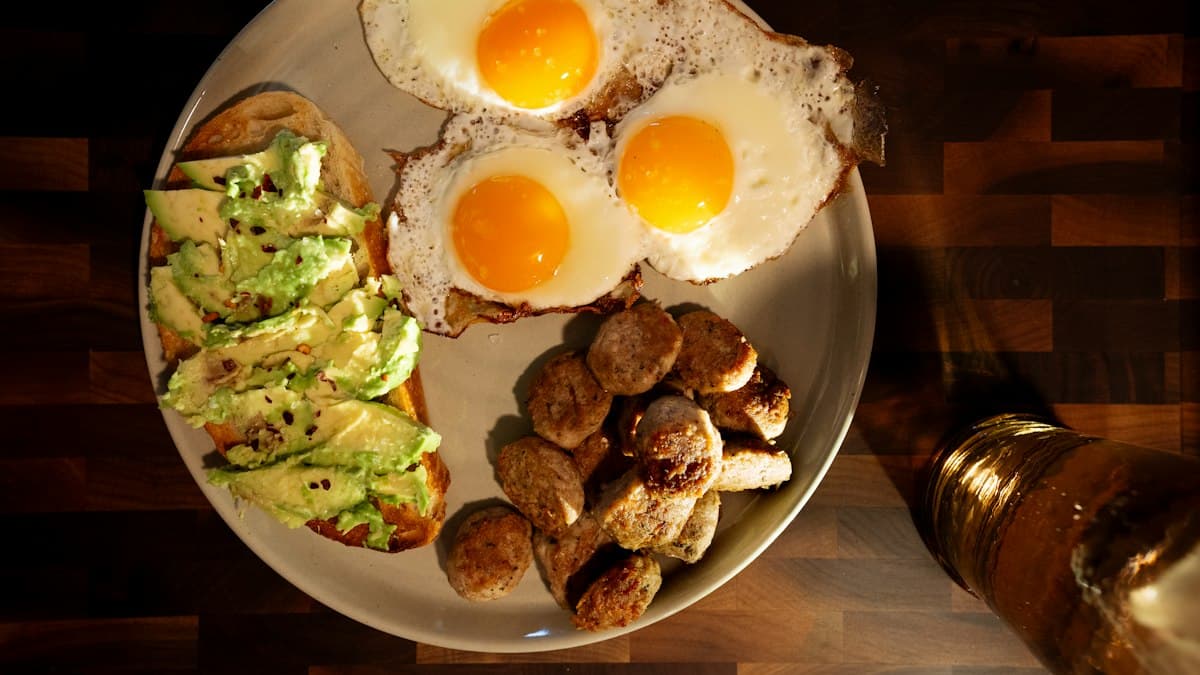
A growing number of olive oil enthusiasts begin the morning with a single spoonful before eating anything else. According to material published by the Italian olive oil producers' association Unaprol, the practice of tasting fresh oil on an empty stomach at harvest time has been documented in parts of Mediterranean farming culture for centuries. In a contemporary context, fasted intake attracts interest from a digestive-absorption standpoint, though anyone with a sensitive stomach may find it more comfortable to have even a small piece of bread alongside.
At lunch and dinner, adding roughly one tablespoon during the final stage of cooking or pouring it directly at the table onto individual plates are both widely recommended approaches. For higher-heat cooking, the smoke point is worth keeping in mind: extra virgin olive oil has a smoke point in the range of approximately 190–210 °C, and the International Olive Council (IOC) has reported that it can be used without meaningful quality loss at the temperatures common to everyday home cooking. Sustained deep-frying is generally best avoided.
Storage and Freshness — Conditions Matter as Much as Quantity
Even a high-quality extra virgin olive oil deteriorates quickly under poor storage conditions. Light, heat, and oxygen are the primary drivers of oxidation. The baseline is simple: store the bottle tightly sealed, away from direct sunlight, in a cool area between 15 and 20 °C. Refrigeration causes the oil to solidify and turn cloudy, but this is a normal physical response rather than a sign of spoilage — the oil returns to its transparent state at room temperature.
After opening, finishing the bottle within 30 to 60 days preserves flavor best. Choosing smaller bottles and opening them more frequently keeps each pour fresher than working through a large format over many months. ORO CELESTE labels indicate the window during which each cultivar maintains its peak aroma and flavor, making it worth checking the date before the first pour.
Consistency Is the Point
The most important principle of daily olive oil use is not occasional large quantities but a small, steady amount every day. Dietary fat research from the Harvard T.H. Chan School of Public Health has reported that the health associations observed with olive oil in Mediterranean Diet studies were linked to consistent everyday use over months rather than to isolated, high-intake episodes — and that it is too early to conclude what role any single component plays. Integrating olive oil as part of a food culture, rather than treating it as a supplement to dose, is the habit that holds.
A gentle morning spoonful of Ojiblanca, Sibarita finishing an evening pasta, Picual brought out for a weekend roast — rotating through the three cultivars keeps the table interesting and gradually sharpens a palate for what good oil actually tastes like.
Frequently asked questions
- How many tablespoons of olive oil should I eat per day?
- The Mediterranean Diet guidelines published by Spain's Foundation for Nutrition and Food Research (FINUT) recommend 2 to 4 tablespoons (30–55 ml) of extra virgin olive oil per day, including oil used in cooking. Spreading that amount across breakfast, lunch, and dinner is considered more practical than taking it all at once.
- Is it better to take olive oil on an empty stomach?
- Taking a small spoonful of olive oil before breakfast is a longstanding habit in parts of the Mediterranean. According to records compiled by the Italian olive oil producers' association Unaprol, some traditional farming households have tasted fresh-pressed oil on an empty stomach at harvest time for centuries. If your stomach is sensitive, pairing even a small amount with bread or food may be more comfortable.
- Can you cook with extra virgin olive oil at high heat?
- Extra virgin olive oil has a smoke point in the range of approximately 190–210 °C, and the International Olive Council (IOC) has reported that it can be used without significant quality loss at the temperatures typical of everyday home cooking. Prolonged deep-frying, which sustains very high heat over time, is generally best avoided.
- Which ORO CELESTE cultivar has the most polyphenols?
- Among ORO CELESTE's three offerings, Picual has the highest polyphenol density at over 800 mg/kg, followed by Ojiblanca at over 600 mg/kg and Sibarita at over 500 mg/kg. Picual's characteristic bitterness and peppery finish are linked to compounds including oleocanthal and oleacein, both of which have been highlighted in olive polyphenol research at UC Davis.
- How long does an open bottle of extra virgin olive oil stay fresh?
- Once opened, finishing the bottle within 30 to 60 days is recommended. Buying smaller bottles more frequently preserves freshness better than holding a large bottle for months. ORO CELESTE labels indicate the window during which each cultivar is at peak flavor — checking that date before opening is a useful habit.
Related reading
- Heat, Smoke, and Polar Compounds: The Chemistry of Cooking with Olive Oil
Heating olive oil triggers a cascade of hydrolysis, oxidation, and polymerization reactions that accelerate past the smoke point. This guide traces the science of polar compound formation and explains why high-polyphenol EVOO tends to hold up better under heat.
- Does Olive Oil You Eat Reach Your Skin? A Clinical Research Roundup
A growing body of clinical research is examining whether regular dietary intake of olive oil is associated with measurable changes in skin hydration and elasticity. This guide summarizes the current evidence, its limits, and how the findings sit within the broader context of Mediterranean eating patterns.
- Senescent Cells, Senolytics, and the Question of Olive Oil Polyphenols
The senolytic diet hypothesis has drawn attention to plant polyphenols as potential allies against aging cells. This guide maps where extra virgin olive oil's oleocanthal and related phenolic compounds currently sit in that research — and what the evidence cannot yet support.
- Olive Oil, Antioxidants, and Fatigue: A Guide to the Emerging Clinical Research
Extra virgin olive oil is drawing growing attention in oxidative stress and chronic fatigue research, with its polyphenols and oleic acid studied for potential roles in cellular energy metabolism. Here is what the current clinical evidence actually shows.
- Bone Health on the Table: What the Osteoblast and Calcitriol Research Says About Olive Oil
From oleic acid's reported role in osteoblast differentiation to calcitriol absorption and polyphenol activity, a growing body of cell and animal research links extra virgin olive oil to bone metabolism — though the clinical picture is still forming.
- Olive Oil and Inflammation: What Two Decades of Research Have Found
From oleocanthal's proposed COX-inhibiting mechanism to EFSA's conditional polyphenol claim, this guide traces what peer-reviewed research has — and has not — established about EVOO's role in an anti-inflammatory diet.
Tags