Craft
Set Up a Home Olive Oil Tasting: Lighting, Temperature, Glasses, and Tasting Notes
A professional-level olive oil tasting environment does not require special equipment. This guide walks through the exact setup — lighting, oil temperature, glass selection, and a simple scoresheet — that lets any curious cook build real sensory skills at home.
Translated from the Korean edition, originally published September 26, 2026 · read the original
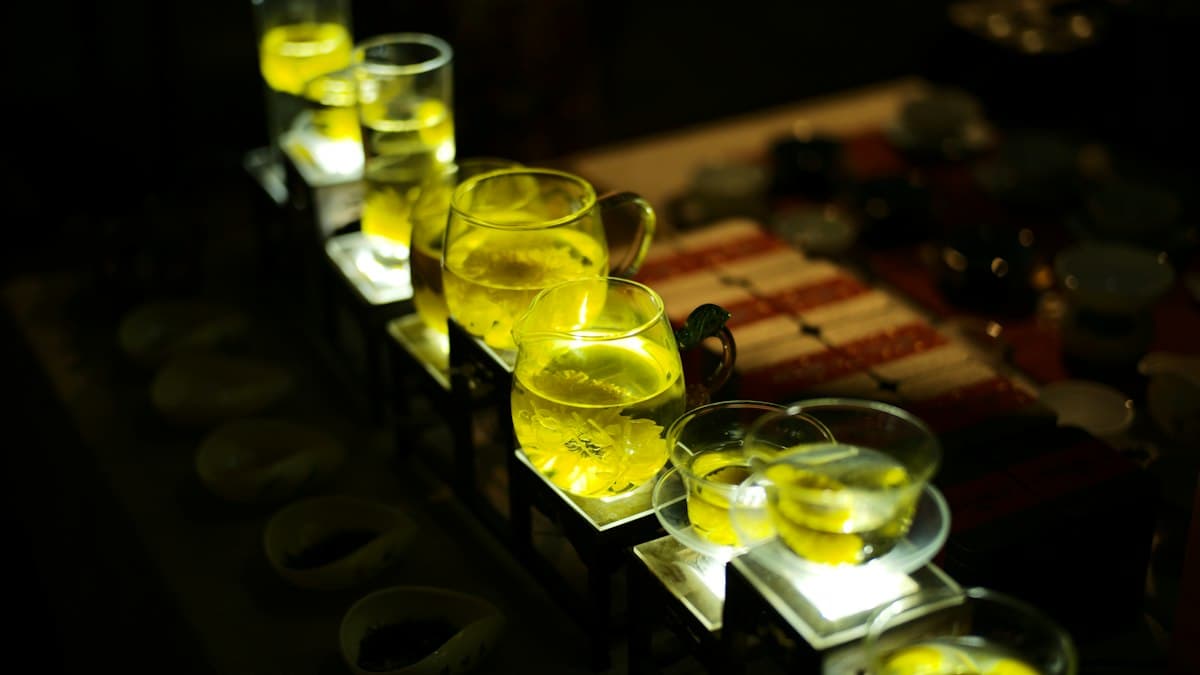
Why Taste Olive Oil at Home
The most reliable way to judge olive oil quality is sensory evaluation conducted by a trained, accredited panel. The IOC's definition of the extra virgin grade requires both chemical thresholds and a passing sensory result — neither alone is sufficient. According to the IOC's sensory evaluation guidelines, trained panelists develop the ability to distinguish flavor defects from positive attributes through systematic, repeated tasting. That same principle applies to any curious consumer: structured home tasting is a genuinely worthwhile starting point for understanding what is in the bottle.
The process sharpens perception over time. With repeated comparative sessions, the differences among fresh fruitiness (Fruttato), bitterness (Amaro), and peppery finish (Piccante) become intuitive rather than abstract. No specialist equipment or large space is required — only the right setup, focused attention, and the habit of writing things down.
Environment — Lighting and Temperature Shape the Results
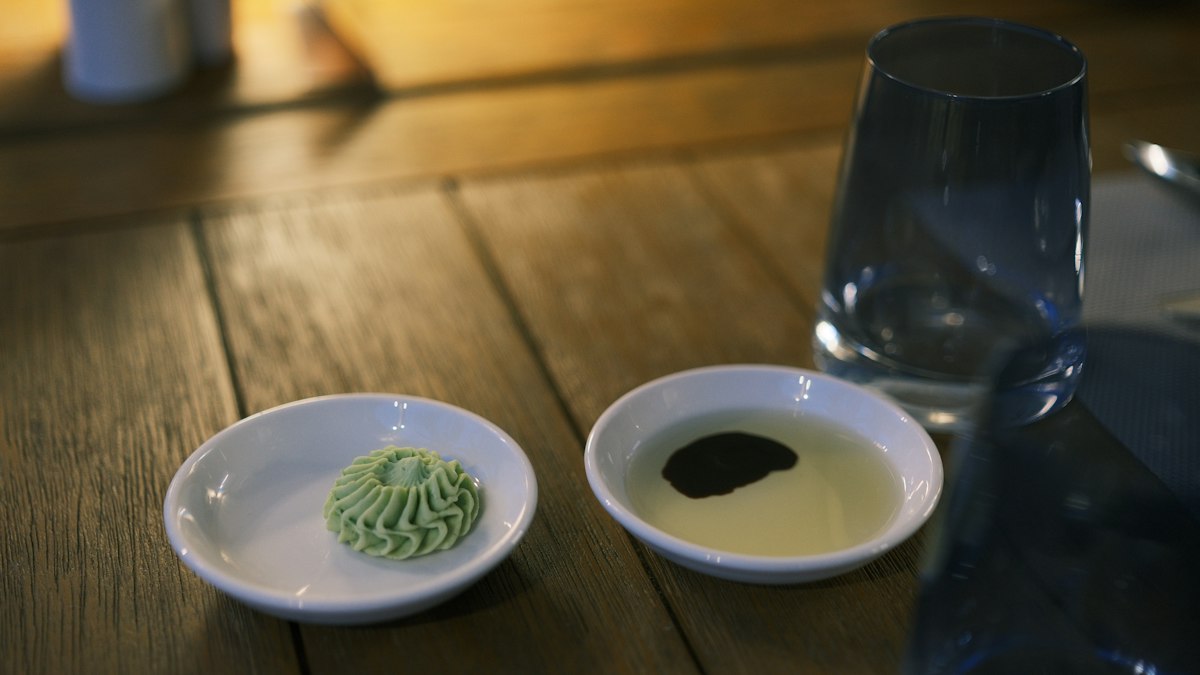
Professional tasting panels work under blue or red lighting to prevent the oil's color from creating bias before a single drop is tasted. The IOC's standard sensory procedure states explicitly that color has no direct relationship to quality, so visual information is deliberately excluded. At home, colored or opaque glasses achieve a similar effect.
For ambient lighting, soft indirect light is ideal. Harsh fluorescent overhead lighting tends to increase eye strain and, in turn, reduce olfactory concentration.
Temperature is one of the most consequential variables in a home tasting. According to the IOC sensory evaluation guidelines and material published by the Spanish olive oil producers' association ASOLIVA, the recommended oil temperature at the moment of tasting is approximately 28 °C, because volatile aroma compounds are released most effectively at that point. At home, pouring the oil into the glass and then cupping it in both hands for two to three minutes brings it close to that target. In winter, resting the glass on top of a small cup of warm water is an easy workaround.
The tasting space itself should be free of any strong aromas. Scented candles, air fresheners, perfume, and nearby cooking smells all compromise olfactory discrimination. The IOC guidelines specify that professional panel rooms must be thoroughly isolated from external odors — the same principle applies at the kitchen table.
Choosing a Glass — Small Decisions, Large Impact
The traditional olive oil tasting glass is cobalt blue — the color masks the oil's appearance while the tulip shape concentrates aromas inside the bowl. The IOC standard tasting glass, adapted from the ISO 3591 specification, narrows toward the rim precisely to trap volatile compounds.
For home use, four criteria narrow the choice quickly. First, a capacity of roughly 100–150 mL is appropriate; anything larger allows aromas to dissipate before they reach the nose. Second, the opening should be narrower than the widest point of the bowl. Third, if the glass is transparent, placing a small watch glass or a saucer on top for a minute before tasting traps the aromas and compensates for the lack of colored glass. Fourth, a small ISO-format wine glass or a compact brandy snifter both serve the purpose well.
Fifteen to twenty milliliters of oil per pour is enough for a full evaluation when the glass shape is correct.
Tasting Sequence and Palate Technique
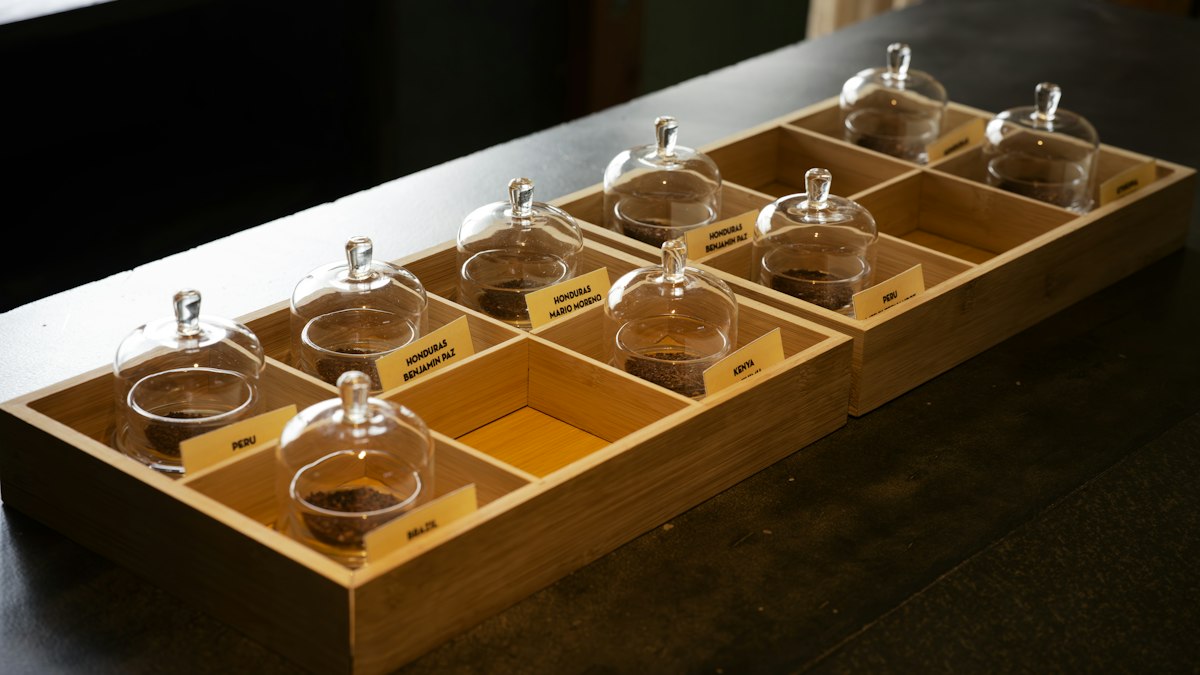
A structured tasting moves through three stages.
Stage 1 — Olfaction: Cup the glass in both hands for about one minute, then lift the cover and inhale slowly and deeply. Fresh extra virgin olive oil has been reported to yield aromas of grass, tomato leaf, almond, apple, and artichoke, among others. Musty, fermented, or rancid impressions at this stage suggest a defective oil.
Stage 2 — Gustation: Take a small sip and move it slowly across the entire mouth. Pay attention in sequence: bitterness at the front of the tongue, any savory or sweet impression in the middle, and the peppery finish at the back of the throat. According to the IOC sensory evaluation glossary, bitterness and pungency are both classified as positive attributes and are associated with polyphenol content.
Stage 3 — Retronasal perception: Immediately after swallowing, close the mouth and exhale slowly through the nose. Additional aromatic notes often appear at this point; the complexity and persistence of that finish can help gauge the oil's overall depth.
When comparing multiple oils, rinse with plain water between samples and cleanse the palate with a slice of plain apple or an unsalted cracker. Bread is worth avoiding — it tends to absorb the oil's own aroma compounds and can muddy the next sample.
Keeping a Scoresheet — Records Outlast Memory
The most common mistake in home tasting is relying on impressions held in memory rather than writing them down immediately. Professional panels record and quantify every evaluation. A home scoresheet does not need to be elaborate — five fields are enough.
① Oil information: origin, cultivar, harvest year, date opened. ② Color: a brief visual note — yellow, golden, pale green. ③ Nose: up to three aroma keywords. ④ Palate: bitterness, pungency, and sweetness each rated 1–5, plus one line on texture — thin, creamy, buttery. ⑤ Overall impression: a personal score out of 10, one or two suggested food pairings, and whether you would buy it again.
As the records accumulate, a personal flavor profile emerges from the data. Whether a taster gravitates toward assertive pungency or delicate, nuanced fruitiness — and which cultivars consistently earn higher scores — becomes visible in a way that memory alone cannot sustain. That accumulation of self-knowledge is what olive oil literacy actually looks like in practice.
A Comparative Tasting Curriculum — Where to Begin
For anyone starting out, two session formats work particularly well: the same cultivar across different harvest years, or different cultivars from the same harvest year tasted side by side. Comparing a Picual and an Ojiblanca from Andalusia on the same day, for instance, makes cultivar differences immediately tangible. Picual is generally known among professionals for its robust, herbal character and assertive peppery finish; Ojiblanca tends toward delicate fruitiness with almond nuances.
Four samples per session is a practical ceiling. Sensory research has reported that olfactory fatigue accumulates as a session lengthens, causing tasters to miss subtle characteristics in later samples. Short, concentrated sessions repeated regularly are more effective for building genuine sensory skill than a single long sitting.
Frequently asked questions
- What temperature should olive oil be when tasting it at home?
- According to IOC sensory evaluation guidelines and data from the Spanish olive oil producers' association ASOLIVA, the recommended tasting temperature is around 28 °C. At that point volatile aroma compounds are released most effectively. At home, cupping the glass in both hands for two to three minutes brings the oil close to that target.
- What kind of glass should I use for olive oil tasting?
- Professional panels use a cobalt-blue tulip-shaped glass derived from the ISO 3591 standard — the narrow rim concentrates aromas and the dark color hides the oil's appearance. At home, a small 100–150 mL glass with a slightly narrowing mouth works well. A small ISO wine glass or a brandy snifter are both practical alternatives; if the glass is transparent, cover it with a small watch glass to trap aromas before you smell.
- What are the positive and negative descriptors in olive oil tasting?
- According to the IOC sensory evaluation glossary, bitterness (Amaro) and pungency (Piccante) are classified as positive attributes and are associated with polyphenol content. Fresh fruitiness (Fruttato) — think grass, tomato leaf, almond, apple, or artichoke — is also a positive sign. Musty, fermented, or rancid notes indicate defects.
- How many olive oils should I taste in one session?
- Keeping a session to four samples or fewer is advisable. Sensory research has reported that olfactory fatigue accumulates quickly, causing tasters to miss subtle characteristics in later samples. Short, focused sessions repeated over time are more effective for building sensory skills than long single sittings.
- What is the best way to compare different olive oil cultivars at home?
- Two approaches work well for beginners: tasting the same cultivar from different harvest years side by side, or tasting different cultivars from the same harvest year. For example, comparing a Picual and an Ojiblanca from Andalusia on the same day makes the contrast between cultivars immediately tangible — Picual is known for its robust, herbal character and assertive pungency, while Ojiblanca tends toward delicate fruitiness with almond nuances.
Related reading
- Six Olive Oil Off-Flavors — and How to Tell Them Apart at Home
From musty and winey-vinegary to metallic and rancid, off-flavors are the clearest signal that an extra virgin olive oil has fallen short of grade. This practical guide explains what causes each defect and how to detect them without professional panel training.
- Closer to the Source: A Practical Guide to Buying Olive Oil Direct from Producers
From farm-direct shipping and micro-importers to group buys, there are more ways than ever to reach a producer before a supermarket shelf does. This guide walks through each route, what to verify before you buy, and how to set realistic expectations on price and freshness.
- Olive Oil Confit: A Complete Guide to Low-Temperature Oil Cooking
Confit — the French technique of slow-cooking ingredients submerged in oil at low heat — finds a natural partner in extra virgin olive oil, which preserves moisture, concentrates flavor, and adds its own grassy depth to garlic, vegetables, and poultry alike.
- The Countdown Starts When You Break the Seal: An Olive Oil Oxidation Timeline
The moment you open a bottle of extra virgin olive oil, oxygen, light, and heat begin working against it. This guide maps freshness changes at one week, one month, and three months after opening — and lays out the storage habits that slow the decline.
- Organic Certification, Carbon Footprint, Water Use: A Practical Guide to Olive Oil Sustainability Labels
Behind every bottle of olive oil sit three measurable sustainability indicators — organic certification standards, carbon footprint figures, and water consumption data. Knowing how to read them turns a label logo from a marketing symbol into a genuine purchasing signal.
- Mapping the Global Olive Oil Trade: Exporters, Importers, and the Re-Export Layer in Between
Oil pressed in Spain reaches American supermarket shelves in bottles labeled Italy — a journey that reveals the layered re-export structure sitting between producer nations and end consumers. This guide traces that flow using IOC trade data.