Craft
Cold Press, First Press, Centrifuge: Decoding the Extraction Claims on Olive Oil Labels
Three terms appear on nearly every bottle of quality olive oil, yet few buyers know which ones carry legal weight and which are historical relics. This guide unpacks what cold press, first press, and centrifuge extraction actually mean — and where EU regulation draws the line.
Translated from the Korean edition, originally published September 14, 2026 · read the original
One Sentence on the Label — How Much Does It Actually Mean?
Pick up almost any bottle of olive oil and the same cluster of phrases stares back at you: Cold Press, First Press, Centrifuge Extracted. The instinctive read is reassuring — natural, gentle, fresh. But whether those words carry any verifiable promise is an entirely different question. Understanding what extraction claims do and do not guarantee is the first practical step toward buying better olive oil.
'First Press' Is a Relic of a Production Method That Barely Exists Anymore
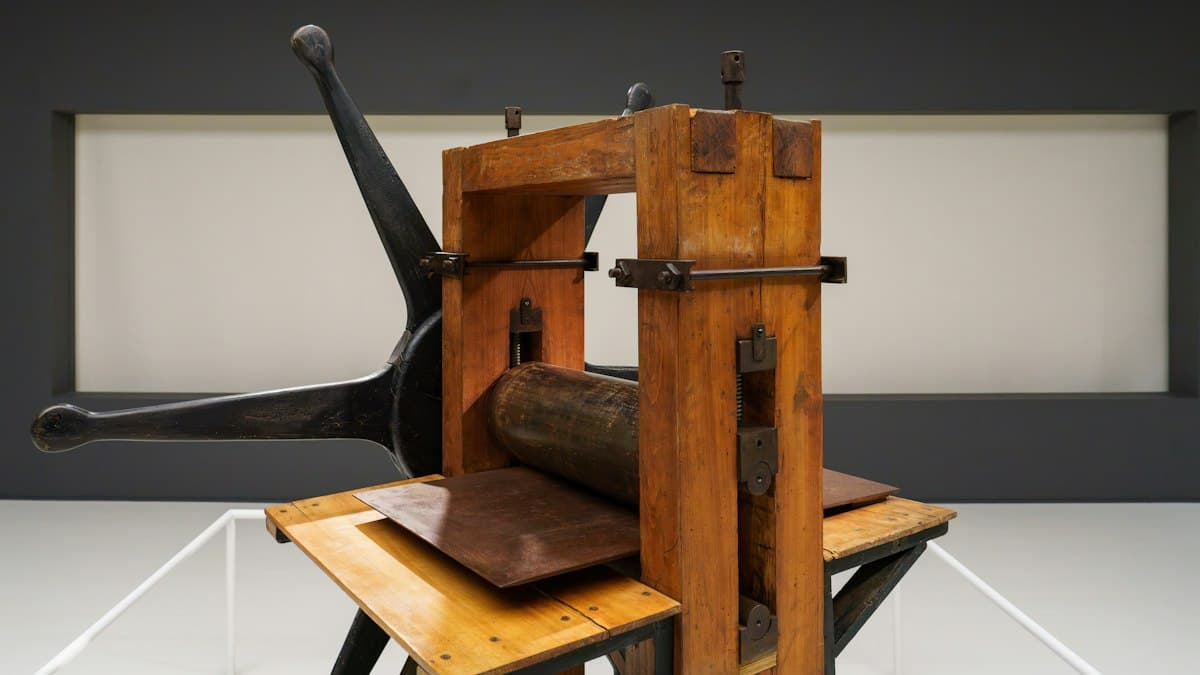
The term 'first press' — or 'first cold press' — traces back to the way olive oil was made for centuries. Olives were crushed under heavy stone mills, the resulting paste was spread onto circular fiber mats called sportos, the mats were stacked and pushed down by a hydraulic press, and the oil that ran freely from that initial squeeze was labeled first-press oil. A harder, second pressing followed to extract what remained.
Virtually none of that describes a modern olive mill. Today the dominant production method is the continuous centrifuge system: olives are crushed, the paste is malaxed, and a horizontal centrifuge called a decanter separates the oil, vegetation water, and solid pomace in a single continuous flow. A vertical centrifuge then removes residual moisture. In this process the concepts of 'first' and 'second' pressing have no meaning — there is no pressing at all.
The legal framework reflects this reality. EU regulation EC No 1348/2013, which governs olive oil grades and labeling, does not include 'first press' among the defined terms for extra virgin olive oil. A bottle bearing that phrase is not lying outright, but the claim carries no regulatory weight and almost certainly does not describe a hydraulic press.

'Cold Press' Is a Temperature Regulation — Here Is the Precise Standard
Unlike 'first press,' the cold-press claim does have a legal home. Under EU regulation EC No 1019/2002, two terms are formally defined:
- Cold Pressed: oil obtained by pressing, where the temperature of the olive paste never exceeded 27°C.
- Cold Extracted: oil obtained by centrifuge or other mechanical means, again with the paste kept at or below 27°C throughout.
The temperature threshold exists for a documented reason. During malaxation — the slow churning of the olive paste that encourages oil droplets to coalesce before separation — raising the temperature increases yield. More oil comes out of the same batch of fruit. But researchers at the Universidad de Córdoba reported that maintaining malaxation temperatures at or below 27°C was associated with higher retention of heat-sensitive bioactive compounds, including hydroxytyrosol and oleocanthal-family polyphenols. Volatile aromatic compounds responsible for fresh, grassy, and peppery notes are also more likely to survive lower-temperature processing.
For a consumer scanning a label, 'cold pressed' or 'cold extracted' is therefore the most substantive extraction-related claim available: it is specific, temperature-anchored, and EU-regulated.
Centrifuge Extraction Is Not a Shortcut — It Is the Industry Standard
The word 'centrifuge' sometimes reads as industrial shorthand for corners cut. It should not. The continuous centrifuge process is the global production standard precisely because, according to IOC technical documentation, it offers significant advantages in hygiene control and minimizes the window during which the oil is exposed to oxygen — both critical factors in keeping acidity, peroxide values, and oxidative markers (K268 and K232 spectrophotometric indices) within acceptable ranges.
The older hydraulic press, by contrast, involved considerable contact time between oil and air, and the fiber mats were notoriously difficult to clean between batches, raising the risk of fermentation residues contaminating subsequent pressings.
The honest conclusion is that machinery type is the wrong variable to optimize. What determines whether a centrifuge-extracted oil is exceptional or mediocre is the combination of factors the producer controls: the freshness of the incoming olives (ideally milled within hours of harvest), the extraction temperature, the duration of malaxation, and the rigor of hygiene at every stage.

Extra Virgin Grade Is the Non-Negotiable Baseline
Step back from the extraction debate and the single most reliable quality signal on any bottle is the extra virgin designation — provided it is genuine. Under IOC standards, extra virgin olive oil must meet all four of the following conditions simultaneously:
- Free fatty acid content (acidity) of 0.8% or less
- Peroxide value of 20 meq O₂/kg or less
- No chemical defects as defined by spectrophotometric and other analytical criteria
- A panel-test score of zero for sensory defects, assessed by trained tasters
An oil that fails any one of these thresholds is classified as virgin olive oil or lampante (a grade destined for refining, not for direct consumption) — regardless of how many flattering words appear on its label. Conversely, an oil extracted by continuous centrifuge at controlled low temperature, meeting every extra virgin criterion, is by definition a high-quality product.
The grade is the floor. Extraction language, at best, provides additional context above that floor.
How to Read a Label: A Practical Checklist
When choosing an olive oil, extraction claims are worth noting — but they belong at the end of the evaluation, not the beginning. A sensible order of priority:
1. Confirm extra virgin grade. This is the only legally defined quality threshold that covers chemistry, sensory evaluation, and production method simultaneously. Without it, no other label claim compensates.
2. Check the harvest date or best-by date. Freshness degrades with time regardless of how carefully the oil was made. Consumption within 12–18 months of harvest is broadly recommended across the industry.
3. Note 'cold pressed' or 'cold extracted' as a positive secondary signal. Under EU regulation, either phrase confirms that paste temperature stayed at or below 27°C — a condition associated with better polyphenol and aroma retention.
4. Treat 'first press' alone as a neutral marketing phrase. It references a production method that is no longer standard and has no standing in current EU labeling regulation. Weigh it alongside the other indicators rather than as a quality marker in its own right.
5. Favor single-origin products with named region and cultivar. When a producer specifies the estate, harvest zone, and olive variety, traceability is inherently higher and quality-control claims are easier to verify.
Label language is a space where marketing copy and technical regulation share the same small rectangle of paper. Knowing which phrases are regulated, which are historical artifacts, and which are genuinely informative is what separates a considered purchase from an expensive guess.
Frequently asked questions
- What does cold pressed mean on an olive oil label?
- Under EU regulation EC No 1019/2002, 'cold pressed' is a legally defined term: the olive paste must not exceed 27°C during extraction. It is one of the few extraction-related label claims that carries a specific, enforceable standard.
- Is first press olive oil better than other olive oils?
- 'First press' refers to an old hydraulic-press system that has largely been replaced by continuous centrifuge methods. The term has no legal definition under current EU olive oil regulations (EC No 1348/2013) and does not on its own guarantee any particular quality level.
- Is centrifuge-extracted olive oil lower quality than pressed oil?
- Not inherently. According to technical guidance from the International Olive Council (IOC), modern continuous centrifuge systems offer better hygiene control and shorter oxidation exposure than traditional presses. Quality depends far more on temperature management, olive freshness, and processing time than on the type of machinery used.
- What is the most reliable quality indicator on an olive oil label?
- The 'extra virgin' grade is the most meaningful benchmark. Under IOC standards, it requires free acidity below 0.8%, a peroxide value below 20 meq O₂/kg, no chemical defects, and a panel-test score of zero for sensory faults — regardless of what extraction method was used.
- How should I read an olive oil label to find a good bottle?
- Prioritize in this order: (1) confirmed extra virgin grade; (2) harvest date or best-by date — consumption within 12–18 months of harvest is generally recommended; (3) 'cold pressed' or 'cold extracted' as a positive but secondary signal; (4) single-origin labeling with named region and cultivar, which tends to reflect greater production transparency.
Related reading
- Closer to the Source: A Practical Guide to Buying Olive Oil Direct from Producers
From farm-direct shipping and micro-importers to group buys, there are more ways than ever to reach a producer before a supermarket shelf does. This guide walks through each route, what to verify before you buy, and how to set realistic expectations on price and freshness.
- Organic Certification, Carbon Footprint, Water Use: A Practical Guide to Olive Oil Sustainability Labels
Behind every bottle of olive oil sit three measurable sustainability indicators — organic certification standards, carbon footprint figures, and water consumption data. Knowing how to read them turns a label logo from a marketing symbol into a genuine purchasing signal.
- Mapping the Global Olive Oil Trade: Exporters, Importers, and the Re-Export Layer in Between
Oil pressed in Spain reaches American supermarket shelves in bottles labeled Italy — a journey that reveals the layered re-export structure sitting between producer nations and end consumers. This guide traces that flow using IOC trade data.
- Six Reasons a Bottle of Great EVOO Costs What It Does
From hand-harvesting to cold-chain logistics, the price of extra virgin olive oil is built layer by layer across every stage of production. Breaking down those cost factors helps explain why genuine quality rarely comes cheap.
- Budget, Mid-Range, or Premium Olive Oil: The Numbers That Actually Separate Them
Every bottle on the shelf says 'extra virgin,' yet prices for 500 ml can vary tenfold. Acidity, polyphenols, harvest timing, and certification are the real dividing lines — and they're all readable on the label.
- Olive Oil Confit: A Complete Guide to Low-Temperature Oil Cooking
Confit — the French technique of slow-cooking ingredients submerged in oil at low heat — finds a natural partner in extra virgin olive oil, which preserves moisture, concentrates flavor, and adds its own grassy depth to garlic, vegetables, and poultry alike.