Craft
Organic Certification, Carbon Footprint, Water Use: A Practical Guide to Olive Oil Sustainability Labels
Behind every bottle of olive oil sit three measurable sustainability indicators — organic certification standards, carbon footprint figures, and water consumption data. Knowing how to read them turns a label logo from a marketing symbol into a genuine purchasing signal.
Translated from the Korean edition, originally published September 19, 2026 · read the original
Why Olive Oil Sustainability Matters Now
Alongside acidity and polyphenol counts, 'sustainability' has become one of the most frequently encountered words in olive oil marketing. As the links between food production and climate change have become a genuine concern for everyday shoppers, a growing number of producers are publishing organic certification status, carbon footprint figures, and water consumption data as core product indicators. According to the IOC's 2023 annual report, approximately 22% of EU olive-growing area now holds organic certification — a figure that represents a rise of nearly 6 percentage points compared with 2018. More important than the headline number, though, is understanding what these indicators actually mean in practice.
Organic Certification: The Standards Behind the Logo
Organic certification is not a single uniform standard. The most widely recognised framework is EU Organic Regulation 2018/848 (which revised the earlier EC No 834/2007), requiring the absence of synthetic pesticides and chemical fertilisers, a conversion period of at least three years, and annual third-party audits. The USDA Organic programme, which targets the US market, and Japan's JAS Organic certification follow similar principles but differ in the detail of their permitted-inputs lists.
The EU green leaf logo — the star-shaped green emblem common on Spanish, Italian, and Greek bottles — confirms that the product meets EU Organic Regulation requirements. However, certification verifies practices only up to the farm gate. Energy consumption during milling and bottling, and the environmental impact of packaging materials, must be assessed against separate standards. For a more accurate purchasing decision, it is worth checking whether a producer publishes environmental data across the full production chain, not just at the farming stage.
Carbon Footprint: The Greenhouse Gas Cost of One Litre
The carbon footprint of olive oil is shaped by so many variables — cultivar, farming method, milling process, and transport distance — that no single figure applies universally. A life-cycle assessment (LCA) study published by the University of Bologna reported that producing 1 kg of extra virgin olive oil generates approximately 2.5–3.5 kg CO₂eq under intensive farming systems and 1.5–2.0 kg CO₂eq under traditional low-density cultivation. Intensive systems deliver higher yields but carry a higher carbon cost because of greater machinery use and fertiliser inputs.
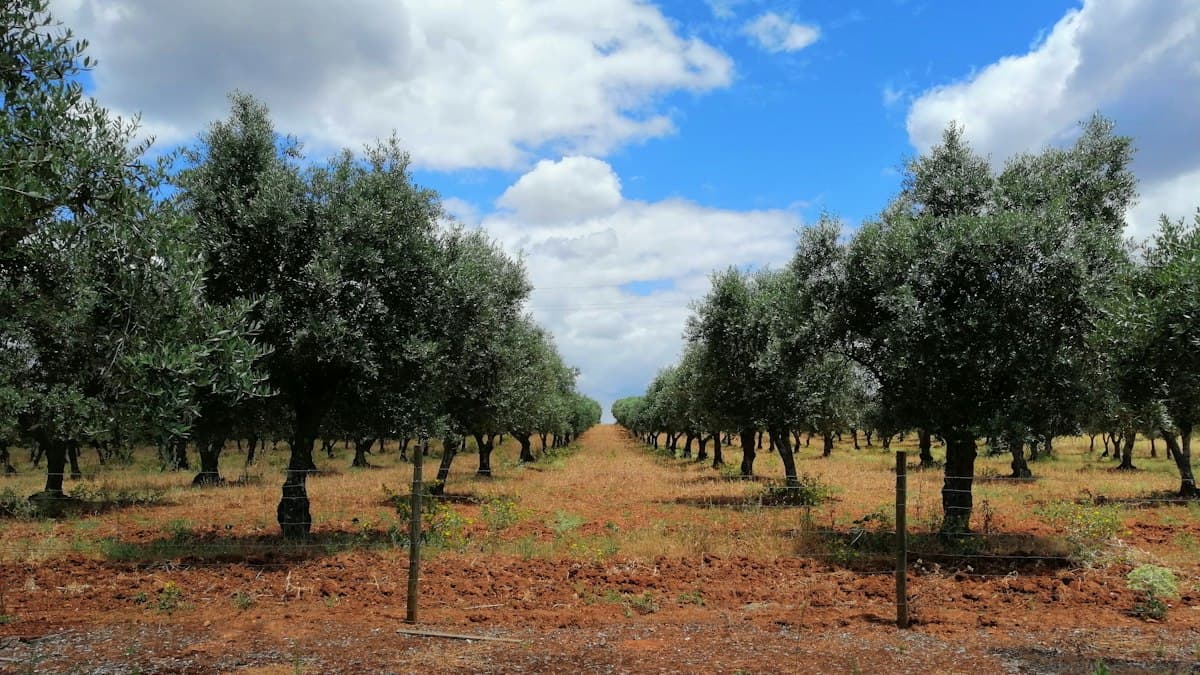
One factor worth noting is the carbon sequestration capacity of the olive tree itself. Olive trees survive for centuries in Mediterranean climates, continuously absorbing atmospheric CO₂. According to FAO 2022 data, one hectare of mature olive grove can sequester an estimated 3.6 tonnes of CO₂ per year. When this sequestration is offset against production emissions, some traditional farms approach carbon neutrality at the farm gate — though full-chain assessments that include logistics and packaging still show net emissions.
When a producer publishes a carbon footprint figure, it is worth checking whether the disclosure distinguishes between Scope 1 (direct emissions from the producer's own operations), Scope 2 (indirect emissions from purchased energy), and Scope 3 (full supply-chain emissions). A disclosure limited to Scope 1 typically represents less than half of the complete picture.
Water Use: The Central Challenge Facing the Mediterranean
Water consumption is at least as significant a sustainability indicator as carbon footprint for olive oil production. The Mediterranean basin is experiencing growing variability in rainfall as a result of climate change; the IPCC Sixth Assessment Report (2022) projects that summer precipitation in southern European Mediterranean regions could decrease by 10–20% relative to current levels by mid-century.
The volume of water required to produce one litre of olive oil varies considerably by farming method. According to Water Footprint Network data, irrigated olive cultivation can consume roughly 3,000–5,000 litres of water per litre of oil, while traditional dry-farming methods — relying entirely on rainfall — are reported to bring that figure down by more than half. The water-saving dimension of dry farming is one reason dryland olive oils command a premium in quality-focused markets.
The wastewater generated during milling — known as alpechin — presents a separate concern. Alpechin carries a high concentration of organic matter and can cause water pollution if not properly treated. Two-phase extraction systems substantially reduce the volume of this effluent compared with three-phase systems, and the two-phase approach is spreading rapidly among European producers as an environmentally preferable milling technology.
A Practical Label-Reading Checklist
Four perspectives help translate sustainability indicators from label copy into actionable information.
Scope of certification. Look for third-party logos such as the EU Organic emblem, USDA Organic, or Rainforest Alliance — then check the producer's website to confirm whether certification covers only the farm stage or extends across the full production process.
Carbon footprint disclosure and scope. Prioritise data explicitly identified as LCA-based and note whether the figure covers Scope 1 only or includes Scopes 2 and 3. A number without a stated scope definition is difficult to interpret meaningfully.
Irrigation method. Labels or producer descriptions that specify dry farming, deficit irrigation, or drip irrigation signal measurable efforts to reduce water consumption and are worth treating as meaningful differentiators.
Milling process. References to two-phase (two-phase) extraction and cold extraction (below 27 °C) indicate production practices associated with lower environmental impact and, in the case of cold extraction, better preservation of polyphenols and volatile aromatics.
Choosing Olive Oil by Sustainability Criteria
Organic certification, carbon footprint figures, and water use indicators do not directly guarantee the chemical quality of the oil in the bottle. Considered together, however, they are a reliable indirect measure of producer transparency and environmental accountability. If acidity and polyphenol content are the chemical quality language of olive oil, then sustainability data is a second language describing the ecological cost at which that bottle was made. Spending a little more time with a label reveals a dimension of value that the standard quality indicators alone cannot capture.
Frequently asked questions
- What does the EU organic logo on an olive oil bottle actually mean?
- The EU green leaf logo confirms that the product meets EU Organic Regulation 2018/848 — no synthetic pesticides or chemical fertilisers, a minimum three-year conversion period, and annual third-party audits. Importantly, the certification covers the farming stage; energy use during milling and bottling, and packaging materials, are assessed under separate standards. Checking the producer's website for full supply-chain data gives a more complete picture.
- How much CO₂ does producing a litre of olive oil generate?
- It varies significantly by growing method. A life-cycle assessment published by the University of Bologna reported that producing 1 kg of extra virgin olive oil generates approximately 2.5–3.5 kg CO₂eq under intensive farming and 1.5–2.0 kg CO₂eq under traditional low-density cultivation. According to FAO 2022 data, one hectare of mature olive grove can sequester roughly 3.6 tonnes of CO₂ per year, which brings some traditional farms close to carbon neutrality at the farm gate — though logistics and packaging push the full-chain figure back into net emissions.
- How much water does it take to produce a litre of olive oil?
- According to Water Footprint Network data, irrigated olive cultivation can consume roughly 3,000–5,000 litres of water per litre of oil. Traditional dryland (dry-farming) methods can cut that figure by more than half. The milling process also generates high-organic-load wastewater called alpechin; two-phase extraction systems substantially reduce this effluent compared with three-phase systems.
- What is Scope 1, 2, and 3 in an olive oil carbon footprint disclosure?
- Scope 1 covers direct emissions from the producer's own operations (farm machinery, mill energy). Scope 2 adds indirect emissions from purchased electricity or heat. Scope 3 encompasses the entire supply chain — transport, packaging, distribution, and end-of-life waste. A producer that publishes only Scope 1 figures is typically showing less than half the full picture; look for disclosures that specify which scopes are included.
- Does organic certification guarantee better olive oil quality?
- Not directly. Organic certification, carbon footprint figures, and water use indicators do not by themselves guarantee chemical quality benchmarks such as low acidity or high polyphenol content. They are, however, a reliable proxy for producer transparency and environmental accountability. Considered alongside acidity and polyphenol data, sustainability indicators give a more complete view of what a bottle of olive oil actually represents.
Related reading
- Closer to the Source: A Practical Guide to Buying Olive Oil Direct from Producers
From farm-direct shipping and micro-importers to group buys, there are more ways than ever to reach a producer before a supermarket shelf does. This guide walks through each route, what to verify before you buy, and how to set realistic expectations on price and freshness.
- Mapping the Global Olive Oil Trade: Exporters, Importers, and the Re-Export Layer in Between
Oil pressed in Spain reaches American supermarket shelves in bottles labeled Italy — a journey that reveals the layered re-export structure sitting between producer nations and end consumers. This guide traces that flow using IOC trade data.
- Cold Press, First Press, Centrifuge: Decoding the Extraction Claims on Olive Oil Labels
Three terms appear on nearly every bottle of quality olive oil, yet few buyers know which ones carry legal weight and which are historical relics. This guide unpacks what cold press, first press, and centrifuge extraction actually mean — and where EU regulation draws the line.
- Set Up a Home Olive Oil Tasting: Lighting, Temperature, Glasses, and Tasting Notes
A professional-level olive oil tasting environment does not require special equipment. This guide walks through the exact setup — lighting, oil temperature, glass selection, and a simple scoresheet — that lets any curious cook build real sensory skills at home.
- Budget, Mid-Range, or Premium Olive Oil: The Numbers That Actually Separate Them
Every bottle on the shelf says 'extra virgin,' yet prices for 500 ml can vary tenfold. Acidity, polyphenols, harvest timing, and certification are the real dividing lines — and they're all readable on the label.
- Olive Oil Confit: A Complete Guide to Low-Temperature Oil Cooking
Confit — the French technique of slow-cooking ingredients submerged in oil at low heat — finds a natural partner in extra virgin olive oil, which preserves moisture, concentrates flavor, and adds its own grassy depth to garlic, vegetables, and poultry alike.