Craft
Budget, Mid-Range, or Premium Olive Oil: The Numbers That Actually Separate Them
Every bottle on the shelf says 'extra virgin,' yet prices for 500 ml can vary tenfold. Acidity, polyphenols, harvest timing, and certification are the real dividing lines — and they're all readable on the label.
Translated from the Korean edition, originally published August 15, 2026 · read the original
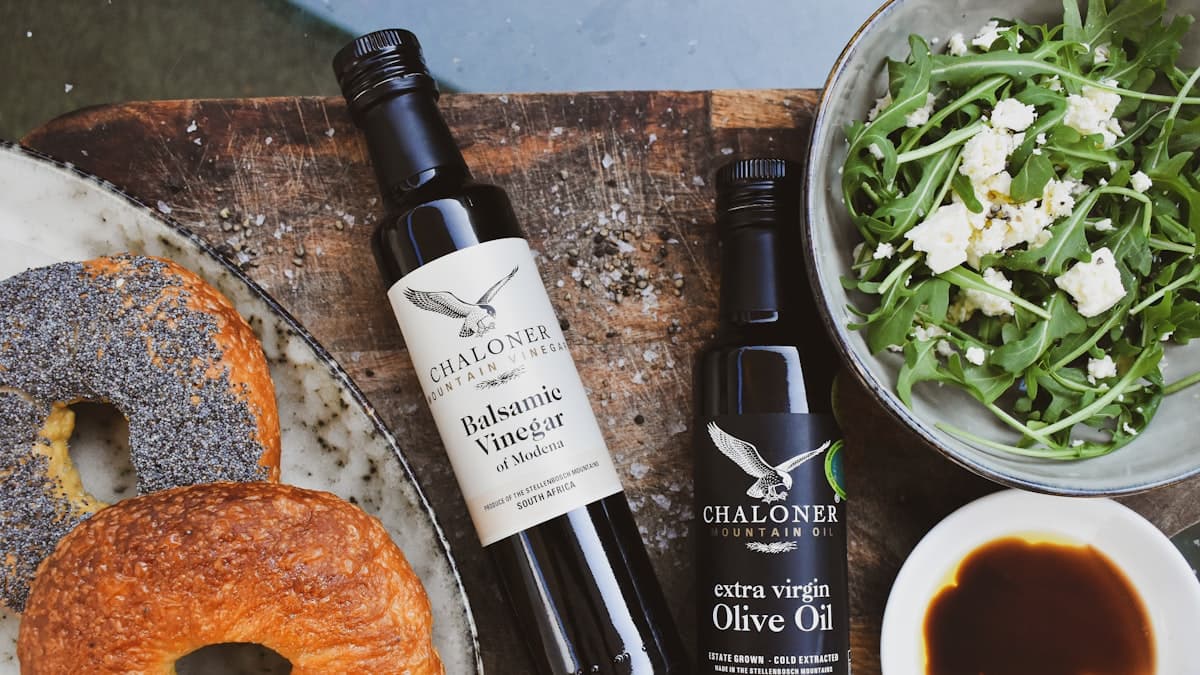
Same 'EVOO' Label, Yet Prices Ten Times Apart
Standing in front of a supermarket shelf of olive oils, most shoppers pause at least once. Every bottle reads 'Extra Virgin Olive Oil (EVOO)', yet prices for a 500 ml bottle can run from under five dollars to fifty. If the label is the same, is the contents the same? The short answer is no. EVOO is a legal minimum-standard category, and the quality variation within it is considerable.
The International Olive Council (IOC) defines EVOO by two chemical thresholds: free acidity below 0.8% and a peroxide value below 20 meq/kg. Any oil that passes both tests may carry the label. That means an oil at 0.79% acidity and one at 0.15% acidity sit in the same grade — yet the real-world quality gap between them is significant. That gap is the first key to understanding the price spread.
Three Core Indicators That Drive the Price

First: Acidity. Free acidity is an indirect indicator of how fresh the olives were when they were pressed. The faster the fruit is cold-pressed after harvest, the lower the acidity. Budget oils tend to sit in the 0.5–0.8% range; mid-range oils in the 0.3–0.5% range; and premium oils are often below 0.2%. Some single-estate products reach as low as 0.1%.
Second: Polyphenol content. Polyphenols are the group of natural antioxidants responsible for olive oil's characteristic bitterness, peppery finish, and depth of flavour. According to a report by the European Food Safety Authority (EFSA), the polyphenol compounds in olive oil are associated with protecting blood lipids from LDL cholesterol oxidation. Content is measured in mg/kg (ppm): budget oils generally fall in the 100–200 mg/kg range, mid-range oils in the 200–400 mg/kg range, and premium oils frequently exceed 500 mg/kg. Higher polyphenol levels require earlier harvesting, specific cultivar selection, and faster milling — all of which raise production costs and, consequently, price.
Third: Harvest timing and milling speed. Olives picked just before full ripeness — while still carrying some green — yield higher polyphenols and lower acidity. The trade-off is that early-harvest yields are the smallest of the season, pushing the cost per litre up. Fully ripe olives produce more oil per tree but shed polyphenols sharply. Many budget products use large-volume, fully ripe harvests blended to hit the legal minimum while keeping costs down.
How Budget, Mid-Range, and Premium Actually Differ
Budget (roughly under $6 per 500 ml): Most are multi-country blends — within the EU, Italian, Spanish, and Greek oils are commonly combined, and some products incorporate a proportion of refined olive oil. They clear the legal acidity threshold but tend to carry low polyphenol counts and simple flavour profiles. For high-heat cooking, they represent reasonable value.
Mid-range (roughly $10–20 per 500 ml): Origin labelling tends to be more specific — a single country or a named region. This is the tier where voluntary polyphenol labelling begins to appear, and cold-pressed or cold-extracted certification becomes common. Varietal character — grassiness, almond, artichoke — becomes perceptible. These oils suit salad dressings and finishing use well.
Premium (roughly $25 and above per 500 ml): These products typically combine several quality markers at once: single-estate sourcing, single cultivar, early harvest, a stated harvest year, and polyphenol levels above 500 mg/kg. International competition medals — from events such as EVOOLEUM and MARIO — are concentrated in this tier. According to research from the UC Davis Olive Center, sensory evaluation scores for high-grade EVOO are strongly correlated with full production traceability and milling within 60 days of harvest.

What to Check on the Label Before You Buy
The most direct quality signals are on the label itself, not in the price. Checking these items in order gives a practical way to assess value.
Harvest date: This is not the same as the production or bottling date. Consuming olive oil within 12–18 months of harvest is the standard recommendation. A bottle that shows only a best-before date, with no harvest year, makes freshness impossible to verify.
Origin statement: 'Blend of EU olive oils' signals a cost-reduction blend. A specific designation — such as 'Jaén, Spain' or 'Crete, Greece' — indicates a higher level of traceability.
Polyphenol content: Voluntary disclosure of a mg/kg figure is not yet a mandatory labelling requirement, so any producer that publishes it is signalling confidence in their product's quality.
Certification marks: PDO (Protected Designation of Origin), PGI (Protected Geographical Indication), and organic certification all indicate that production standards have been independently verified by a third party. That said, certification alone does not guarantee peak quality; it should be read alongside the acidity and polyphenol figures rather than treated as a substitute for them.
Matching the Price Tier to the Use
The 'right' price for olive oil ultimately depends on how it will be used. For cooking at or above 180 °C — sautéing, roasting, frying — a budget to mid-range EVOO performs well. Olive oil's smoke point is approximately 190–210 °C, which is stable for most home cooking applications.
For uses where flavour and polyphenol content are experienced directly — dipping bread, finishing a salad, drizzling over crudo or raw fish — the difference a premium oil makes is immediately apparent. From an editorial standpoint, splitting a kitchen between two grades, one for cooking and one for finishing, tends to deliver better overall value than using a single premium bottle for every purpose.
A high price does not automatically mean a better oil. But when a label transparently states harvest year, acidity, and polyphenol content, that price generally rests on verifiable grounds. A clearly numbered mid-range oil can be a sounder choice than an expensive one that tells you nothing — and that is worth keeping in mind the next time the supermarket shelf gives you pause.
Frequently asked questions
- Why do extra virgin olive oils vary so much in price if they all meet the same standard?
- The EVOO designation, as defined by the International Olive Council (IOC), sets only a minimum bar: free acidity below 0.8% and a peroxide value below 20 meq/kg. Any oil that clears those thresholds can carry the label. Within that bracket, acidity can range from 0.79% down to 0.1%, and polyphenol content can range from under 100 mg/kg to over 500 mg/kg — differences that are significant in both flavour and production cost.
- What polyphenol level should I look for in a good olive oil?
- There is no single 'correct' level, but as a practical guide, budget oils typically fall in the 100–200 mg/kg range, mid-range oils in the 200–400 mg/kg range, and premium oils often exceed 500 mg/kg. The European Food Safety Authority (EFSA) has reported that the polyphenol compounds in olive oil are associated with protecting blood lipids from LDL cholesterol oxidation, though it is too early to conclude that any specific intake level produces a defined health outcome.
- Does a higher price guarantee better olive oil?
- Not automatically. Price rises with early-harvest timing, single-estate sourcing, low acidity, and high polyphenol content — all of which carry real production costs. However, an expensive bottle that omits acidity figures, polyphenol content, and a harvest date gives you no way to verify those qualities. A transparently labelled mid-range oil with clear numbers is often a better choice than a pricier bottle without them.
- Is it worth buying premium olive oil if I'm going to cook with it at high heat?
- For high-temperature cooking (above 180 °C), a budget to mid-range EVOO is generally sufficient. Olive oil's smoke point is approximately 190–210 °C, which is stable for most home cooking. Reserve premium oils — where polyphenols and aroma are fully intact — for finishing uses: dipping bread, dressing salads, or drizzling over raw fish. Keeping two grades on hand, one for cooking and one for finishing, tends to deliver better value than using a single premium bottle for everything.
- What should I look for on an olive oil label before buying?
- Check four things in order. First, the harvest date (not just the best-before date) — consumption within 12–18 months of harvest is recommended. Second, the origin statement: 'Blend of EU olive oils' signals a cost-reduction blend, while a named region such as Jaén, Spain or Crete, Greece indicates greater traceability. Third, a voluntary polyphenol figure in mg/kg, which signals producer confidence in quality. Fourth, third-party certifications such as PDO or PGI, which confirm that production standards have been independently verified — though certification alone does not guarantee peak polyphenol levels, so consider it alongside the acidity and polyphenol numbers.
Related reading
- Reading Polyphenol Numbers on an Olive Oil Label: A Step-by-Step Comparison Guide
The mg/kg polyphenol figure printed on an extra virgin olive oil bottle is one of the most useful quality signals a label can carry — but only if you know how to read it. This guide walks through what the number means, how measurement method affects it, and what else to check alongside it.
- Closer to the Source: A Practical Guide to Buying Olive Oil Direct from Producers
From farm-direct shipping and micro-importers to group buys, there are more ways than ever to reach a producer before a supermarket shelf does. This guide walks through each route, what to verify before you buy, and how to set realistic expectations on price and freshness.
- One Label, Four Rulebooks: How EVOO Standards Differ Across the EU, IOC, US, and Australia
The words "extra virgin" appear on bottles from every olive-growing country, yet the rules behind them vary in ways that matter to buyers. This guide breaks down how the IOC, EU, USDA, and Australian standards diverge on acidity, sensory evaluation, and certification.
- Organic Certification, Carbon Footprint, Water Use: A Practical Guide to Olive Oil Sustainability Labels
Behind every bottle of olive oil sit three measurable sustainability indicators — organic certification standards, carbon footprint figures, and water consumption data. Knowing how to read them turns a label logo from a marketing symbol into a genuine purchasing signal.
- Cold Press, First Press, Centrifuge: Decoding the Extraction Claims on Olive Oil Labels
Three terms appear on nearly every bottle of quality olive oil, yet few buyers know which ones carry legal weight and which are historical relics. This guide unpacks what cold press, first press, and centrifuge extraction actually mean — and where EU regulation draws the line.
- Organic EVOO Certifications Decoded: Euro-leaf, USDA, and Demeter
Three certification marks — the EU Euro-leaf, USDA Organic, and Demeter — divide the organic EVOO shelf into meaningfully different tiers. Understanding what each one actually requires makes it far easier to judge whether the premium is worth paying.