Craft
EU, USDA, and Beyond: How Organic Olive Oil Certifications Actually Differ
The EU organic leaf, the USDA ORGANIC seal, and equivalent schemes from other markets all certify olive oil as organic — but they do so by different rules. Here is what each system requires and what to look for on the label.
Translated from the Korean edition, originally published August 12, 2026 · read the original
Why Organic Logos Cause Confusion
Pick up a bottle of olive oil in any well-stocked shop and you may find several certification marks competing for your attention: the twelve-star EU organic leaf rendered in green, the circular USDA ORGANIC seal, or equivalent marks issued under other national schemes. At a glance they signal the same thing. In practice, each rests on a distinct set of rules covering permitted inputs, inspection frequency, and the scope of operations that must be covered. Reading the label accurately starts with understanding those differences.
EU Organic Certification: What the Green Leaf Requires
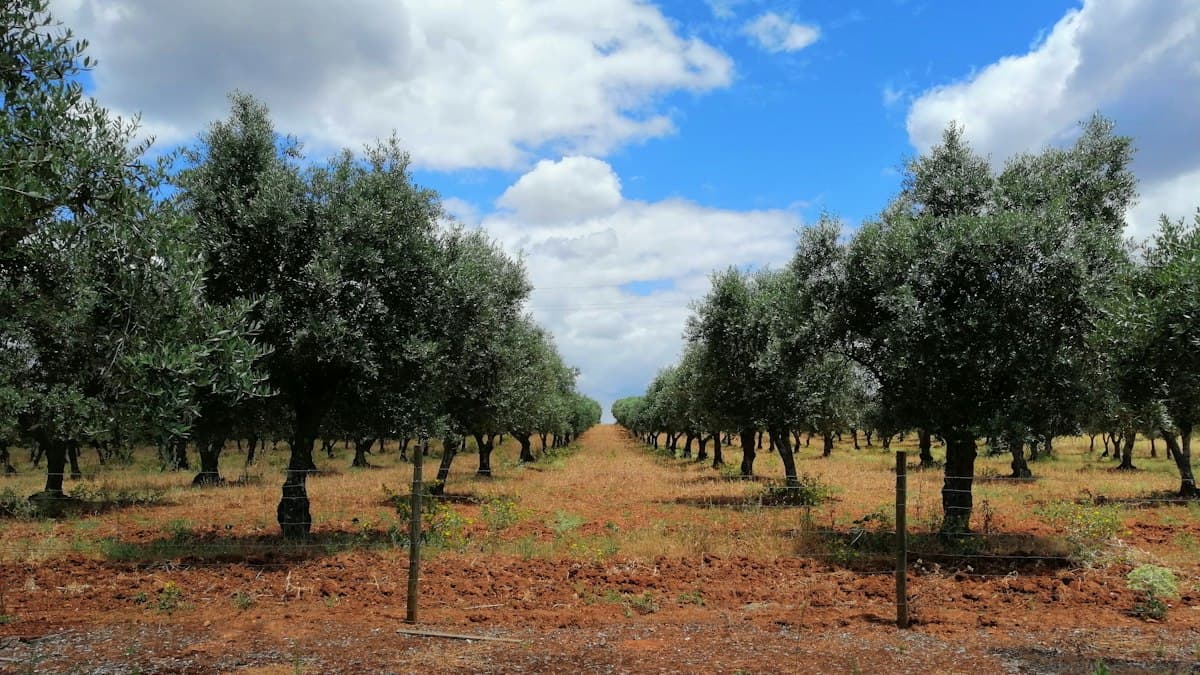
The European Union's framework for organic production is governed by EU Regulation 2018/848, which came into full effect in 2022 and tightened several earlier standards. Three core conditions apply to olive oil. First, olive groves must complete a minimum three-year conversion period during which synthetic pesticides and chemical fertilisers are prohibited. Second, no unauthorised additives or solvents may be used at any processing stage. Third, at least one annual on-site inspection by an accredited Control Body is mandatory.
According to European Commission data, organically farmed olive groves within the EU covered approximately 800,000 hectares as of 2023, representing more than 20 percent of the bloc's total olive-growing area. Spain, Italy, and Greece together account for more than 90 percent of that figure. The twelve-star EU organic logo is compulsory on products grown and processed within member states; for imports it is optional, but any producer wishing to display it must satisfy an equivalence standard pre-approved by the EU for their country of origin.
USDA Organic: How the American Standard Works
The USDA's National Organic Program (NOP) derives its authority from the Organic Foods Production Act of 1990. Like the EU system, it mandates a three-year transition period and prohibits synthetic pesticides, herbicides, and GMO-derived inputs. The most notable structural difference lies in the National List mechanism: USDA maintains a positive list of synthetic substances that may be used under specific conditions, a framework that diverges from the EU approach of prohibition as the baseline with defined exceptions.
According to USDA Agricultural Marketing Service data, more than 80 accredited certifying agents worldwide are authorised to conduct inspections, and imported olive oils must pass review by one of these agents before the USDA seal can appear on the label. Two label claims are worth distinguishing: "100% Organic" means every ingredient is organically produced, while "Organic" requires that at least 95 percent of agricultural ingredients meet that standard. Both designations are eligible to carry the USDA seal.
Equivalent Schemes in Other Markets
Other importing countries operate their own organic frameworks and, where formal equivalence agreements exist, products certified under the EU or USDA programs can often be labelled organic without undergoing a separate national audit. Where no equivalence agreement is in place, an independent inspection by a nationally designated body is typically required before an organic claim may appear on the label.
This distinction matters when sourcing olive oil from producing countries such as Tunisia, Morocco, or Turkey, which may not hold equivalence status with every destination market. In those cases, it is worth checking which certifying body issued the certificate and whether that body is recognised in the market where the product is being sold.
What to Check on the Label
The presence of a certification mark matters, but so does understanding the scope it covers. If the olives were grown under certified organic conditions but the bottling took place at a non-certified facility, the product does not represent end-to-end organic certification in the strictest sense. The label should identify both the certifying body and the operator certificate number, allowing the claim to be verified.
Certificate validity is equally important. Both EU and USDA certifications are typically renewed on a 12-month cycle, so when buying online it is reasonable to ask the seller for a copy of the current certificate.
According to an International Olive Council report, the global organic olive oil market has been growing at more than 6 percent annually, a trajectory that reflects rising consumer interest in certified products and, correspondingly, greater scrutiny of the labels that carry them. Across all three major certification frameworks discussed here, the shared baseline is the three-year conversion period and the prohibition on synthetic pesticides. Where they diverge is in the permitted-inputs list and the structure of audit oversight — a distinction worth keeping in mind the next time a certified label catches your eye on the shelf.
Frequently asked questions
- What is the difference between EU organic and USDA organic certification for olive oil?
- Both require a three-year transition period and prohibit synthetic pesticides, herbicides, and GMO inputs. The main structural difference is that USDA operates a National List of conditionally permitted synthetic substances, whereas EU Regulation 2018/848 works from a principle of prohibition with defined exceptions. Audit frequency and approved certifying bodies also differ between the two systems.
- Can an olive oil carry more than one organic certification at the same time?
- Yes. A producer can be certified under both EU and USDA programs simultaneously, provided the product meets each scheme's requirements independently. Many exporters targeting multiple markets pursue dual certification. When you see two seals on a label, check that each certification number or certifying body is listed separately.
- Does an EU or USDA organic certificate guarantee the entire production process — from grove to bottle — is certified?
- Not automatically. The olive fruit may be organically certified while the bottling or blending facility operates outside the certification scope. To confirm full-chain coverage, look for the certifying body's name on the label and, when purchasing online, request a copy of the current certificate, which both EU and USDA schemes renew on a roughly 12-month cycle.
Related reading
- Six Reasons a Bottle of Great EVOO Costs What It Does
From hand-harvesting to cold-chain logistics, the price of extra virgin olive oil is built layer by layer across every stage of production. Breaking down those cost factors helps explain why genuine quality rarely comes cheap.
- Reading Polyphenol Numbers on an Olive Oil Label: A Step-by-Step Comparison Guide
The mg/kg polyphenol figure printed on an extra virgin olive oil bottle is one of the most useful quality signals a label can carry — but only if you know how to read it. This guide walks through what the number means, how measurement method affects it, and what else to check alongside it.
- Cold, Room Temperature, Hot: How Olive Oil Changes at Every Stage
Olive oil solidifies in the refrigerator and thins dramatically on a hot stove. Understanding the science behind these viscosity shifts opens up a more deliberate approach to cooking with EVOO at every temperature.
- Closer to the Source: A Practical Guide to Buying Olive Oil Direct from Producers
From farm-direct shipping and micro-importers to group buys, there are more ways than ever to reach a producer before a supermarket shelf does. This guide walks through each route, what to verify before you buy, and how to set realistic expectations on price and freshness.
- Olive Oil Confit: A Complete Guide to Low-Temperature Oil Cooking
Confit — the French technique of slow-cooking ingredients submerged in oil at low heat — finds a natural partner in extra virgin olive oil, which preserves moisture, concentrates flavor, and adds its own grassy depth to garlic, vegetables, and poultry alike.
- Six Olive Oil Off-Flavors — and How to Tell Them Apart at Home
From musty and winey-vinegary to metallic and rancid, off-flavors are the clearest signal that an extra virgin olive oil has fallen short of grade. This practical guide explains what causes each defect and how to detect them without professional panel training.
Tags
- organic certification
- USDA organic
- EU organic
- olive oil labels
- extra virgin olive oil