Craft
Cold, Room Temperature, Hot: How Olive Oil Changes at Every Stage
Olive oil solidifies in the refrigerator and thins dramatically on a hot stove. Understanding the science behind these viscosity shifts opens up a more deliberate approach to cooking with EVOO at every temperature.
Translated from the Korean edition, originally published October 6, 2026 · read the original

Why Olive Oil Solidifies — The Basics of Viscosity
Leave a bottle of olive oil in the refrigerator overnight and you may find it cloudy or partly solid the next morning. For anyone encountering it for the first time, the reaction is often alarm — has the oil gone off? In fact, the opposite is true. Solidification at cold temperatures is a normal physical response, and it can even serve as a rough quality signal.
Viscosity — the measure of a fluid's resistance to flow — changes dynamically with temperature in all oils. As temperature falls, molecular movement slows and intermolecular attraction strengthens, raising viscosity. As temperature rises, molecules move more freely and viscosity drops. That principle applies universally, but olive oil's particular fatty acid profile makes the shift especially pronounced.
The dominant component of olive oil is oleic acid, a monounsaturated fatty acid. According to International Olive Council (IOC) data, oleic acid accounts for 55–83% of total fatty acids in a high-quality extra virgin olive oil. Monounsaturated fatty acid chains are flexible enough to remain liquid at relatively low temperatures, yet olive oil also contains roughly 10–20% saturated fatty acids — principally palmitic and stearic acid. It is those saturated molecules that crystallize during cooling and drive the solidification you see.
Viscosity Across Temperature Ranges — Reading the Texture Spectrum by the Numbers
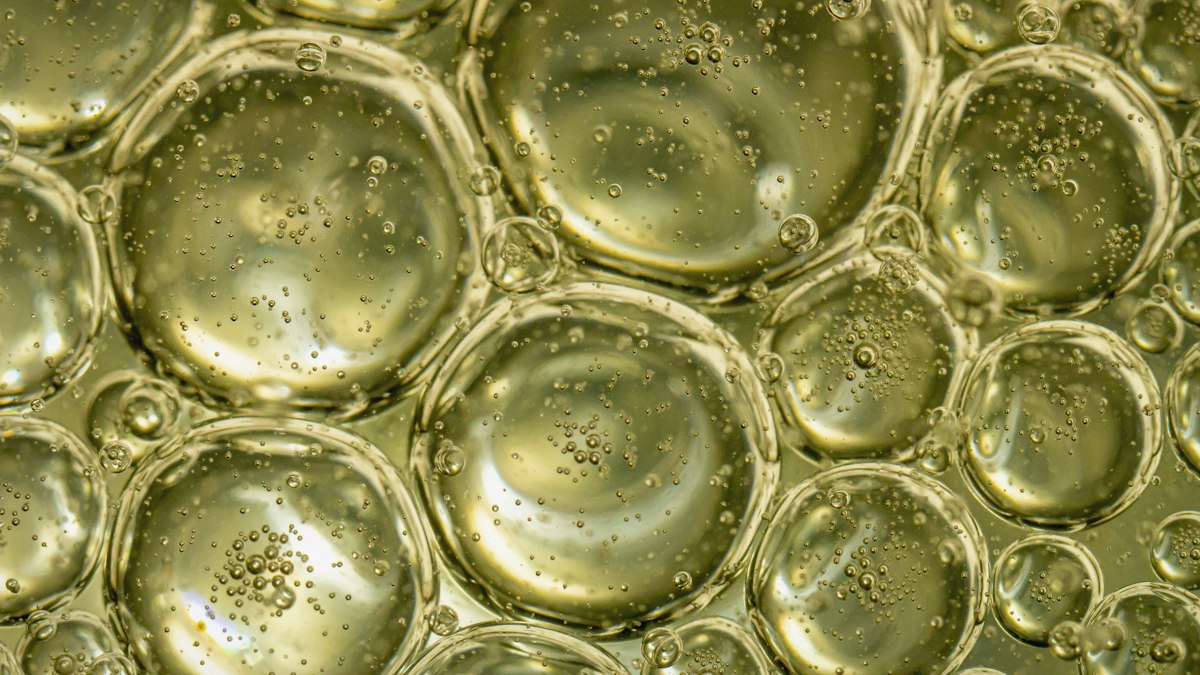
Olive oil moves through several distinct textural states depending on the temperature it is kept at.
Refrigerator temperature (4–7 °C): Saturated fatty acids crystallize, and the oil becomes semi-solid or a cloudy gel. A study published in the Journal of Food Engineering reported that extra virgin olive oil can reach a viscosity 5–8 times higher at 5 °C than at 25 °C. The texture at this point resembles butter or coconut oil — tilt the bottle and flow is extremely slow.
Room temperature (18–25 °C): This is the range in which olive oil maintains its ideal liquid state. Viscosity at this temperature is typically measured at around 60–100 mPa·s (millipascal-seconds), making it notably thicker than most seed oils. The reason EVOO feels richer than sunflower or grapeseed oil is directly traceable to its higher proportion of oleic acid.
Cooking heat (100–180 °C): Viscosity drops sharply, and the oil flows almost like water. Molecular motion at this range is intense enough to minimize flow resistance significantly. At these temperatures it is also worth noting that some heat-sensitive minor compounds — polyphenols and tocopherols among them — can begin to degrade.
Deep-frying range (180–210 °C): Viscosity falls further still, and above the smoke point the oil begins to break down chemically. According to IOC guidelines, the smoke point of extra virgin olive oil is reported at approximately 190–210 °C, depending on cultivar and acidity level.
Solid in the Fridge — Don't Throw It Out
Many people assume that olive oil that has solidified in the refrigerator has somehow spoiled. The logic actually runs the other way. The tendency to solidify at low temperatures can be an indicator that the oil is unadulterated. Some oils blended with refined fractions, or those containing certain additives, may remain fluid at temperatures where pure olive oil would begin to crystallize.
To return a solidified bottle to its liquid state, simply leave it at room temperature for 20–30 minutes, or stand it briefly in warm water. The oil's quality is unchanged by this process. Direct microwave heating, however, is not recommended — it can create localized hot spots that damage the oil unevenly.
For long-term storage, a cool, dark location at around 14–18 °C is preferable to the refrigerator. Repeatedly cycling the oil through cold and warm temperatures — causing repeated crystallization and re-liquefying — may over time disturb the oil's fine microstructure, so it is worth keeping this cycle to a minimum.
Viscosity Differences by Cultivar — Oleic Acid Is the Key Variable
Even within the extra virgin category, different cultivars exhibit subtly different viscosity characteristics. The difference comes down to fatty acid composition — specifically, how much oleic acid is present.
Picual is associated with a relatively high oleic acid content and is also known for its substantial polyphenol levels; at room temperature it tends toward a slightly richer, more coating texture. Ojiblanca is recognized for a more delicate, smoother feel on the palate. Sibarita, with its balanced fatty acid profile, tends to sit somewhere between the two in terms of viscosity.
Research data published by Spain's Ministry of Agriculture, Fisheries and Food (MAPA) reported that Picual's average oleic acid content falls in the range of 72–80%, above most other major Spanish cultivars. A higher oleic acid proportion is associated with slower crystallization at low temperatures and a fuller, more substantial texture at room temperature.
Harvest timing also plays a role. Oil pressed from early-harvested, unripe olives tends to be richer in chlorophyll and polyphenols, and typically carries a somewhat higher oleic acid ratio — factors that generally translate to a slightly denser texture compared with oil from fully ripened fruit.
Temperature Strategy in the Kitchen
Once you understand how viscosity shifts with temperature, you can use that knowledge as a practical cooking tool.
Dressings and marinades: Room temperature oil (20–25 °C) is ideal. At this viscosity, EVOO emulsifies reliably with vinegar or lemon juice and holds together longer. Cold oil poured straight from the refrigerator emulsifies poorly and separates quickly.
Finishing pasta or soup: When you drizzle oil over a hot dish at the end of cooking, oil that arrives cold is heated almost instantaneously, causing its volatile aromatic compounds to flash off rapidly. Starting with room-temperature oil gives those polyphenol-derived aromas more time to linger on the dish.
Low-temperature confit and sous vide (55–90 °C): In this range, viscosity is lower than at room temperature, so the oil spreads evenly around ingredients and penetrates surfaces well. There is no smoke-point concern at these temperatures, making EVOO a strong candidate for preserving its full flavor character throughout long, gentle cooking.
High-heat sautéing and roasting (180 °C and above): At these temperatures the oil becomes very fluid. Adding too much at once can cause it to run across the pan rather than coating the surface evenly. Use measured amounts, and be mindful of proximity to the smoke point — adjusting heat before the oil begins to break down is always the better move.
Thinking about olive oil in terms of its temperature-dependent viscosity is the first step toward treating it not just as an ingredient but as a material with deliberate physical properties. Rather than being caught off guard by a solidified bottle, use the full temperature spectrum — cold, ambient, warm, hot — to get the most out of every pour.
Frequently asked questions
- Why does olive oil solidify in the refrigerator?
- Olive oil contains roughly 10–20% saturated fatty acids, primarily palmitic and stearic acid. When the temperature drops to refrigerator levels (around 4–7 °C), those saturated molecules form crystals, turning the oil cloudy or semi-solid. This is completely normal and is not a sign of spoilage.
- Is olive oil that has gone solid in the fridge still safe to use?
- Yes. Solidification is a physical change, not a chemical one. Leaving the bottle at room temperature for 20–30 minutes, or standing it in warm water for a few minutes, returns the oil to its normal liquid state without affecting quality. Direct microwave heating is not recommended because it can cause uneven hot spots.
- Does refrigerating olive oil damage it?
- Occasional refrigeration does no measurable harm, but repeatedly cycling olive oil between cold and room temperature — causing it to crystallize and re-liquefy many times — can disturb its microstructure. The IOC and most producers recommend storing EVOO in a cool, dark place at around 14–18 °C rather than in the refrigerator.
- Which olive oil cultivar is thickest at room temperature?
- Picual tends to feel slightly richer at room temperature because it has a high oleic acid content — reported at an average of 72–80% according to research data from Spain's Ministry of Agriculture, Fisheries and Food (MAPA). Higher oleic acid content is associated with slower crystallization at low temperatures and a fuller texture at room temperature.
- What happens to olive oil's polyphenols when the oil is heated and its viscosity drops?
- As temperature rises above roughly 100 °C, viscosity falls sharply and heat-sensitive minor compounds — including polyphenols and tocopherols — can begin to degrade. The extent of loss depends on temperature and cooking time. For finishing applications where aroma and polyphenol content matter most, adding EVOO off the heat or at the very end of cooking is generally preferable.
Related reading
- Olive Oil Confit: A Complete Guide to Low-Temperature Oil Cooking
Confit — the French technique of slow-cooking ingredients submerged in oil at low heat — finds a natural partner in extra virgin olive oil, which preserves moisture, concentrates flavor, and adds its own grassy depth to garlic, vegetables, and poultry alike.
- Before or After: The Complete Guide to Seasoning with Olive Oil
Coating ingredients with olive oil before cooking and finishing a dish with it afterward are two fundamentally different techniques. This guide covers oil-coating mechanics, marinade sequencing, and the heat chemistry that determines when each approach works best.
- Stop Throwing Away Pasta Water: The Emulsion Science Behind a Perfect Sauce
Starch dissolved in pasta cooking water acts as an emulsifier that binds olive oil into a smooth, clingy sauce. This step-by-step guide covers the chemistry, the correct pan technique, and how your choice of extra virgin olive oil shapes the final result.
- Fat Does the Heavy Lifting: Olive Oil in Gluten-Free Baking
When gluten is removed from a recipe, fat takes on structural work it never had to do before. This guide covers the conversion ratios, cultivar choices, and mixing techniques that make olive oil a reliable butter substitute in gluten-free baking.
- Olive Oil Sprayers: How Your Dispensing Method Affects Oil Quality
Convenience should not come at the cost of the oil itself. A guide to pump misters, hand-pump sprayers, and aerosol cans — and how each one treats your extra virgin olive oil.
- Oiling Your Cutting Board and Wooden Bowls: A Guide to Olive Oil as a Wood Finish
Olive oil has long served as a natural finish for wooden kitchenware, slowing the drying and cracking that shortens a board's life. This guide covers when to apply it, how to do it properly, and which mistakes to avoid.