Craft
Stop Throwing Away Pasta Water: The Emulsion Science Behind a Perfect Sauce
Starch dissolved in pasta cooking water acts as an emulsifier that binds olive oil into a smooth, clingy sauce. This step-by-step guide covers the chemistry, the correct pan technique, and how your choice of extra virgin olive oil shapes the final result.
Translated from the Korean edition, originally published September 11, 2026 · read the original
Why Sauce Breaks — and Where Emulsification Comes In
Anyone who has tried to recreate a restaurant pasta at home knows the frustration: the noodles sit in a pool of oil, or the sauce stays at the bottom of the pan and never coats the pasta. Most of the time, the difference comes down to whether emulsification succeeded or failed.
Emulsification is the process by which two liquids that would not normally mix — in this case, olive oil and water — are held together in a stable combination with the help of a surfactant. The problem is that olive oil and plain water produce almost no stable emulsion on their own. That is where pasta cooking water enters the picture.
As pasta boils, starch and some protein migrate from the noodles into the water. Those starch particles take on the role of surfactant: they wrap around oil molecules and stabilise the interface between oil and water. According to data published by the Italian culinary research institution Academia Barilla, a properly boiled litre of pasta cooking water contains approximately 3–5 g of soluble starch, and that concentration is reported to have a direct bearing on emulsion stability.
How Much Does Starch Concentration Actually Matter?
The starch concentration in your cooking water depends on the ratio of pasta to water. Boiling a small amount of pasta in a large pot dilutes the starch and weakens its emulsifying power. Using a moderate amount of salted water relative to the pasta produces a more concentrated result.
This is precisely why cooks refer to pasta water as "liquid gold" in simple Roman recipes such as carbonara or cacio e pepe, where the sauce has very few components to fall back on. A 2022 report by the Italian culinary publication La Cucina Italiana found that more than 90% of professional chefs surveyed said they always incorporate pasta cooking water during the finishing stage of a pasta sauce.
Salt also plays a role that should not be overlooked. It regulates how quickly starch dissolves and influences the texture of the cooked noodle. A commonly recommended ratio is 7–10 g of coarse salt per litre of water.
The Three-Step Pan Technique
Building an emulsified sauce on the stovetop breaks down into three distinct steps.
Step one: preheat the pan and warm the olive oil. Because extra virgin olive oil can lose aromatic compounds at high heat, warm the oil over medium heat before adding garlic or other aromatics. The polyphenols that contribute to EVOO's flavour can partially degrade with heat, but short-duration cooking at medium heat has been reported to preserve most of them.
Step two: transfer the almost-al-dente pasta and pasta water to the pan. Add 2–4 tablespoons of pasta water to the pan first and stir it with the oil to form a preliminary emulsion before the noodles go in. Adding oil and water simultaneously tends to cause the oil to pool, because the temperature difference prevents immediate integration — sequence matters here.
Step three: shake the pan or stir briskly with a wooden spoon to complete the emulsion. This mechanical action breaks oil into smaller droplets and encourages starch to coat each one. The moment the sauce begins to form a thin, glossy film on the bottom of the pan, emulsification is underway.
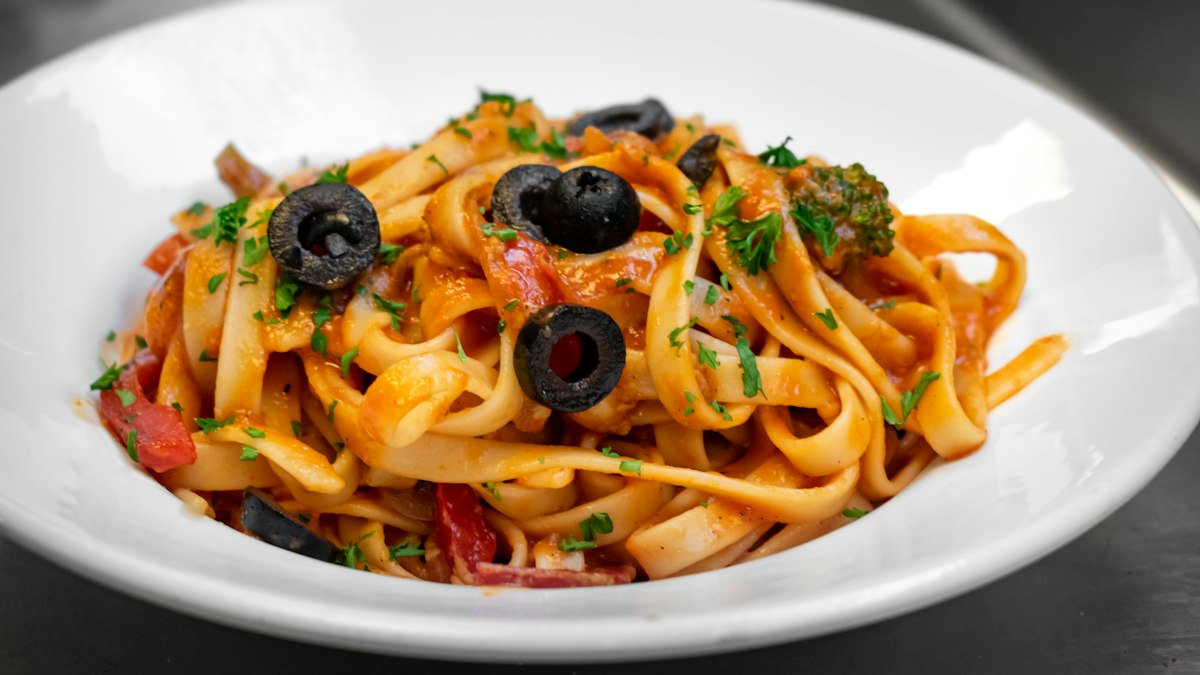
How Your Choice of Olive Oil Shapes the Sauce
The quality of an extra virgin olive oil affects both sauce texture and flavour. Oils with lower acidity and higher polyphenol content are reported to maintain a more stable structure after brief heat exposure.
On the acidity side, the International Olive Council (IOC) requires extra virgin grade oils to contain no more than 0.8% free fatty acids. Among premium oils available on the market, some record acidity at 0.2% or below; at those levels, heat-induced oxidation has been reported to proceed more slowly.
Flavour intensity is equally worth thinking about. Bold cultivars such as Picual suit assertive sauces — aglio e olio, arrabbiata — where garlic and chilli need a counterpart. Delicate, buttery cultivars such as Ojiblanca or Sibarita are better suited as a finishing drizzle over fresh pasta or cream-based sauces, where subtlety reads as elegance rather than absence.
Common Mistakes and How to Fix Them
Emulsion failures tend to follow three recognisable patterns.
The sauce looks greasy and broken. The usual culprit is too little pasta water or too low a heat. Add pasta water a tablespoon at a time while shaking the pan firmly; in most cases the emulsion recovers.
The sauce is too thin and watery. This happens when too much pasta water was added, or when the cooking water was too dilute to begin with. Raise the heat to medium and keep shaking the pan until the excess moisture evaporates and the sauce thickens.
The noodles are clumping together. Either the olive oil quantity is too low, or the pasta sat too long before being moved to the pan. Transfer the pasta while it is still a full minute short of al dente, and increase the oil by 1–2 tablespoons.
As food-science author J. Kenji López-Alt writes in The Food Lab (2015), the key to a stable pasta sauce emulsion is controlling temperature and mechanical agitation at the same time — remove either variable and stability drops sharply.
Emulsification is a real chemical phenomenon, but with the right sequence and a little practice it is entirely achievable at home. It starts with two habits: keeping a cup of pasta water back before you drain, and reaching for a quality extra virgin olive oil.
Frequently asked questions
- Why does pasta cooking water help emulsify olive oil into a sauce?
- As pasta boils, starch and some protein leach into the water. According to data from Academia Barilla, a properly boiled litre of pasta water contains roughly 3–5 g of soluble starch. Those starch particles act as a natural surfactant, surrounding oil droplets and stabilising the boundary between oil and water so the two stay combined rather than separating.
- How much pasta water should I add to the pan?
- Start with 2–4 tablespoons added to the pan before the oil, to create a preliminary emulsion. Add more a tablespoon at a time if the sauce looks greasy or broken. Concentration matters: if you cooked a small amount of pasta in a very large pot, the starch will be diluted and the emulsifying power will be weaker, so you may need to add less water and rely more on vigorous pan movement.
- Does the quality of extra virgin olive oil affect pasta sauce texture?
- Yes, in two ways. On acidity: the International Olive Council (IOC) sets the extra virgin grade at a maximum of 0.8% free fatty acids, and some premium oils record 0.2% or below — at that level, oxidation under moderate heat has been reported to proceed more slowly. On flavour: robust cultivars such as Picual suit punchy sauces like aglio e olio or arrabbiata, while delicate, buttery cultivars such as Ojiblanca or Sibarita are better matched to fresh pasta or as a finishing drizzle over cream-based sauces.
- What should I do if my pasta sauce breaks and turns greasy?
- A broken sauce usually means too little pasta water or too low a heat. Add pasta water one tablespoon at a time while shaking the pan vigorously — this mechanical agitation breaks oil into smaller droplets that the starch can re-coat. If the sauce is too thin instead, raise the heat to medium and keep shaking until excess moisture evaporates and the sauce tightens. As food-science author J. Kenji López-Alt explains in The Food Lab (2015), stable pasta sauce emulsion depends on controlling temperature and mechanical agitation simultaneously; losing either one sharply reduces stability.
Related reading
- Olive Oil Confit: A Complete Guide to Low-Temperature Oil Cooking
Confit — the French technique of slow-cooking ingredients submerged in oil at low heat — finds a natural partner in extra virgin olive oil, which preserves moisture, concentrates flavor, and adds its own grassy depth to garlic, vegetables, and poultry alike.
- Before or After: The Complete Guide to Seasoning with Olive Oil
Coating ingredients with olive oil before cooking and finishing a dish with it afterward are two fundamentally different techniques. This guide covers oil-coating mechanics, marinade sequencing, and the heat chemistry that determines when each approach works best.
- Fat Does the Heavy Lifting: Olive Oil in Gluten-Free Baking
When gluten is removed from a recipe, fat takes on structural work it never had to do before. This guide covers the conversion ratios, cultivar choices, and mixing techniques that make olive oil a reliable butter substitute in gluten-free baking.
- Olive Oil Sprayers: How Your Dispensing Method Affects Oil Quality
Convenience should not come at the cost of the oil itself. A guide to pump misters, hand-pump sprayers, and aerosol cans — and how each one treats your extra virgin olive oil.
- Set Up a Home Olive Oil Tasting: Lighting, Temperature, Glasses, and Tasting Notes
A professional-level olive oil tasting environment does not require special equipment. This guide walks through the exact setup — lighting, oil temperature, glass selection, and a simple scoresheet — that lets any curious cook build real sensory skills at home.
- Oiling Your Cutting Board and Wooden Bowls: A Guide to Olive Oil as a Wood Finish
Olive oil has long served as a natural finish for wooden kitchenware, slowing the drying and cracking that shortens a board's life. This guide covers when to apply it, how to do it properly, and which mistakes to avoid.