Craft
Mapping the Global Olive Oil Trade: Exporters, Importers, and the Re-Export Layer in Between
Oil pressed in Spain reaches American supermarket shelves in bottles labeled Italy — a journey that reveals the layered re-export structure sitting between producer nations and end consumers. This guide traces that flow using IOC trade data.
Translated from the Korean edition, originally published September 17, 2026 · read the original
Why the Olive Oil Trade Is So Structurally Complex
Olive oil is one of the clearest examples of an agricultural commodity where production and consumption are geographically far apart. A handful of Mediterranean nations account for more than 90 percent of global output, while the fastest-growing consumer markets are concentrated in North America, Northern Europe, and East Asia. According to the International Olive Council (IOC), world olive oil production in the 2022/23 season reached approximately 2.35 million tonnes, with more than half of that volume crossing at least one international border before reaching a consumer.
The result is not a simple producer-to-consumer pipeline but a multi-layered structure that routes oil through major processing and packaging hubs. Understanding trade flows requires distinguishing three distinct roles. Origin exporters sell oil pressed from their own olives — in bulk or bottled — to foreign buyers. End-consumption importers bring product in to meet domestic demand. Re-exporters import bulk oil from other countries, blend and bottle it under their own national brands, and ship it onward to third markets. These roles frequently overlap within a single country, which is precisely what makes origin traceability so difficult.
The Supply Pyramid: Spain at the Top, and Who Follows
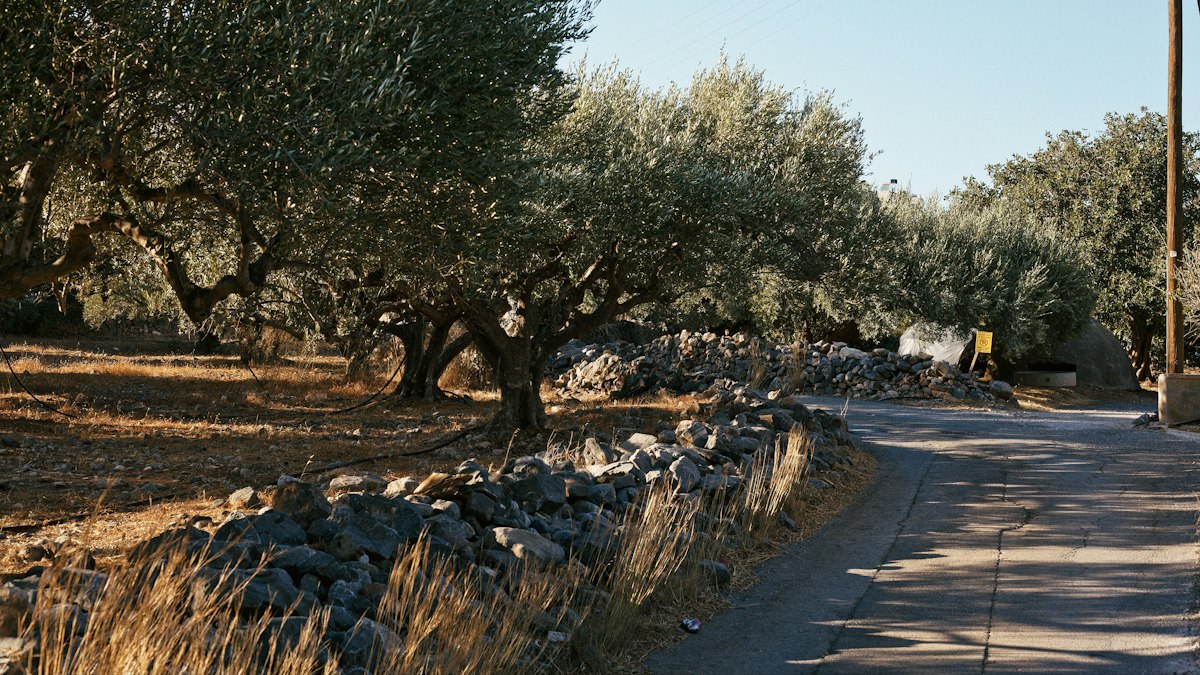
According to IOC trade statistics, Spain has held the position of the world's largest olive oil exporter for many consecutive seasons. In 2021/22, Spanish exports reached approximately 970,000 tonnes — well over half of total global trade. The vast Picual and Ojiblanca estates of Andalusia generate the bulk of this volume, and a large share leaves the country in bulk tankers bound for Italy, the United States, and Australia.
Italy is the world's second-largest exporter, but it is simultaneously the world's largest bulk importer. IOC data show that Italy imports 400,000–500,000 tonnes of olive oil each year from Spain, Tunisia, and Greece, blends and bottles it, and re-exports it under Italian brand names. The fact that familiar Italian labels frequently rest on multinational raw materials is the central point of contention in ongoing debates about origin-labeling regulations.
Tunisia deserves particular attention as a rapidly growing exporter. Annual production there varies considerably with climate, but in strong seasons Tunisia has risen to second place globally behind Spain. Most Tunisian oil enters the EU as bulk, where it is processed and often re-exported, giving it low consumer visibility despite its volume. Morocco and Portugal are smaller but clearly accelerating exporters: according to the IOC's 2023 report, their combined export share grew by roughly 30 percent compared with 2019.
The Demand Anchors: The US, Intra-EU Trade, and Asia
Among pure consumption importers, the United States is the largest single market. According to the US International Trade Commission (USITC), the US imports olive oil worth approximately USD 1.5 billion annually. Domestic production is negligible, making the country almost entirely import-dependent. By label, Italian-branded products dominate retail shelves, but analysts applying origin-tracing standards note that Spanish-source oil makes up a substantial portion of what Americans actually consume.
Intra-EU trade is equally significant. Spain, Greece, Italy, and Portugal produce; Germany, France, the United Kingdom (now outside the EU), and the Nordic countries consume. According to European Commission agricultural trade reports, olive oil consistently ranks among the top five agricultural commodities by value in intra-EU trade.
Asia's absolute volumes remain modest, but the growth trajectory stands out. China has recorded double-digit average annual import growth since the mid-2010s and is now Asia's largest olive oil importer. The IOC's 2022 market report puts China's annual imports at around 50,000–60,000 tonnes, with rising health consciousness and the spread of Western food culture cited as the primary drivers. South Korea, Japan, and Australia are also posting steady import growth.
The Hidden Role of Re-Exporters: The Middle Layer of the Value Chain
Re-exporters occupy a structurally unique position in olive oil trade. Beyond Italy, Spain itself sometimes imports foreign bulk oil and re-exports it after processing. The Netherlands and Belgium function as EU logistics hubs — clearing, storing, and forwarding bulk oil to third countries. Greece, whose production is dominated by small family farms with limited brand infrastructure, supplies high-quality raw material that Italian blending operations depend on heavily.
The most significant problem the re-export structure creates is origin opacity. EU Regulation No 29/2012 requires that packaged olive oil display its country of origin, but when oil from multiple sources is blended, broad designations such as "blend of EU olive oils" are permitted. This means a consumer reading a standard supermarket label has no way of identifying the specific growing region. By contrast, single-origin and single-estate products are attracting growing attention precisely because they offer both premium positioning and supply-chain transparency simultaneously.
The Variables That Move Global Prices and Supply
Global olive oil trade prices are acutely sensitive to weather. According to IOC monthly price trend reports, consecutive drought and extreme heat events across Spain, Italy, and Greece in 2023 drove bulk extra virgin olive oil prices up by more than 100 percent year-on-year. The resulting supply shock prompted a sharp increase in demand for oil from Tunisia, Morocco, and Argentina, bringing the strategic value of geographic diversification back into sharp focus.
Exchange rates and tariff structures also shape trade flows. The United States applies a 3.4 percent tariff to most olive oil imports, though preferential rates under various free trade agreements and the Generalized System of Preferences (GSP) benefit certain countries, including Tunisia and Morocco. Within the EU, zero-tariff movement means that Spanish or Greek oil processed in Italy and re-exported under an EU brand carries no additional customs burden — a structural advantage that reinforces Italy's position as the global packaging hub.
Why Trade Structure Matters to the Consumer Buying a Bottle
Understanding how olive oil moves around the world is more than background knowledge. It explains why "Product of Italy" on a label may refer to the bottling location rather than the growing origin, why a low price point often reflects multinational bulk blending, and why single-origin, single-season products justify a price premium.
A few practical habits follow from this understanding. On any label, look separately at "Origin" and "Bottled in" — they are not always the same place. Prioritize products that state a harvest date or milling date, since those details anchor the oil to a specific season and give you a basis for judging freshness. Finally, an IOC certification mark or an independent quality seal provides a degree of assurance that what is on the label reflects what is in the bottle. The more clearly you see the complexity of the global supply chain, the more legible the value of a transparent, traceable olive oil becomes.
Frequently asked questions
- Why does olive oil labeled 'Product of Italy' sometimes come from Spain?
- EU regulation (EU No 29/2012) requires labeling the country where oil is bottled, not necessarily where the olives were grown or the oil was pressed. Italy is the world's largest bulk importer — according to IOC data, it brings in 400,000–500,000 tonnes of bulk oil annually from Spain, Tunisia, and Greece, blends and bottles it, then re-exports it under Italian brand names. The label 'Bottled in Italy' is legally accurate even when the source olives were harvested elsewhere.
- Which country exports the most olive oil in the world?
- Spain is consistently the world's largest olive oil exporter. According to IOC trade statistics, Spain exported approximately 970,000 tonnes in the 2021/22 season, accounting for more than half of total global trade. The vast Picual and Ojiblanca groves of Andalusia underpin this volume, with much of it shipped in bulk tankers to Italy, the United States, and Australia.
- How fast is demand for olive oil growing in Asia?
- Asia's absolute volumes are still modest compared with the US or intra-EU trade, but the growth rate is notable. China has recorded double-digit average annual import growth since the mid-2010s and is now Asia's largest olive oil importer. According to the IOC's 2022 market report, China's annual imports stand at around 50,000–60,000 tonnes, driven by rising health awareness and the spread of Western food culture.
- Why did olive oil prices spike so sharply in 2023?
- According to the IOC's monthly price trend reports, consecutive drought and extreme heat events across Spain, Italy, and Greece in 2023 pushed bulk extra virgin olive oil prices up by more than 100 percent year-on-year. The supply shock accelerated demand for oil from Tunisia, Morocco, and Argentina, highlighting the strategic value of geographic diversification in the global supply chain.
- What should I look for on a label to understand where olive oil really comes from?
- Look for two separate pieces of information: 'Origin' (where the olives were grown and pressed) and 'Bottled in' (where the oil was packaged). Beyond that, a harvest date or milling date narrows the season and helps you assess freshness. Single-estate or single-origin designations, combined with an IOC or independent quality certification, are the clearest signals that the supply chain is transparent and traceable.
Related reading
- Organic Certification, Carbon Footprint, Water Use: A Practical Guide to Olive Oil Sustainability Labels
Behind every bottle of olive oil sit three measurable sustainability indicators — organic certification standards, carbon footprint figures, and water consumption data. Knowing how to read them turns a label logo from a marketing symbol into a genuine purchasing signal.
- Closer to the Source: A Practical Guide to Buying Olive Oil Direct from Producers
From farm-direct shipping and micro-importers to group buys, there are more ways than ever to reach a producer before a supermarket shelf does. This guide walks through each route, what to verify before you buy, and how to set realistic expectations on price and freshness.
- Cold Press, First Press, Centrifuge: Decoding the Extraction Claims on Olive Oil Labels
Three terms appear on nearly every bottle of quality olive oil, yet few buyers know which ones carry legal weight and which are historical relics. This guide unpacks what cold press, first press, and centrifuge extraction actually mean — and where EU regulation draws the line.
- Set Up a Home Olive Oil Tasting: Lighting, Temperature, Glasses, and Tasting Notes
A professional-level olive oil tasting environment does not require special equipment. This guide walks through the exact setup — lighting, oil temperature, glass selection, and a simple scoresheet — that lets any curious cook build real sensory skills at home.
- Olive Oil Confit: A Complete Guide to Low-Temperature Oil Cooking
Confit — the French technique of slow-cooking ingredients submerged in oil at low heat — finds a natural partner in extra virgin olive oil, which preserves moisture, concentrates flavor, and adds its own grassy depth to garlic, vegetables, and poultry alike.
- Six Olive Oil Off-Flavors — and How to Tell Them Apart at Home
From musty and winey-vinegary to metallic and rancid, off-flavors are the clearest signal that an extra virgin olive oil has fallen short of grade. This practical guide explains what causes each defect and how to detect them without professional panel training.