Craft
One Label, Four Rulebooks: How EVOO Standards Differ Across the EU, IOC, US, and Australia
The words "extra virgin" appear on bottles from every olive-growing country, yet the rules behind them vary in ways that matter to buyers. This guide breaks down how the IOC, EU, USDA, and Australian standards diverge on acidity, sensory evaluation, and certification.
Translated from the Korean edition, originally published October 18, 2026 · read the original
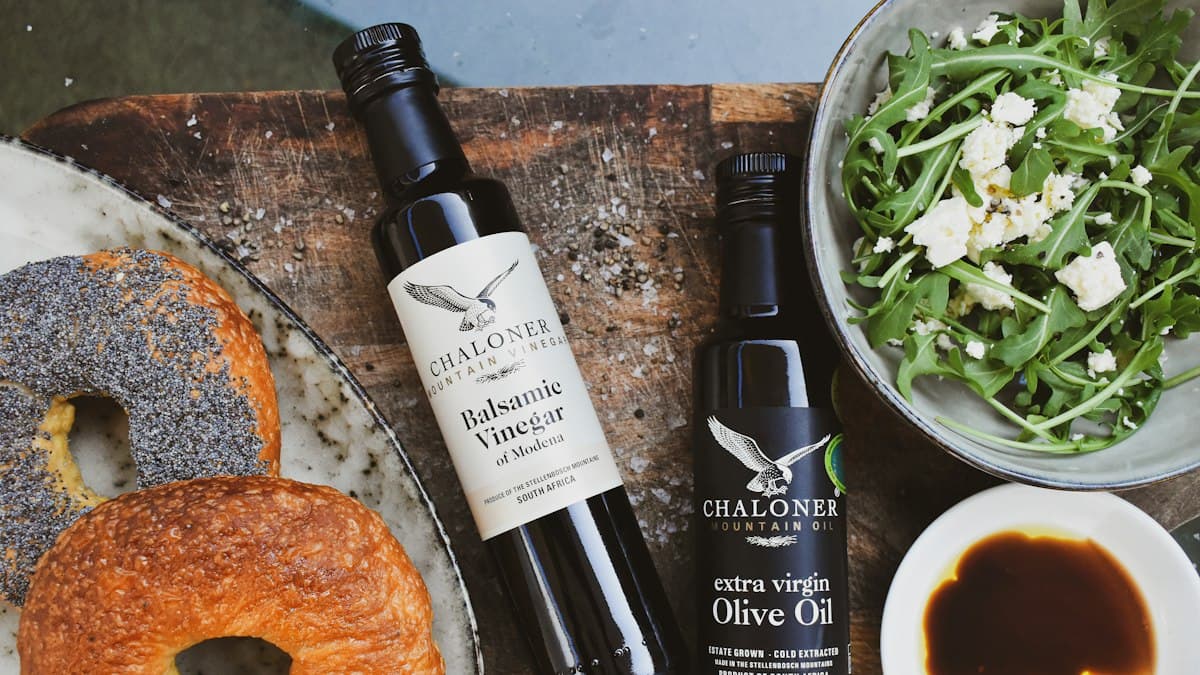
The Weight Behind "Extra Virgin"
The words "extra virgin" on an olive oil label read, to most shoppers, as a universal guarantee of top quality. What that guarantee actually requires — the specific thresholds, tests, and enforcement mechanisms behind it — differs from one country to the next. A Spanish extra virgin and an American extra virgin cannot automatically be assumed to have cleared the same bar. The bodies that govern olive oil classification break down into four main frameworks: the International Olive Council (IOC), the European Union, the United States Department of Agriculture (USDA), and the Australian Olive Association (AOA). Each shares a common core but diverges in meaningful ways at the detail level.
IOC Standards: The International Baseline
The International Olive Council provides what functions as the global reference point for olive oil trade and quality control. Under IOC definitions, extra virgin olive oil (EVOO) must satisfy two core conditions: free fatty acid content (acidity), expressed as oleic acid, must be no greater than 0.8%; and the oil must achieve a defect median of zero and a fruitiness median above zero in an evaluation conducted by an accredited tasting panel.
IOC reports consistently emphasize that a low acidity figure alone is not sufficient to qualify an oil as extra virgin — sensory evaluation is mandatory. That panel assessment involves trained tasters scoring flavor and aroma directly, detecting faults such as rancidity, fermentation, and metallic off-notes that chemical analysis cannot reliably capture on its own.
Beyond acidity, the IOC framework includes a peroxide value ceiling of 20 meq O₂/kg, ultraviolet absorbance limits (K232 and K270), and dozens of further chemical parameters covering fatty acid composition and sterol profiles. Oils that fall short of these thresholds are classified as virgin olive oil, ordinary virgin olive oil, or refined grades accordingly.
EU Regulations: IOC Rules Made Legally Binding
The European Union incorporates most of the IOC framework but applies it through enforceable legislation. The current regime is governed by EU Regulation 2568/91 and its subsequent amendments, most notably 2022/2104. Like the IOC, the EU sets maximum acidity at 0.8% and maximum peroxide value at 20 as the baseline conditions for extra virgin classification.
Where the EU goes further is in its 2022 revision, which tightened sterol composition and wax content criteria to improve detection of blending with refined or other vegetable oils. EU regulations are also moving toward mandatory disclosure of harvest year and expanding the use of protected geographical indications — PDO and PGI designations — to link quality claims to origin. According to European Commission data, EU member states produced approximately 1.3 million tonnes of olive oil in 2022, representing more than 60% of global output; the precision of the regulatory framework continues to increase in step with the commercial stakes.
On sensory evaluation, EU rules adopt the IOC panel methodology, though industry observers note that the number of accredited panels and the consistency of their operation varies across member states, creating some practical variation in how rigorously the standard is applied on the ground.
USDA Standards: The Problem with Voluntary Certification
For most of its history, the United States had no functioning olive oil grade standard. The USDA formalized one in 2010, drawing on IOC and Codex Alimentarius criteria and setting the same 0.8% acidity and 20 meq O₂/kg peroxide value limits for extra virgin classification. The critical difference lies in what happens next: USDA grade certification in the United States is entirely voluntary. Producers may legally print "extra virgin" on a label without submitting to any official grading or third-party verification.
Reports from the UC Davis Olive Center and surveys by the North American Olive Oil Association (NAOOA) have repeatedly found that a significant proportion of retail products sold as extra virgin in the US fail to meet either the chemical or sensory criteria of the standard. Researchers attribute this directly to the absence of mandatory certification. Within California, the California Olive Oil Council (COOC) operates a voluntary certification program that applies a stricter acidity limit of 0.5% — below the federal baseline — as a way of differentiating verified domestic production.
Australian AOA Standards: Among the Strictest in the World
The standard administered by the Australian Olive Association is widely regarded as one of the most demanding EVOO frameworks in operation. It aligns with the IOC and EU on the 0.8% acidity ceiling but sets a recommended threshold of 0.5%, and operates additional guidelines covering freshness and polyphenol content. According to Food Standards Australia New Zealand (FSANZ), Australian regulations also strictly limit misleading or exaggerated label claims relating to olive oil composition.
The AOA adopts the IOC sensory evaluation methodology while running its own independent accredited panel training program domestically. The AOA certification seal is awarded only to oils that meet both chemical and sensory criteria assessed close to harvest — giving consumers a visible, third-party signal that the oil in the bottle has been verified against the full standard.

What These Differences Mean When You Buy
Understanding how standards diverge makes the checklist at the point of purchase considerably clearer. Lower acidity indicates a fresher oil, but acidity alone does not tell the whole story. Practical checkpoints worth applying regardless of which country's standard applies to the bottle in hand: confirm whether the oil has passed a sensory evaluation confirming the absence of defects; look for a clearly stated harvest year and best-by date; and check for a credible third-party certification — IOC-recognized bodies, EU PDO status, COOC, or AOA seals all carry meaningful weight.
Polyphenol content remains outside the formal grading criteria of both the IOC and the EU, but a growing number of producers are voluntarily publishing figures. The European Food Safety Authority (EFSA) has recognized that hydroxytyrosol and its derivatives in olive oil are associated with protection of LDL cholesterol from oxidative stress — a relationship that holds, EFSA notes, when at least 5 mg of these compounds is present per 20 g of oil consumed daily. That regulatory recognition has given polyphenol figures increasing relevance as a quality signal beyond the grading system itself.
The country-by-country variation can seem complicated, but the underlying principles are consistent. Low acidity, a clean sensory profile, credible third-party verification, and a legible harvest date: these four checkpoints form a reliable starting point whichever standard the label was produced under.
Frequently asked questions
- Are extra virgin olive oil standards the same worldwide?
- No. The IOC sets an international benchmark, but the EU enforces it through binding law, the US applies it only voluntarily, and Australia adds its own stricter recommended thresholds. A bottle labeled extra virgin in one country may not have been tested to the same standard as one from another.
- What acidity level is required for extra virgin olive oil?
- The IOC, EU, and USDA all set the maximum free acidity at 0.8% (expressed as oleic acid). Australia's AOA recommends a tighter threshold of 0.5%, and California's COOC certification also requires 0.5% or below. Lower acidity generally indicates fresher oil, though acidity alone does not capture overall quality.
- Does the US legally require extra virgin olive oil to be certified?
- No. USDA grading for olive oil, introduced in 2010, is voluntary. Producers can legally print "extra virgin" on a label without submitting to any third-party certification. Repeated surveys by the UC Davis Olive Center and the North American Olive Oil Association have found that a significant share of retail EVOO in the US fails to meet the standard's own chemical or sensory criteria.
- Is polyphenol content part of the official EVOO grading criteria?
- Not in the IOC or EU grade classifications. Polyphenols are not a formal grading parameter under either framework. However, the European Food Safety Authority (EFSA) has recognized that hydroxytyrosol and its derivatives in olive oil are associated with protection of LDL cholesterol from oxidative stress, provided at least 5 mg of these compounds are present per 20 g of oil daily. Against that backdrop, a growing number of producers voluntarily disclose polyphenol levels as an additional quality indicator.
- Which country has the strictest extra virgin olive oil standard?
- Australia's standard, administered by the Australian Olive Association (AOA), is widely regarded as among the most rigorous. It adopts the IOC sensory methodology, operates its own accredited panel training program, and recommends an acidity ceiling of 0.5% — stricter than the IOC and EU baseline of 0.8%. Only oils that meet both chemical and sensory criteria at the time of testing receive the AOA certification seal.
Related reading
- Organic Certification, Carbon Footprint, Water Use: A Practical Guide to Olive Oil Sustainability Labels
Behind every bottle of olive oil sit three measurable sustainability indicators — organic certification standards, carbon footprint figures, and water consumption data. Knowing how to read them turns a label logo from a marketing symbol into a genuine purchasing signal.
- Reading Polyphenol Numbers on an Olive Oil Label: A Step-by-Step Comparison Guide
The mg/kg polyphenol figure printed on an extra virgin olive oil bottle is one of the most useful quality signals a label can carry — but only if you know how to read it. This guide walks through what the number means, how measurement method affects it, and what else to check alongside it.
- Closer to the Source: A Practical Guide to Buying Olive Oil Direct from Producers
From farm-direct shipping and micro-importers to group buys, there are more ways than ever to reach a producer before a supermarket shelf does. This guide walks through each route, what to verify before you buy, and how to set realistic expectations on price and freshness.
- Mapping the Global Olive Oil Trade: Exporters, Importers, and the Re-Export Layer in Between
Oil pressed in Spain reaches American supermarket shelves in bottles labeled Italy — a journey that reveals the layered re-export structure sitting between producer nations and end consumers. This guide traces that flow using IOC trade data.
- Cold Press, First Press, Centrifuge: Decoding the Extraction Claims on Olive Oil Labels
Three terms appear on nearly every bottle of quality olive oil, yet few buyers know which ones carry legal weight and which are historical relics. This guide unpacks what cold press, first press, and centrifuge extraction actually mean — and where EU regulation draws the line.
- Extra Virgin vs. Pure Olive Oil: A Shelf-Side Buying Guide
Two bottles, side by side, same country of origin — yet the price gap can be substantial. Here is what the IOC grade standards, label rules, and food-science research say about choosing between extra virgin and pure olive oil.