Guides
Olive Oil at the Center of an Anti-Inflammatory Diet for Joint Health
Chronic low-grade inflammation is increasingly linked to everyday joint discomfort, and the Mediterranean diet—with extra virgin olive oil as its defining fat—sits at the heart of anti-inflammatory dietary research. Here is a close look at the compounds involved and how to put them to work at the table.
Translated from the Korean edition, originally published June 20, 2026 · read the original
Inflammation, Joints, and the Diet Connection
Many people know the feeling of stiff, heavy joints first thing in the morning. Modern medicine increasingly points to chronic low-grade inflammation as part of the picture underlying that discomfort. Inflammation itself is a normal protective mechanism, but when it persists over the long term it is associated with added burden on joint tissue.
Diet is one of the factors that has been consistently studied in relation to inflammatory signaling. The Mediterranean dietary pattern has become a central model in anti-inflammatory research, in part because populations following it have shown lower chronic inflammation markers and more favorable joint-related outcomes in observational studies. The most emblematic fat source in that diet is extra virgin olive oil (EVOO).
Oleocanthal — A Compound Unique to Olive Oil
One of the features that sets extra virgin olive oil apart from other culinary oils is the presence of oleocanthal, a phenolic compound responsible for the peppery, throat-catching sensation you feel when tasting a high-quality oil. The more pronounced that sensation, the higher the oleocanthal content tends to be.
Researchers at the Monell Chemical Senses Center in Philadelphia reported that oleocanthal inhibits COX-1 and COX-2 enzymes through a pathway similar to that of non-steroidal anti-inflammatory drugs (NSAIDs). That research was conducted in cell and animal models, so it is too early to conclude that the identical mechanism operates in the human body at normal dietary levels. Nonetheless, oleocanthal is widely recognized in the scientific literature as one of the most closely watched molecules in anti-inflammatory nutrition research.
The Role of Polyphenols — and Why Freshness Matters
Beyond oleocanthal, extra virgin olive oil contains a range of polyphenols including hydroxytyrosol, oleuropein, and tyrosol. In a 2011 scientific opinion, the European Food Safety Authority (EFSA) formally recognized that olive oil polyphenols contribute to the protection of blood LDL cholesterol from oxidative damage. The opinion specified that this effect is observed when 5 mg of combined oleuropein and hydroxytyrosol is consumed daily — an amount provided by approximately 20 g of qualifying olive oil.
Polyphenol content varies considerably depending on harvest timing, cultivar, and processing method. Oils made from early-harvest olives — green fruit cold-pressed at low temperatures — are generally known to carry the highest polyphenol concentrations. Because olive oil is sensitive to light and oxygen, storing it in a dark glass bottle or metal tin and using it promptly after opening helps preserve those compounds.
For anyone following an anti-inflammatory diet, developing the habit of checking the total polyphenol content (mg/kg) on the bottle label or the producer's quality certificate is worthwhile. The industry broadly classifies oils above 250 mg/kg as high-phenolic and those above 500 mg/kg as robust.
How the Mediterranean Anti-Inflammatory Diet Is Structured
The prevailing view in nutritional science is that olive oil functions best within the context of the overall diet rather than as an isolated ingredient. A large-scale meta-analysis published in the BMJ in 2022 reported that groups who consistently followed a Mediterranean dietary pattern showed significantly lower levels of inflammation-related biomarkers — including C-reactive protein (CRP) and interleukin-6 (IL-6) — compared with control groups.
The main building blocks of a Mediterranean anti-inflammatory diet are as follows.
Olive oil — the primary fat for both cooking and dressing, used in place of butter or refined vegetable oils.
Vegetables and fruit — tomatoes, bell peppers, leafy greens, and berries supply antioxidant vitamins (C and E) and flavonoids; variety and daily intake are both emphasized.
Omega-3 fatty acids — oily fish such as mackerel, sardines, and salmon provide EPA and DHA, which are associated with helping to balance the body's omega-6 to omega-3 ratio.
Whole grains and legumes — reported to moderate sharp blood-glucose spikes and support gut microbiome diversity, both of which may contribute to regulating overall inflammatory signaling.
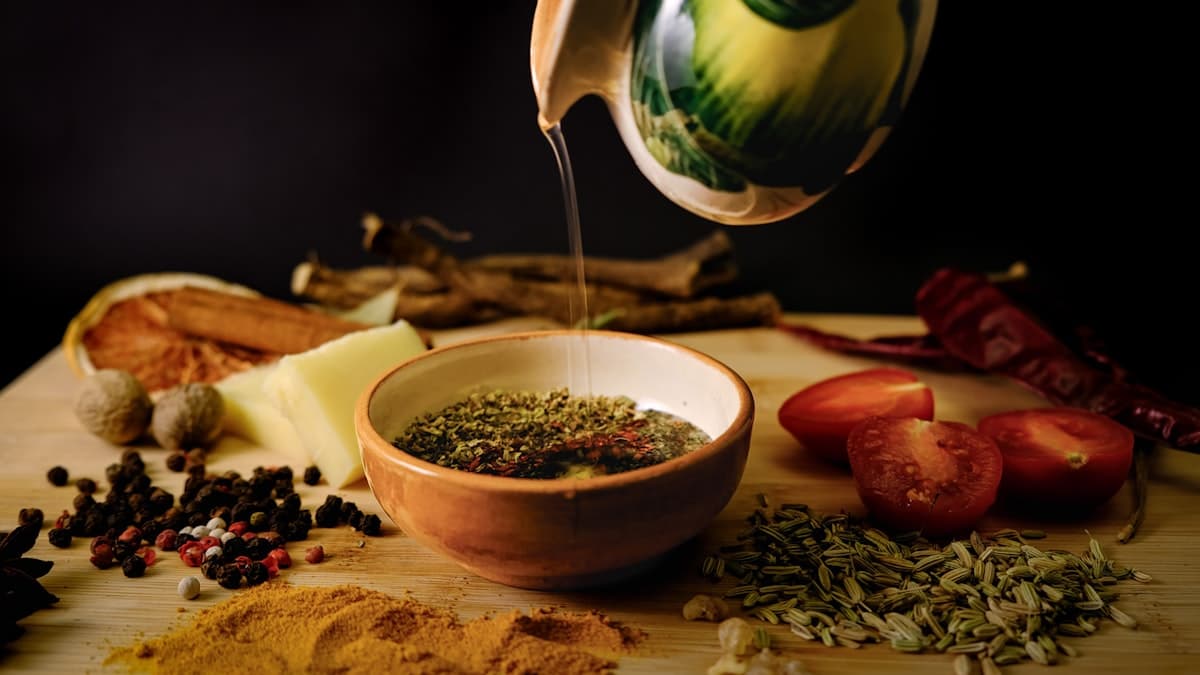
Herbs and spices — turmeric (curcumin), ginger, and garlic each contain compounds that are under investigation for anti-inflammatory potential and pair naturally with a Mediterranean approach.
Practical Ways to Use Olive Oil in This Diet
Several guidelines help make the most of extra virgin olive oil within an anti-inflammatory eating pattern.
Managing heat: Extra virgin olive oil has a smoke point of roughly 180–210°C, which is sufficient for everyday sautéing. Polyphenol loss is generally lower with gentle sautéing, oven roasting below 200°C, or use as a dressing or finishing oil than with high-temperature deep-frying.
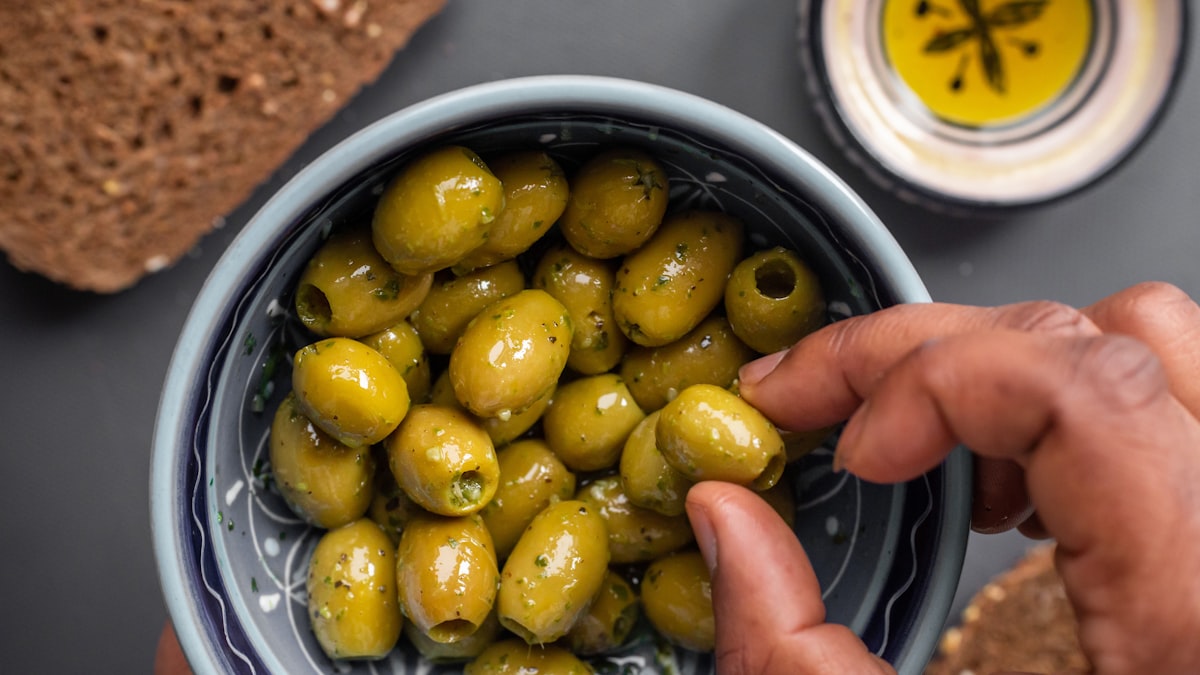
Unheated use: Drizzling over salads, serving as a dipping oil for bread, or finishing soups with a pour of raw oil are all ways to consume oleocanthal and polyphenols with minimal degradation.
Pairing with omega-3 foods: Grilled mackerel with an olive oil dressing, or salmon carpaccio finished with lemon juice and olive oil, are classic examples of how this diet combines its key anti-inflammatory ingredients.
Combining with tomatoes: Lycopene, the fat-soluble antioxidant in tomatoes, has been reported to show higher bioavailability when consumed alongside a fat source. The traditional Mediterranean practice of adding olive oil to tomato dishes has a plausible nutritional rationale in this regard.
What to Look for When Buying Olive Oil
Quality is the prerequisite if you intend the oil to play a meaningful role in an anti-inflammatory diet. Not all products labeled "olive oil" are equivalent.
Grade: Only the Extra Virgin grade carries any assurance of polyphenol content. Pure and Light grades undergo refining processes that remove the majority of polyphenols.
Acidity: According to the International Olive Council (IOC), extra virgin olive oil must contain no more than 0.8% free fatty acids. Acidity below 0.3% generally reflects fruit freshness and careful processing.
Harvest date: A current harvest year on the label, combined with a generous amount of shelf life remaining, is a reasonable indicator that polyphenol levels are still high.
Certification marks: Products carrying PDO (Protected Designation of Origin), PGI (Protected Geographical Indication), or the logos of recognized EVOO quality-certification bodies offer traceable origin and processing standards.
A diet oriented toward joint health is not a short-term prescription but an accumulation of daily habits over the long term. Extra virgin olive oil is a practical tool for steering those daily habits in an anti-inflammatory direction — one meal at a time.
Frequently asked questions
- What is oleocanthal and why does it matter for inflammation?
- Oleocanthal is a phenolic compound found in extra virgin olive oil that produces the characteristic throat-sting sensation when you taste a high-quality oil. Researchers at the Monell Chemical Senses Center in Philadelphia reported that oleocanthal inhibits COX-1 and COX-2 enzymes through a pathway similar to non-steroidal anti-inflammatory drugs (NSAIDs). That work was conducted in cell and animal models, so it is too early to conclude that the same mechanism operates in humans at normal dietary doses — but oleocanthal remains one of the most actively studied molecules in anti-inflammatory nutrition research.
- How many polyphenols should a good anti-inflammatory olive oil have?
- The industry commonly classifies oils above 250 mg/kg of total polyphenols as high-phenolic and those above 500 mg/kg as robust. Polyphenol content varies significantly with harvest timing, cultivar, and processing: early-harvest oils cold-pressed from green olives tend to score highest. Check the bottle label or the producer's quality certificate for a stated total polyphenol figure in mg/kg.
- Did the European Food Safety Authority officially recognize any health benefit of olive oil polyphenols?
- Yes. In a 2011 scientific opinion, the European Food Safety Authority (EFSA) formally recognized that olive oil polyphenols contribute to the protection of blood LDL cholesterol from oxidative damage. The opinion specified that the benefit is observed when 5 mg of oleuropein and hydroxytyrosol combined is consumed daily — an amount provided by approximately 20 g of qualifying olive oil.
- Does cooking destroy the polyphenols in extra virgin olive oil?
- High heat does degrade polyphenols to some degree. Extra virgin olive oil has a smoke point of roughly 180–210°C, which is adequate for everyday sautéing and oven roasting below 200°C. To minimize polyphenol loss, it is advisable to use the oil also in unheated applications — salad dressings, a drizzle over soup, or as a finishing oil — alongside any cooked uses.
- What does the research say about the Mediterranean diet and inflammatory markers?
- A large-scale meta-analysis published in the BMJ in 2022 reported that groups who consistently followed a Mediterranean dietary pattern showed significantly lower levels of inflammation-related biomarkers — including C-reactive protein (CRP) and interleukin-6 (IL-6) — compared with control groups. Nutritional scientists generally view olive oil as working in concert with the diet as a whole rather than as a standalone intervention.
Related reading
- Olive Oil and Inflammation: What Two Decades of Research Have Found
From oleocanthal's proposed COX-inhibiting mechanism to EFSA's conditional polyphenol claim, this guide traces what peer-reviewed research has — and has not — established about EVOO's role in an anti-inflammatory diet.
- Olive Oil in an Anti-Inflammatory Diet: Where the Science Stands on Autoimmune Conditions
Interest in dietary approaches to autoimmune disease continues to grow. This guide examines how oleocanthal and polyphenols in extra-virgin olive oil relate to inflammatory signaling—and what the current research does, and does not, show.
- Senescent Cells, Senolytics, and the Question of Olive Oil Polyphenols
The senolytic diet hypothesis has drawn attention to plant polyphenols as potential allies against aging cells. This guide maps where extra virgin olive oil's oleocanthal and related phenolic compounds currently sit in that research — and what the evidence cannot yet support.
- Olive Oil, Cortisol, and Dietary Fat: Where the Research Actually Stands
Chronic stress and elevated cortisol have become defining health concerns of our time. A growing body of research is examining whether the type of dietary fat we consume — extra virgin olive oil in particular — may be linked to how the body regulates its stress response.
- Olive Oil and Cognitive Health: The Dietary Pattern Researchers Keep Coming Back To
Extra virgin olive oil has emerged as a recurring subject in aging and cognition research, largely through its role in the Mediterranean diet. Here is what the current evidence says — and where important caveats remain.
- Bone Density Around Menopause: What Clinical Research Says About Olive Oil
As estrogen levels fall, bone resorption accelerates — and researchers have begun asking whether the quality of dietary fat plays a role. A look at the clinical and nutritional-epidemiology evidence linking extra virgin olive oil to bone metabolism around menopause.