Guides
Olive Oil, Mood, and the Mediterranean Diet: What Nutrition Research Is Exploring
A growing field called nutritional psychiatry is examining how dietary patterns — with olive oil playing a central role — may be associated with psychological well-being. The evidence is preliminary, but the direction of inquiry is worth understanding.
Translated from the Korean edition, originally published June 12, 2026 · read the original

Where the Table Meets the Mind: A Research Connection Worth Noting
The idea that food shapes not only the body but also mental experience has a long history. More recently, the emerging field of nutritional psychiatry has given researchers a formal framework for examining that relationship — treating overall dietary patterns as a variable and exploring their associations with mood and psychological well-being. The Mediterranean dietary pattern appears repeatedly in this literature, and olive oil is an indispensable element of its structure.
The Mediterranean dietary pattern is defined by an abundance of vegetables, whole grains, legumes, fish, nuts, and olive oil. According to the SMILES trial, published in BMC Medicine in 2017, participants who shifted to a Mediterranean-style diet showed meaningfully different outcomes on psychological indicators compared with a control group that received social support alone. What the trial cannot settle, however, is which element of that complex dietary shift deserves the credit — and it is too early to conclude that olive oil played any independent causal role.

The Compounds in Olive Oil: What Roles Might They Play
Extra virgin olive oil contains oleic acid, a monounsaturated fatty acid, alongside polyphenol compounds including oleocanthal and hydroxytyrosol. Research is ongoing into whether these compounds may contribute to the modulation of oxidative stress and inflammatory responses.
From a neuroscience perspective, oleocanthal has attracted particular attention. A study published in Nature in 2005 reported that oleocanthal shares structural characteristics with ibuprofen, a non-steroidal anti-inflammatory drug. In the context of researchers exploring the hypothesis that neuroinflammation may be associated with mood regulation, this finding is frequently cited as a compelling starting point. It must be noted, however, that demonstrating an equivalent effect in humans through ordinary dietary consumption remains an open question that current evidence does not resolve.
Oleic acid has also drawn interest. A study published in PLOS ONE in 2014 raised the possibility that diets rich in monounsaturated fatty acids may interact with neural pathways associated with serotonin and dopamine. Researchers emphasize, however, that the data supporting this are largely from animal models or small preliminary clinical studies, and that direct application to humans requires further investigation.
Seeing the Whole Dietary Pattern, Not Just One Ingredient
Nutritional science consistently emphasizes that the relevant unit of analysis is the overall dietary pattern, not an individual food. Extracting olive oil from its dietary context and attributing any standalone effect on mood to it alone would be an oversimplification that goes beyond what current research supports.
A commentary published by the Harvard T.H. Chan School of Public Health, Nutritional Psychiatry: Your Brain on Food, notes that the brain is a metabolically demanding organ that may be sensitive to the quality and quantity of fatty acids, antioxidants, and minerals supplied through diet. In that framework, olive oil is best understood not as a mood-altering substance in its own right, but as one important component of a dietary pattern that, taken as a whole, may contribute to well-being.
Mediterranean diet studies are indeed almost always designed around the complete meal configuration, not isolated ingredients. Researchers also take into account that consuming olive oil alongside vegetables may alter the absorption of fat-soluble antioxidants, and that the social and cultural dimensions of a shared meal may themselves contribute to psychological well-being — factors that are difficult to disentangle in any trial.
Bringing the Research Direction Into Everyday Eating
For those who want to reflect the thrust of this research in daily life, thinking of olive oil not merely as a cooking fat but as a tool for raising the overall quality of a dietary pattern is a useful reframing. Experts commonly recommend integrating it naturally across meals — as a dressing for vegetable salads, paired with whole-grain bread, or finishing a fish dish — rather than treating it as a supplement to be added in isolation.
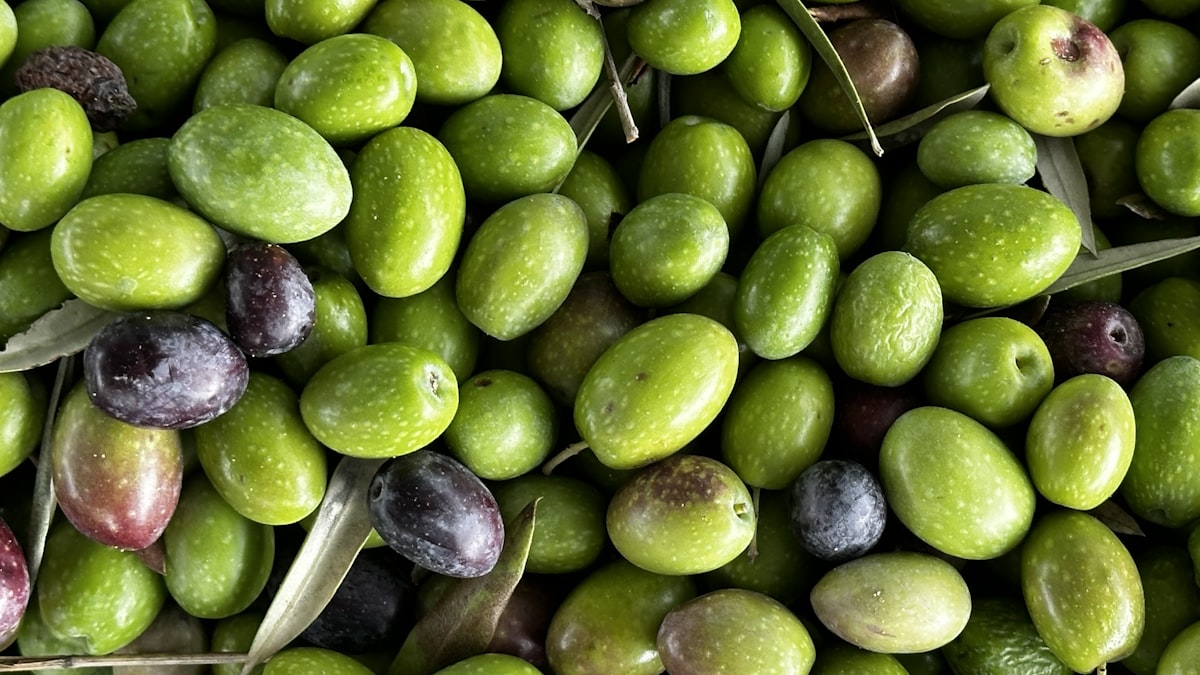
When selecting an extra virgin olive oil, polyphenol content and acidity are the standard reference points. Higher polyphenol levels correlate with a more pronounced bitter and pungent character, and vary considerably depending on harvest timing and cultivar. Lower acidity is generally understood to indicate a fresher oil in which oleic acid has been better preserved.
The connection between olive oil and mood remains an area of active inquiry. Current research holds the question open rather than closed: it is premature to assert that any specific compound produces any specific psychological state. What researchers do consistently support, however, is the broader direction — that quality fats, varied vegetables, and unhurried meals, taken together, may contribute to an improved overall quality of life.
Frequently asked questions
- Can olive oil affect your mood?
- No direct causal claim can yet be made. Researchers in nutritional psychiatry are exploring associations between Mediterranean dietary patterns — of which olive oil is a key component — and psychological well-being, but it is too early to conclude that olive oil alone produces any specific mood effect.
- What is oleocanthal and why do neuroscientists find it interesting?
- Oleocanthal is a polyphenol compound found in extra virgin olive oil. A 2005 study published in Nature reported that it shares structural characteristics with ibuprofen, a non-steroidal anti-inflammatory. Researchers exploring links between neuroinflammation and mood regulation have cited this finding as an intriguing starting point, while stressing that equivalent effects from dietary intake in humans have not been established.
- Did the SMILES trial show that a Mediterranean diet improves mental health?
- The SMILES trial, published in BMC Medicine in 2017, reported that participants who switched to a Mediterranean-style diet showed a greater improvement in psychological indicators compared with a control group receiving social support only. However, because the diet is a complex intervention, isolating the role of any single ingredient — including olive oil — as a cause of that difference is not possible from the trial data alone.
- Is oleic acid linked to neurotransmitter activity?
- A study published in PLOS ONE in 2014 raised the possibility that diets rich in monounsaturated fatty acids may interact with neural pathways associated with serotonin and dopamine. Researchers note, however, that this evidence comes largely from animal models and small-scale preliminary clinical data, and that further research in humans is needed before any firm conclusions can be drawn.
- What should I look for when choosing an extra virgin olive oil for nutritional quality?
- Polyphenol content and acidity are the two standard markers. Higher polyphenol levels are associated with a more pronounced bitter and pungent taste, and vary considerably by harvest timing and cultivar. Lower acidity is generally understood to indicate a fresher oil in which oleic acid has been better preserved.
Related reading
- Senescent Cells, Senolytics, and the Question of Olive Oil Polyphenols
The senolytic diet hypothesis has drawn attention to plant polyphenols as potential allies against aging cells. This guide maps where extra virgin olive oil's oleocanthal and related phenolic compounds currently sit in that research — and what the evidence cannot yet support.
- Olive Oil and Inflammation: What Two Decades of Research Have Found
From oleocanthal's proposed COX-inhibiting mechanism to EFSA's conditional polyphenol claim, this guide traces what peer-reviewed research has — and has not — established about EVOO's role in an anti-inflammatory diet.
- Olive Oil, Cortisol, and Dietary Fat: Where the Research Actually Stands
Chronic stress and elevated cortisol have become defining health concerns of our time. A growing body of research is examining whether the type of dietary fat we consume — extra virgin olive oil in particular — may be linked to how the body regulates its stress response.
- Olive Oil and Cognitive Health: The Dietary Pattern Researchers Keep Coming Back To
Extra virgin olive oil has emerged as a recurring subject in aging and cognition research, largely through its role in the Mediterranean diet. Here is what the current evidence says — and where important caveats remain.
- Olive Oil at the Center of an Anti-Inflammatory Diet for Joint Health
Chronic low-grade inflammation is increasingly linked to everyday joint discomfort, and the Mediterranean diet—with extra virgin olive oil as its defining fat—sits at the heart of anti-inflammatory dietary research. Here is a close look at the compounds involved and how to put them to work at the table.
- Olive Oil in an Anti-Inflammatory Diet: Where the Science Stands on Autoimmune Conditions
Interest in dietary approaches to autoimmune disease continues to grow. This guide examines how oleocanthal and polyphenols in extra-virgin olive oil relate to inflammatory signaling—and what the current research does, and does not, show.
Tags
- nutritional psychiatry
- mediterranean diet
- polyphenols
- oleocanthal
- mood and diet