Guides
Born in the Desert: Oro del Desierto's Solar-Powered Organic Farm in Tabernas
In the heart of Europe's only true desert, Oro del Desierto runs its entire olive farm on solar power and certified-organic principles. A close look at how the extreme aridity of Tabernas may drive polyphenol density — and why the farm's sustainability model is drawing attention across the industry.
Translated from the Korean edition, originally published June 24, 2026 · read the original
Europe's Only True Desert — and What Grows There
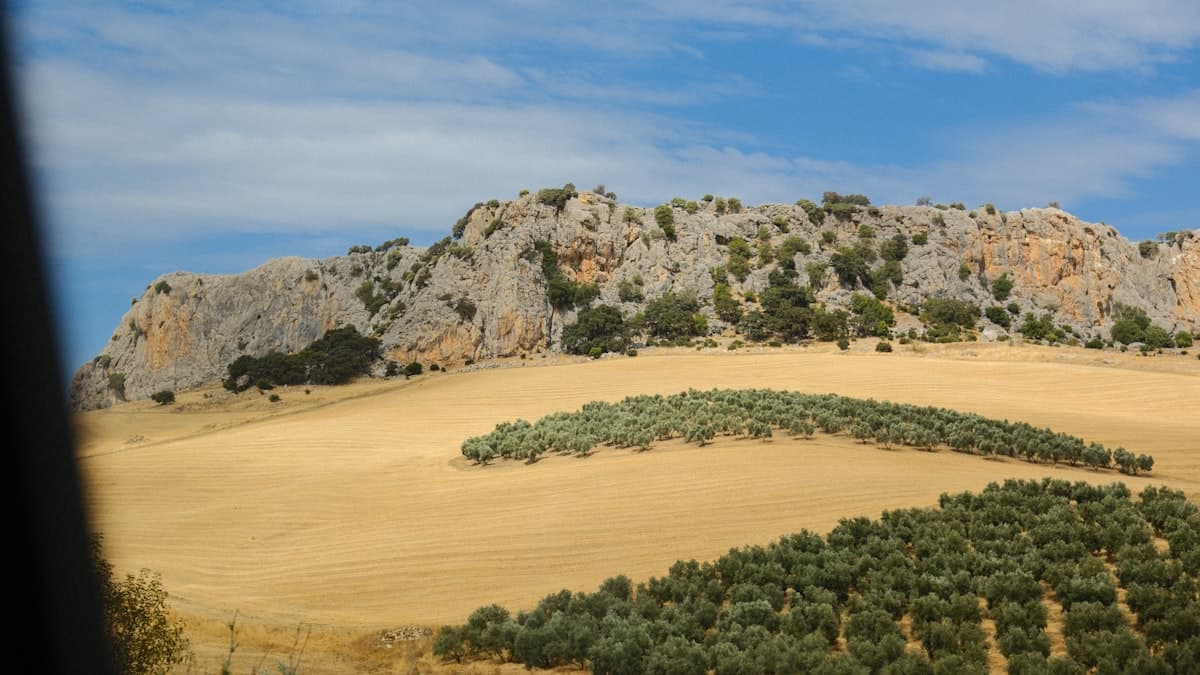
In the inland reaches of Almería province, Andalusia, lies a stretch of land that carries a distinction unique on the continent: Tabernas is classified as Europe's only true desert. Annual rainfall rarely reaches 200 mm, and summer surface temperatures can exceed 50 °C. The landscape is better known to film fans as the backdrop for dozens of spaghetti westerns, yet it is here that Oro del Desierto cultivates its olive groves. What looks like an inhospitable wasteland is, in the farm's view, precisely the right environment for high-quality olive oil.
Tabernas soils are poor in structure — a mix of limestone and clay that retains little moisture. According to data from Spain's National Research Council (CSIC), multiple cultivation trials have confirmed that water-stressed olive trees increase their synthesis of phenolic compounds as a survival mechanism. In practical terms, this means the desert's harshness may contribute to higher concentrations of key polyphenols such as oleocanthal and oleacein. Oro del Desierto is reported to commission independent chemical analysis every harvest season, and its published results have consistently shown elevated polyphenol readings.
Running an Entire Farm on Sunlight
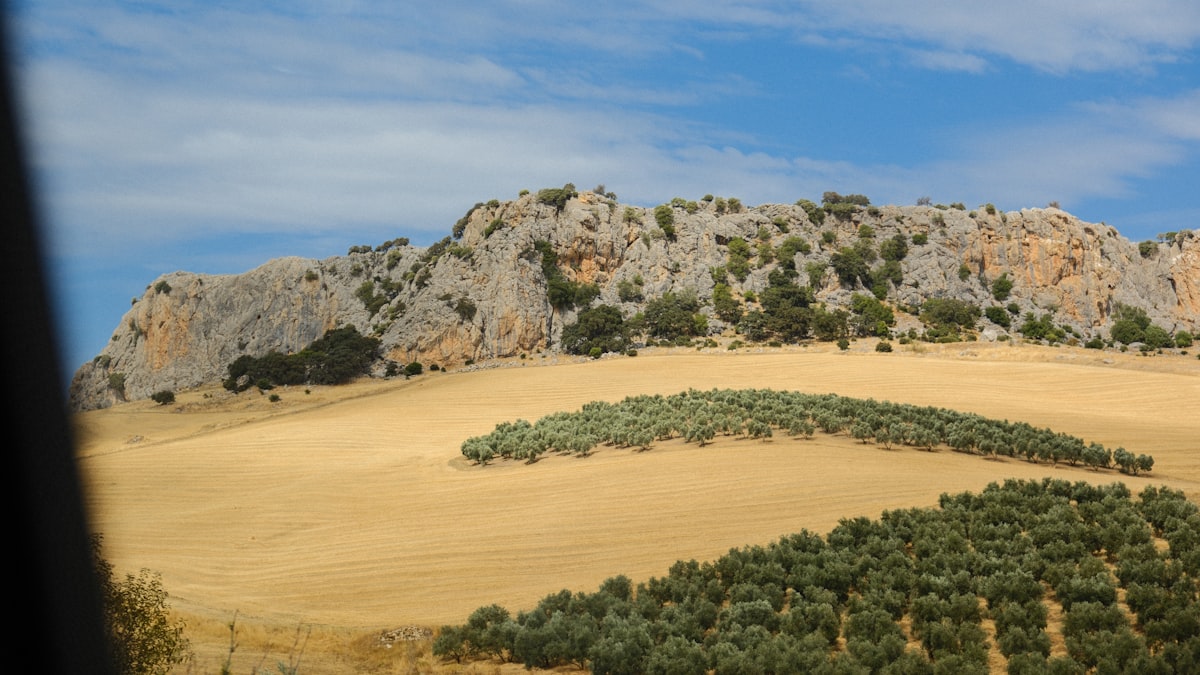
The farm's energy model is the other reason it draws attention within the olive oil industry. According to Oro del Desierto's official position, every kilowatt of electricity the farm consumes — across the olive mill, cooling and storage tanks, irrigation pumps, and bottling line — comes from on-site solar panels. Tabernas is reported to receive more than 3,000 hours of sunshine per year, placing it among the most productive photovoltaic sites anywhere in Europe.
The carbon implications are measurable. According to an International Olive Council (IOC) report published in 2023, the carbon footprint of producing one litre of extra-virgin olive oil can vary by more than twofold depending on the milling technology and energy source used. Against that backdrop, Oro del Desierto's energy self-sufficiency model represents a meaningful reduction in production-stage carbon intensity — which is part of why the farm is frequently cited in discussions about renewable-energy-based food production.
The farm is also certified organic under EU standards. No synthetic pesticides or chemical fertilisers are applied at any stage. Pest management is handled through biological controls: pheromone traps and beneficial insects rather than chemical intervention.
Cultivar Selection and the Logic of Early Harvest
The farm's principal cultivars are Picual, Hojiblanca, Picudo, and Lechena. Of these, Picual is regarded as the most naturally aligned with the Tabernas climate. Research reported by the Instituto de la Grasa has noted that Picual tends to maintain high oleic acid content and oxidative stability under high-temperature, low-moisture growing conditions — a property that suits both the terroir and the market positioning of a polyphenol-forward oil.
Harvest takes place from late October to early November, just before the olives reach full veraison — the moment of colour change that marks the onset of full ripening. Harvesting this early maximises polyphenol content but produces significantly lower oil yield per tonne of fruit. Oro del Desierto has consistently held to this trade-off, relying on the resulting quality premium to offset the lower volume. Pressing follows within a few hours of picking, at temperatures below 27 °C — the threshold that qualifies under EU regulation for the 'cold extraction' label designation.
Stewardship of a Fragile Ecosystem
Tabernas is not simply an extreme agricultural landscape — it is also an ecosystem of recognised ecological importance. The desert lies adjacent to habitat used by the Iberian lynx and other rare species, and forms part of a dryland ecosystem that UNESCO has highlighted as worthy of conservation attention. Oro del Desierto is reported to maintain non-cultivated buffer zones within its farm boundary and to manage chemical inputs in ways designed to limit any runoff into surrounding habitat.
Beyond its EU organic certification, the farm is reported to publish an independent environmental management report each year. Transparent disclosure of this kind is increasingly important to premium olive oil consumers. According to Innova Market Insights' 2024 European food market report, the proportion of EU consumers who describe environmental-impact information as 'very important' to their purchasing decisions has grown steadily compared with the previous year.
A Different Way of Reading a Bottle
The Oro del Desierto case invites a more layered way of thinking about extra-virgin olive oil. The climate of the growing region, the source of the energy used to process the fruit, the exact moment of harvest, the temperature at which the oil is pressed — every bottle is the product of dozens of deliberate choices. This farm's particular experiment — using the extremity of a desert environment to pursue both elevated polyphenol density and a reduced carbon footprint — is a useful reminder that olive oil can be read as an ecological artefact as much as a culinary ingredient. The attention that Tabernas's golden oil has attracted is not incidental; it reflects a coherent set of decisions made at every stage of production.
Frequently asked questions
- Where is the Tabernas desert and why is it significant for olive oil?
- Tabernas is an inland region of Almería province in Andalusia, Spain, and is classified as Europe's only true desert, receiving under 200 mm of annual rainfall. According to data published by Spain's National Research Council (CSIC), water-stressed olive trees tend to increase their synthesis of phenolic compounds as a survival response — meaning the harsh conditions may contribute to higher concentrations of polyphenols such as oleocanthal and oleacein in the resulting oil.
- How does Oro del Desierto power its olive mill with solar energy?
- The farm states that its entire electricity demand — covering the olive mill, cooling and storage tanks, irrigation pumps, and bottling line — is met by on-site solar panels. Tabernas is reported to receive more than 3,000 hours of sunshine per year, making it one of the most favorable locations in Europe for photovoltaic generation. According to an International Olive Council (IOC) report from 2023, the carbon footprint of producing one litre of extra-virgin olive oil can vary by more than twofold depending on the milling method and energy source, which is part of why the farm's self-sufficient energy model attracts industry attention.
- What olive cultivars does Oro del Desierto grow?
- The farm's main cultivars are Picual, Hojiblanca, Picudo, and Lechena. Picual is considered particularly well suited to the hot, dry conditions of Tabernas: research reported by the Instituto de la Grasa has noted that Picual tends to maintain high oleic acid content and oxidative stability under high-temperature, low-moisture conditions.
- When does Oro del Desierto harvest, and why does timing matter?
- Harvest takes place from late October to early November, just before the olives reach full veraison — the point at which they begin to change colour. Early harvesting maximises polyphenol content but comes at the cost of lower yield. The farm has consistently accepted that yield trade-off in favour of quality. Pressing takes place within a few hours of picking at temperatures below 27 °C, which meets the EU regulatory threshold for the 'cold extraction' designation.
- Is Oro del Desierto certified organic, and how does it handle pest control?
- Yes. The farm meets EU organic certification standards and uses no synthetic pesticides or chemical fertilisers. Pest management relies on biological controls, including pheromone traps and beneficial insects. The farm is also reported to publish an independent environmental management report annually, a practice that Innova Market Insights' 2024 European food market research identifies as increasingly important: the share of EU consumers who say environmental-impact information is 'very important' to their purchasing decisions has grown steadily year on year.
Related reading
- Lab Numbers vs. Living Bodies: The Truth About Olive Oil Antioxidant Assays
DPPH, FRAP, and Folin-Ciocalteu tests can put a number on an olive oil's polyphenol potential — but in-vitro results and in-vivo bioavailability are not the same thing. This guide examines the gap between the two and what it means at the table.
- Bone Density Around Menopause: What Clinical Research Says About Olive Oil
As estrogen levels fall, bone resorption accelerates — and researchers have begun asking whether the quality of dietary fat plays a role. A look at the clinical and nutritional-epidemiology evidence linking extra virgin olive oil to bone metabolism around menopause.
- Heat, Smoke, and Polar Compounds: The Chemistry of Cooking with Olive Oil
Heating olive oil triggers a cascade of hydrolysis, oxidation, and polymerization reactions that accelerate past the smoke point. This guide traces the science of polar compound formation and explains why high-polyphenol EVOO tends to hold up better under heat.
- Does Olive Oil You Eat Reach Your Skin? A Clinical Research Roundup
A growing body of clinical research is examining whether regular dietary intake of olive oil is associated with measurable changes in skin hydration and elasticity. This guide summarizes the current evidence, its limits, and how the findings sit within the broader context of Mediterranean eating patterns.
- Fasting Lipids, LDL Particle Size, and the Case for Olive Oil at Breakfast
Research into fasting blood lipid profiles is shifting attention from total LDL numbers toward particle size and quality — and olive oil's monounsaturated fats and polyphenols are central to that conversation.
- Senescent Cells, Senolytics, and the Question of Olive Oil Polyphenols
The senolytic diet hypothesis has drawn attention to plant polyphenols as potential allies against aging cells. This guide maps where extra virgin olive oil's oleocanthal and related phenolic compounds currently sit in that research — and what the evidence cannot yet support.
Tags
- oro del desierto
- tabernas
- organic olive oil
- solar farming
- polyphenols
- sustainable agriculture