Guides
Nine Centuries of Olive Growing at Capezzana, Carmignano
First recorded in an 804 CE deed from the age of Charlemagne, Tenuta di Capezzana in Carmignano, Tuscany, ranks among Europe's oldest documented olive estates. Its extra virgin olive oil, pressed from trees up to eight centuries old, represents a continuous dialogue between traditional Tuscan farming and modern quality standards.
Translated from the Korean edition, originally published June 24, 2026 · read the original
A Name Recorded in 804 CE
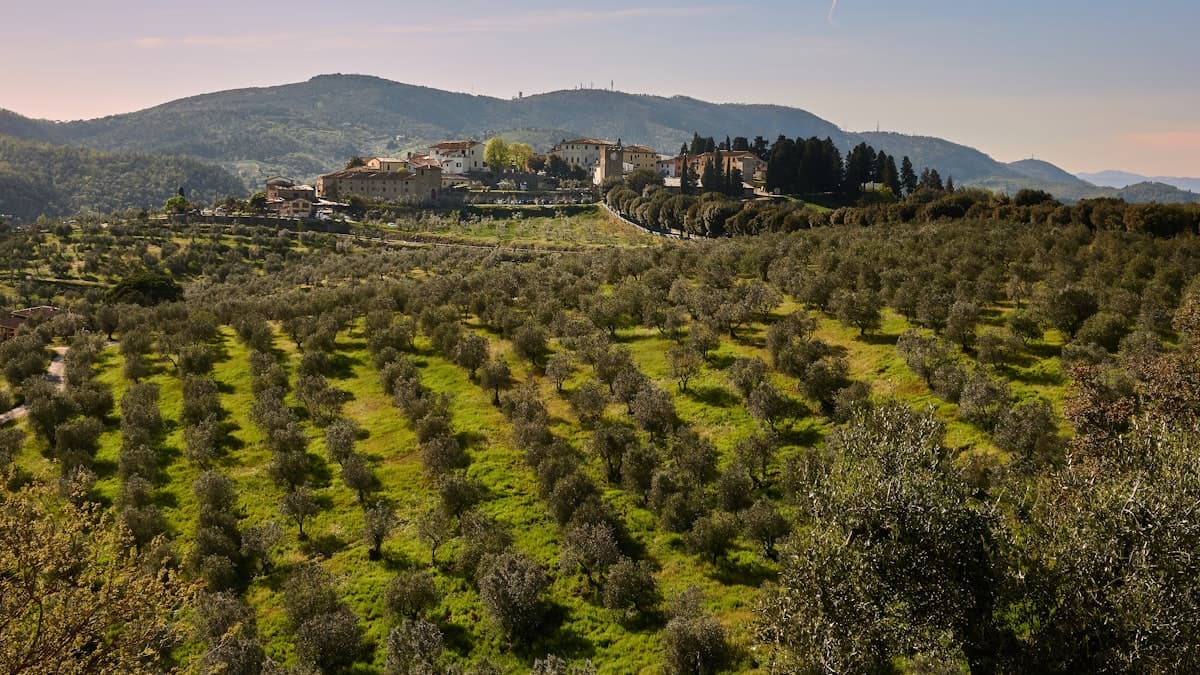
On the hills of Carmignano in Tuscany stands one of Europe's most historically documented olive estates. Tenuta di Capezzana first enters the written record in 804 CE, when the site — named 'Capiciana' — was listed in a donation deed from the era of Charlemagne. That document, preserved in the State Archive of Florence, establishes Capezzana not merely as an olive oil producer but as a chapter in European agricultural history.
Carmignano lies roughly 20 kilometres west of Florence, at the foot of the Montalbano hills. The estate sits on gently sloping terrain at 100 to 200 metres above sea level, on well-drained clay-limestone soils with generous annual sunshine. According to data from Italy's Ministry of Agricultural, Food and Forestry Policies (MIPAAF), the Carmignano area forms a microclimate well suited to olive cultivation, and the wide daily temperature swings are associated with naturally elevated polyphenol concentrations in the fruit.
Trees Measured in Centuries, and the Moraiolo Cultivar
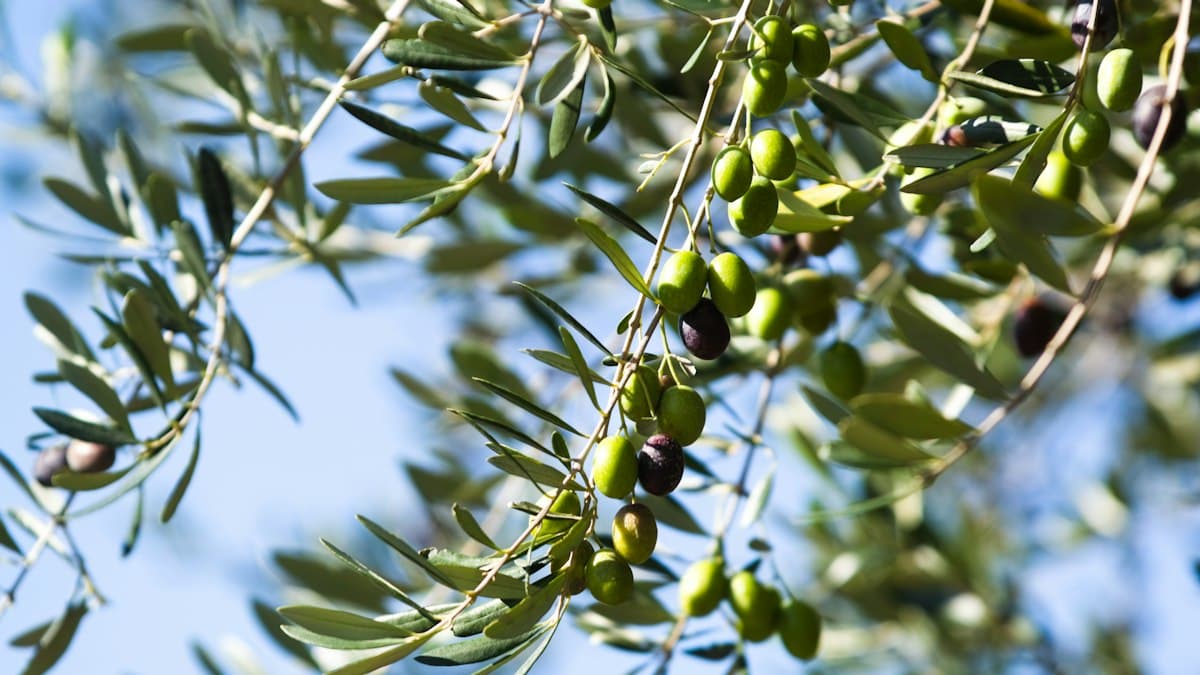
Capezzana currently cultivates around 60,000 olive trees, a portion of which are estimated to be between 600 and 800 years old. The three principal cultivars are Moraiolo, Frantoio, and Leccino. The blending ratio among them is adjusted each season according to the condition of the fruit at harvest, though Moraiolo has traditionally served as the anchor variety.
Moraiolo is the emblematic cultivar of inland Tuscany. According to a report by CNR-IVALSA, the Italian National Research Council's institute for wood and agro-forestry systems, Moraiolo has been reported to contain relatively higher levels of oleocanthal and oleacein compared with other major cultivars. These two compounds are also responsible for the characteristic bitter and peppery sensations that define the oil's palate.
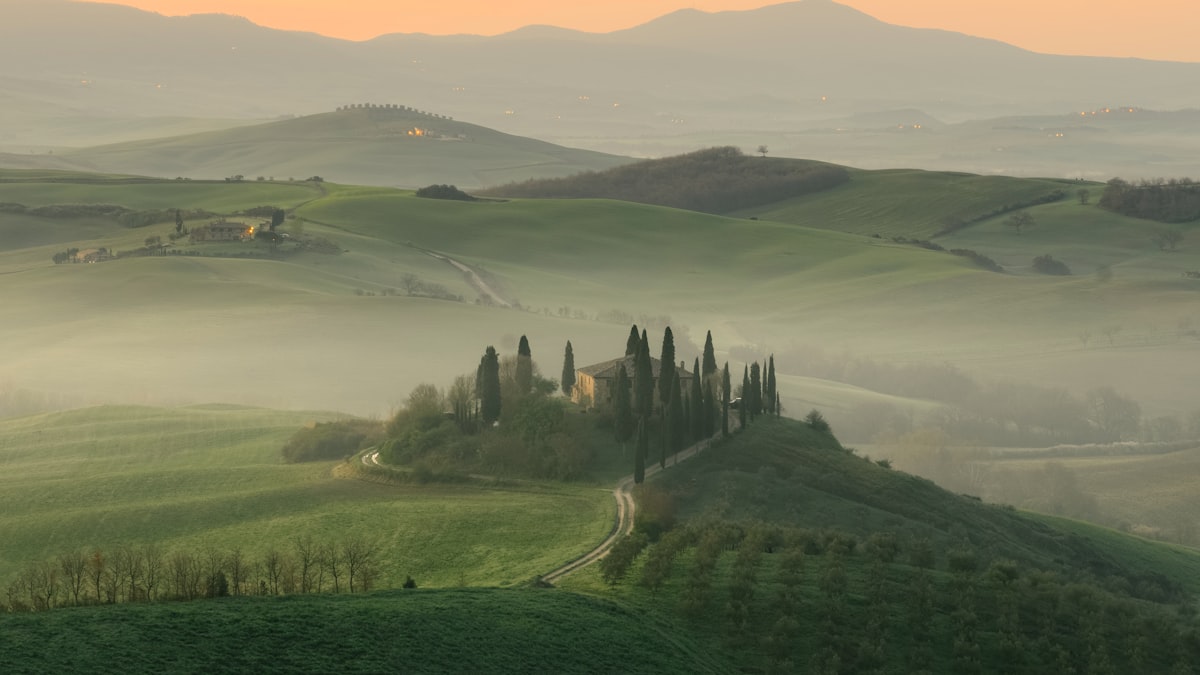
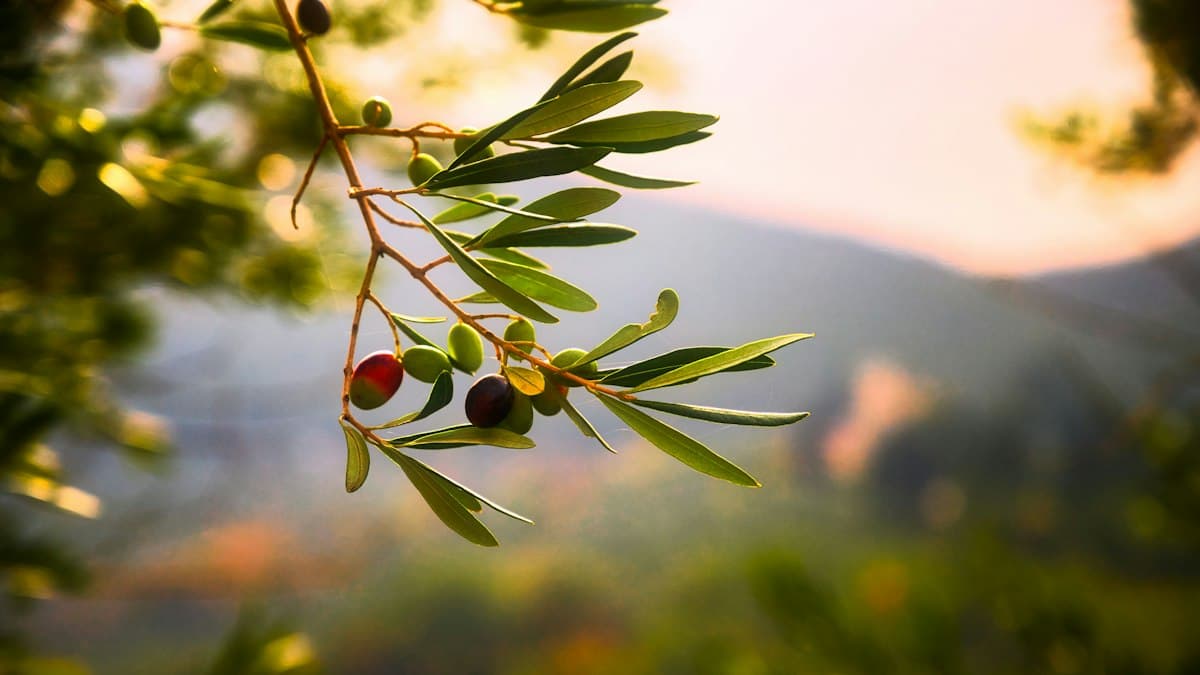
Harvest takes place each year between late October and early November, just before veraison — the point at which the olives transition from green to violet. This early picking is a deliberate choice to keep acidity low and preserve polyphenol content at its peak. Milling follows within 24 hours of harvest at the estate's own frantoio, using cold extraction. Under European Commission regulations, pressing temperature must not exceed 27°C for the oil to qualify as extra virgin.
The Contini Bonacossi Family and Sustainable Farming
In the twentieth century, Capezzana passed to the Contini Bonacossi family, long known in Italy as art collectors and cultural patrons. Under their stewardship, the estate has been managed both as a heritage site and as a modern production facility, with systematic work to raise the quality of both wine and olive oil to contemporary standards.
Today Capezzana operates with a combination of Integrated Pest Management (IPM) and traditional pruning techniques. Minimising chemical herbicides and using cover crops to maintain soil carbon aligns with the agricultural direction recommended by the EU Green Deal strategy. According to figures published by CCPB, an Italian organic certification body, in 2023, the share of small traditional farms in Tuscany adopting organic conversion or natural farming methods has been steadily rising.
Carmignano DOC and the Place of Olive Oil Within It
Carmignano is also home to one of Italy's oldest wine appellations. Its boundaries were drawn by a grand-ducal decree of the Tuscan state in 1716, and the zone is today officially recognised as both a DOC and a DOCG wine territory. The fact that wine and olive oil grow from the same land reflects the traditional intercropping culture that has long characterised Tuscan agriculture.
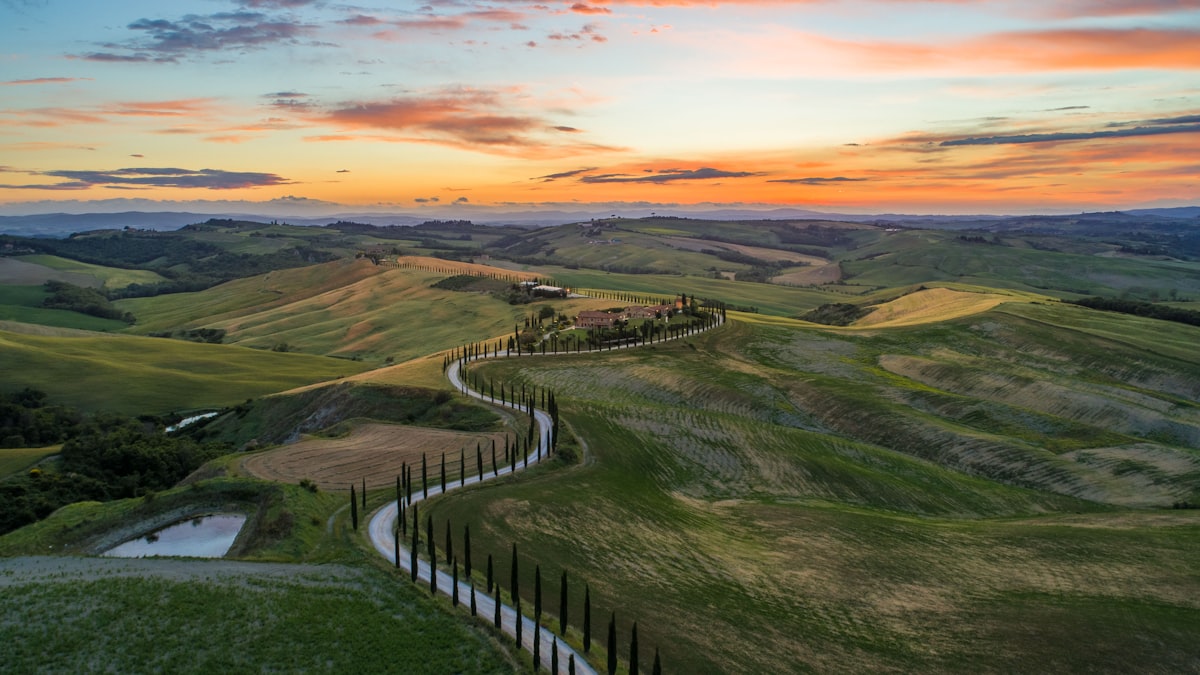
The coexistence of olives and vines carries significance beyond tradition. Research from the agricultural biodiversity team within Italy's National Research Council (CNR) has reported that intercropping systems combining olives and grapevines contribute to higher soil microbial diversity compared with monoculture plantings.
Capezzana Through the Eyes of an Oil Taster
Capezzana's extra virgin olive oil is reported to maintain acidity below 0.3%, meeting International Olive Council (IOC) standards comfortably. The flavour profile centers on fresh green grass, artichoke, and almond, with a lasting peppery finish understood as a signature expression of the Moraiolo cultivar.
A 2023 extra virgin guide published by the International Gourmet Association tasting panel described Capezzana's oil as 'the quintessence of the classic Toscano style.' That style is defined by structure and bitterness rather than light fruitiness, and is widely considered a natural pairing for the rich textures of central Italian cooking.
Among tasters with intermediate to advanced experience, Capezzana is often treated as a reference point for the Tuscan style. Drizzled over bruschetta or finished onto a bowl of ribollita — the traditional Florentine bread soup — the oil integrates most naturally with the food culture from which it emerged.
History as a Dimension of Quality
Capezzana is more than an estate that produces fine olive oil. Twelve centuries of continuous cultivation on the same land, managing the same trees, constitute a quality indicator in their own right. The soil microbiome, the root depth of ancient trees, and the milling knowledge passed across generations represent assets that no modern facility can reproduce in a short time.
According to a report by FARO, Italy's agricultural heritage body, fewer than 100 farms across the country hold olive trees aged 500 years or older, and researchers have reported that fruit from these ancient specimens reflects a broader spectrum of minerals drawn up through deep root systems compared with fruit from younger trees. The sustained attention Capezzana continues to attract from producers and tasters alike is rooted in precisely this kind of complexity — one that land and time have built together.
Frequently asked questions
- How old is the Capezzana olive estate?
- The name Capezzana — recorded as 'Capiciana' — appears in a donation deed dated 804 CE, held by the State Archive of Florence. That makes it one of the oldest documented olive-growing sites in Europe, with a recorded history spanning more than twelve centuries.
- What olive cultivars does Capezzana use?
- The estate grows approximately 60,000 trees, with Moraiolo as the primary cultivar, blended with Frantoio and Leccino. The exact blend ratio is adjusted each harvest depending on the condition of the fruit at picking time.
- What does Capezzana extra virgin olive oil taste like?
- Tasting notes typically center on fresh green grass, artichoke, and almond, with a peppery, lingering finish characteristic of Moraiolo. A 2023 tasting guide published by the International Gourmet Association panel described it as 'the quintessence of the classic Toscano style,' meaning it emphasizes structure and bitterness over delicate fruitiness.
- What is the acidity level of Capezzana EVOO?
- Capezzana's extra virgin olive oil is reported to maintain acidity below 0.3%, well within the International Olive Council (IOC) threshold for extra virgin classification, which sets the maximum at 0.8%.
- Why do old olive trees matter for oil quality?
- According to a report by the Italian agricultural heritage body FARO, fewer than 100 farms across Italy hold trees aged 500 years or older. Researchers have reported that fruit from these ancient trees reflects a broader spectrum of minerals absorbed through deep root systems — an asset that cannot be replicated quickly by modern plantings.
Related reading
- The Farms That Keep Winning: A Guide to NYIOOC and Olive Japan Award Names
The world's two leading EVOO competitions honor hundreds of brands each year, yet Gold and Best in Class medals cluster around a surprisingly small circle of estates. A look at the 2024 results reveals which producers are setting the global standard.
- Spain's Top EVOO Estates: A Guide to the Names That Keep Winning
Not all single-estate Spanish olive oils occupy the same tier. From Jaén and Granada to the Tabernas Desert and Extremadura, this guide maps the Spanish houses that international competition judges and critic guides return to year after year.
- Castillo de Canena: How a 1780 Family Estate Became a Biodynamic EVOO Benchmark
A single Andalusian estate has been farming olives on the same land since 1780 — yet the premium reputation that precedes Castillo de Canena today was built largely in the last two decades, through biodynamic certification, cultivar transparency, and a deliberate repositioning in the global EVOO market.
- Beyond Tuscany: The Italian EVOO Estates Worth Knowing in Umbria and Sicily
Premium Italian extra virgin olive oil extends well beyond a Tuscany IGP label. From Carmignano to Palma di Montechiaro, three regions and their benchmark estates mapped out.
- Four Price Tiers of Extra Virgin Olive Oil — and What Each One Actually Buys You
From entry-level PET-bottle blends to single-estate premiums, the EVOO shelf divides into four distinct tiers. Knowing what separates them makes it easier to shop with intention.
- Korea's Cooking Oil Aisle Is Making Room for EVOO
Extra virgin olive oil is claiming a growing share of South Korea's cooking oil shelves, driven by single-person households, the home-cooking surge, and a wider wellness conversation. Here is how the shift is taking shape.
Tags
- tuscany
- single estate
- extra virgin olive oil
- italy
- olive history
- moraiolo