Guides
Spain's Top EVOO Estates: A Guide to the Names That Keep Winning
Not all single-estate Spanish olive oils occupy the same tier. From Jaén and Granada to the Tabernas Desert and Extremadura, this guide maps the Spanish houses that international competition judges and critic guides return to year after year.
Translated from the Korean edition, originally published June 14, 2023 · read the original
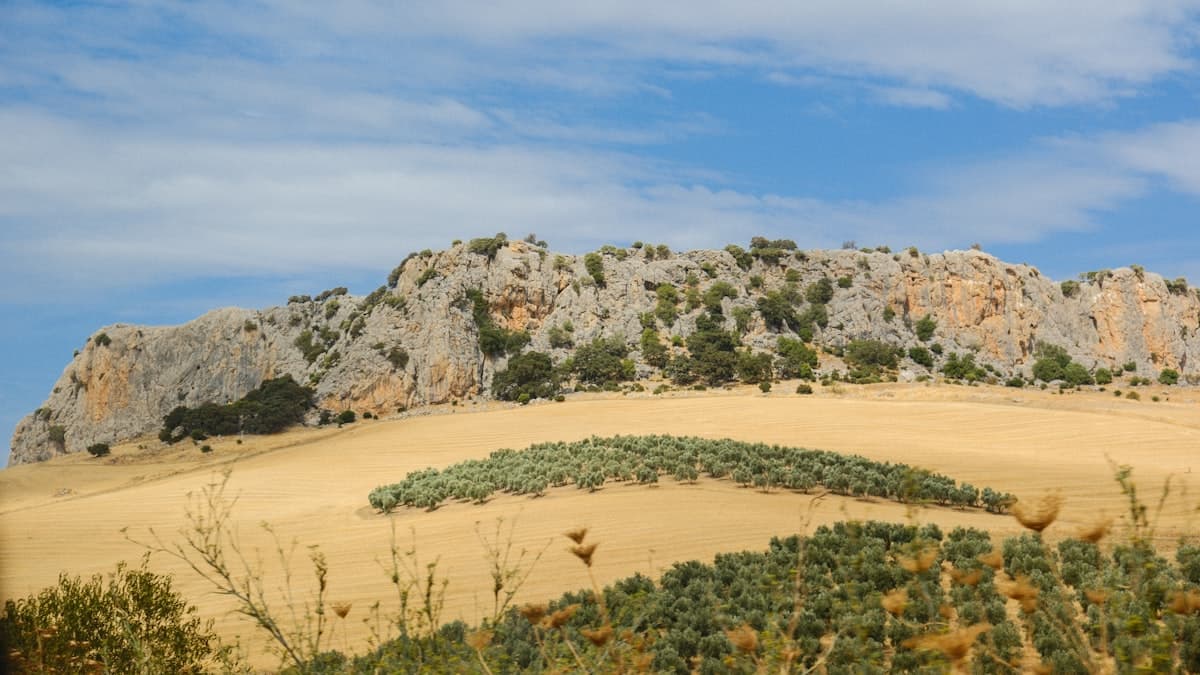
Within the broad category of single-estate Spanish EVOO, position varies considerably. When the international olive oil world reaches for a Spanish reference point, attention converges on a handful of provinces — Jaén, Granada, Córdoba, and Seville in Andalusia, plus Extremadura and Toledo further north. The estates that appear year after year in authoritative guides such as NYIOOC, Flos Olei, and Olive Japan tend to share two traits: longstanding family ownership, and a willingness to publish acidity and polyphenol figures alongside the oil itself.
Andalusia's Benchmark Estates
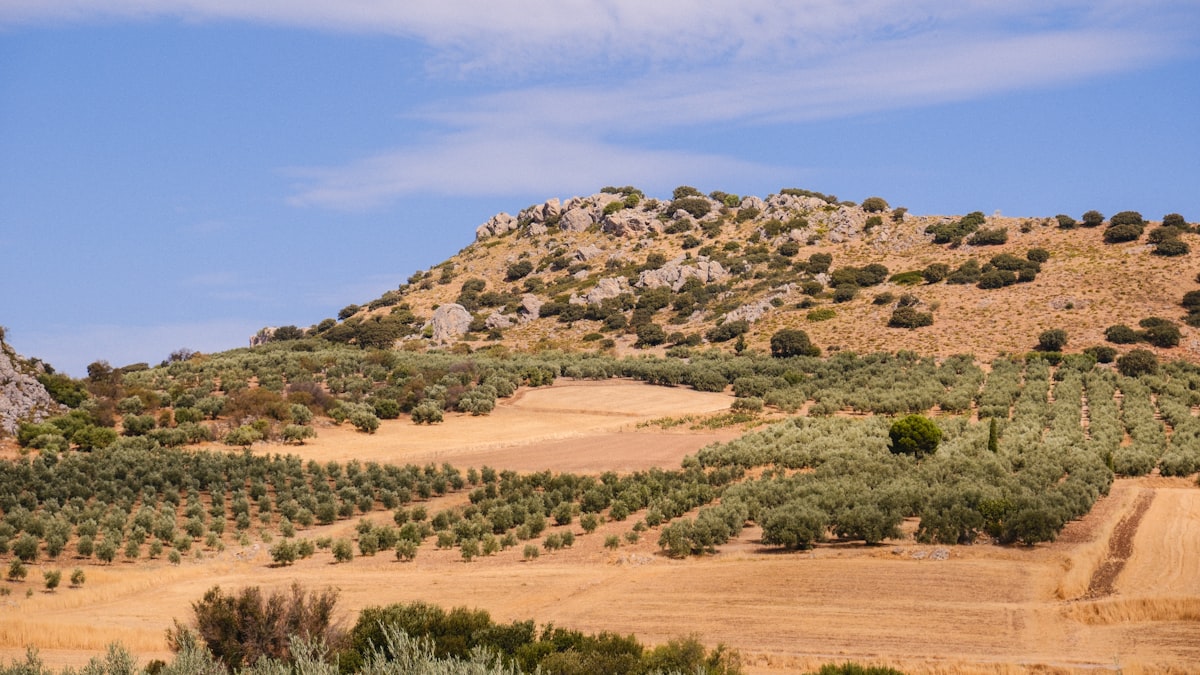
The single most frequently cited Spanish origin in global EVOO rankings is Jaén, and the name most associated with it is Castillo de Canena. According to the estate's own published records, the family has managed the same farm continuously since 1780; in 2010 it transitioned to biodynamic farming and subsequently received Demeter certification. Also in Jaén, in the village of Villanueva de la Reina, Oro Bailén is run by the Gálvez-González family and is regularly cited as one of the reference points for single-cultivar Picual, having received multiple NYIOOC awards. In Granada, the estate O-MED, based in the village of Ácula, has maintained a consistent presence in both the Feinschmecker OLIO AWARD and the Flos Olei guide with its single-cultivar lineup of Picual, Arbequina, and Hojiblanca expressions.
Desert and Plain: Single Farms on Different Terrain
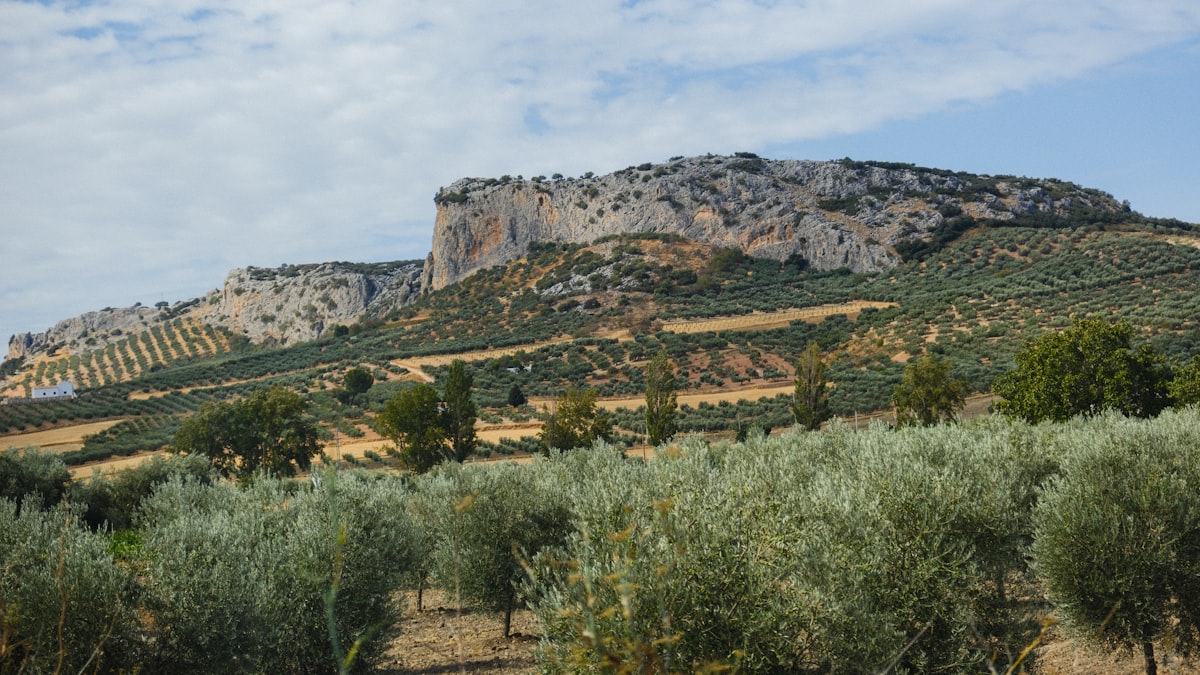
Oro del Desierto sits in the Tabernas Desert in Almería — the driest zone in continental Europe — and operates as a certified organic single farm. According to the estate's published materials, the entire production process runs on solar energy, and the producer holds international awards including a gold medal at BIOL 2012. In Extremadura, near Mérida, Marqués de Valdueza operates from the roughly 1,000-hectare Perales de Valdueza farm, blending Arbequina, Picual, Hojiblanca, and Morisca into what the estate positions as a chef-oriented oil; it has accumulated a series of NYIOOC awards. In Toledo, Marqués de Griñón's Dominio de Valdepusa became the first estate in Spain to receive the Aceite de Pago designation in 2002 — a single-estate protected origin certification that has since served as the template for the category.
Reading the Competition Results
According to Olive Oil Times' summary of the 2024 NYIOOC World Olive Oil Competition, Italy led with 147 awards from 217 entries, while Spain took 82 awards. Italy's volume advantage is clear, but the concentration of estates in Andalusia that have maintained consistent quality at single-farm level across more than a decade is a distinctive feature of the Spanish side of the ledger. Within that geography, there is a meaningful split between producers staking their reputation on a single cultivar such as Picual and those engineering flavour through multi-variety blending — and the price range for a 250–750 ml bottle spans a wide band internationally. Checking the pressing date and the availability of a published lab report alongside the label is the most reliable way to locate where within the broader category of "Spanish EVOO" any given bottle actually sits.
Acidity, polyphenol, and pricing figures for international producers may vary by vintage and by import channel. Availability of official imports changes over time; always verify the label and retailer details at the point of purchase.
Frequently asked questions
- Which Spanish region produces the most award-winning extra virgin olive oil?
- Andalusia — and within it, the province of Jaén — accounts for the largest concentration of internationally recognised single-estate producers. Estates in Granada, Córdoba, Almería, and the neighbouring region of Extremadura also appear regularly in major competition results.
- What is an Aceite de Pago certification in Spain?
- Aceite de Pago is a single-estate protected designation unique to Spain, modelled loosely on the wine concept of a named estate appellation. Dominio de Valdepusa in Toledo was the first estate in Spain to receive the designation, in 2002.
- How do I tell a premium Spanish EVOO from an ordinary one on the label?
- Look for the pressing or harvest date (not just a best-before year), a declared free acidity figure, and — ideally — a published lab report showing polyphenol content. Estates that make these figures publicly available tend to be more accountable for the quality in the bottle.
- Is single-cultivar Spanish olive oil better than a blend?
- Neither approach is inherently superior. Single-cultivar oils — Picual being the most prominent Spanish example — offer varietal transparency and traceability, while thoughtfully designed blends can achieve greater aromatic complexity. Both styles appear among the top-ranked Spanish producers.
- How many awards did Spanish producers win at NYIOOC 2024?
- According to Olive Oil Times' tally of the 2024 NYIOOC World Olive Oil Competition results, Spain took 82 awards. Italy led in total entries (217 submissions, 147 awards), but Spain's Andalusian estates are notable for sustaining consistent results across many consecutive years.
Related reading
- Premium EVOO at Every Price Point: A Global Farm Map
Within the global premium EVOO tier, estates cluster around a consistent set of signals — single origin, single cultivar, and published lab results. This guide charts the farms and labels that define that space, from Andalusia to California.
- Castillo de Canena: How a 1780 Family Estate Became a Biodynamic EVOO Benchmark
A single Andalusian estate has been farming olives on the same land since 1780 — yet the premium reputation that precedes Castillo de Canena today was built largely in the last two decades, through biodynamic certification, cultivar transparency, and a deliberate repositioning in the global EVOO market.
- Spain, Italy, Greece: How the Three EVOO Heartlands Taste Different
Spain, Italy, and Greece together account for more than 80 percent of the world's extra virgin olive oil, according to the International Olive Council — yet the flavors they produce could hardly be more distinct.
- The Farms That Keep Winning: A Guide to NYIOOC and Olive Japan Award Names
The world's two leading EVOO competitions honor hundreds of brands each year, yet Gold and Best in Class medals cluster around a surprisingly small circle of estates. A look at the 2024 results reveals which producers are setting the global standard.
- Tunisia's Olive Oil Is No Longer Just a Bulk Story
Tunisia has reclaimed its position as the world's second-largest EVOO producer and is steadily expanding single-cultivar labelling — a shift that is reframing a country long associated with anonymous bulk supply.
- EVOO Prices Are Easing — Here's Why They Rose and How Far They've Fallen
Global extra virgin olive oil wholesale prices hit record highs in the 2023–24 season and are now retreating. Harvest conditions, climate shocks, and the structure of the supply chain each play a distinct role in how prices move.