Guides
EVOO's Environmental Footprint: CO₂ Emissions, Water Use, and Where Olive Oil Actually Stands
Extra virgin olive oil occupies a complicated position in the sustainability conversation — lower carbon intensity than palm oil, but a water footprint that demands closer reading. A data-driven look at the numbers behind the bottle.
Translated from the Korean edition, originally published July 6, 2026 · read the original
Cooking Oils and the Environment — Why the Comparison Matters
Food systems account for approximately 26% of global greenhouse gas emissions, according to Our World in Data at the University of Oxford — a figure that is now widely cited in climate policy discussions. Within that total, edible oils are deeply entangled with three key environmental indicators across their full production, transport, and processing chains: land use, carbon emissions, and freshwater consumption. Which oil a consumer chooses is no longer simply a dietary question; it ripples across entire agricultural ecosystems.
Extra virgin olive oil (EVOO) is the defining product of Mediterranean agriculture, yet a systematic comparison of its environmental position against other cooking oils is rarely presented in accessible form. This guide focuses on two primary axes — carbon footprint (measured in CO₂ equivalent) and water footprint — to locate EVOO within the broader sustainability picture.
CO₂ Footprint — Where Olive Oil Falls in the Range
Comparing the greenhouse gas emissions required to produce 1 kg of edible oil, expressed in kg CO₂ equivalent (CO₂eq), brings the picture into focus. According to the European Environment Agency (EEA) and multiple life cycle assessment (LCA) studies, palm oil production — when tropical deforestation and land-use conversion are included — has been reported to reach as high as 8–10 kg CO₂eq per kilogram. Olive oil, by contrast, is estimated at approximately 2–4 kg CO₂eq per kilogram, with the range depending heavily on production method.
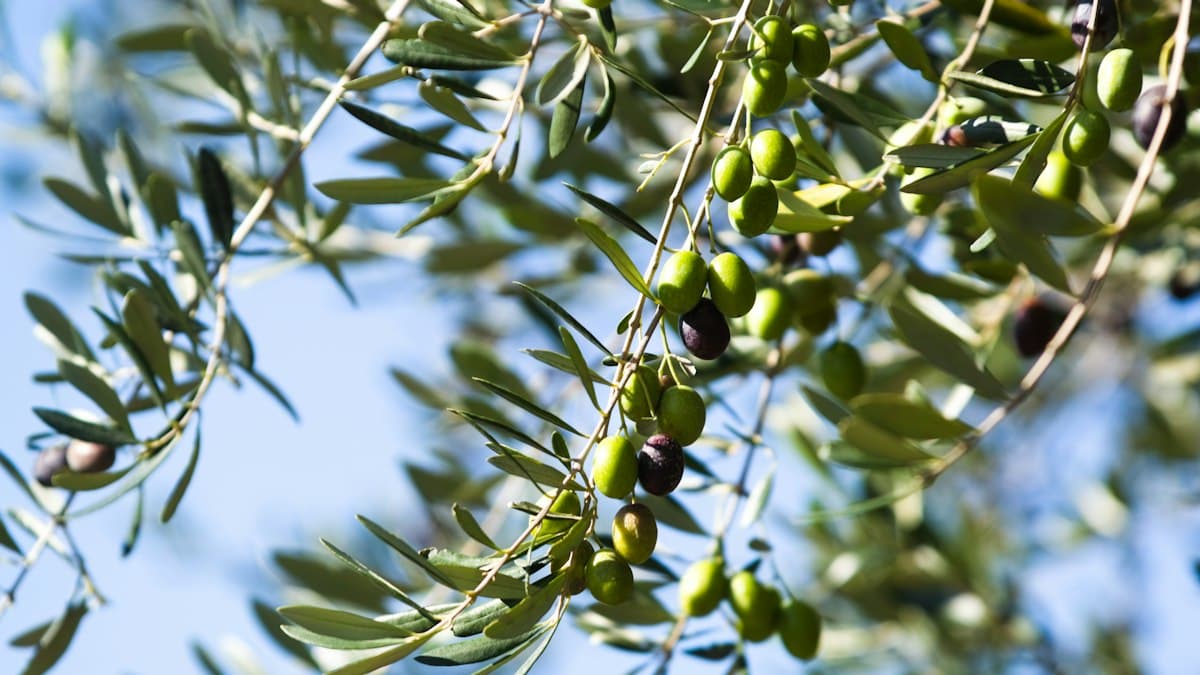
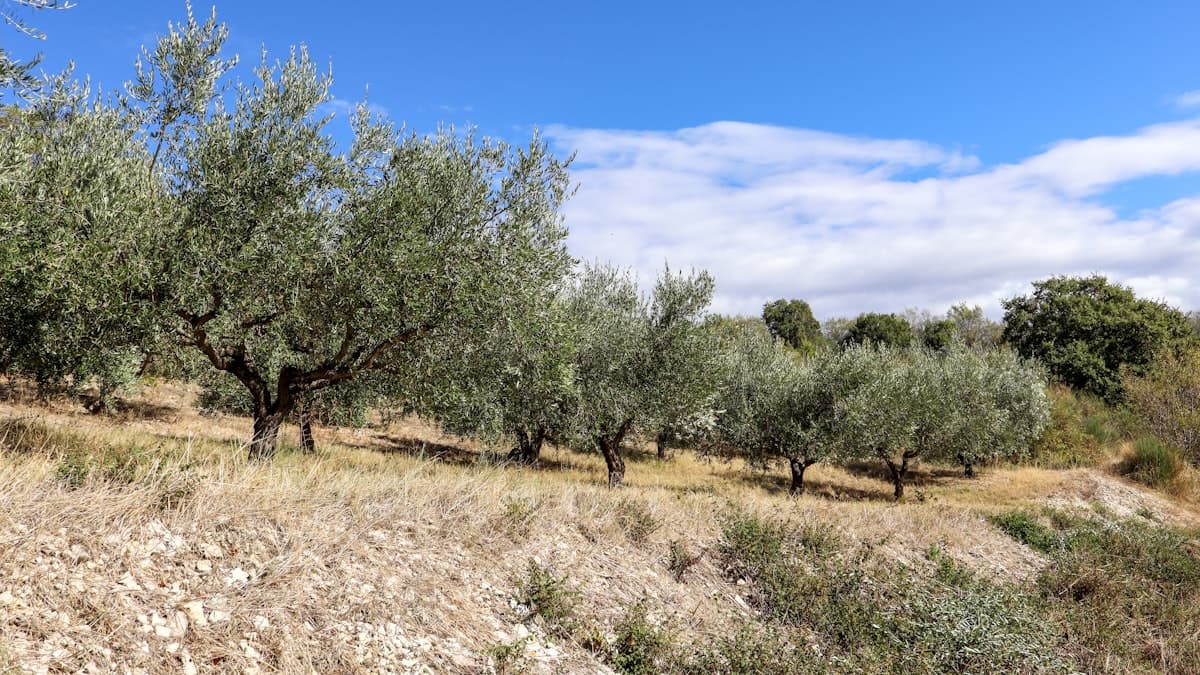
The olive tree itself functions as a carbon sink, and that is worth noting. A study published in 2022 by researchers at the University of Córdoba found that mature olive groves absorb approximately 1.5–2.5 tonnes of CO₂ per hectare per year. That figure varies with irrigation method, soil management practice, and degree of mechanised harvesting, so it is too early to apply a single number universally. Nevertheless, multiple studies consistently identify the long-rotation nature of olive cultivation as giving it relatively higher carbon-sequestration potential than annual oilseed crops.
At the processing stage, cold-press extraction is the key variable in keeping environmental load low. Unlike refined oils that require chemical solvent extraction or high-temperature refining, EVOO is obtained through mechanical pressing alone, resulting in comparatively low energy input. According to LCA analysis by a research team at the University of Bologna, the processing stage accounts for only about 15–20% of EVOO's total carbon footprint, while farm-stage activities represent more than 60% of the total.
Water Footprint — The Mediterranean's Water Dilemma
Water footprint is the most complex variable in the sustainability case for olive oil. According to the Water Footprint Network, hosted by UNESCO-IHE, producing 1 kg of olive oil requires an estimated 14,000–15,000 litres of water. That figure sounds substantial in isolation, but a significant portion of it is classified as 'green water footprint' — rainfall and soil moisture rather than water actively drawn from external sources.
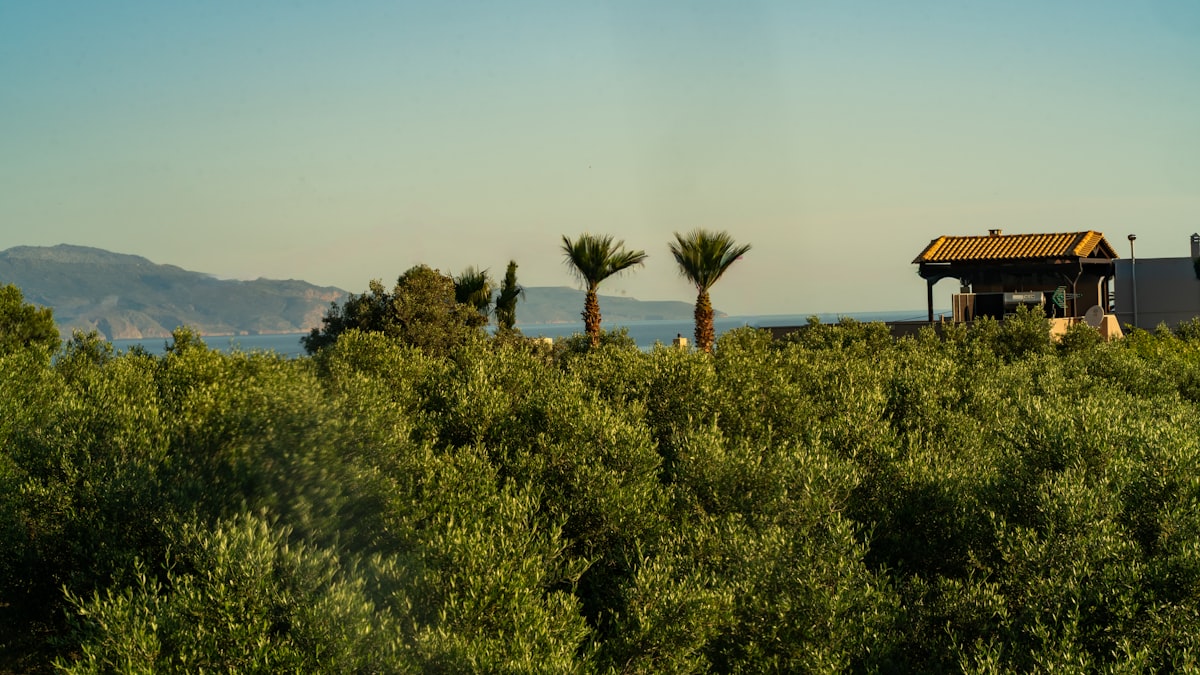
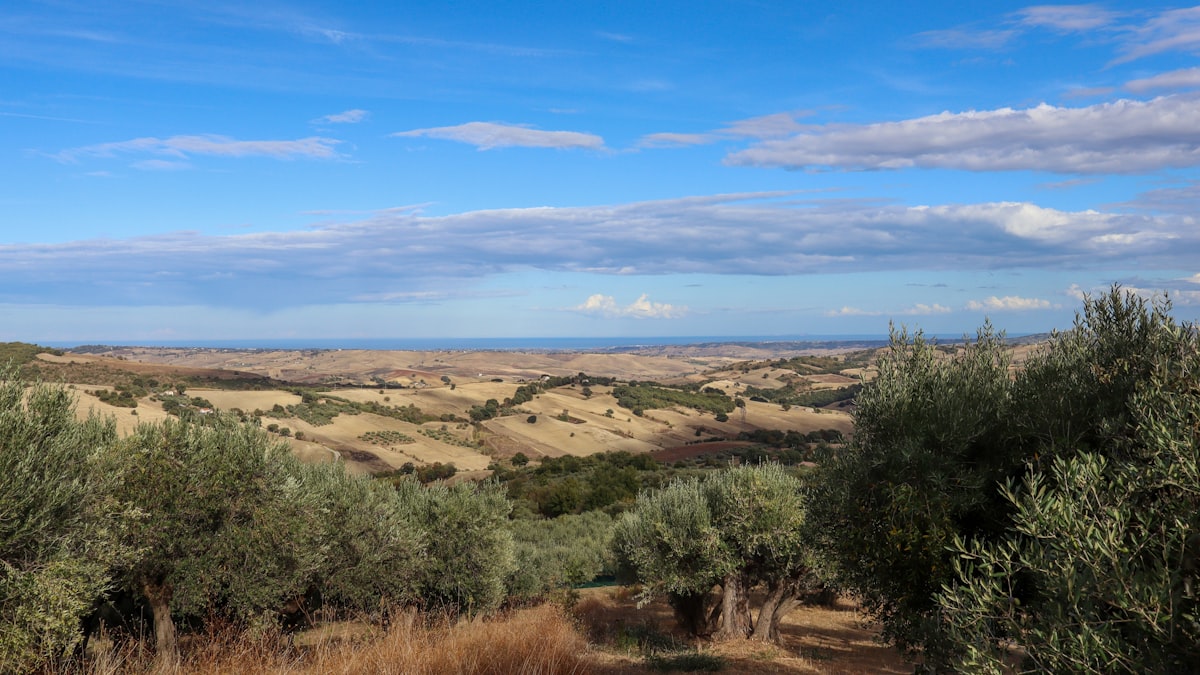
The olive tree is a species adapted to arid climates. Under traditional rainfed cultivation, production is possible without additional irrigation, and in those systems the 'blue water footprint' — groundwater and surface-water consumption — is considerably smaller. Intensive super-high-density farming systems, however, require substantially more irrigation, increasing the blue water footprint. Research from the agricultural engineering department at the University of Seville reported that intensively irrigated olive farms can use three to four times more blue water than traditional rainfed operations.
Comparison with other oils shifts the context considerably. Soybean oil carries a water footprint of approximately 4,300 litres per kilogram, according to the Water Footprint Network database — but a significant share of global soybean cultivation is located in biodiversity-critical regions such as the Amazon, making its indirect ecological cost high. Sunflower oil is estimated at around 6,800 litres per kilogram and rapeseed (canola) oil at around 4,500 litres per kilogram, according to the same database. Raw volume totals alone, then, do not tell the full story.
How Origin and Certification Shape the Numbers
Even within EVOO, environmental indicators vary considerably depending on where and how the olives are grown. European Union PDO (Protected Designation of Origin) and PGI (Protected Geographical Indication) certified olive oils frequently require adherence to regional traditional farming practices, which tend to support biodiversity and soil health.
Organic certification is also associated with improvements to environmental performance, by restricting synthetic fertilisers and pesticides in ways that are reported to enhance soil carbon sequestration and reduce water-pollution load. According to FAO's 2023 report on sustainable food systems, organically farmed olive groves recorded soil organic matter content that was on average 15–25% higher than conventionally farmed plots.
From a consumer perspective, choosing products that clearly state the harvest year and production origin — and minimising unnecessary long-distance transport where possible — may contribute to a lower carbon footprint. The International Olive Council (IOC) is continuing to discuss the development of standards aimed at increasing the share of producers with transparent supply chains.
Packaging and Logistics: Completing the Footprint Picture
A full accounting of olive oil's environmental footprint cannot ignore packaging and distribution. According to data from the Packaging Industry Research Association (PIRA), glass bottles achieve high recycling rates but add transport emissions due to their weight. Tin cans, being lighter and highly effective at blocking light, are evaluated as packaging that can simultaneously serve quality preservation and lower transport-stage carbon emissions. Dark glass bottles also limit photo-oxidation, indirectly reducing waste from spoilage — a form of environmental benefit that does not always appear in headline footprint figures.
The spread of refill-station retail models, particularly across Europe, is also worth watching. Producers in Spain and Italy have begun supplying large-format barrels from which consumers fill reusable containers directly. Industry reports indicate this approach can reduce packaging-related footprint by as much as 60–70%.
A Practical Checklist for More Sustainable Choices
For readers who want to factor sustainability into their olive oil purchases, a few criteria are worth applying. First, check that the harvest year is clearly marked — ageing stock risks quality loss and eventual disposal waste. Second, look for organic certification or verifiable sustainable-farming credentials. Third, verify that the packaging is recyclable and light-protective. Fourth, consider the distance between the production country and your location, and favour shorter supply chains where practical. Fifth, buy in a size you will actually finish: minimising oxidation after opening by choosing an appropriate bottle size reduces waste, which is itself an environmental variable.
Choosing a bottle of olive oil connects a consumer to the entire Mediterranean agricultural ecosystem. No single number captures the full picture perfectly, but understanding which indicators matter — and why — changes how that choice is made.
Frequently asked questions
- How much CO₂ does it take to produce a kilogram of olive oil?
- According to multiple life cycle assessment (LCA) studies, producing 1 kg of extra virgin olive oil generates roughly 2–4 kg CO₂ equivalent, depending on farming method, irrigation intensity, and mechanisation level. Farm-stage activities account for more than 60% of that figure, according to LCA analysis by researchers at the University of Bologna.
- Is the water footprint of olive oil really as high as it looks?
- The Water Footprint Network, hosted by UNESCO-IHE, estimates that producing 1 kg of olive oil requires approximately 14,000–15,000 litres of water. However, a large share of that figure is 'green water' — rainfall and soil moisture — rather than 'blue water' drawn from rivers or aquifers. Traditional rainfed olive cultivation uses significantly less blue water than intensive irrigated systems, which can use three to four times more, according to research published by the agricultural engineering department at the University of Seville.
- How does olive oil compare to other cooking oils on carbon emissions?
- According to the European Environment Agency (EEA) and multiple LCA studies, palm oil production — when land-use change from tropical deforestation is included — can reach 8–10 kg CO₂eq per kilogram. Olive oil's estimated 2–4 kg CO₂eq per kilogram is meaningfully lower, though direct comparison is complicated by differences in land use, biodiversity impact, and regional farming practices.
- Does organic certification actually improve olive oil's environmental profile?
- It is associated with measurable differences in soil health. According to FAO's 2023 report on sustainable food systems, organically farmed olive groves recorded soil organic matter content that was on average 15–25% higher than conventionally farmed plots. This is linked to greater carbon sequestration potential and reduced water-pollution load, though researchers note it is too early to draw uniform conclusions across all growing regions.
- Does packaging matter for an olive oil's total carbon footprint?
- Yes, meaningfully so. According to data from the Packaging Industry Research Association (PIRA), glass bottles have high recycling rates but add transport emissions due to their weight. Tin cans are lighter and block light effectively, making them a strong option for both quality preservation and lower transport emissions. Industry reports from Spain and Italy note that refill-station models — where consumers fill reusable containers from bulk barrels — can reduce packaging-related footprint by as much as 60–70%.
Related reading
- The Boom-and-Bust Cycle of EVOO Prices: Lessons from 2015 and 2024
Extra virgin olive oil markets have swung through two dramatic price cycles in a decade — a glut-driven collapse in 2015 and a climate-driven spike in 2024. Understanding the mechanics behind each cycle changes the way a buyer should think about every bottle.
- Andalusia: How One Region Came to Produce a Third of the World's Olive Oil
From Phoenician traders to single-estate pressing, Spain's Andalusia has held its place at the center of global olive oil production for more than a thousand years. A look at the history behind the world's largest EVOO-producing region.
- The Mediterranean Diet Just Topped the U.S. News Rankings for the Eighth Year Running
U.S. News & World Report has ranked the Mediterranean diet first overall for eight consecutive years, scoring 4.8 out of 5.0 in its most recent comprehensive evaluation. OLEA looks at where extra-virgin olive oil fits within that eating pattern.
- Four Cooking Oils, Four Nutritional Profiles: EVOO, Sesame, Perilla, and Avocado Compared
Extra virgin olive oil, sesame oil, perilla oil, and avocado oil share shelf space in many kitchens, yet their fatty-acid profiles and specialty compounds differ considerably. A look at what the data actually shows.
- Eight Years at the Top: Why the Mediterranean Diet Keeps Winning
U.S. News & World Report has ranked the Mediterranean diet number one for the eighth consecutive year in its 2025 Best Diets evaluation. Here is a look at the scoring methodology and the clinical evidence behind the result.
- EVOO Daily Intake: Calories, Quantities, and What the Evidence Actually Recommends
One tablespoon of extra virgin olive oil delivers roughly 119 kcal. This guide walks through what major institutions and clinical research say about daily quantities, and how to fit EVOO into a real diet.
Tags
- sustainability
- carbon footprint
- water footprint
- evoo
- environmental impact