Guides
Four Cooking Oils, Four Nutritional Profiles: EVOO, Sesame, Perilla, and Avocado Compared
Extra virgin olive oil, sesame oil, perilla oil, and avocado oil share shelf space in many kitchens, yet their fatty-acid profiles and specialty compounds differ considerably. A look at what the data actually shows.
Translated from the Korean edition, originally published October 9, 2025 · read the original
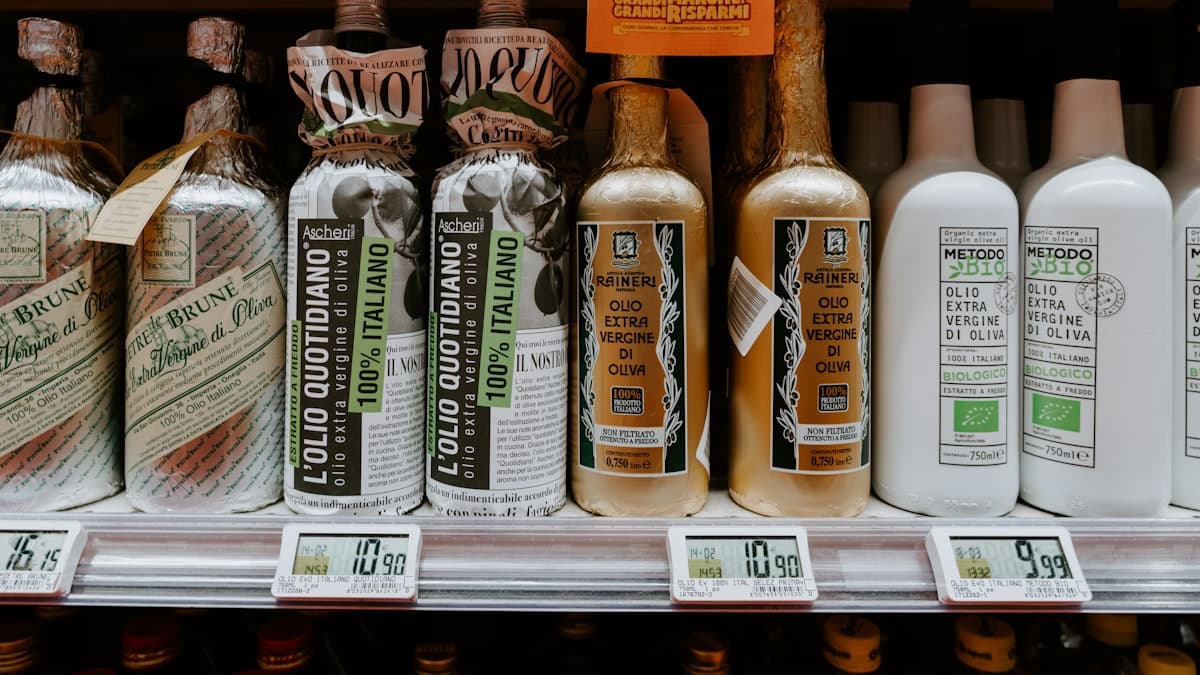
Extra virgin olive oil (EVOO), sesame oil, perilla oil, and avocado oil frequently appear side by side in well-stocked kitchens, yet their nutritional profiles are quite distinct. Comparing the four against data from the USDA FoodData Central database and peer-reviewed literature on fatty-acid composition reveals that the more useful question is not which oil is best overall, but which oil is best for a given purpose.
Monounsaturated Fat — EVOO and Avocado Oil
Approximately 73% of the fat in EVOO consists of monounsaturated fatty acids (MUFAs), primarily oleic acid. Avocado oil sits close behind at roughly 70% MUFA, making these two the most similar pair in terms of fatty-acid profile. MUFAs are among the most extensively studied dietary fat variables; the American Heart Association (AHA) recommends shifting dietary fat intake toward higher MUFA and PUFA proportions as a way to reduce saturated fat intake. Despite their similar fat profiles, the two oils differ in polyphenol content — EVOO tends to measure significantly higher, a difference attributed to the olive fruit's distinct phytochemistry and the cold-pressing process used for extra virgin production.

Omega-3 Fatty Acids — Perilla Oil Leads
Perilla oil contains the highest proportion of alpha-linolenic acid (ALA, an omega-3 fatty acid) of the four oils discussed here — approximately 54–64% of total fat, according to a 2020 report in OCL Journal (Oilseeds & Fats, Crops and Lipids). Because ALA is highly susceptible to oxidation, perilla oil is not well suited to high-heat cooking. Refrigerated storage after opening and relatively quick use are widely recommended to preserve its quality. From a practical standpoint, perilla oil is best deployed as a finishing oil — drizzled over seasoned vegetables or mixed dishes — rather than used as a cooking medium.
Specialty Compounds — Sesame Oil
Sesame oil's fatty-acid split is relatively balanced — roughly 40% monounsaturated and 43% polyunsaturated — but its defining nutritional feature is a group of lignans: sesamol, sesamin, and sesamolin. In vitro studies have reported antioxidant activity associated with these compounds, though it is too early to conclude what this means for human health outcomes. Practically speaking, sesame oil's powerful roasted aroma means it functions as a flavoring and finishing oil rather than an everyday cooking fat; the quantities typically used are far smaller than those of EVOO or avocado oil.
No Single Oil Does Everything
The four oils are better understood as complements than substitutes. For raw applications, dressings, and gentle heat, EVOO's polyphenol content is best preserved. For frequent high-heat cooking, refined avocado oil or refined olive oil offer a more practical smoke-point margin and a neutral flavor. For seasoning and finishing, perilla oil and sesame oil each bring characteristics no other oil replicates. The Dietary Guidelines Advisory Committee (DGAC) has consistently emphasized dietary pattern diversity over reliance on any single food, a principle that applies directly to fat sources.
When choosing an oil at the store, checking label grades and understanding how heat affects its composition can help balance both flavor and nutritional considerations.
Frequently asked questions
- Which cooking oil has the most omega-3?
- Perilla oil contains the highest proportion of alpha-linolenic acid (ALA, an omega-3 fatty acid) among common cooking oils — approximately 54–64% of its total fat content, according to a 2020 report in OCL Journal. Because ALA oxidizes easily, perilla oil is best used as a finishing oil rather than for high-heat cooking.
- Is avocado oil the same as olive oil nutritionally?
- The two are the closest in fatty-acid structure: extra virgin olive oil is roughly 73% monounsaturated fat (mainly oleic acid) and avocado oil roughly 70%, according to the USDA FoodData Central database. Where they diverge is in polyphenol content — EVOO consistently measures higher, largely because of differences in fruit source and processing method.
- Can I use extra virgin olive oil for high-heat cooking instead of avocado oil?
- For frequent high-heat cooking, refined avocado oil or refined olive oil is generally considered more practical because of their higher smoke points and milder flavor. EVOO's polyphenol content and distinct character are better preserved when it is used raw, in dressings, or at low to moderate heat.
- What makes sesame oil different from other cooking oils?
- Sesame oil's standout compounds are its lignans — sesamol, sesamin, and sesamolin — rather than its fatty-acid split (roughly 40% monounsaturated, 43% polyunsaturated). In vitro studies have reported antioxidant activity from these lignans, though it is too early to draw firm conclusions about effects in humans. Sesame oil's intense roasted flavor means it functions primarily as a finishing oil rather than an everyday cooking medium.
- Do I need to refrigerate perilla oil?
- Because of its very high ALA content, perilla oil is unusually sensitive to oxidation. Once opened, refrigerated storage and prompt use are widely recommended to preserve both flavor and nutritional quality.
Related reading
- From Mouth to Bloodstream: How Olive Oil Fat Is Digested and Absorbed
After you swallow a spoonful of olive oil, its fats travel a precisely orchestrated route — emulsification in the small intestine, packaging into chylomicrons, and a journey through the lymphatic system before reaching the bloodstream. This guide walks through the physiology, step by step.
- Olive Oil During Pregnancy: The Omega Fatty Acid and Fetal Brain Research, Explained
Dietary fat quality during pregnancy is closely linked to fetal nervous system development, according to accumulating research. Here is where the science currently stands on olive oil's role—through its omega-9 and omega-3 context—in a pregnancy diet.
- Olive Oil and Constipation: Separating the Clinical Evidence from the Folk Remedy
A spoonful on an empty stomach has long been said to ease constipation. Here is how far the clinical research actually goes — and where the folk wisdom ends.
- Olive Oil During Pregnancy and Breastfeeding: A Nutrition Guide
How does extra virgin olive oil fit into the diets of pregnant and breastfeeding women? OLEA reviews the guidance from obstetric societies and nutrition research.
- Olive Oil and Cognitive Health: The Dietary Pattern Researchers Keep Coming Back To
Extra virgin olive oil has emerged as a recurring subject in aging and cognition research, largely through its role in the Mediterranean diet. Here is what the current evidence says — and where important caveats remain.
- Oleic Acid and Cholesterol: The Case for Monounsaturated Fat
Oleic acid accounts for 70–80% of extra virgin olive oil by fat content, and it sits at the center of most research linking EVOO to cardiovascular health. Here is what the science currently supports—and where it stops short.
Tags
- evoo
- cooking oils
- fatty acids
- nutrition
- avocado oil