Guides
Eight Years at the Top: Why the Mediterranean Diet Keeps Winning
U.S. News & World Report has ranked the Mediterranean diet number one for the eighth consecutive year in its 2025 Best Diets evaluation. Here is a look at the scoring methodology and the clinical evidence behind the result.
Translated from the Korean edition, originally published December 8, 2025 · read the original
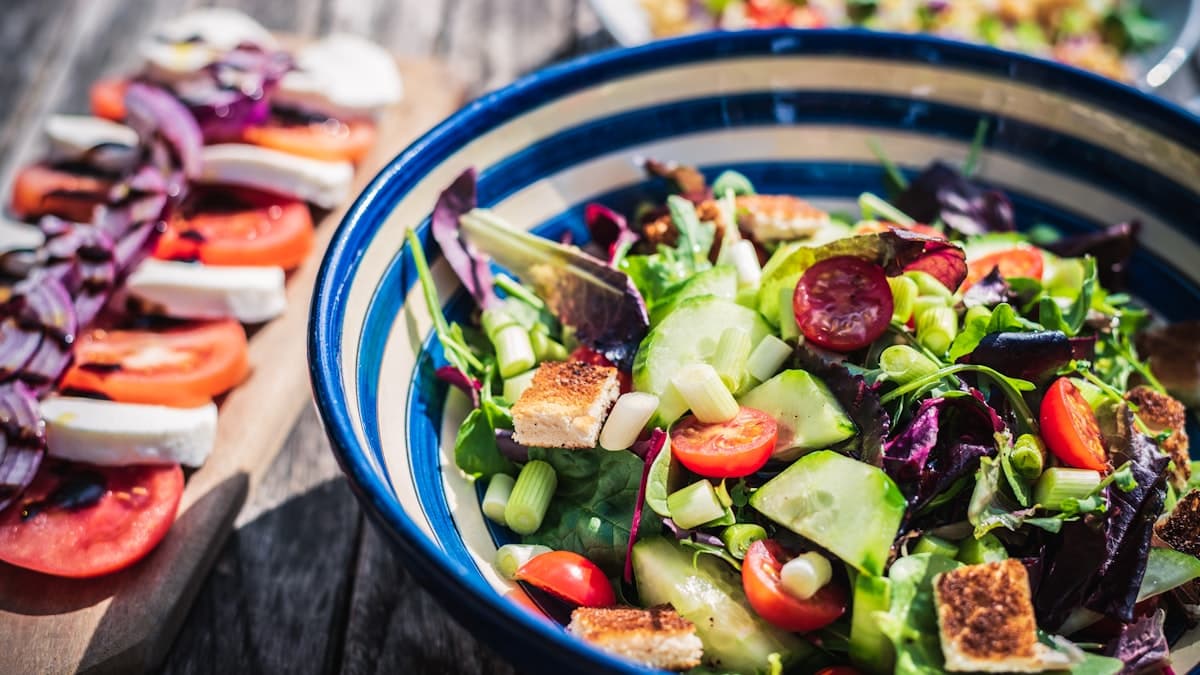
Every January, U.S. News & World Report publishes its annual Best Diets rankings. A panel of nutritionists, internists, and diabetes specialists evaluates each diet across dimensions including nutritional balance, safety, long-term sustainability, and relevance to chronic-disease management. In the 2025 edition, the Mediterranean diet claimed the overall number-one spot for the eighth consecutive year.
A Revised Scoring System, the Same Outcome
For the 2025 edition, U.S. News updated its methodology. Rather than a simple ordinal ranking, 38 diets are now rated across 21 categories and compared by numerical score. Under this framework, the Mediterranean diet received an overall rating of 4.8 out of 5.0. The DASH diet followed at 4.6 and the flexitarian diet at 4.5. The Mediterranean diet also claimed first place in several subcategories, including best diet for mental health and best diet for diabetes.
Critics have argued that the evaluation criteria inherently favour the Mediterranean pattern. Even so, with panel membership and category weightings adjusted each year, eight consecutive number-one finishes are difficult to attribute to chance.

The Clinical Evidence Behind the Ranking
The most frequently cited academic foundation is Spain's Predimed trial. Following 7,447 people at high cardiovascular risk, the study was republished in the New England Journal of Medicine in 2018 and reported that participants assigned to a Mediterranean diet supplemented with extra-virgin olive oil (EVOO) or nuts had a lower incidence of major cardiovascular events — stroke, myocardial infarction, and cardiovascular death — than those in a low-fat control group. The recommended daily intake for the EVOO arm was approximately four tablespoons.
The American Heart Association's 2026 dietary guidelines also recommend a plant-centred eating pattern with olive oil, whole grains, and legumes at its core. Cohort analyses conducted by researchers at the Harvard T.H. Chan School of Public Health have consistently reported a signal suggesting that replacing animal fats such as butter with plant-based oils may be associated with a lower risk of premature mortality, though the researchers note it is too early to draw definitive conclusions from observational data alone.
Translating the Pattern to Your Own Table
The strength of the Mediterranean diet lies not in any single ingredient or food, but in the overall dietary pattern: vegetables, fruit, whole grains, legumes, fish, and nuts consumed daily or several times a week; red meat and processed foods kept to a minimum; and EVOO as the primary cooking fat. Nutritionists often note that these structural principles travel well across food cultures — a table organised around lightly cooked vegetables, fish, mixed grains, and legumes, with EVOO complementing other plant-based oils, captures the essential framework without requiring a strictly Mediterranean menu.
For a closer look at how this pattern intersects with current food trends, see Mediterranean Diet Trends for 2026. Guidance on choosing the right EVOO is covered in the Label Reading Guide and the Polyphenol Guide. Eight consecutive years at the top of a major ranking is a meaningful signal — but the benefit only reaches the table when it shapes what goes on the plate.
Frequently asked questions
- Why does the Mediterranean diet rank number one every year?
- U.S. News & World Report convenes a panel of nutritionists, physicians, and diabetes specialists who score diets across 21 categories covering nutritional balance, safety, sustainability, and chronic-disease management. In the 2025 edition, the Mediterranean diet scored 4.8 out of 5.0, the highest of 38 diets assessed. The panel composition and category weightings are revised annually, making eight consecutive top finishes a statistically meaningful result rather than a methodological artefact.
- What clinical studies support the Mediterranean diet?
- The most frequently cited evidence is Spain's Predimed trial, which followed 7,447 people at high cardiovascular risk. Republished in the New England Journal of Medicine in 2018, it reported that participants assigned to a Mediterranean diet supplemented with extra-virgin olive oil (EVOO) or nuts had a lower rate of major cardiovascular events — stroke, myocardial infarction, and cardiovascular death — than a low-fat control group. The recommended daily EVOO intake in the EVOO arm was approximately four tablespoons.
- How much olive oil should you use on a Mediterranean diet?
- In the Predimed trial, published in the New England Journal of Medicine in 2018, the EVOO group was assigned roughly four tablespoons of extra-virgin olive oil per day. The American Heart Association's 2026 dietary guidelines similarly recommend plant-centred eating patterns with olive oil as the primary fat, though specific daily quantities vary by individual caloric needs.
- Can the Mediterranean diet work if you don't eat Mediterranean food?
- Nutrition researchers broadly agree that the benefit comes from the overall dietary pattern rather than any single ingredient: frequent intake of vegetables, fruit, whole grains, legumes, fish, and nuts; limited red meat and processed foods; and EVOO as the primary cooking fat. These principles can be adapted to many food cultures. In practice, a diet built around lightly seasoned vegetables, fish, mixed grains, and legumes — with EVOO supplementing other plant-based oils — captures the core structure.
Related reading
- Olive Oil, BMI, and Waist Circumference: Reading the Cohort Meta-Analysis Data
A meta-analysis pooling cohort studies on the Mediterranean diet reports a statistically significant association between habitual olive oil consumption and lower BMI and waist circumference measurements. Here is what the data actually show — and what they do not.
- The Mediterranean Diet Just Topped the U.S. News Rankings for the Eighth Year Running
U.S. News & World Report has ranked the Mediterranean diet first overall for eight consecutive years, scoring 4.8 out of 5.0 in its most recent comprehensive evaluation. OLEA looks at where extra-virgin olive oil fits within that eating pattern.
- EVOO Daily Intake: Calories, Quantities, and What the Evidence Actually Recommends
One tablespoon of extra virgin olive oil delivers roughly 119 kcal. This guide walks through what major institutions and clinical research say about daily quantities, and how to fit EVOO into a real diet.
- Five Markers, One Oil: EVOO and Metabolic Syndrome in Context
Waist circumference, blood pressure, fasting glucose, triglycerides, HDL — metabolic syndrome is defined by five converging risk factors. A review of the current research on where extra-virgin olive oil fits into that picture.
- Breathing, Inflammation, and the Role of Olive Oil in an Anti-Inflammatory Diet
Researchers studying chronic low-grade inflammation and respiratory health are paying closer attention to dietary patterns — and extra virgin olive oil keeps appearing at the center of the conversation. A look at the polyphenols, oleic acid, and the studies behind the claim.
- Three Ways Olive Oil May Influence Your Post-Meal Blood Sugar Curve
Oleic acid and polyphenols in extra virgin olive oil have been associated with measurable differences in post-meal blood sugar response. A review of recent research examines the proposed mechanisms — and what the evidence actually supports.
Tags
- mediterranean diet
- evoo
- nutrition research
- healthy eating
- dietary patterns