Guides
Supermarket Shelf Science: How Light and Position Degrade Your Olive Oil
A transparent bottle under fluorescent lighting can accelerate rancidity in extra virgin olive oil within a matter of weeks. Here is what every shopper should understand about how light, heat, and shelf position quietly alter polyphenol levels and acidity before the bottle even reaches home.
Translated from the Korean edition, originally published July 18, 2026 · read the original
Why You Should Pause at the Shelf
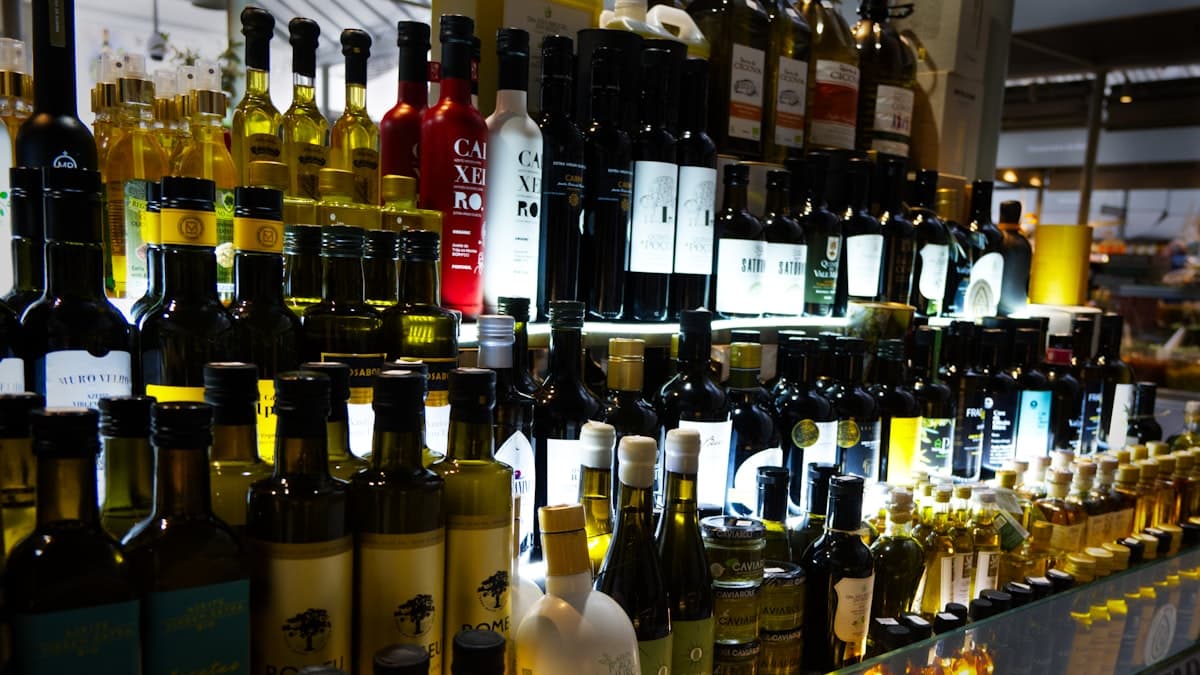
Most shoppers reach for an extra virgin olive oil (EVOO) and immediately check the label for origin or price. What is far less widely understood is that the factors most directly compromising quality are already at work on the shelf itself. Lighting, temperature, bottle material, and shelf position — these four variables quietly alter the chemical structure of olive oil before a bottle is ever opened.
Two metrics define EVOO quality. The first is acidity, which reflects free fatty acid content; the second is polyphenol content, the total measure of the oil's antioxidant compounds. According to the International Olive Council (IOC), extra virgin grade status requires acidity of no more than 0.8%. The critical point is that this figure is recorded at the time of production — and it can change at any point along the supply chain, depending on exposure to light and heat.
What Light Does to Olive Oil
Light is one of the most damaging forces acting on olive oil. Visible wavelengths in the 400–700 nm range, along with ultraviolet radiation, activate the chlorophyll naturally present in olive oil as a photosensitizer. This triggers oxidation of oleic acid — the primary monounsaturated fatty acid in olive oil — as well as the polyphenols. The process is known as photo-oxidation, and it is reported to accelerate rancidity several times faster than storage in darkness.
A study by researchers at the University of Perugia found that extra virgin olive oil held in clear glass bottles under fluorescent lighting at approximately 1,000 lux for 12 weeks experienced a polyphenol reduction of up to 40% compared with the initial value. Acidity was observed to approach or exceed the 0.8% threshold within the same period in some cases.
The lighting environment in a typical supermarket is not substantially different from those conditions. Average in-store illuminance in large retail spaces generally falls in the 750–1,500 lux range, and olive oil sections are almost universally displayed on standard open shelving without any light-shielding treatment.
Container Material and Color Are Decisive
The most effective way to limit the impact of light is through the choice of container. IOC packaging guidelines recommend dark green or dark brown glass bottles, or opaque stainless-steel tins, for storing EVOO. These materials have been reported to block more than 90% of visible light and UV radiation.
Clear glass and PET plastic containers, by contrast, offer almost no barrier against photo-oxidation. Some producers package their oil in transparent bottles specifically to display its color — golden or green hues serve as a marketing asset on shelf — but that visual appeal comes at a direct cost to preservation. When you encounter a clear bottle on a supermarket shelf, there is no reliable way to estimate how long it has been exposed to the overhead lights.
Tin cans offer the advantage of complete light exclusion, though once opened, the headspace inside oxidizes more quickly; smaller tin sizes are therefore preferable once the seal is broken.
Shelf Position: Height and Depth Both Matter
Where a bottle sits on the shelf is not a trivial consideration. Products on the top shelf are closest to ceiling fixtures and receive the most direct and angled light. Lower shelves sit farther from overhead lighting and consequently receive less. Similarly, bottles at the front of a shelf face more direct illumination than those placed toward the back.
Retailers call the middle-height front row the eye-level position, and it is standard practice to place higher-margin products there because that is where shoppers' eyes naturally land. That position is not, however, the one best suited to quality preservation. All else being equal, a bottle sitting toward the rear or bottom of a fixture is likely to have accumulated less light exposure.
Temperature adds another layer. The recognized ideal storage range for olive oil is 14–18 °C. Most supermarket floors are maintained at roughly 20–24 °C, and the upper shelves nearest to lighting fixtures can run 2–4 °C warmer still. Since heat accelerates oxidation reactions, the thermal environment of a shelf position is worth factoring into a purchase decision alongside the lighting.
A Practical Checklist for the Shelf
Putting all of this together, there are four concrete things worth checking before you place a bottle in your basket.
First, examine the container. Prioritize dark green or dark brown glass, or an opaque tin. If a clear bottle is your only option, plan to transfer or store it somewhere dark and cool as soon as you get home.
Second, look for a harvest date. For Spanish and Italian oils, the main harvest window runs from October through December. Choose the most recent harvest year available. If the label shows only a production date rather than a harvest date, be aware that the two can differ significantly.
Third, reach toward the back or bottom of the shelf. Among identical products, those stored farther from direct light are more likely to have accumulated less photo-oxidative stress.
Fourth, check whether acidity and polyphenol figures appear on the label. The IOC has set 250 mg/kg as a reference point for high polyphenol content. A producer who prints these numbers is signaling confidence in their product's measurable quality — and giving you the means to verify it.
What Happens After the Checkout Counter
The choices made at the shelf are only the starting point. Storage at home is the second, equally important, gate for quality.
Olive oil belongs in a dark cupboard, not on the countertop in a clear glass dispenser exposed to ambient light. Storing it next to a stovetop accelerates oxidation through repeated heat exposure and should be avoided. The ideal home storage temperature, as noted above, is in the 14–18 °C range.
Once a bottle is opened, consuming the oil within four to six weeks is the generally recommended guideline. The per-unit cost of a large bottle may look attractive, but if quality degrades noticeably over a prolonged period of use after opening, the economic advantage shrinks considerably. Choosing a smaller or medium format — and cycling through it promptly — is the more reliable strategy for keeping polyphenol levels and flavor where they should be.
The supermarket shelf is where a purchase decision is made, but it is also an environment in which the quality clock is already running. Understanding the role of light and position is the most practical starting point for buying better.
Frequently asked questions
- Does supermarket lighting really damage olive oil?
- Yes, it can. Researchers at the University of Perugia reported that extra virgin olive oil stored in clear glass bottles under fluorescent lighting at roughly 1,000 lux lost up to 40% of its initial polyphenol content after 12 weeks — conditions that closely resemble a typical supermarket shelf.
- What is the best bottle color or material for olive oil?
- The International Olive Council (IOC) recommends dark green or dark brown glass, or opaque stainless-steel tins. These materials have been reported to block more than 90% of visible light and UV radiation. Clear glass and PET plastic offer virtually no protection against photo-oxidation.
- Does shelf position in a supermarket affect olive oil quality?
- It can. Shelves at eye level and at the front of a fixture receive the most direct light and are also closest to overhead lighting, which generates heat. Products placed toward the back or on lower shelves are generally exposed to less light and slightly lower temperatures.
- How should I store olive oil at home after buying it?
- Store EVOO in a cool, dark cupboard away from direct sunlight and heat sources such as a stovetop. An opaque or tinted container is preferable to a clear dispenser left on the counter. The ideal storage temperature is reported to be in the 14–18 °C range.
- How quickly should I use olive oil after opening it?
- Consuming opened olive oil within four to six weeks is generally recommended to preserve freshness. Buying a large bottle may appear economical, but quality can decline noticeably over an extended period of use after opening, making a smaller or medium size the more practical choice for maintaining flavor and polyphenol content.
Related reading
- EVOO Gift Sets by Price: A Buyer's Guide for Any Occasion
Choosing an olive oil gift set is harder than it looks when the packaging hides the quality. This guide breaks down what to check on the label and which price tier delivers what.
- Heat, Smoke, and Polar Compounds: The Chemistry of Cooking with Olive Oil
Heating olive oil triggers a cascade of hydrolysis, oxidation, and polymerization reactions that accelerate past the smoke point. This guide traces the science of polar compound formation and explains why high-polyphenol EVOO tends to hold up better under heat.
- Does Olive Oil You Eat Reach Your Skin? A Clinical Research Roundup
A growing body of clinical research is examining whether regular dietary intake of olive oil is associated with measurable changes in skin hydration and elasticity. This guide summarizes the current evidence, its limits, and how the findings sit within the broader context of Mediterranean eating patterns.
- Senescent Cells, Senolytics, and the Question of Olive Oil Polyphenols
The senolytic diet hypothesis has drawn attention to plant polyphenols as potential allies against aging cells. This guide maps where extra virgin olive oil's oleocanthal and related phenolic compounds currently sit in that research — and what the evidence cannot yet support.
- Burning Groves: How Wildfire and Air Pollution Are Reshaping Olive Oil Country
The Mediterranean produces around 95% of the world's olive oil — and it is heating up faster than almost anywhere else on earth. From scorched root systems to smoke-tainted harvests, environmental disaster is leaving marks on olive groves that last far longer than the flames.
- Olive Oil, Antioxidants, and Fatigue: A Guide to the Emerging Clinical Research
Extra virgin olive oil is drawing growing attention in oxidative stress and chronic fatigue research, with its polyphenols and oleic acid studied for potential roles in cellular energy metabolism. Here is what the current clinical evidence actually shows.
Tags