Guides
What 0.2% Actually Tells You — How to Read Olive Oil Acidity Labels
Extra virgin olive oil must fall below 0.8% free acidity, yet premium bottles routinely display figures in the 0.1–0.3% range. Understanding what sits behind those numbers — cultivar, harvest timing, processing speed — is what separates an informed purchase from a lucky one.
Translated from the Korean edition, originally published June 16, 2026 · read the original

What acidity is — where the number starts
Flip an olive oil bottle over and you will usually find, in small print, something like "Acidity 0.2%" or "Free fatty acids 0.18%". That figure represents the proportion of free fatty acids in the oil, calculated as oleic acid equivalents. When the cells inside an olive are damaged, the enzyme lipase breaks triglycerides apart and liberates individual fatty acids; the more free fatty acids present, the higher the acidity reading.
The International Olive Council (IOC standard COI/T.15/NC No.3/Rev.14) sets the free acidity ceiling for extra virgin olive oil at 0.8%. The European Union adopted the same threshold through EU Regulation 2568/91, which applies across all member states. In other words, any oil at or below 0.8% is legally entitled to the extra virgin label. So why do premium producers go out of their way to print figures in the 0.1–0.3% range on the front of the bottle?
The gap between 0.8% and 0.2% — ceiling versus reality
If 0.8% is the legal ceiling, genuinely high-quality oils tend to sit far below it. A research team at the University of Jaén analysed several hundred extra virgin oils from Andalusia and reported that oils cold-pressed immediately after harvest had a median acidity in the 0.15–0.25% range. That finding suggests a meaningful quality gap between oils at the legal limit — 0.6–0.7% — and those produced under tight harvest and milling conditions, even though both carry the same extra virgin label.

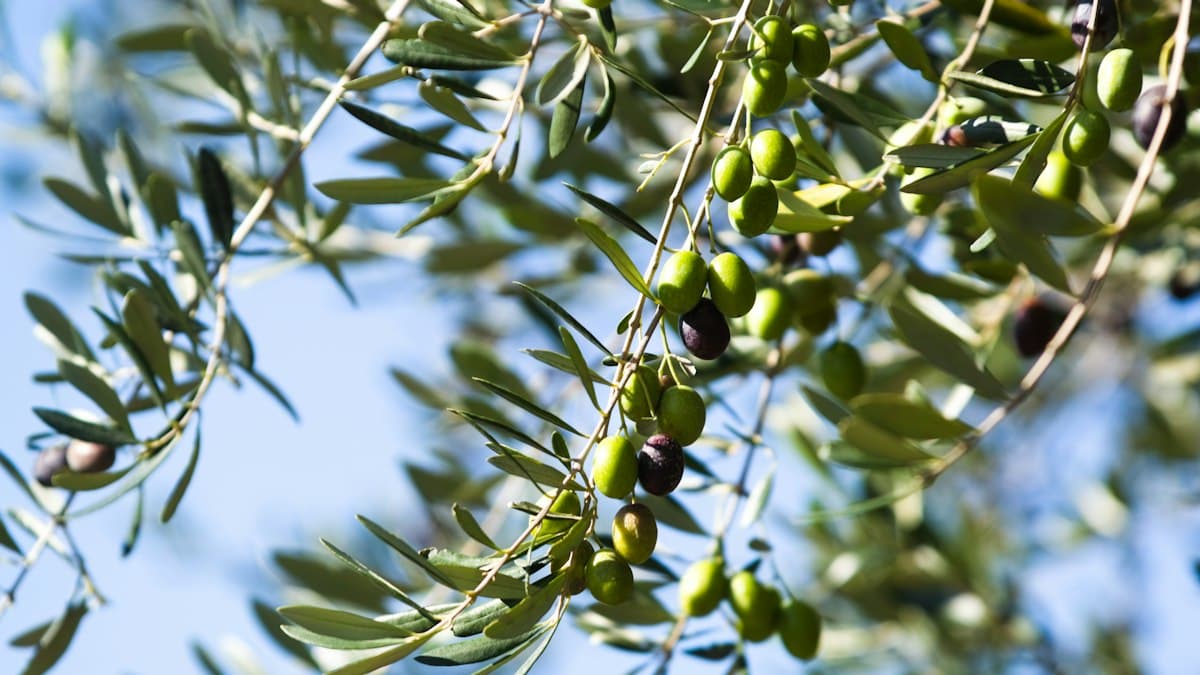
Three variables drive acidity down most reliably. First, harvest timing: picking before full ripeness, when the fruit is still transitioning from green to purple, keeps cell walls firm and limits enzymatic damage. Second, speed of processing: IOC guidelines recommend milling within 24 hours of harvest, because microbial activity and oxidation accelerate free fatty acid release the longer olives sit in bins. Third, milling temperature: maintaining cold-press conditions — below 27 °C — is widely reported to limit acidity rise during extraction.
Why quality still diverges within the same 0.2% band
This is the central point of this guide. A label reading "Acidity 0.20%" does not, by itself, confirm that what is inside the bottle is a genuinely premium low-acidity oil.
The first reason is the moment of measurement. EU rules tie the declared acidity figure to testing at bottling, not at the point of purchase. Oil exposed to light, heat, and air during distribution will see its acidity creep upward. An oil bottled at 0.15% may read 0.25% by the time it reaches a consumer's kitchen. This is why checking both the harvest year and the bottling or best-before date matters.
The second reason is that acidity is a separate indicator from polyphenol content and peroxide value. A report from researchers at the University of Florence noted that the correlation between acidity and oxidative stability (Rancimat index) shifts considerably depending on cultivar and harvest timing, making it difficult to draw quality conclusions from acidity alone. An oil with low acidity but sparse polyphenols may oxidise quickly; conversely, oils in the upper 0.2% range but rich in polyphenols have in some cases been reported to show higher stability.
The third reason is cultivar character. Picual, which carries high polyphenol levels and a high oleic acid proportion, tends naturally toward lower acidity readings. Arbequina has a different fatty-acid composition and can produce slightly higher acidity figures under identical growing and processing conditions. The same farm, the same equipment, the same harvest date — different cultivar, different number.
A practical checklist for reading the label
The acidity figure only becomes meaningful in context. Read it alongside the following.
Harvest year: Olive oil has vintages, much like wine. If the harvest year is more than two years behind the bottling year, freshness warrants scrutiny. Industry guidance generally recommends consuming extra virgin olive oil within 18–24 months of harvest.
Bottling date or best-before date: EU regulations require a best-before date; listing the harvest year separately is voluntary. Brands that print both are offering a higher level of transparency.
Peroxide value (PV): This figure reflects the degree of oxidation already present. The IOC ceiling for extra virgin is 20 meq O₂/kg. When a label shows both acidity and PV, you can form a much fuller picture of the oil's history.
Certification marks: PDO (Protected Designation of Origin), PGI (Protected Geographical Indication), and national equivalents such as the Italian or Spanish DOP marks require periodic third-party testing. Their presence adds meaningful weight to the numbers on the label.
What actually matters when choosing a low-acidity oil
Acidity is a starting point for quality assessment, not the finish line. A figure below 0.2% is a positive signal, but it needs to be read alongside harvest year, polyphenol content, peroxide value, and cultivar information before it tells a complete story.
Data from Spain's Interprofesional del Aceite de Oliva Español indicates that fewer than 40% of olive oil consumers in Europe pay attention to acidity labelling at all. The ability to decode a label — and to ask what context surrounds a single number — is what separates a considered choice from a random one.
The most reliable practical approach is to look for producers who publish a full Certificate of Analysis (COA) from an independent laboratory. A COA that lists acidity, peroxide value, polyphenol content, and harvest date together gives you the context to understand exactly what that 0.2% is — and what it is not.
Frequently asked questions
- What does olive oil acidity percentage actually mean?
- It measures the proportion of free fatty acids in the oil, expressed as a percentage of oleic acid equivalents. When olive cells are damaged — by rough handling, heat, or delayed milling — an enzyme called lipase breaks down triglycerides and releases free fatty acids, raising the acidity figure.
- What is the maximum acidity for extra virgin olive oil?
- According to the International Olive Council (IOC standard COI/T.15/NC No.3/Rev.14) and EU Regulation 2568/91, extra virgin olive oil must not exceed 0.8% free acidity. Any oil at or below that threshold may legally carry the extra virgin designation.
- Is 0.2% acidity always better than 0.4% acidity?
- Not automatically. Acidity is one indicator among several. Research published by the University of Florence reported that the correlation between acidity and oxidative stability (Rancimat index) varies significantly by cultivar and harvest date, making it unreliable as a standalone quality measure. An oil with 0.2% acidity but low polyphenols may oxidise faster than one at 0.3% with high polyphenol content.
- Why do acidity figures differ between cultivars like Picual and Arbequina?
- Each cultivar has a distinct fatty-acid profile. Picual, which is high in oleic acid and polyphenols, tends to produce naturally lower acidity readings under equivalent growing and milling conditions. Arbequina has a different fatty-acid composition that can result in slightly higher acidity figures even from the same estate and the same cold-press process.
- What else should I check alongside the acidity number on the label?
- Four things: (1) Harvest year — the IOC and industry bodies generally recommend consuming extra virgin olive oil within 18–24 months of harvest; (2) Bottling or best-before date — EU rules require a best-before date but harvest year is optional, so brands that list both are being more transparent; (3) Peroxide value (PV) — the IOC sets a ceiling of 20 meq O₂/kg for extra virgin; (4) A Certificate of Analysis (COA) from a third-party lab, which should show acidity, PV, polyphenol content, and harvest date together.
Related reading
- Organic EVOO Certifications Decoded: Euro-leaf, USDA, and Demeter
Three certification marks — the EU Euro-leaf, USDA Organic, and Demeter — divide the organic EVOO shelf into meaningfully different tiers. Understanding what each one actually requires makes it far easier to judge whether the premium is worth paying.
- Six Supermarket EVOOs, Ranked by Acidity and Origin
From a sub-1% acidity Spanish single-estate to entry-level Korean-imported blends, six widely available extra virgin olive oils are compared on the facts that actually matter at the shelf.
- Daily EVOO Under $20: How to Read the Shelf and Pick the Right Bottle
Two bottles labeled 'extra virgin' can sit side by side at very different prices — and both can be the right choice, depending on how fast you cook through them. Here is how to read the signals that matter in the budget tier.
- Four Price Tiers of Extra Virgin Olive Oil — and What Each One Actually Buys You
From entry-level PET-bottle blends to single-estate premiums, the EVOO shelf divides into four distinct tiers. Knowing what separates them makes it easier to shop with intention.
- Premium EVOO at Every Price Point: A Global Farm Map
Within the global premium EVOO tier, estates cluster around a consistent set of signals — single origin, single cultivar, and published lab results. This guide charts the farms and labels that define that space, from Andalusia to California.
- Five Lines on the Label That Separate a Good EVOO from a Mediocre One
When two bottles of extra virgin olive oil sit at the same price point, the difference is usually already written on the label. A guide to the five things worth checking before you buy.
Tags
- acidity
- extra virgin olive oil
- label reading
- polyphenols
- quality grading