Guides
Decoding the Olive Oil Label: Five Things to Check Before You Buy
"100% Olive Oil," "Pure," "Extra Virgin" — the phrases on olive oil bottles carry precise legal meanings that rarely match what shoppers assume. This guide breaks down every key term, grade, and label signal so readers can choose with confidence.
Translated from the Korean edition, originally published August 5, 2026 · read the original
The Trap Hidden in "100% Olive Oil"
The phrase that tends to catch the eye first on any supermarket shelf is "100% Olive Oil." It sounds like an unambiguous stamp of purity — but it covers far more ground than most shoppers expect. Under the grade system defined by the International Olive Council (IOC), the category simply called "Olive Oil" is a legally permitted name for blends of refined olive oil and virgin-grade oil. In other words, "100% olive oil" confirms only that the raw material came from olives; it makes no guarantee about how the oil was processed or where it falls in the quality hierarchy.
The gap between label and contents is not trivial. Research published by the UC Davis Olive Center found that a significant proportion of products sold as "extra virgin" in the United States exceeded IOC thresholds for acidity or oxidation markers — meaning the grade on the front of the bottle did not always reflect what was inside.
Understanding the Grade System
Olive oil is divided into four main categories based on production method and quality indicators.
Extra Virgin Olive Oil (EVOO) is the top grade: free acidity at or below 0.8%, extracted exclusively by physical (cold) means with no chemical treatment, and required to pass a sensory panel test with no detectable flavor defects.
Virgin Olive Oil allows free acidity up to 2.0% and also permits only mechanical extraction, but minor sensory defects are acceptable.
Olive Oil — the category behind that broad "100%" claim — is a blend of refined olive oil and a virgin-grade fraction. Because refined oil is produced with heat and chemical processing, heat-sensitive compounds such as polyphenols are substantially reduced compared with EVOO.
Olive Pomace Oil is extracted from the olive paste remaining after pressing, using chemical solvents. It is not considered harmful, but it is the lowest grade in the system and should be understood as an entirely different product from EVOO.
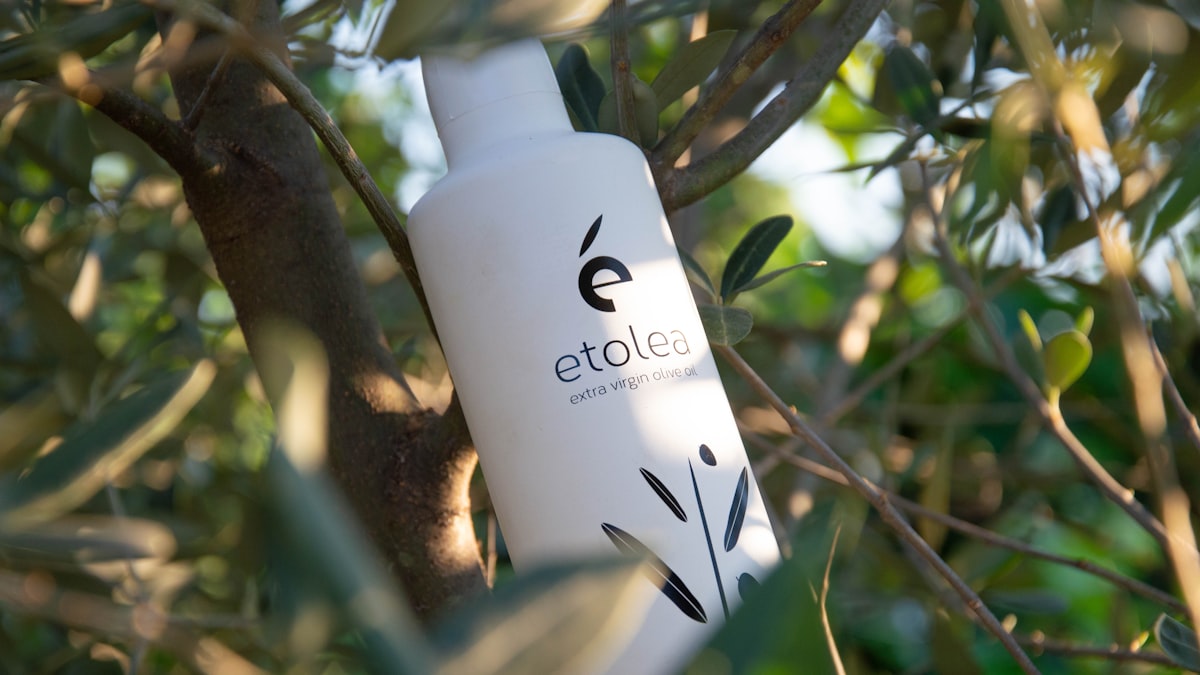
Five Things to Check on the Label
① Acidity (Free Acidity) — If a label states the acidity figure, that is the first positive signal. EVOO must be at or below 0.8%; anything at or below 0.3% is generally classified as high quality. When no acidity figure appears at all, it is reasonable to ask why the producer chose not to publish it.
② Harvest Date — The bottling date and the harvest date are not the same thing. EVOO is generally recommended for consumption within roughly 12 to 18 months of harvest, but a bottle showing only a bottling date gives no indication of how old the source oil actually is. The IOC recommends disclosing the harvest year, though it does not require it — brands that do so voluntarily are signaling a higher degree of transparency.
③ Origin and PDO / PGI Certification — A label reading "Product of Italy" can legally apply to oil pressed from olives imported from other countries and simply bottled in Italy. EU Protected Designation of Origin (PDO) and Protected Geographical Indication (PGI) marks, by contrast, carry a legal guarantee that the olives were grown and the oil was produced in the named region. Spain's AOVE designation, Italy's DOP seal, and Greece's PDO certification all operate under this same framework and are worth checking alongside the country-of-origin statement.
④ Polyphenol Content — Polyphenols are the compounds associated with EVOO's characteristic bitterness and peppery finish, and they are closely linked to the oil's antioxidant properties. In a 2011 report, the European Food Safety Authority (EFSA) concluded that olive oils providing at least 5 mg per day of hydroxytyrosol and its derivatives are associated with the protection of blood LDL particles from oxidative stress. Polyphenol content is not a mandatory labeling item, so producers who disclose it voluntarily are generally signaling confidence in their quality control.
⑤ Marketing Terms: "Pure," "Light," "Classic" — These expressions have no standing in international grade standards. "Pure Olive Oil" is most commonly used for refined-and-virgin blends. "Light" does not mean lower in calories; it means lighter in flavor — which is a consequence of more intensive refining.

Simple Checks You Can Do at Home
Definitive verification requires a professional analytical laboratory, but there are a few home checks worth knowing — along with their limits.
The refrigerator test is widely cited: genuine EVOO placed in a refrigerator at 4–7 °C for 30 minutes or more tends to turn cloudy or thicken due to its natural wax content. However, some refined oils behave similarly under cold, so this test alone is not a reliable verdict.
Taste and aroma are more informative. High-quality EVOO typically smells of fresh-cut grass, artichoke, or tomato leaf, and delivers a distinct peppery catch at the back of the throat — a sensation researchers have reported to be associated with oleocanthal, a naturally occurring polyphenol. Rancid oil, by contrast, smells of crayon, wax, or wine vinegar; heavily refined oil has almost no aroma at all.
Color is not a reliable quality indicator. A golden oil can be excellent; a deep green oil may simply be high in chlorophyll rather than high in grade. Professional sensory panels use blue-tinted glasses specifically to eliminate color from the evaluation.
From Label Reading to a Better Buying Habit
Reading an olive oil label well is ultimately about deciding which producers to trust. Brands that voluntarily publish harvest date, acidity, and polyphenol content — and that hold PDO or PGI certification — are demonstrating that they are prepared to be held accountable for what is in the bottle.
How the oil is treated after purchase matters just as much. Storing EVOO in a cool, dark place and using it within 60 days of opening are habits as important as choosing wisely in the first place. Even a bottle with an impeccable label will oxidize quickly if left in direct sunlight.
Price is also a signal. Genuine high-quality EVOO involves substantial costs: careful olive harvesting, cold-press extraction, sensory panel testing, and certification. When a bottle labeled EVOO is priced unusually low, that is a reason to look at the label one more time.
Frequently asked questions
- Does "100% olive oil" on the label mean it's extra virgin?
- No. According to the International Olive Council (IOC) grade system, "Olive Oil" is a legally defined category that includes blends of refined olive oil and virgin-grade oil. The phrase "100% olive oil" only confirms the raw material is olives; it says nothing about processing method or quality grade.
- What is the acidity level of genuine extra virgin olive oil?
- Extra virgin olive oil must have a free acidity of 0.8% or below, with no chemical processing — only mechanical (cold) extraction. Oils below 0.3% acidity are generally considered high quality. If a bottle labeled EVOO carries no acidity figure at all, it is worth asking why the producer chose not to disclose it.
- What does "Pure Olive Oil" or "Light Olive Oil" actually mean?
- Both are marketing terms unrelated to international grade standards. "Pure Olive Oil" is most often applied to refined-and-virgin blends. "Light" refers to a milder flavor — the result of heavier refining — not to lower calorie content.
- Does chilling olive oil in the fridge prove it's real EVOO?
- The refrigerator test — watching for cloudiness or thickening at 4–7 °C — is widely repeated but has clear limits. Genuine EVOO does tend to solidify or turn hazy due to wax content, but some refined oils behave similarly. Use the cold test as one data point, not a definitive verdict.
- What certifications should I look for on an olive oil label?
- EU Protected Designation of Origin (PDO) and Protected Geographical Indication (PGI) marks legally guarantee that the olives were grown and processed in the stated region. Spain's AOVE designation, Italy's DOP seal, and Greece's PDO certification all carry the same legal weight under EU rules. Brands that also voluntarily publish harvest date, acidity, and polyphenol content are signaling an additional layer of transparency.
Related reading
- Organic EVOO Certifications Decoded: Euro-leaf, USDA, and Demeter
Three certification marks — the EU Euro-leaf, USDA Organic, and Demeter — divide the organic EVOO shelf into meaningfully different tiers. Understanding what each one actually requires makes it far easier to judge whether the premium is worth paying.
- Five Lines on the Label That Separate a Good EVOO from a Mediocre One
When two bottles of extra virgin olive oil sit at the same price point, the difference is usually already written on the label. A guide to the five things worth checking before you buy.
- What the Polyphenol Number on Your Olive Oil Label Actually Means
Labels on premium extra virgin olive oil increasingly feature figures like 600+ or 800+ mg/kg of polyphenols — but what those numbers represent, and where the regulatory threshold comes from, is rarely spelled out.
- What 0.2% Actually Tells You — How to Read Olive Oil Acidity Labels
Extra virgin olive oil must fall below 0.8% free acidity, yet premium bottles routinely display figures in the 0.1–0.3% range. Understanding what sits behind those numbers — cultivar, harvest timing, processing speed — is what separates an informed purchase from a lucky one.
- Heat, Smoke, and Polar Compounds: The Chemistry of Cooking with Olive Oil
Heating olive oil triggers a cascade of hydrolysis, oxidation, and polymerization reactions that accelerate past the smoke point. This guide traces the science of polar compound formation and explains why high-polyphenol EVOO tends to hold up better under heat.
- Does Olive Oil You Eat Reach Your Skin? A Clinical Research Roundup
A growing body of clinical research is examining whether regular dietary intake of olive oil is associated with measurable changes in skin hydration and elasticity. This guide summarizes the current evidence, its limits, and how the findings sit within the broader context of Mediterranean eating patterns.