Guides
What the Numbers Mean: ORO CELESTE's Polyphenol Counts of 600, 500, and 800 vs. the EU's 250 mg/kg Threshold
Three single-cultivar oils from ORO CELESTE — Ojiblanca, Sibarita, and Picual — each clear the EU's 250 mg/kg polyphenol benchmark by a wide margin. Here is what those figures actually mean, and how to use them when choosing an extra virgin olive oil.
Translated from the Korean edition, originally published June 22, 2026 · read the original
Why the polyphenol number matters
Polyphenol content is one of the most frequently cited quality indicators when choosing an extra virgin olive oil (EVOO). Polyphenols are a broad family of phenolic compounds found in the flesh and pit of the olive, including oleocanthal, hydroxytyrosol, tyrosol, and oleuropein, among others. In a 2011 scientific opinion, the European Food Safety Authority (EFSA) reported that the phenolic compounds in olive oil — specifically hydroxytyrosol and its derivatives — have been associated with the protection of blood LDL from oxidation at a daily intake of 20 g of oil. On the basis of that opinion, the EU has permitted polyphenol-related health claims on olive oil labels since 2012, but only for products that test at or above 250 mg/kg under EU Regulation No. 432/2012.
In other words, 250 mg/kg is the regulatory floor, not a mark of distinction in itself. A product must clear it just to carry any polyphenol-related label language. Understanding where that floor sits relative to what is actually on the market makes the significance of individual figures far easier to judge.
What a typical EVOO contains — and where the EU 250 benchmark fits
According to data from Spain's Ministry of Agriculture, Fisheries and Food (MAPA), polyphenol content in Spanish extra virgin olive oils is broadly distributed across a range of roughly 100–300 mg/kg, with substantial variation driven by cultivar, harvest timing, and processing method. The International Olive Council (IOC) has reported that a considerable portion of commercially sold EVOOs fall below 250 mg/kg, or sit only marginally above it.
Seen in that light, any oil measuring more than twice the EU threshold has required strict discipline at every stage — cultivar selection, precise harvest timing, and cold-extraction processing. The label descriptor "Spanish EVOO" alone gives little indication of polyphenol content; checking the specific figure alongside free fatty acid acidity is the more reliable approach for a buyer who wants to compare products meaningfully.
ORO CELESTE's three cultivars: the actual figures
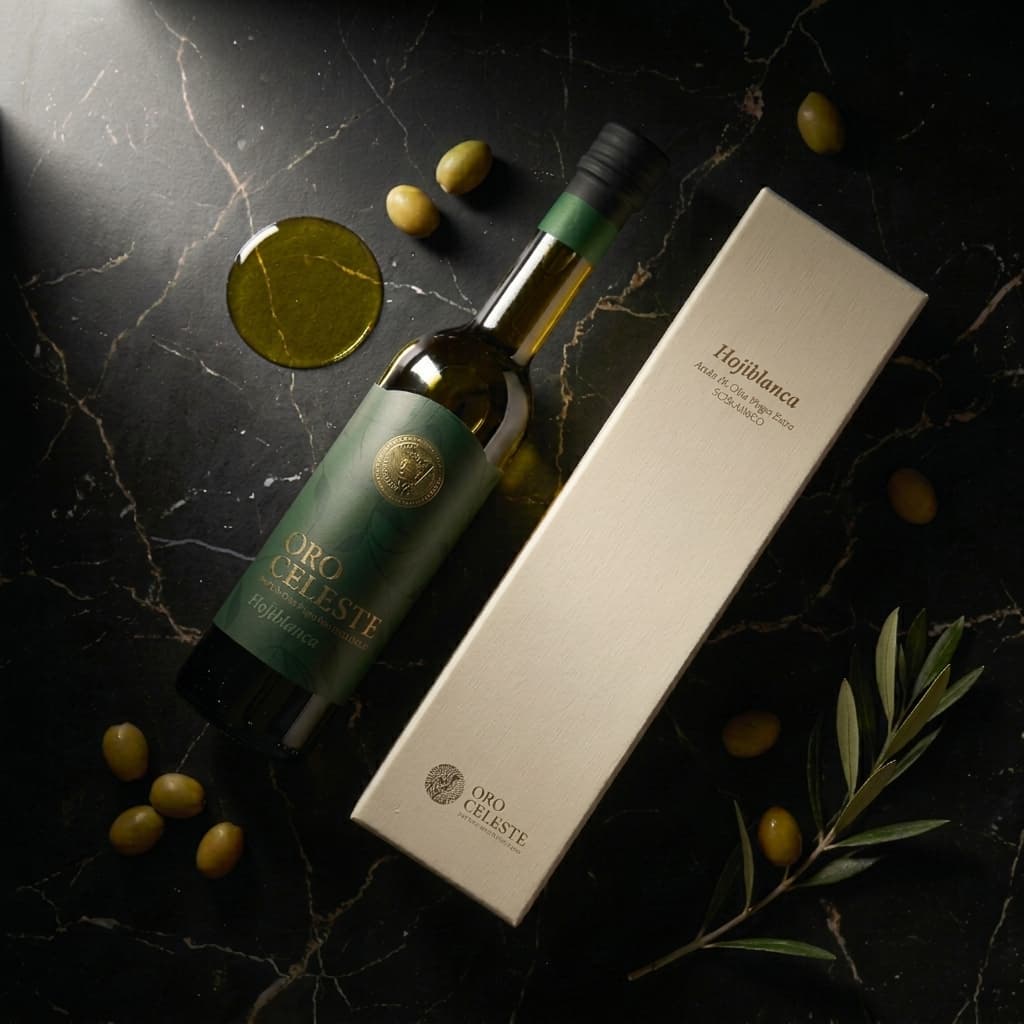
ORO CELESTE produces single-cultivar extra virgin olive oils in the Andalusia region of Spain, across three lines: Ojiblanca, Sibarita, and Picual. The certified analytical values for each are as follows.
Ojiblanca — acidity 0.16%, polyphenols above 600 mg/kg. That is 2.4 times the EU threshold. The cultivar is characterised by pronounced fruit and almond notes, with a medium-intensity bitterness and peppery finish that makes it versatile across a range of dishes.
Sibarita — acidity 0.14%, polyphenols above 500 mg/kg. At 0.14%, this is the lowest acidity of the three oils, and the polyphenol count is more than twice the EU minimum. Its flavour profile is described as gentle and refined, considered well suited to fresh vegetables and fish.
Picual — acidity 0.20%, polyphenols above 800 mg/kg. The highest polyphenol reading of the three, at 3.2 times the EU benchmark. Picual is the most widely planted cultivar in Spain, but this polyphenol level is well above what most commercially available Picual oils record. The oil is noted for a strong green-grass character and a distinctly peppery finish.
All three products maintain acidity levels that fall far below the 0.8% ceiling required for EVOO classification under IOC rules — a detail worth noting alongside the polyphenol figures.
The factors that drive polyphenol content
Even within the same cultivar, polyphenol levels can vary considerably depending on when and how the olives are processed. According to EFSA scientific panel data, olives harvested just before or at the veraison stage — while still strongly green — tend to yield higher concentrations of phenolic compounds. Allowing olives to ripen fully before picking, or delaying milling after harvest, has been reported to reduce polyphenol content.
Extraction temperature is another significant variable. Research published by a team at the University of Córdoba found that raising malaxation temperature increases oil yield but is associated with a meaningful and measurable decline in polyphenol content. Cold extraction — defined as pressing below 27°C — is consistently cited across multiple studies as more favourable for polyphenol retention. A high polyphenol figure, then, is not simply a product of fortunate growing conditions; it reflects a producer's deliberate choice to prioritise quality over throughput.
Why acidity and polyphenols are best read together
When assessing olive oil quality, free fatty acid content (acidity, or FFA) and polyphenol concentration provide different but complementary information. Acidity reflects primarily the freshness of the raw fruit and the hygiene of the milling process. Physical damage to olives, or an extended gap between harvest and pressing, causes fatty acids to break down — pushing acidity upward. Under IOC rules, an oil must read 0.8% FFA or below to qualify as extra virgin; premium-tier producers in Italy and Spain commonly target below 0.3%.
Polyphenol content, by contrast, measures the concentration of antioxidant phenolic compounds. When low acidity and high polyphenols are achieved simultaneously, it is reasonable to conclude that both the raw material and the processing were handled with care. ORO CELESTE's three oils — ranging from 0.14% to 0.20% acidity alongside 500–800 mg/kg polyphenols — offer a relatively clear reference point for consumers who use both metrics as selection criteria.
What to actually check when buying olive oil
The most reliable way to verify a polyphenol figure is to consult the product's Certificate of Analysis (CoA) from an accredited laboratory, available either on the label or through the brand's official channels. In the European market, any product bearing a polyphenol-related health claim under EU Regulation No. 432/2012 must have passed independent accredited testing — so the presence of that claim provides a degree of regulatory assurance that the oil meets the 250 mg/kg minimum.
Beyond polyphenols, other indicators worth examining include the peroxide value (POV), which reflects oxidation level — a lower reading indicates greater freshness, per IOC guidelines. A stated harvest year allows for straightforward traceability and is more transparent than blended products that omit it. Single-cultivar oils deliver a consistent flavour profile, which simplifies food pairing decisions.
Ultimately, polyphenol content is one meaningful criterion among several. A complete quality picture only comes together when acidity, peroxide value, harvest date, and cultivar information are disclosed alongside it. The EU's 250 mg/kg figure is a starting line, not a finishing one.
Frequently asked questions
- What does the EU 250 mg/kg polyphenol threshold for olive oil actually mean?
- Under EU Regulation No. 432/2012, an olive oil must contain at least 250 mg/kg of hydroxytyrosol and its derivatives before a producer is permitted to carry a polyphenol-related health claim on the label. The European Food Safety Authority (EFSA) established this figure in its 2011 opinion, noting that the relevant phenolic compounds, at a daily intake of 20 g of oil, have been reported to contribute to the protection of blood LDL from oxidation. The 250 mg/kg mark is therefore a regulatory minimum, not a quality ceiling.
- How do ORO CELESTE's polyphenol levels compare to a typical extra virgin olive oil?
- According to Spain's Ministry of Agriculture, Fisheries and Food (MAPA), polyphenol content in Spanish extra virgin olive oils typically ranges from roughly 100 to 300 mg/kg, with wide variation depending on cultivar, harvest timing, and processing. The International Olive Council (IOC) has noted that a significant share of commercially available EVOOs fall below or only marginally above the 250 mg/kg mark. ORO CELESTE's Sibarita (500 mg/kg), Ojiblanca (600 mg/kg), and Picual (800 mg/kg) therefore sit considerably above what is common on the market.
- Why does harvest timing affect the polyphenol content of olive oil?
- According to EFSA scientific panel data, olives harvested just before or at the veraison stage — when the fruit is still strongly green — tend to yield higher concentrations of phenolic compounds. Once olives fully ripen, or if processing is delayed after harvest, polyphenol levels can decline. Pressing temperature also plays a role: research published by a team at the University of Córdoba found that raising the malaxation temperature increases oil yield but is associated with a meaningful reduction in polyphenol content. High polyphenol figures therefore reflect a deliberate trade-off in favour of quality over volume.
- Why should I look at both acidity and polyphenols when buying olive oil?
- The two figures tell different stories. Free fatty acid content (acidity) is primarily an indicator of how fresh and undamaged the olives were at harvest and how carefully they were handled during processing — physical damage or delays after picking cause fatty acids to break down and acidity to rise. Under IOC rules, an oil must measure 0.8% acidity or below to qualify as extra virgin, and premium producers typically aim below 0.3%. Polyphenol content, by contrast, reflects the concentration of antioxidant phenolic compounds. When both a low acidity and a high polyphenol count are achieved simultaneously — as with ORO CELESTE's three oils, which range from 0.14% to 0.20% acidity alongside 500–800 mg/kg polyphenols — it suggests that raw-material quality and processing discipline are both in order.
- What else should I check on an olive oil label beyond polyphenols?
- Polyphenol content is one important data point, but a fuller picture comes from reading it alongside several others. The peroxide value (POV) indicates oxidation level — a lower figure points to greater freshness, per IOC guidelines. The harvest year confirms how recent the oil is; products that state it are easier to trace than blends that do not. Single-cultivar oils offer a consistent flavour profile, which is useful when planning food pairings. For verified polyphenol figures, look for a Certificate of Analysis issued by an accredited laboratory, or a label bearing an EU Regulation No. 432/2012 health claim, which guarantees the oil has been independently tested and cleared the 250 mg/kg threshold.
Related reading
- Premium EVOO at Every Price Point: A Global Farm Map
Within the global premium EVOO tier, estates cluster around a consistent set of signals — single origin, single cultivar, and published lab results. This guide charts the farms and labels that define that space, from Andalusia to California.
- Heat, Smoke, and Polar Compounds: The Chemistry of Cooking with Olive Oil
Heating olive oil triggers a cascade of hydrolysis, oxidation, and polymerization reactions that accelerate past the smoke point. This guide traces the science of polar compound formation and explains why high-polyphenol EVOO tends to hold up better under heat.
- Spain's Top EVOO Estates: A Guide to the Names That Keep Winning
Not all single-estate Spanish olive oils occupy the same tier. From Jaén and Granada to the Tabernas Desert and Extremadura, this guide maps the Spanish houses that international competition judges and critic guides return to year after year.
- Organic EVOO Certifications Decoded: Euro-leaf, USDA, and Demeter
Three certification marks — the EU Euro-leaf, USDA Organic, and Demeter — divide the organic EVOO shelf into meaningfully different tiers. Understanding what each one actually requires makes it far easier to judge whether the premium is worth paying.
- Spain, Italy, Greece: How the Three EVOO Heartlands Taste Different
Spain, Italy, and Greece together account for more than 80 percent of the world's extra virgin olive oil, according to the International Olive Council — yet the flavors they produce could hardly be more distinct.
- Oro Bailén: A Four-Generation Estate and the Picual Standard
Nestled in Guarromán, in Spain's Jaén province, Oro Bailén is widely regarded as a benchmark for single-estate Picual extra virgin olive oil. This is the story of how four generations of family farming and exacting quality control built a reputation on the world stage.