Craft
Opened Olive Oil Goes Stale Faster Than You Think — Here's the Timeline
The best-by date on an olive oil bottle assumes it has never been opened. Once air gets in, oxidation begins immediately — and how fast it progresses depends on polyphenol content, storage temperature, light exposure, and container type.
Translated from the Korean edition, originally published July 26, 2026 · read the original
Unopened Best-By Date vs. Recommended Window After Opening
The date printed on the back of an olive oil bottle is calculated for an unopened container. According to International Olive Council (IOC) guidelines, extra virgin olive oil (EVOO) carries a recommended shelf life of 18 to 24 months from the point of harvest and pressing — provided the seal has never been broken. The moment you open the bottle, the rules change.
As soon as a bottle is opened, oxygen begins entering the headspace, and the unsaturated fatty acids in olive oil — primarily oleic acid and linoleic acid — start forming peroxides through contact with that oxygen. That reaction is the starting point of rancidity. Researchers at Spain's National Research Council (CSIC) reported that EVOO stored at room temperature after opening can lose up to 40% of its polyphenol content within four weeks. The printed best-by date is therefore best understood not as a use-by deadline, but as a quality guarantee for an unopened product.
The commonly recommended consumption window after opening is 30 to 60 days — and that assumes storage conditions are close to ideal. Oils with low polyphenol content, or bottles kept in direct sunlight or near a heat source, may fall below acceptable quality well before that window closes.
Three Factors That Accelerate Oxidation
Three variables have the greatest influence on how quickly an opened bottle of olive oil degrades.
Oxygen exposure. Every time a bottle is opened and closed, more air enters. The bigger the headspace — the empty space above the oil — the greater the surface area in contact with oxygen. A bottle that is less than half full has most of its interior filled with air, and oxidation accelerates noticeably as a result.
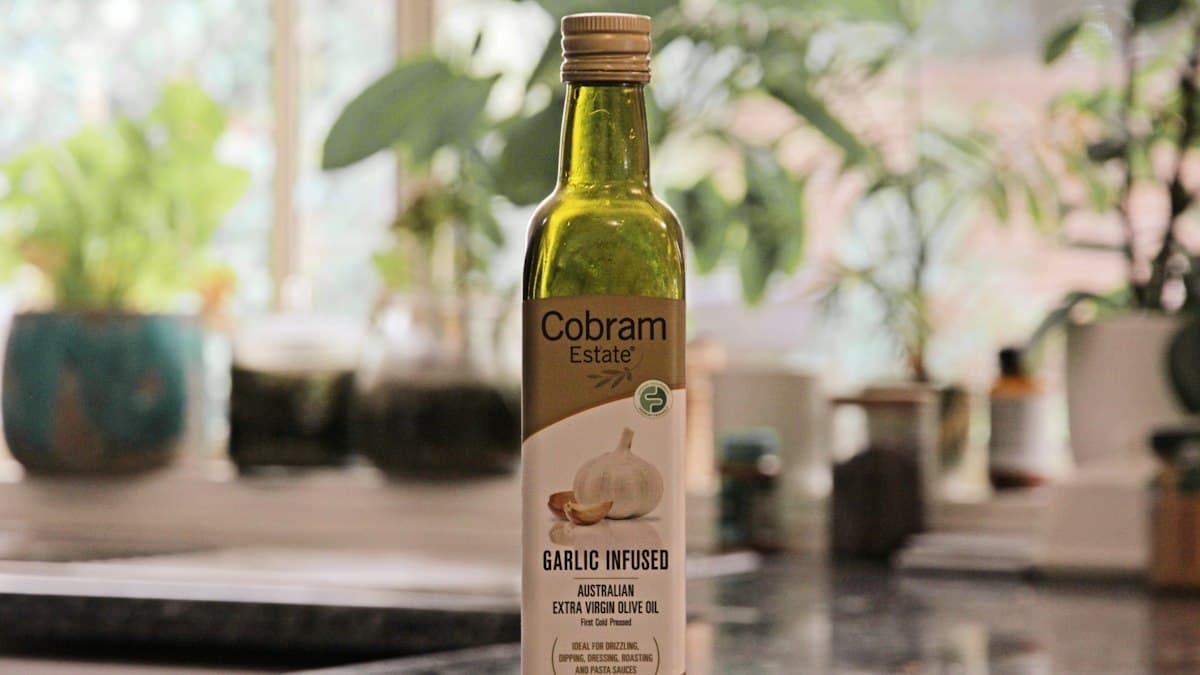
Light, especially UV. Research from the UC Davis Olive Center found that olive oil in a clear glass bottle can begin to show quality degradation within six hours of exposure to fluorescent lighting. The mechanism involves chlorophyll absorbing light energy and promoting the formation of oxygen radicals. This is why dark-colored glass bottles — amber or green — offer meaningfully better protection than clear ones.
Heat. Above 25°C, the rate of oxidation reactions rises sharply. Spots where heat collects — beside a gas burner, on top of a refrigerator — are among the worst places to store oil. According to data from the Italian Association of Food Technology (AITA), the rate of oxidation reactions is reported to roughly double for every 10°C rise in storage temperature.
Why Polyphenol Content Slows Oxidation
Polyphenols are the natural antioxidant compounds olive trees produce to protect themselves from oxidative stress. In EVOO, the most significant ones include oleocanthal, oleuropein, and hydroxytyrosol. These molecules work by interrupting the chain reactions that drive oxidation — essentially sacrificing themselves before the fatty acids are damaged.
This means that a higher-polyphenol EVOO, stored under identical conditions, is reported to oxidize more slowly than a lower-polyphenol one. The European Food Safety Authority (EFSA), in its 2011 health claims guidance, references hydroxytyrosol and its derivatives in the context of protecting lipids from oxidative stress, noting a polyphenol level of 5 mg per 20 g of oil as the relevant threshold; high-polyphenol oils are reported to carry greater resistance to oxidation.
The corollary is also worth noting: an oil that has already lost most of its polyphenols — whether through extended storage, heavy heat exposure, or a refining process that strips them out — will oxidize considerably faster once opened.
A Practical Storage Checklist
Controlling the environment is the most reliable way to slow oxidation after a bottle is opened. Applying the four principles below gives the best chance of maintaining quality throughout the recommended 30–60 day window.
Dark and cool. The ideal storage temperature is 14–18°C. A pantry cupboard or the back of a kitchen cabinet works well. Countertop storage in an unshaded spot is best avoided.
Cap it immediately after pouring. Replacing the cap right after use — rather than leaving the bottle open on the counter — meaningfully limits the rate at which oxygen builds up inside.
Decant into a smaller bottle. If you buy a large tin or a bottle of 3 liters or more, transferring your regular-use portion into a small amber glass bottle (250–500 mL) and keeping the remainder tightly sealed in a cool location reduces the headspace problem considerably.
Refrigeration: the trade-offs. Storing oil at 4–8°C slows oxidation significantly. The drawback is that olive oil will turn cloudy or partially solidify at those temperatures — a phenomenon called wax crystallization. This is a normal physical response to cold, not a sign of spoilage; the oil returns to its usual appearance once brought back to room temperature. A workable approach is to keep a small pour bottle at room temperature for everyday cooking, and refrigerate any portion you won't use for a while.
How to Tell Whether Your Oil Has Already Turned
Sensory evaluation is a more direct freshness indicator than the calendar. Olive oil signals oxidation in three ways.
A crayon or waxy smell. When oxidized fatty acids break down into aldehydes, the result is a smell reminiscent of new crayons, stale walnuts, or musty oil. If that character is present, oxidation is well advanced.
Loss of bitterness and pepper sting. Fresh, high-quality EVOO produces a mild peppery catch at the back of the throat — the characteristic sensation associated with oleocanthal — along with a distinct bitterness and grassy note. When those qualities fade and only a flat, neutral oiliness remains, the polyphenols have been largely depleted.
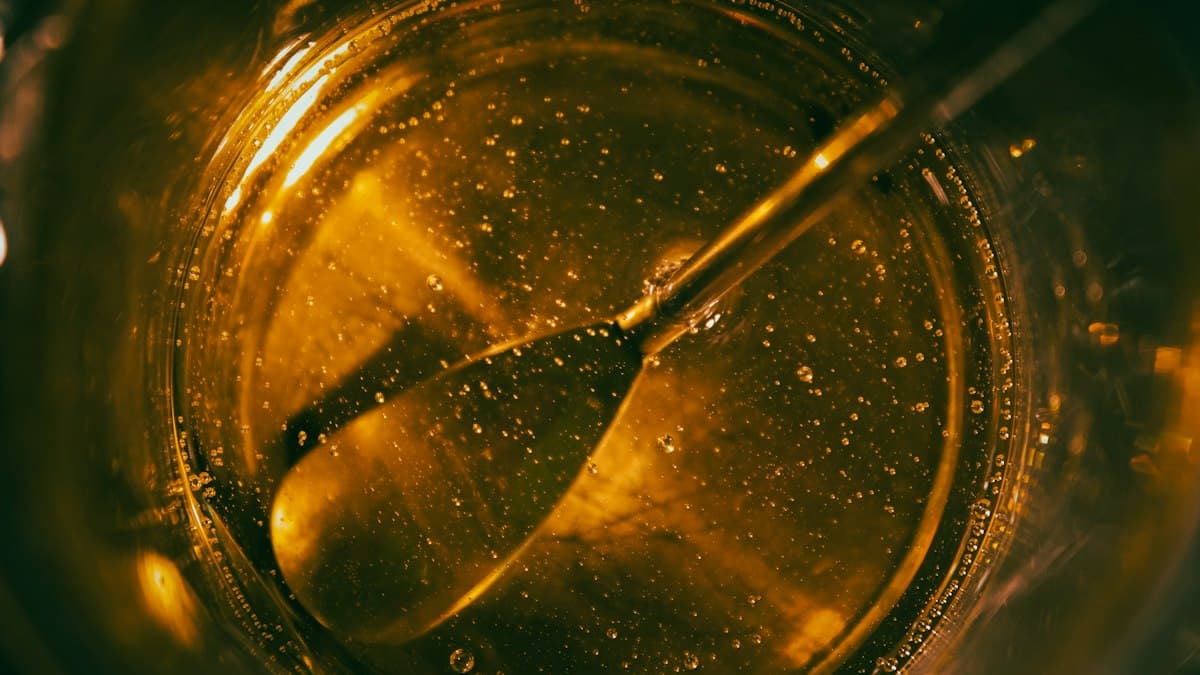
Color shift. A change from pale green toward deep yellow or brown tones can indicate significant oxidation. That said, color alone is an unreliable single indicator, since starting color varies by cultivar; aroma and taste should always be checked alongside it.
Oil that has gone rancid affects the flavor of everything cooked in it. If there is genuine doubt, opening a fresh bottle is the straightforward solution.
Frequently asked questions
- How long does extra virgin olive oil last after opening?
- The generally recommended window is 30 to 60 days after opening, assuming optimal storage conditions — away from light, heat, and excess air. Oils with low polyphenol content or stored near a stove or in a clear bottle may degrade noticeably faster than that.
- Does the best-by date on olive oil apply after the bottle is opened?
- No. According to International Olive Council (IOC) guidelines, the 18–24 month best-by date printed on a bottle refers strictly to an unopened, properly stored product. Once opened, oxygen enters the bottle and oxidation begins regardless of how much time remains on the printed date.
- Does higher polyphenol content slow down oxidation in olive oil?
- Yes. Polyphenols such as oleocanthal, oleuropein, and hydroxytyrosol act as natural antioxidants that interrupt the chain reactions driving oxidation. A 2011 European Food Safety Authority (EFSA) health claims guideline references these compounds specifically in the context of protecting fats from oxidative stress. Under the same storage conditions, a high-polyphenol EVOO is reported to resist oxidation longer than a low-polyphenol one.
- What does rancid olive oil smell like?
- Rancid olive oil typically smells of crayons, old wax, or stale walnuts — the result of oxidized fatty acids breaking down into aldehyde compounds. A fresh, high-quality EVOO should have a grassy, peppery character; when that pepper-throat sting and bitterness disappear and only a flat, greasy taste remains, the polyphenols are largely spent and the oil is past its best.
- Should you refrigerate olive oil after opening?
- Refrigeration (4–8°C) significantly slows oxidation and is a valid option, especially for bottles you use infrequently. The oil will turn cloudy or partially solidify at those temperatures due to wax crystallization — a normal physical reaction, not a quality defect. It clears again at room temperature. A practical approach is to keep a small pour bottle at room temperature for daily cooking and refrigerate the rest of a larger container.
Related reading
- Light, Heat, Oxygen, Time: The Four Forces Destroying Your Olive Oil's Aroma
The flavor of extra virgin olive oil is quietly dismantled by four forces: light, heat, oxygen, and time. Here is the science behind each mechanism and what it means for storage.
- Acidity Is Only the Beginning: Three Numbers That Reveal Olive Oil Rancidity
Free fatty acids tell only part of the story. Peroxide value, UV absorbance (K232 and K270), and hexanal each capture a different stage of oxidation — and reading all four together is the only way to assess what is really in the bottle.
- Reading Polyphenol Numbers on an Olive Oil Label: A Step-by-Step Comparison Guide
The mg/kg polyphenol figure printed on an extra virgin olive oil bottle is one of the most useful quality signals a label can carry — but only if you know how to read it. This guide walks through what the number means, how measurement method affects it, and what else to check alongside it.
- Cold, Room Temperature, Hot: How Olive Oil Changes at Every Stage
Olive oil solidifies in the refrigerator and thins dramatically on a hot stove. Understanding the science behind these viscosity shifts opens up a more deliberate approach to cooking with EVOO at every temperature.
- The Countdown Starts When You Break the Seal: An Olive Oil Oxidation Timeline
The moment you open a bottle of extra virgin olive oil, oxygen, light, and heat begin working against it. This guide maps freshness changes at one week, one month, and three months after opening — and lays out the storage habits that slow the decline.
- The Right Container Makes or Breaks a Bulk Olive Oil Purchase
Decanting a large tin or bottle of extra virgin olive oil into a smaller vessel sounds simple — but the container you choose determines how much of that quality actually survives. A practical guide to material, light-blocking, and seal performance.
Tags