Craft
Sautéing vs. Finishing: How Much Olive Oil to Use, and When
The right amount of olive oil depends entirely on how you are using it. From smoke-point basics to per-serving measurements for every technique, this guide covers what you need to know at the stove.
Translated from the Korean edition, originally published July 27, 2026 · read the original
Why the Amount You Use Actually Matters
Olive oil is not a neutral cooking medium in the way that a refined vegetable oil is. Like salt, it actively shapes the flavour of a dish, which means too much can mask the natural character of your ingredients and add unnecessary calories, while too little leaves food sticking to the pan or a finishing drizzle too faint to taste. Understanding how much to use — and at what temperature — for each technique is the foundation of cooking with olive oil well.
Oleic acid, the monounsaturated fatty acid that defines olive oil's fatty-acid profile, accounts for 55–83% of total fatty acids, according to International Olive Council (IOC) data. Compared with polyunsaturated fats, monounsaturated fats are more resistant to oxidation during heating. That said, this stability is not unlimited: above the smoke point, any cooking fat degrades in quality.
Smoke Point, and the Real Heat Tolerance of Extra Virgin
The smoke point is the temperature at which an oil begins to produce visible smoke, at which point unpleasant odours and oxidation by-products are generated. For extra virgin olive oil (EVOO), that threshold varies with quality: research published in the journal Food Chemistry reports that high-quality EVOO with high polyphenol content and low free-fatty-acid acidity reaches its smoke point in the range of 190–210°C.
Ordinary home sautéing sits at around 160–180°C, and even a vigorous stir-fry rarely pushes pan-surface temperature above 200°C for more than a moment. In practice, good-quality EVOO is a sound choice across standard sautéing conditions. The habits to avoid are preheating the pan until it is extremely hot before adding oil, and waiting until the oil smokes before adding ingredients — by that point, the oil is already past its optimal temperature.
Sautéing: Temperature, Quantity, and Pan Choice
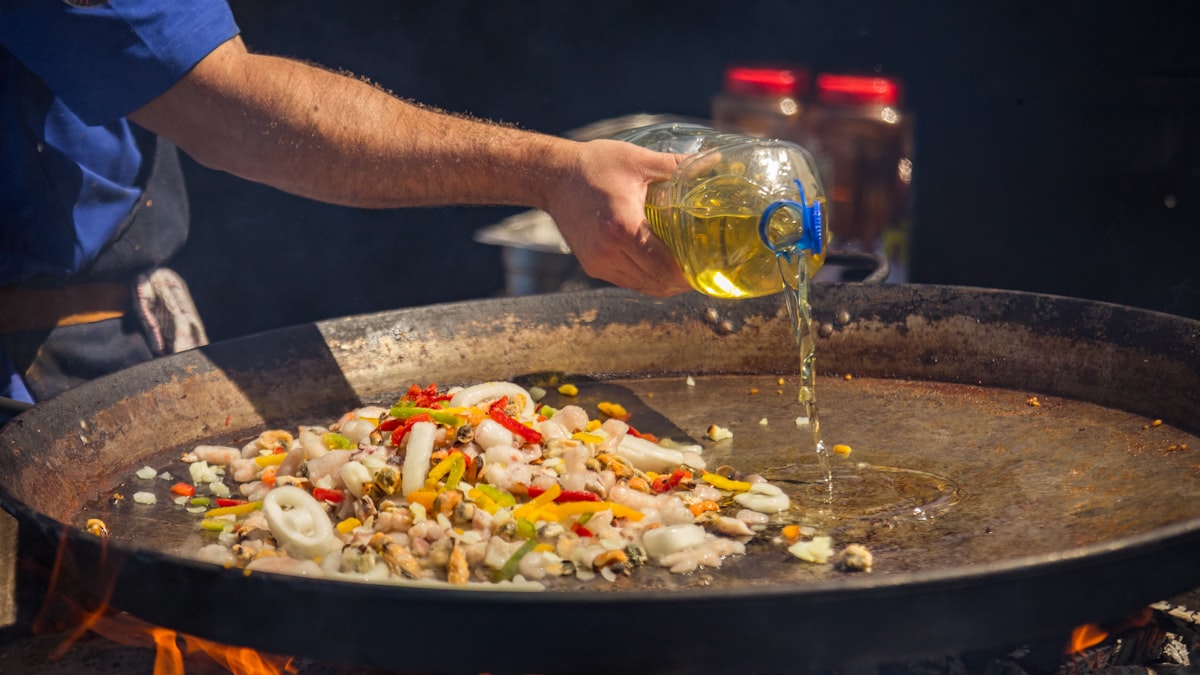
How much to use For one serving, 1 to 1.5 tablespoons (15–22 mL) is a practical starting point for sautéing. Water-rich vegetables tend to dry out the pan quickly, so starting on the generous side makes sense; meat, which releases its own fat during cooking, rarely needs more than 1 tablespoon (15 mL), and often less.
Temperature management Preheat the pan over medium heat for 30–40 seconds, add the oil, and put the ingredients in within 15–20 seconds. A useful visual cue: when the oil begins to shimmer and takes on a slight sheen — around 160°C — it is ready. Waiting for wisps of smoke is waiting too long.
Pan choice Heavy stainless-steel and cast-iron pans hold heat evenly and pair well with EVOO. Non-stick pans are best kept at medium heat or below, which protects both the coating and the oil.
Preserving aroma A small finishing drizzle of raw EVOO — about ½ teaspoon (2–3 mL) — added the moment a sauté comes off the heat can restore aromatic compounds driven off during cooking. It is a minor addition that makes a noticeable difference.
Finishing: Getting the Most from an Unheated Drizzle
Finishing means adding olive oil raw — over a completed dish, a salad, or bread — without any subsequent heating. Because the oil never sees a flame, its polyphenols and volatile aroma compounds reach the palate completely intact. A more intensely flavoured EVOO will make its presence felt with a smaller quantity.
How much to use A single salad serving typically needs around 1 teaspoon (5 mL). For a bread-dipping plate, 1–2 tablespoons (15–30 mL) is a reasonable pour. Pasta and soups need only ½ to 1 teaspoon (2–5 mL) to register clearly.
Temperature Olive oil releases its aroma most readily near room temperature. If the bottle has been refrigerated, take it out 10 minutes before serving, or pour a small amount into a bowl and cup it in your hands for 30 seconds to bring it up to temperature quickly.
Pairing principles Bold, bitter-peppery varieties — Picual, Coratina — stand up to grilled meat and hearty bean stews. Softer, fruit-forward varieties such as Ojiblanca are generally considered well matched to white fish, ricotta, and fruit salads.
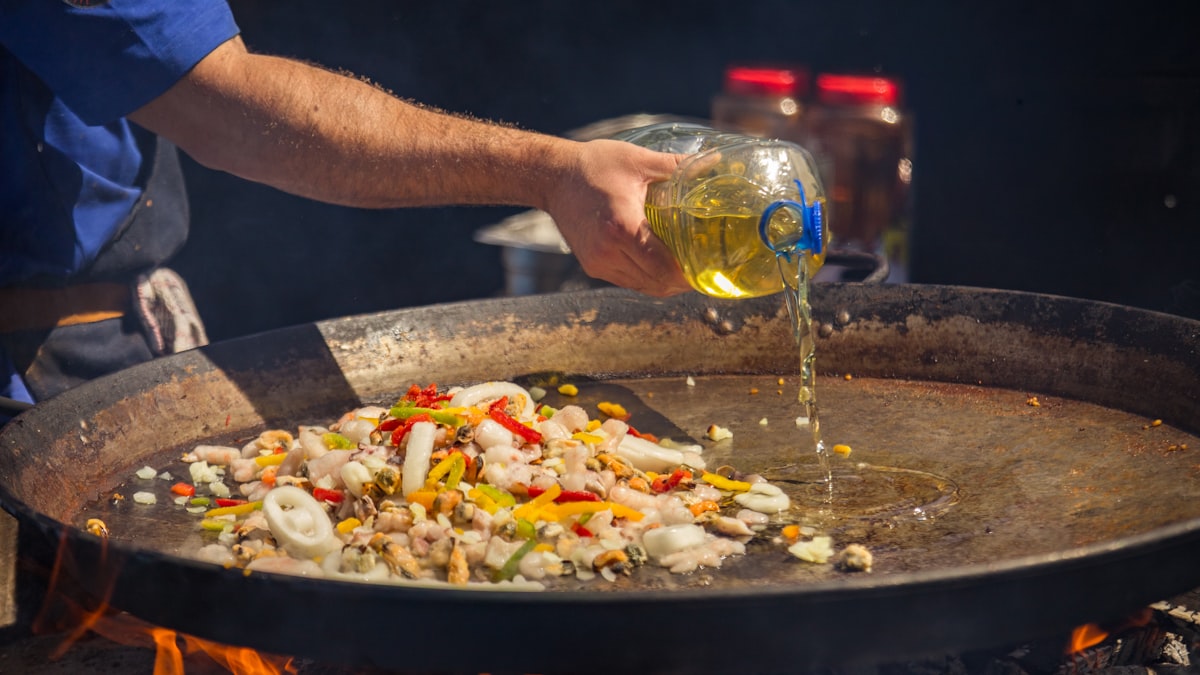
Per-Serving Reference Amounts by Technique
Sautéing — vegetables, tofu, seafood: 1 to 1.5 tablespoons (15–22 mL). Start with enough to coat the pan base; add a small splash if ingredients begin to stick.
Sautéing — meat: ½ to 1 tablespoon (8–15 mL). Meat releases its own fat, so a light initial coat is all that is needed.
Omelette or scrambled eggs: ½ tablespoon (approximately 7 mL). With a non-stick pan, even less will do.
Salad dressing: 1 teaspoon to 1 tablespoon (5–15 mL). A 2:1 ratio of olive oil to vinegar or lemon juice is the standard starting point.
Pasta or soup finish: ½ to 1 teaspoon (2–5 mL). The quantity is small, but the flavour difference is clear.
Bread dipping: 1 to 2 tablespoons (15–30 mL, for a small plate). A pinch of salt or a few dried herbs alongside keeps it simple and effective.
Storage and Oxidation: Protecting the Oil You Paid For
How you manage a bottle after opening has a direct effect on what ends up on the plate. Oxygen, light, and heat all accelerate oxidation. The IOC's consumer guidance recommends keeping opened olive oil in a cool, dark place and finishing it within 60 days. One practical approach is to buy cooking oil and finishing oil separately — a 500 mL bottle for the pan, and a smaller 250 mL or less bottle kept for drizzling — so the finishing oil is always relatively fresh.
The decorative bottle sitting next to the hob is a common culprit. Constant exposure to heat and light can cause even excellent EVOO to go rancid within weeks. A better habit is to decant a small amount into a dark glass bottle for daily use and keep the rest sealed in a cool cupboard away from the stove.
Frequently asked questions
- What is the smoke point of extra virgin olive oil?
- According to research published in Food Chemistry, high-quality extra virgin olive oil with high polyphenol content and low free-fatty-acid acidity has a measured smoke point in the range of 190–210°C. That comfortably covers typical home sautéing temperatures of 160–180°C.
- How much olive oil should I use per serving when sautéing?
- As a general starting point, 1 to 1.5 tablespoons (15–22 mL) per serving works well for vegetables, tofu, and seafood. For meat, which releases its own fat, ½ to 1 tablespoon (8–15 mL) is usually sufficient.
- How much olive oil do I use as a finishing drizzle on pasta or soup?
- A finishing drizzle of ½ to 1 teaspoon (2–5 mL) per serving is enough to register clearly in flavour without overwhelming the dish. Because the oil is unheated, its polyphenols and aroma compounds remain fully intact.
- Does olive oil go bad quickly once opened?
- The IOC's consumer guidance recommends storing opened olive oil in a cool, dark place and using it within 60 days. Oxygen, light, and heat all accelerate oxidation. Keeping a small dark-glass bottle at arm's reach and storing the main supply in a cupboard away from the stove is a practical way to protect quality.
- Which olive oil cultivars work best as a finishing oil versus for cooking?
- Robust, bitter-peppery varieties such as Picual pair well as a finishing oil over grilled meat or bean stews. Softer, fruit-forward varieties such as Ojiblanca tend to suit white fish, ricotta, and fruit salads. For high-heat sautéing, the cultivar matters less than the oil's overall freshness and polyphenol content.
Related reading
- Before or After: The Complete Guide to Seasoning with Olive Oil
Coating ingredients with olive oil before cooking and finishing a dish with it afterward are two fundamentally different techniques. This guide covers oil-coating mechanics, marinade sequencing, and the heat chemistry that determines when each approach works best.
- Cold, Room Temperature, Hot: How Olive Oil Changes at Every Stage
Olive oil solidifies in the refrigerator and thins dramatically on a hot stove. Understanding the science behind these viscosity shifts opens up a more deliberate approach to cooking with EVOO at every temperature.
- Olive Oil Confit: A Complete Guide to Low-Temperature Oil Cooking
Confit — the French technique of slow-cooking ingredients submerged in oil at low heat — finds a natural partner in extra virgin olive oil, which preserves moisture, concentrates flavor, and adds its own grassy depth to garlic, vegetables, and poultry alike.
- Set Up a Home Olive Oil Tasting: Lighting, Temperature, Glasses, and Tasting Notes
A professional-level olive oil tasting environment does not require special equipment. This guide walks through the exact setup — lighting, oil temperature, glass selection, and a simple scoresheet — that lets any curious cook build real sensory skills at home.
- The Countdown Starts When You Break the Seal: An Olive Oil Oxidation Timeline
The moment you open a bottle of extra virgin olive oil, oxygen, light, and heat begin working against it. This guide maps freshness changes at one week, one month, and three months after opening — and lays out the storage habits that slow the decline.
- The Right Container Makes or Breaks a Bulk Olive Oil Purchase
Decanting a large tin or bottle of extra virgin olive oil into a smaller vessel sounds simple — but the container you choose determines how much of that quality actually survives. A practical guide to material, light-blocking, and seal performance.