Table
Ciabatta, Sourdough, Focaccia: Matching Bread Character to Olive Oil Intensity
Ciabatta, sourdough, and focaccia each bring a distinct fermentation profile, crumb structure, and crust to the table. Matching olive oil intensity to bread character lets both ingredients amplify each other rather than compete.
Translated from the Korean edition, originally published October 11, 2026 · read the original
The Starting Point: Matching Intensity to Intensity
Pairing olive oil with bread follows the same foundational logic as matching wine with food: intensity should meet intensity. According to the International Olive Council (IOC), olive oils are broadly classified into three sensory categories — delicato (delicate), medio (medium), and intenso (intense) — defined by polyphenol content and flavor profile. Bread spans an equally wide spectrum, from neutral white loaves to assertively sour, complex sourdoughs. When intensities clash, one ingredient overruns the other. When they align, the bread's texture and the oil's aromatics unfold on the palate in sequence, producing something more complete than either ingredient alone.
Three factors help determine which intensity to reach for. First, the leavening method — commercial yeast, wild fermentation, or none at all. Second, crust thickness and crumb porosity. Third, grain variety and degree of bake. Read those three signals from your bread and the right oil category becomes clear.
Ciabatta — A Medio Oil for the Bread Built on Air
Ciabatta means "slipper" in Italian, a reference to its flat, elongated shape. Made from just flour, water, salt, and yeast, it has a mild flavor of its own — but its defining feature is an exceptionally open, porous crumb that drinks up oil and amplifies whatever aromatics it carries.
That porosity makes ciabatta most compatible with a medio-intensity oil. Hojiblanca and Arbequina are two frequently cited choices. According to sensory evaluation data from the Oleology Research Institute at the University of Jaén in Spain, both cultivars display almond, apple, and green-herb notes alongside a clear but measured balance of bitterness and pungency. That equilibrium interlocks naturally with ciabatta's mild wheat flavor without tipping into excess.
For service, a pinch of coarse sea salt and a fresh sprig of rosemary added to the dipping bowl will bring out the bread's soft interior texture. Choosing an intenso oil here risks burying ciabatta's subtle fermentation character entirely — the mildness of the bread is the point, and the oil should support it.
Sourdough — Intenso Oils That Hold Their Ground Against Acidity
Sourdough is leavened with a live wild-yeast starter over an extended fermentation period. The process generates lactic and acetic acids, producing the bread's characteristic tang and complex fermentation aroma. The crust is thick and crackling; the interior is dense, chewy, and tightly structured.
Among bread styles, sourdough is one of the most demanding pairing partners. A delicato oil placed next to a strongly acidic loaf simply disappears — the bread's acidity consumes it. What sourdough calls for is an intenso oil, and Picual is the cultivar that comes up most often in this context. It carries high polyphenol levels and a pronounced pepper-like pungency with distinct herbal undertones. The European Food Safety Authority (EFSA), in its 2011 opinion authorizing an olive oil polyphenol health claim, noted that polyphenols found in olive oil are associated with the protection of LDL cholesterol from oxidation, and research has reported that higher-polyphenol cultivars tend to show correspondingly stronger bitter and pungent sensory attributes.
Picual's dense olive aroma and long peppery finish don't clash with sourdough's acidity — they contrast with it, creating layers on the palate rather than a muddy overlap. Lightly toasting a slice of sourdough so that its surface caramelizes slightly adds Maillard-reaction aromas that interplay well with the herbal notes of a high-polyphenol oil.
Focaccia — The Bread That Carries Oil Inside and Out
Focaccia has a closer structural relationship with olive oil than almost any other bread. Oil goes into the dough before baking and is poured generously over the top just before and after the loaf comes out of the oven. Originating in the Ligurian region of Italy, focaccia is a bread whose quality is, more than anything else, a direct function of the oil used to make it.
It helps to think about the oil in two distinct stages. The oil incorporated into the dough is exposed to oven heat, and some of its more volatile aromatic compounds will be transformed during baking; a good fruity oil at medio intensity is entirely adequate here. The finishing oil — drizzled over the baked loaf — is never heated again. Every volatile aroma compound it contains arrives at the table intact. This is where a high-quality extra virgin earns its place: on the warm, golden surface of a just-baked focaccia, the finishing oil's aromatics have nowhere to hide and nothing to compete with except the bread itself.
When toppings are simple — coarse salt and rosemary — the oil becomes the dominant flavor note, and a delicato-to-medio selection allows subtlety to show through. When toppings are assertive (olives, sun-dried tomatoes, olive paste), an intenso oil can stand beside them without being overshadowed.
Oil Intensity at a Glance
Across the three breads, the selection logic flows in one consistent direction.
Delicato oils are low in polyphenols and carry soft notes of butter, almond, and apple with minimal bitterness. They suit plain white bread, brioche, and enriched doughs, and are an undemanding choice for simple ciabatta.
Medio oils offer a balanced profile of grass, artichoke, and almond with moderate bitterness and pungency at the finish. They are the natural match for ciabatta, and work well as the finishing oil on simply topped focaccia.
Intenso oils are high in polyphenols and present unmistakable herb, tomato leaf, and black pepper aromas with a long, assertive peppery finish. They are the right call for strongly fermented sourdough and for focaccia loaded with robust toppings.
Table Setup and Serving Temperature
Temperature affects how much flavor olive oil delivers, and it is worth attending to. Oil that has been stored in a refrigerator has its fat partially solidified, suppressing the volatility of its aroma molecules. For dipping, oil should be served at room temperature — 18 to 22°C — so its flavor compounds can diffuse freely. According to data from Spain's Institute of Agrifood Research and Technology (IRTA), the volatile aroma compounds in extra virgin olive oil evaporate more rapidly as temperature increases; pouring oil directly onto very hot bread can drive off its most delicate aromatics almost immediately. The sweet spot is bread that is warm but not scalding, and oil that is at room temperature — at that intersection, both ingredients express themselves most clearly.
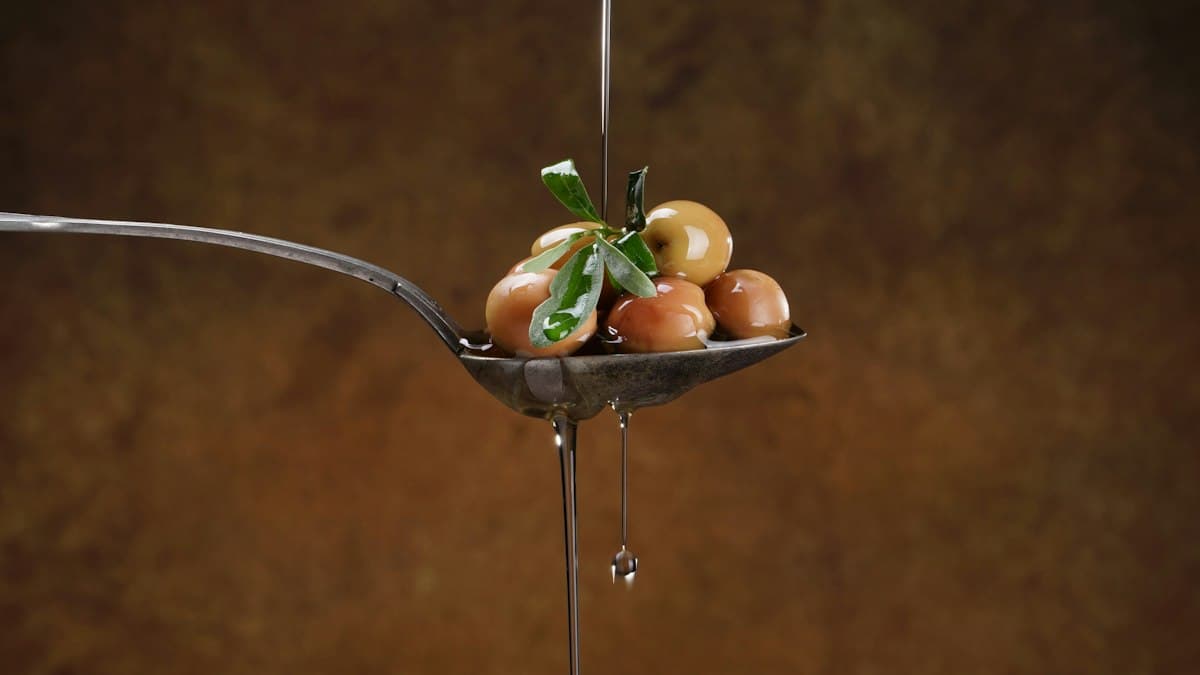
Serving the oil in a small ceramic bowl lets everyone dip or spoon at their own pace. A few finishing touches — flaky sea salt, a strip of lemon zest, a couple of whole peppercorns — add both visual interest and aromatic complexity without requiring anything more than what is already on the table.
Frequently asked questions
- Which olive oil goes best with ciabatta?
- A medio-intensity oil — one with grassy, lightly bitter, and mildly peppery notes — suits ciabatta well. The bread's large, open crumb absorbs oil readily, amplifying its flavor, so a delicato oil can disappear while an intenso can overwhelm the bread's subtle fermentation character. Arbequina and Hojiblanca are widely cited as balanced choices for this pairing.
- Can I use a delicate olive oil with sourdough?
- It's possible, but the strong lactic and acetic acids produced during sourdough fermentation tend to overshadow a delicato oil entirely, leaving very little olive character on the palate. An intenso oil — particularly Picual, with its pronounced pepper finish and high polyphenol content — creates a contrast that holds its own against sourdough's acidity and gives the combination more complexity.
- What olive oil should I use inside focaccia dough versus on top?
- The oil mixed into the dough is exposed to oven heat, which transforms some of its volatile aromatics, so a good medio-intensity fruity oil is sufficient there. The finishing oil drizzled over the baked focaccia is never heated again, meaning every aromatic compound stays intact — that's where a high-quality extra virgin matters most and will make the greatest difference in flavor.
- What temperature should olive oil be when served for dipping?
- Room temperature — roughly 18 to 22°C — is ideal. According to data from Spain's Institute of Agrifood Research and Technology (IRTA), the volatile aroma compounds in extra virgin olive oil evaporate more readily as temperature rises. Oil that has been refrigerated will have its flavor molecules suppressed by solidified fats, while oil poured onto bread that is too hot may lose its most delicate aromatics almost instantly.
- How do the three olive oil intensity categories — delicato, medio, and intenso — differ?
- The International Olive Council (IOC) distinguishes the three levels by polyphenol content and sensory profile. Delicato oils are low in polyphenols and offer soft butter, almond, or apple notes with minimal bitterness. Medio oils show balanced grass, artichoke, and almond characters with moderate bitterness and pungency at the finish. Intenso oils are high in polyphenols and deliver pronounced herb, tomato leaf, and black pepper aromas with a long, assertive peppery aftertaste.
Related reading
- Matching Olive Oil Intensity to Your Ingredients: A Pairing Guide
Acidity and grade tell you whether an olive oil is good; intensity tells you where it belongs on the plate. This guide walks through the mild, medium, and intense tiers — and the cooking variables that shift the equation.
- Guacamole, Tacos, and Olive Oil: A Pairing That Goes Back Centuries
From sixteenth-century Spanish missionaries to modern Latin kitchens in Mexico City, New York, and Los Angeles, extra virgin olive oil has long had a place at the Mexican table. This guide traces the history and explores how chefs are using it today.
- Soy, Gochujang, Doenjang: Ratio Guides for Korean Jang Dressings with Extra Virgin Olive Oil
Combining extra virgin olive oil with Korea's fermented jang pastes opens unexpected flavor territory — but the ratios matter. This guide breaks down the optimal oil-to-jang proportions for soy sauce, gochujang, and doenjang, with practical applications for each.
- A Drop of Science: Pairing Dark Chocolate with Extra Virgin Olive Oil
A drizzle of extra virgin olive oil over dark chocolate softens bitterness and amplifies aroma. From the molecular interactions of phenolic compounds to cultivar-by-cultivar pairing choices, OLEA explores this combination through the lens of culinary science.
- The Mediterranean Art of Oil Poaching Fish: Ratios, Temperatures, and Cultivar Pairings
Oil poaching — gently cooking fish submerged in olive oil at low heat — is a cornerstone technique of Mediterranean kitchens. This guide covers everything from choosing the right EVOO to precise temperature ranges and the oil ratios that make the difference.
- Hummus, Shakshuka, Sabich: How Israeli Cooking Uses Olive Oil at Every Layer
From the finishing pour on hummus to the base of a shakshuka and the layered construction of a sabich, olive oil functions as a primary ingredient on the Israeli table — not a neutral medium. This guide traces how Levantine culinary tradition treats the oil itself as the point.