Table
Hummus, Shakshuka, Sabich: How Israeli Cooking Uses Olive Oil at Every Layer
From the finishing pour on hummus to the base of a shakshuka and the layered construction of a sabich, olive oil functions as a primary ingredient on the Israeli table — not a neutral medium. This guide traces how Levantine culinary tradition treats the oil itself as the point.
Translated from the Korean edition, originally published September 16, 2026 · read the original
Olive Trees at the Eastern Edge of the Mediterranean
Israel is an ancient home of the olive tree. On the shores of the Dead Sea and across the hills of Galilee, trees several centuries old still bear fruit. According to data from the United Nations Food and Agriculture Organization (FAO), per-capita olive oil consumption in Mediterranean coastal countries runs more than ten times the global average, and the Levant region — Israel included — sits at the center of that figure. For thousands of years, olive oil in this land has functioned simultaneously as a medium for religious ritual, everyday cooking, and long-distance trade. It remains the most frequently appearing fat on the Israeli table today.
Israeli food culture formed through successive waves of Jewish immigration layered onto Arab and Ottoman inheritance, all drawing from the same Mediterranean pantry. Within that multi-stranded history, olive oil was never the property of a single community — it was a shared vocabulary across the entire Levant. Three dishes speak that language most clearly: hummus, shakshuka, and sabich.
Hummus — The Finishing Pour That Completes the Dish
Hummus is a creamed dip made by blending cooked chickpeas with tahini, lemon juice, and garlic. At long-established hummus shops in Tel Aviv — the kind that open before most of the city is awake — the preparation follows a consistent ritual: hummus is spread in a wide circle on the plate, a well is formed at the center, and olive oil is poured in generously before a dusting of paprika and parsley. That last step is not decorative.
The oil does more than add sheen. Between the nutty bitterness of tahini and the sharpness of lemon, the fruity character of a good extra virgin acts as a bridge. When the oil carries a higher polyphenol count — as oils from cultivars such as Picual or Hojiblanca tend to — a faint bitterness and a peppery finish enter the bowl, pulling the overall flavor out of monotony and extending it on the palate. According to food researcher Jill Lebovits in her book Israeli Soul Food, traditional hummus craftspeople prefer a freshly pressed fresco-grade oil as their finishing pour, and consider this choice decisive for what she calls the dish's "living taste."
Shakshuka — Oil Lays the Flavor Foundation
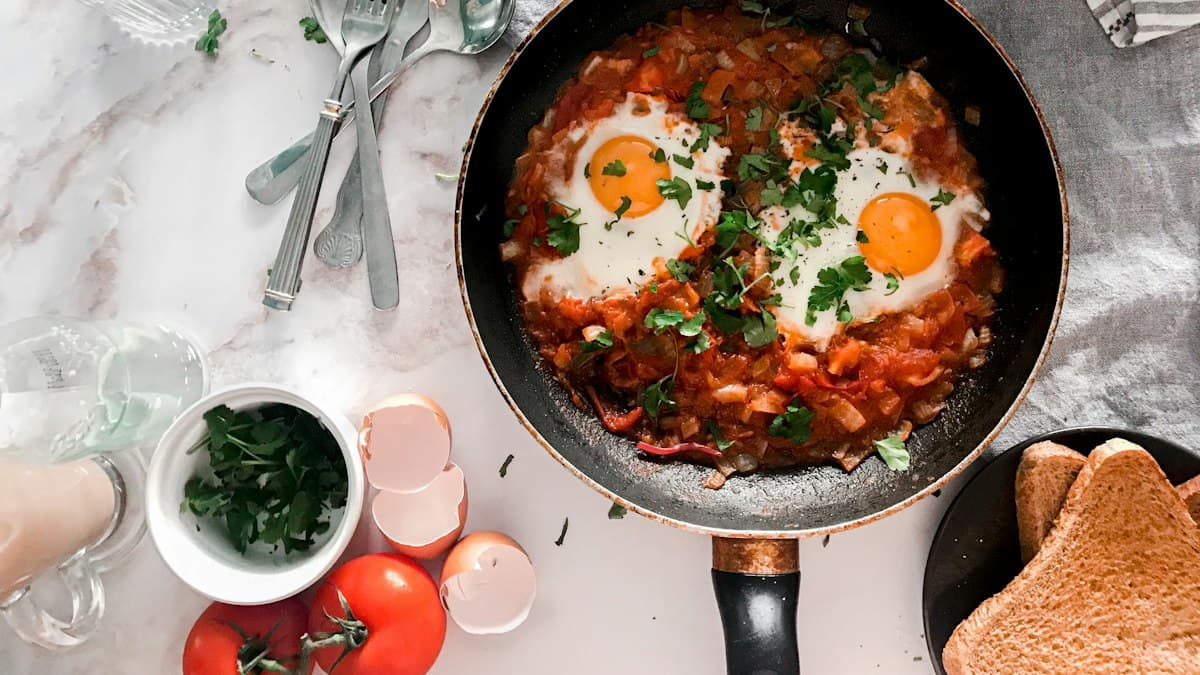
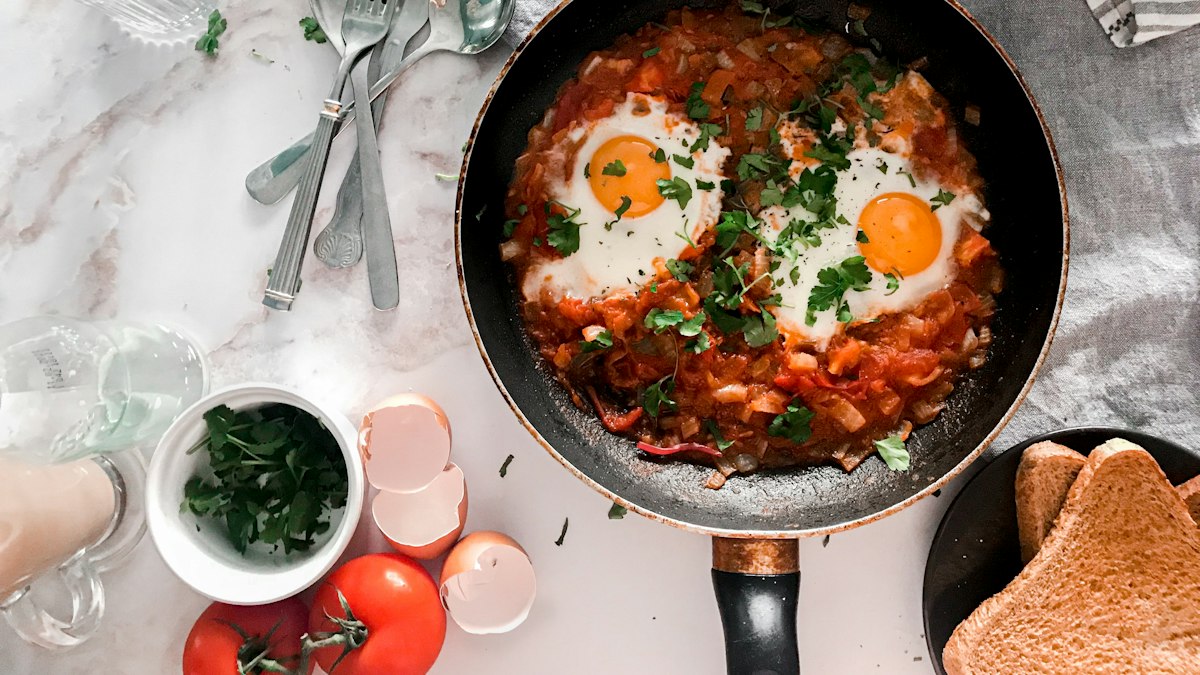
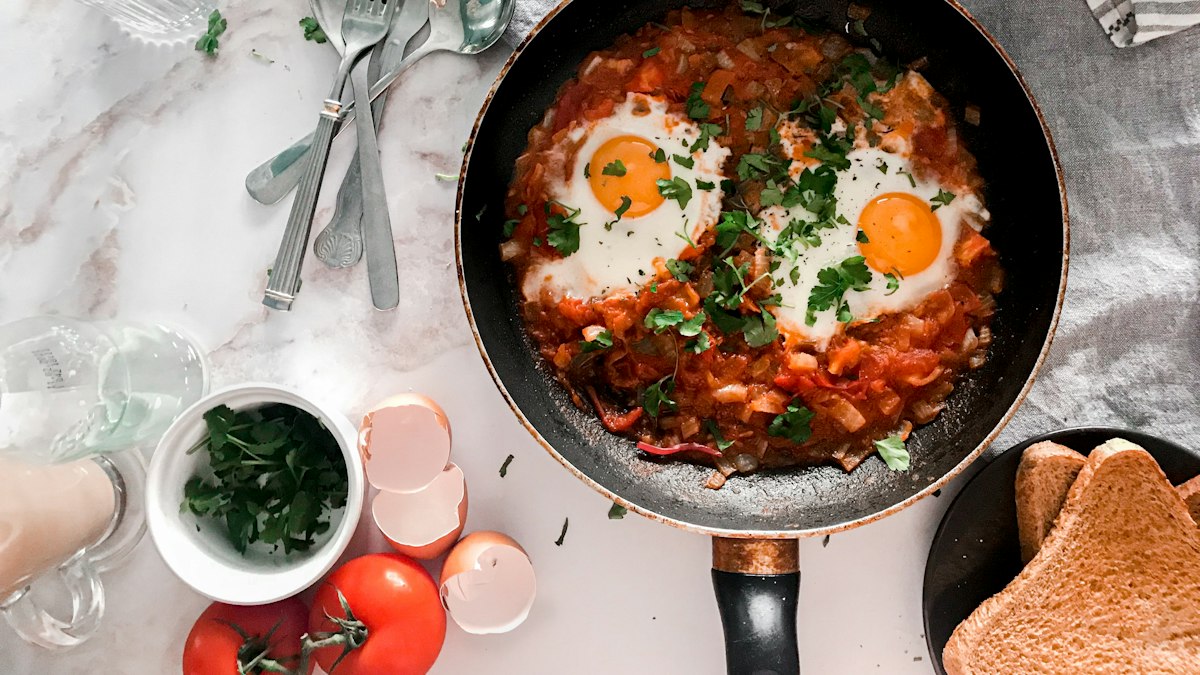
Shakshuka is eggs poached directly in a thick sauce of tomatoes, peppers, and spices. Its roots are widely attributed to Tunisian North Africa, but in Israel it has become a dish without a fixed meal time — eaten at breakfast, lunch, and well past midnight with equal conviction.
Shakshuka always begins with olive oil. Oil goes into the pan first; onions and garlic follow, coaxed slowly over moderate heat until their sharpness softens into sweetness. This opening stage builds the base that will receive the tomatoes and the complex of cumin, paprika, and coriander added later. The mechanism is straightforward: heat releases the fat-soluble aromatic compounds within the oil while simultaneously extracting the oil-soluble compounds from the spices. According to food science resources published by the Harvard T.H. Chan School of Public Health, fat-soluble carotenoids — a category that includes lycopene from tomatoes — have been reported to show improved bioavailability when cooked in the presence of fat.
As restaurants across Tel Aviv and Jerusalem each defend their own shakshuka recipe, the choice of oil varies too. Cooks after a gentler background reach for buttery, mild oils made from cultivars like Arbequina; those who want a more assertive, full-bodied result turn to Picual-style oils. Whatever the choice, one element is consistent: extra virgin rather than refined oil. The flavor contribution of a refined oil is too neutral to serve the role shakshuka asks of it.
Sabich — Oil at Every Layer of the Sandwich
Sabich is a pita sandwich that the Iraqi Jewish community brought to Israel. It is filled, in careful order, with fried eggplant, hard-boiled egg, hummus, Israeli salad (finely chopped tomato, cucumber, and parsley), amba (a pickled mango sauce), and tahini. Olive oil enters this construction at a minimum of three points.
The first is the eggplant. Eggplant absorbs oil the way a sponge absorbs water, which means the oil's character travels directly into the finished vegetable. Roasted in extra virgin olive oil in the traditional manner, the eggplant's inherent bitterness softens, and a moist, sweet quality develops beneath a slightly crisp exterior. The second point is the Israeli salad: finely cut vegetables are tossed with lemon juice and olive oil, which draws out just enough moisture to form a light, vivid dressing without swamping the other components. The third is a final drizzle added just before the tahini goes on — a step that functions as an adhesive, pulling the separate elements into a single coherent flavor.
At sabich street stalls in Tel Aviv's Florentin neighborhood, vendors will add extra oil on request. That gesture is partly cultural generosity and partly practical knowledge accumulated over generations: the oil is not optional garnish. It is the element that completes the sandwich.
The Lesson of the Levantine Table — Quality Changes the Context
What these three dishes say in unison is this: olive oil is an ingredient, not a tool. It is not a neutral cooking medium in the way that refined oil or butter can be. It brings its own aroma, flavor, and texture, and in Levantine cooking it is expected to contribute all three to the conclusion of the dish.
In this context, acidity and polyphenol content become practical rather than technical figures. According to International Olive Council (IOC) standards, extra virgin olive oil must have a free acidity of no more than 0.8%; lower acidity is generally associated with a fresher, more vivid fruit character. Polyphenols are the compounds responsible for the bitterness and peppery finish characteristic of high-quality extra virgin oils, and higher polyphenol levels have been reported to correlate with both greater flavor complexity and stronger resistance to oxidative degradation over time.
The philosophy of the Israeli kitchen is direct: do not be sparing with good oil. Pour it onto hummus not in a cautious trickle but in a generous pool. Let it coat the pan for shakshuka fully. Add it once more to sabich just before serving. That open-handed approach is both the hospitality of the Levantine table and the practical wisdom of people who have lived alongside olive trees long enough to understand what the oil is actually for.
Frequently asked questions
- What kind of olive oil should I use to finish hummus?
- Traditional hummus makers favor a freshly pressed extra virgin olive oil — sometimes called fresco grade — used immediately after harvest. According to food researcher Jill Lebovits in Israeli Soul Food, artisan hummus shops prioritize this 'living' quality in their finishing oil. Cultivars with higher polyphenol content, such as Picual or Hojiblanca, add bitterness and a peppery finish that prevents the dish from tasting flat.
- Why does shakshuka start with olive oil rather than butter or a neutral oil?
- The opening step in shakshuka — slowly sweating onions and garlic in olive oil — builds the aromatic foundation for the tomatoes and spices that follow. Heat releases fat-soluble flavor compounds from the oil itself while simultaneously drawing out oil-soluble compounds from cumin, paprika, and coriander. According to food science resources from the Harvard T.H. Chan School of Public Health, fat-soluble carotenoids, including the lycopene in tomatoes, have been reported to show improved absorption when cooked with fat.
- Can I use any extra virgin olive oil for Israeli cooking, or does the cultivar matter?
- Cultivar choice does shift the result noticeably. Cooks who want a gentler backdrop — particularly for shakshuka — tend to reach for buttery, mild oils from cultivars like Arbequina. Those after a more assertive, full-bodied profile choose Picual-style oils with higher polyphenol counts. What both approaches share is a commitment to extra virgin rather than refined oil; the flavor contribution of a refined oil is too neutral to serve the role these dishes ask of it.
- How does olive oil work inside a sabich sandwich?
- Olive oil appears at least three points in a sabich. First, it is used to fry or roast the eggplant — eggplant absorbs oil readily, so the oil's flavor directly shapes the finished texture and taste. Second, it forms part of the dressing for the Israeli salad (chopped tomato, cucumber, and parsley mixed with lemon juice and oil). Third, a final drizzle is added just before the tahini goes on, acting as a binding element that pulls the separate components into a coherent whole.
- What do acidity and polyphenol levels tell me about olive oil quality for these dishes?
- According to International Olive Council (IOC) standards, extra virgin olive oil must have a free acidity of 0.8% or below; lower acidity is generally associated with fresher, more vivid fruit flavor. Polyphenols are the compounds responsible for the characteristic bitterness and peppery finish in olive oil, and higher polyphenol content has been reported to correlate with both greater flavor complexity and better resistance to oxidative degradation. Both figures are practical guides when choosing an oil whose own flavor is meant to contribute to the dish.
Related reading
- Soy, Gochujang, Doenjang: Ratio Guides for Korean Jang Dressings with Extra Virgin Olive Oil
Combining extra virgin olive oil with Korea's fermented jang pastes opens unexpected flavor territory — but the ratios matter. This guide breaks down the optimal oil-to-jang proportions for soy sauce, gochujang, and doenjang, with practical applications for each.
- The Mediterranean Art of Oil Poaching Fish: Ratios, Temperatures, and Cultivar Pairings
Oil poaching — gently cooking fish submerged in olive oil at low heat — is a cornerstone technique of Mediterranean kitchens. This guide covers everything from choosing the right EVOO to precise temperature ranges and the oil ratios that make the difference.
- Fried, Scrambled, Poached: How Olive Oil Changes Every Style of Egg
Olive oil is more than a non-stick coating in egg cookery — it shapes texture, aroma, and the final bite. This guide breaks down the right oil, temperature, and timing for fried, scrambled, and poached eggs.
- Matching Olive Oil Intensity to Your Ingredients: A Pairing Guide
Acidity and grade tell you whether an olive oil is good; intensity tells you where it belongs on the plate. This guide walks through the mild, medium, and intense tiers — and the cooking variables that shift the equation.
- Five Places EVOO Fits Alongside Perilla and Sesame Oil on a Korean Table
Perilla oil and sesame oil have long held the finishing-oil role in Korean cooking. Here are five spots where extra virgin olive oil can sit beside them without displacing them.
- Roasting Vegetables in Olive Oil: Oil Quantity and Temperature by Vegetable Type
Not every vegetable needs the same amount of olive oil or the same oven temperature. This guide breaks down the optimal combinations by moisture content, starch level, and structure — so roasted vegetables come out evenly cooked with genuine depth of flavor.