Table
Five Places EVOO Fits Alongside Perilla and Sesame Oil on a Korean Table
Perilla oil and sesame oil have long held the finishing-oil role in Korean cooking. Here are five spots where extra virgin olive oil can sit beside them without displacing them.
Translated from the Korean edition, originally published February 25, 2025 · read the original
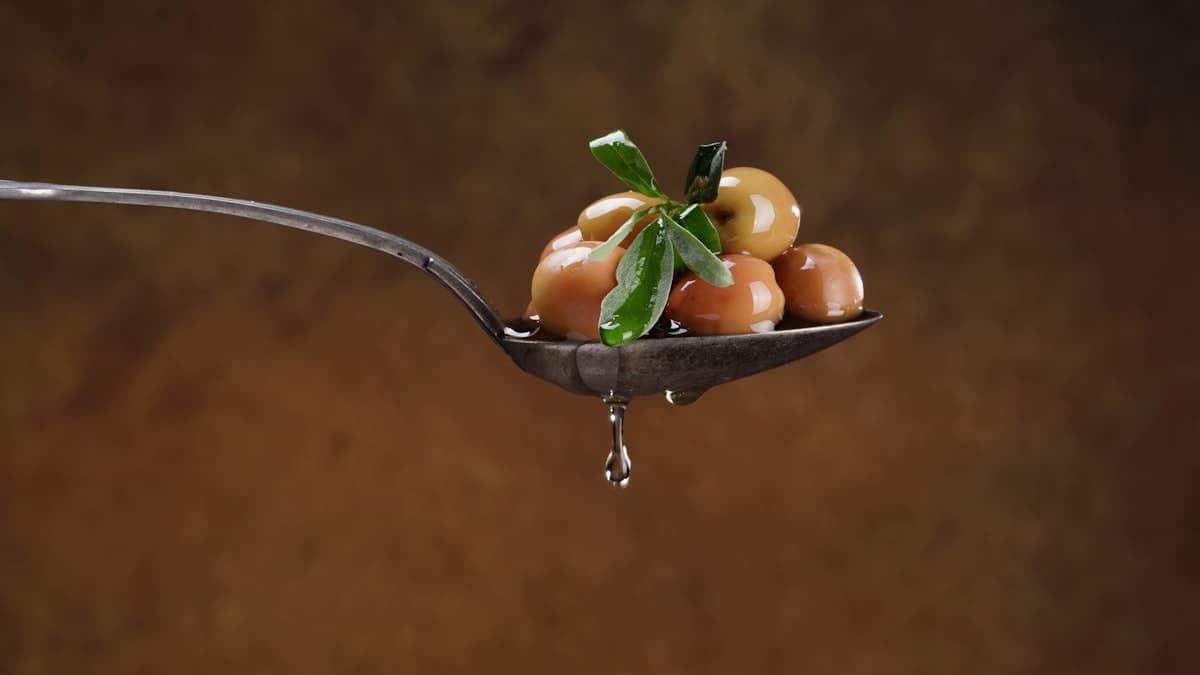
The finishing-oil role in Korean cooking has long belonged to perilla oil (deulgirum) and sesame oil (chamgirum). Both are assertively aromatic, and both are well suited to dishes — bibimbap, seasoned vegetable sides (namul muchim) — where that final drop defines the whole impression of the plate. Extra virgin olive oil is finding its way onto the Korean table not by taking that role away, but by opening up a few new spots beside it.
A finishing drop on seasoned greens
Seasoned vegetable sides (namul muchim) are home territory for perilla and sesame oil. That said, well-blanched spinach or parboiled water parsley finished with EVOO and coarse sea salt takes on an additional layer of character. Rather than applying this across every namul, it works best on milder vegetables where the oil's green, fresh notes can come through without competing with stronger flavors.
A new angle on bibimbap and Korean pancakes
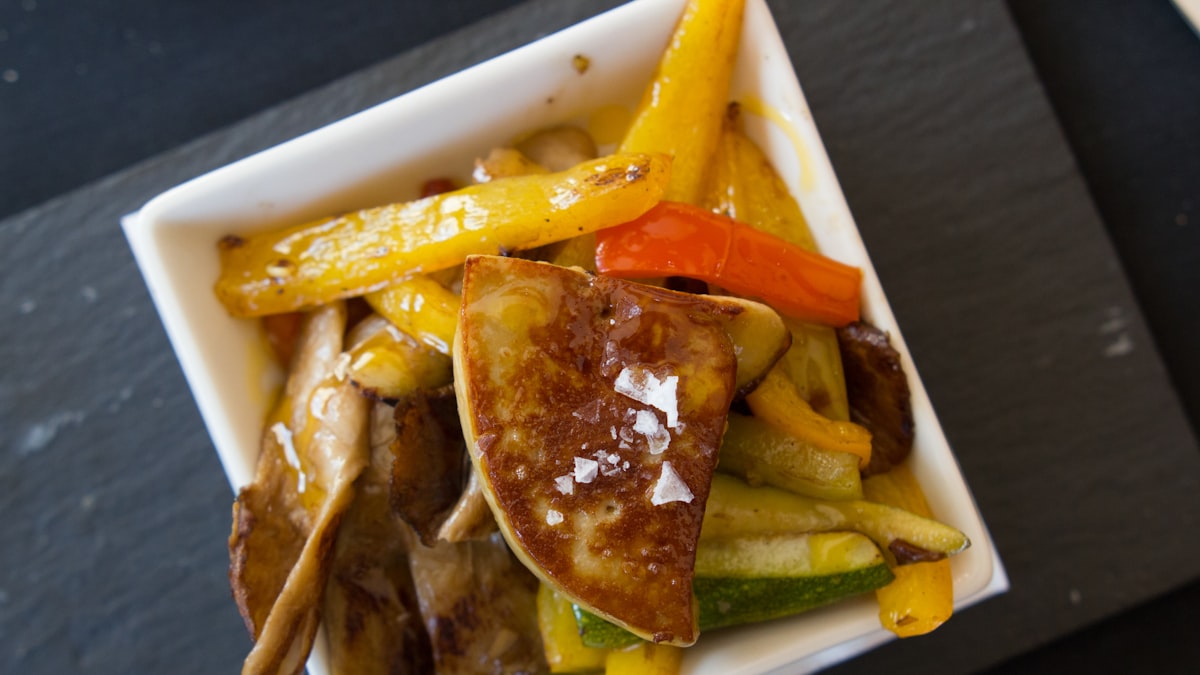
A drizzle of EVOO as the final touch on bibimbap adds a flavor profile that is noticeably different from sesame oil's characteristic sweetness. For jeon (Korean savory pancakes), cooking in EVOO produces a lighter aroma and offers reasonable oxidative stability. In both cases, the idea is not to replace the traditional oils but to have an occasional alternative when you want a different flavor direction.
Raw fish and carpaccio-style finishes
This is arguably where EVOO earns its place most naturally on a Korean table. Sliced raw flatfish (gwangeo hoe) finished with a drizzle of EVOO and flaky sea salt takes on something close to a Korean-style carpaccio. The green notes of a single-cultivar EVOO complement the clean sweetness of fresh fish, and the finish is lighter and crisper than perilla oil can offer.
EVOO on dried seaweed
Toasted or plain dried gim (seaweed) brushed or drizzled with EVOO, sea salt, and a turn of black pepper gains a noticeably richer dimension. The oil coats the surface lightly — similar to the way sesame oil does — but leaves a distinctly different impression on the finish.
A finishing thread over soups and porridges
A thin drizzle of EVOO over warm dishes like seaweed soup (miyeok-guk) or pumpkin porridge (hobak-juk) is a growing practice. Perilla oil is the familiar choice here, but a smooth, mild single-cultivar EVOO can quietly support the broth's flavor without pulling focus.
The guiding principle when pairing EVOO with Korean food is to avoid displacement. Dishes that already center on the deep, roasted character of sesame or perilla oil are best left as they are. EVOO belongs in the gaps — places where a fresh, green finishing note would add something new rather than something competing.
Frequently asked questions
- Can you use extra virgin olive oil in Korean cooking?
- Yes. EVOO works well as a finishing oil in several Korean dishes — drizzled over blanched greens, raw fish, bibimbap, seasoned seaweed, or warm soups and porridges. The key is to treat it as an addition alongside perilla and sesame oil rather than a replacement for them.
- Does olive oil go with Korean food flavors?
- It depends on the dish. EVOO's grassy, green notes pair naturally with mild vegetables, raw fish, and light broths. Strongly flavored dishes that already carry deep sesame or perilla character are generally better left with those traditional oils.
- Is EVOO good for pan-frying Korean pancakes (jeon)?
- It can be used for pan-frying jeon. The aroma is lighter than sesame oil, but EVOO offers reasonable oxidative stability at the temperatures involved. Think of it as an occasional variation rather than a straight swap.
- What kind of EVOO works best with Korean dishes?
- A single-cultivar EVOO with fresh green notes — rather than a very peppery or intensely bitter style — tends to complement mild Korean flavors best. Using a finishing-quality EVOO rather than a bulk cooking oil makes the difference most noticeable.
- Can you drizzle olive oil on Korean soup or porridge?
- Yes, a thin drizzle of EVOO over warm dishes like miyeok-guk (seaweed soup) or hobak-juk (pumpkin porridge) is increasingly common. The oil's mild, smooth character supports the broth's flavor rather than overwhelming it.
Related reading
- Matching Olive Oil Intensity to Your Ingredients: A Pairing Guide
Acidity and grade tell you whether an olive oil is good; intensity tells you where it belongs on the plate. This guide walks through the mild, medium, and intense tiers — and the cooking variables that shift the equation.
- Soy, Gochujang, Doenjang: Ratio Guides for Korean Jang Dressings with Extra Virgin Olive Oil
Combining extra virgin olive oil with Korea's fermented jang pastes opens unexpected flavor territory — but the ratios matter. This guide breaks down the optimal oil-to-jang proportions for soy sauce, gochujang, and doenjang, with practical applications for each.
- The Mediterranean Art of Oil Poaching Fish: Ratios, Temperatures, and Cultivar Pairings
Oil poaching — gently cooking fish submerged in olive oil at low heat — is a cornerstone technique of Mediterranean kitchens. This guide covers everything from choosing the right EVOO to precise temperature ranges and the oil ratios that make the difference.
- Hummus, Shakshuka, Sabich: How Israeli Cooking Uses Olive Oil at Every Layer
From the finishing pour on hummus to the base of a shakshuka and the layered construction of a sabich, olive oil functions as a primary ingredient on the Israeli table — not a neutral medium. This guide traces how Levantine culinary tradition treats the oil itself as the point.
- A Drop of Science: Pairing Dark Chocolate with Extra Virgin Olive Oil
A drizzle of extra virgin olive oil over dark chocolate softens bitterness and amplifies aroma. From the molecular interactions of phenolic compounds to cultivar-by-cultivar pairing choices, OLEA explores this combination through the lens of culinary science.
- Fried, Scrambled, Poached: How Olive Oil Changes Every Style of Egg
Olive oil is more than a non-stick coating in egg cookery — it shapes texture, aroma, and the final bite. This guide breaks down the right oil, temperature, and timing for fried, scrambled, and poached eggs.