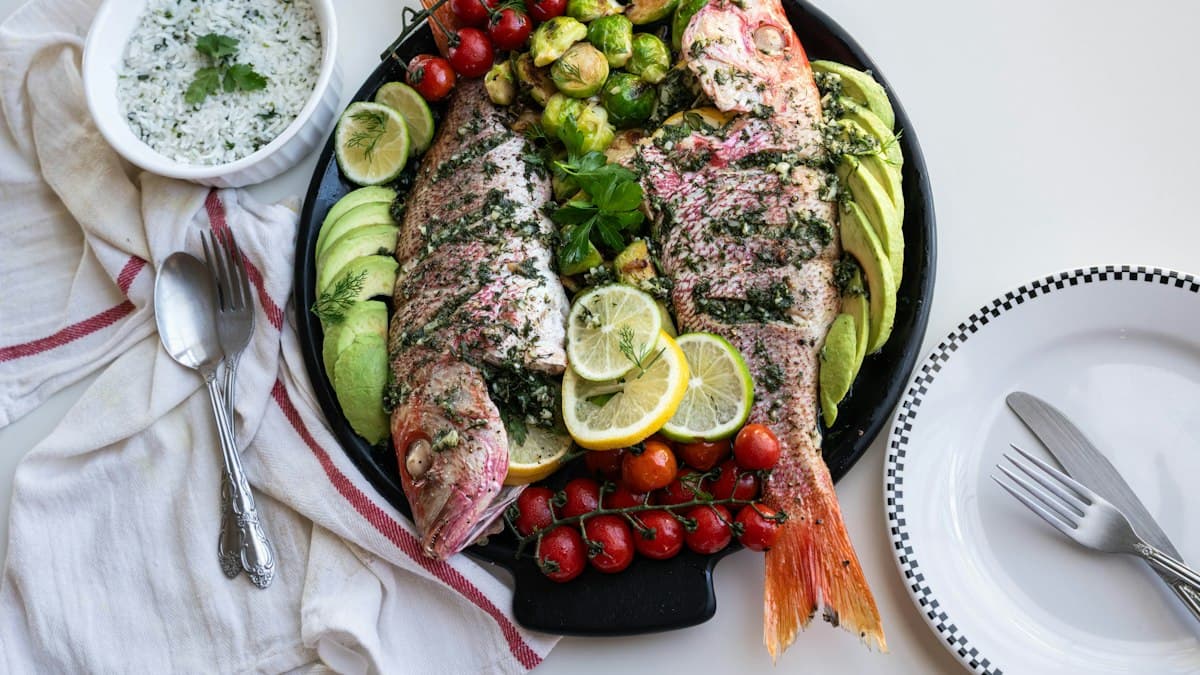
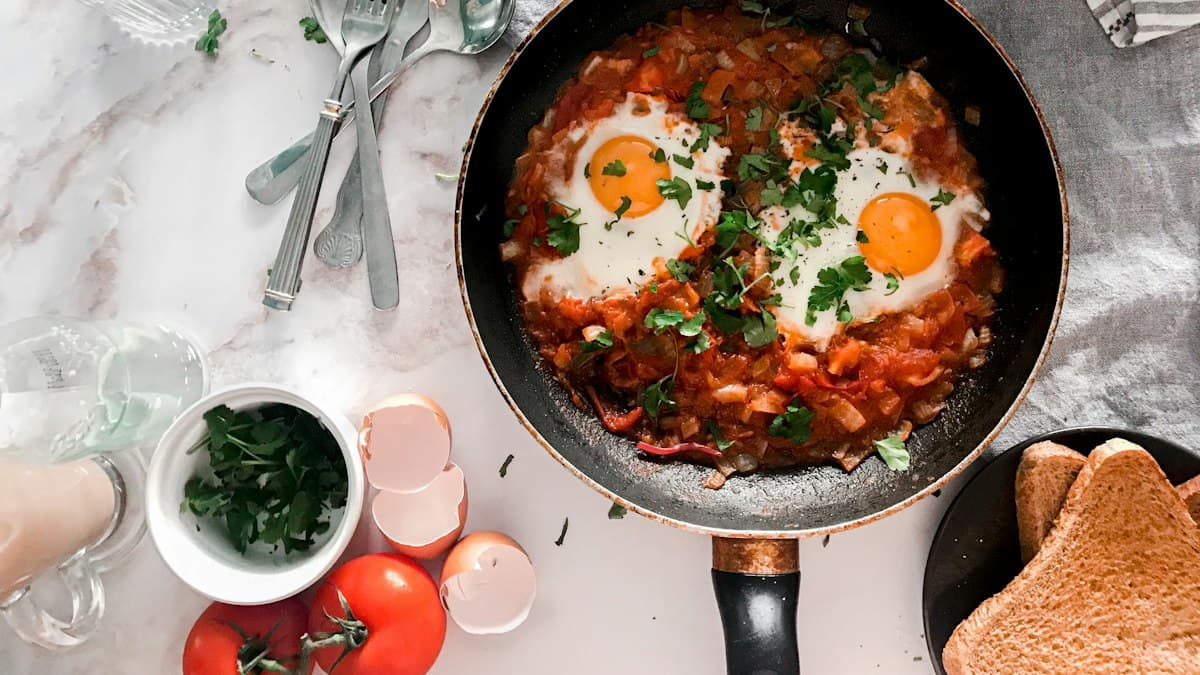
Table
Roasting Vegetables in Olive Oil: Oil Quantity and Temperature by Vegetable Type
Not every vegetable needs the same amount of olive oil or the same oven temperature. This guide breaks down the optimal combinations by moisture content, starch level, and structure — so roasted vegetables come out evenly cooked with genuine depth of flavor.
Translated from the Korean edition, originally published September 8, 2026 · read the original
Why Roast Vegetables in Olive Oil
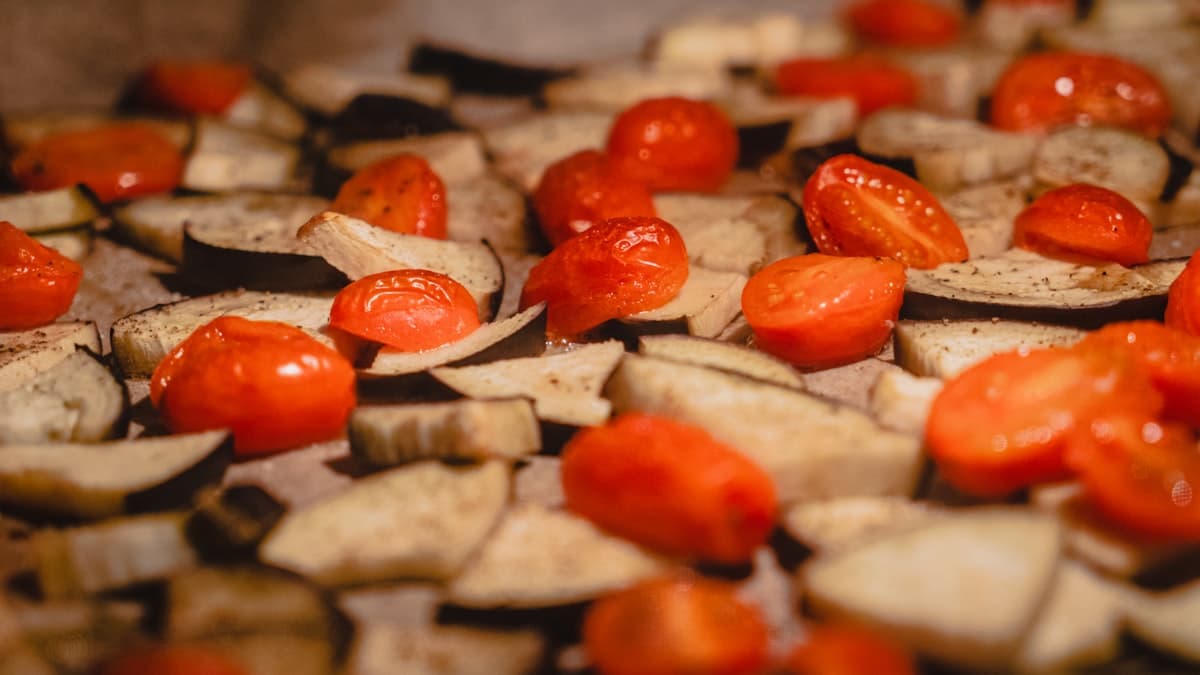
Oven roasting is one of the most direct ways to draw out the natural sweetness and savory depth of vegetables. As moisture evaporates from the surface, the Maillard reaction and caramelization occur simultaneously, building layers of flavor that raw vegetables simply cannot produce. Olive oil amplifies this effect on two fronts: it distributes heat more evenly across the surface, and because the flavor compounds in vegetables are largely fat-soluble, oil carries those aromas deep into the vegetable's tissue.
According to the International Olive Council (IOC), extra virgin olive oil has a smoke point in the range of approximately 190–210°C — a range that overlaps considerably with the temperatures most commonly used for roasting vegetables (180–220°C). Research has reported that smoke point varies with acidity and polyphenol content, meaning a higher-quality EVOO tends to be more stable under sustained high heat.
Sorting Vegetables into Three Groups
Vegetables differ in moisture content, natural sugar levels, and the density of their cell walls. These three factors determine how much oil to use, what temperature to set, and how long to leave them in the oven.
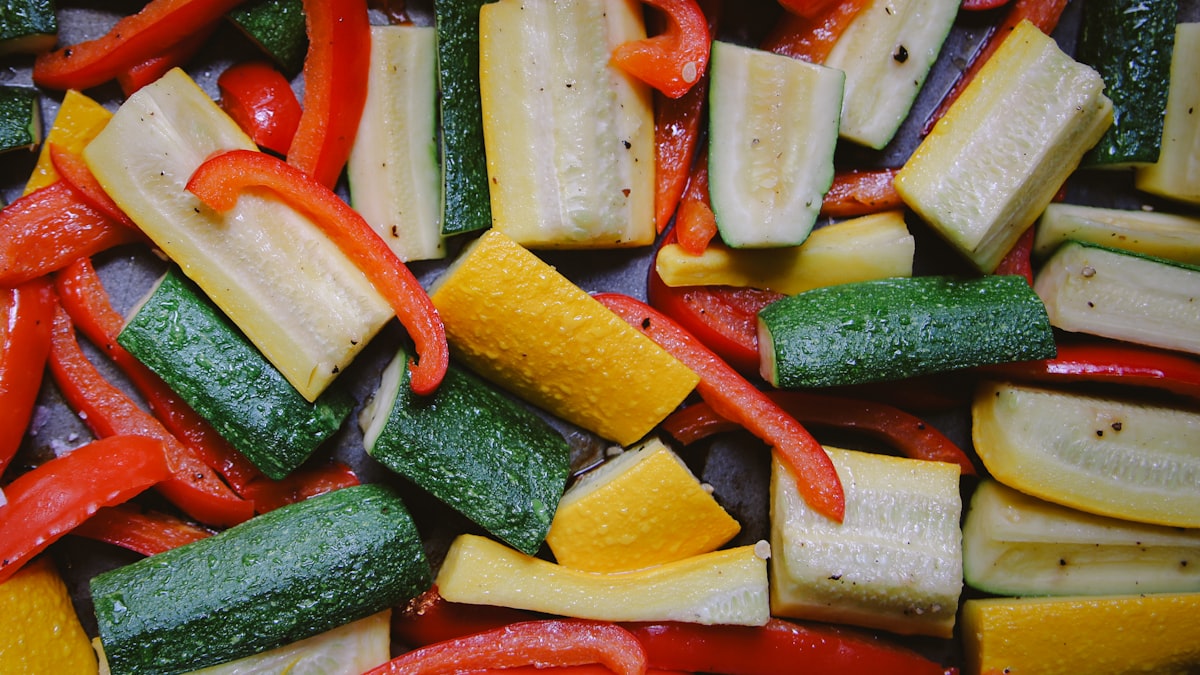
Group 1 — High-moisture, tender-textured vegetables: zucchini, eggplant, bell peppers, and tomatoes. According to the USDA FoodData Central database, many of these have moisture content above 90%, which means excess oil will cause them to steam before the surface moisture has a chance to evaporate. Around 1 to 1½ tablespoons of olive oil per 150g serving is sufficient. Roast at 200–210°C for 20–25 minutes, spread in a single layer — this is non-negotiable.
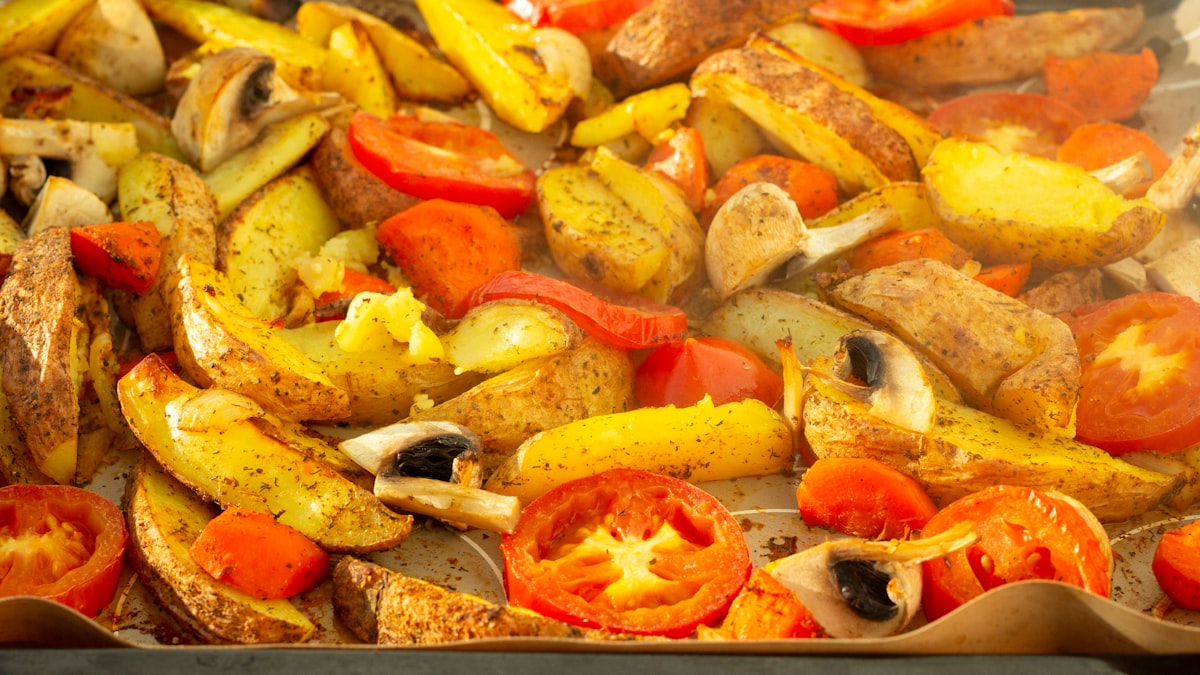
Group 2 — Starchy, dense vegetables: potatoes, sweet potatoes, carrots, beets, and parsnips. These need sustained, even heat to cook all the way through, so the oil's role as a surface protector matters for longer. Use 1½ to 2 tablespoons per 150g serving. Roast at 190–200°C for 35–45 minutes, turning once halfway through.
Group 3 — Leafy vegetables and florets: broccoli, cauliflower, Brussels sprouts, and asparagus. These have large surface areas and open, airy structures. The goal is crisp, deeply caramelized edges with a tender interior — which calls for a thin, even coating of oil rather than a generous pour. Around 1 tablespoon per 150g serving, at 210–220°C for 15–20 minutes.
Vegetable-by-Vegetable Notes
Eggplant absorbs oil at a remarkable rate — its cell structure behaves almost like a sponge. Salting the cut surface for 10 minutes before oiling draws out excess moisture and reduces how much oil the flesh takes on, giving you more control over the final flavor.
Brussels sprouts should be halved and placed cut-side down on the pan. At 220°C for 20 minutes, the flat face caramelizes to a deep brown. A small splash of balsamic vinegar added to the tablespoon of olive oil before tossing noticeably softens the sprouts' natural bitterness.
Potatoes cut into thick wedges benefit from 2 tablespoons of olive oil tossed with coarse salt and rosemary, then roasted at 190°C for 40 minutes with one turn in the middle. Too little oil and the surface dries and cracks; too much and you lose crispness in favor of a greasy texture.
Bell peppers roasted at 200°C for 25 minutes will blister and the skin will loosen. Transfer them immediately to a covered container and let them sit for 5 minutes — the trapped steam makes peeling straightforward. Use 1 tablespoon of olive oil before roasting, then drizzle a little fresh, high-quality oil over the peeled flesh just before serving to bring the oil's own aroma forward.
Cooking Oil vs. Finishing Oil: A Meaningful Distinction
Treating the cooking oil and the finishing oil as two separate jobs makes a tangible difference in the final result. During roasting, use a lower-acidity EVOO that is stable under heat. The moment the pan comes out of the oven, a light drizzle of raw, unheated oil restores aromatic compounds that dissipate during cooking.
Research from Andalusia has reported that certain polyphenol compounds in olive oil decrease with prolonged heat exposure, and that finishing with unheated oil is recognized as a way to recover some of that aromatic and flavor complexity.
Cultivar character also comes into play with roasted vegetables. Robust, grassy oils with noticeable bitterness — such as those made from Picual or early-harvest Koroneiki — suit neutral-flavored vegetables like potatoes and broccoli, where the oil can assert its own personality. Softer, more buttery oils, such as those from Arbequina, tend to harmonize better with vegetables that carry their own sweetness, like butternut squash and sweet potato.
Three Common Mistakes and How to Fix Them
The first is using too much oil. When vegetables sit in pooled oil on the pan, they effectively fry in liquid rather than roasting in dry heat, and the result is soft and greasy rather than crisp. The reference point is 1 to 2 tablespoons per 150g serving — enough to coat every surface in a thin film, no more.
The second is crowding the pan. When vegetables touch one another, steam builds up and cannot escape; the pan turns into a steamer. It is better to divide vegetables between two pans and spread them in a single layer than to pile everything onto one sheet.
The third is skipping preheating. Vegetables placed in a cold oven heat up gradually, shedding moisture slowly in a way that makes them limp rather than caramelized. A fully preheated oven means the surface of each piece of vegetable hits high heat immediately, which is what triggers rapid caramelization from the very first minute.
Frequently asked questions
- What is the smoke point of extra virgin olive oil, and is it safe for roasting vegetables?
- According to the International Olive Council (IOC), extra virgin olive oil has a smoke point in the range of approximately 190–210°C, which overlaps substantially with typical vegetable roasting temperatures of 180–220°C. Research has reported that higher-quality oils with lower acidity and higher polyphenol content tend to be more stable at elevated heat, making a good EVOO a reasonable choice for oven roasting.
- How much olive oil should I use when roasting vegetables?
- It depends on the vegetable type. High-moisture vegetables such as zucchini, eggplant, and peppers need only about 1 to 1½ tablespoons per 150g serving. Starchy, dense vegetables like potatoes, sweet potatoes, and carrots benefit from 1½ to 2 tablespoons. Leafy or floret vegetables like broccoli and Brussels sprouts do well with around 1 tablespoon — enough to coat them in a thin film without pooling on the pan.
- Why do my roasted vegetables turn out soggy instead of caramelized?
- The three most common causes are using too much oil, overcrowding the pan, and skipping oven preheating. When vegetables overlap, steam cannot escape and the pan becomes a steamer rather than a roaster. Too much oil has a similar effect, leaving vegetables sitting in liquid rather than developing a dry crust. A fully preheated oven is essential: vegetables placed in a cold oven heat up slowly, losing moisture gradually and turning limp before caramelization can begin.
- Does the cultivar of olive oil affect how roasted vegetables taste?
- Yes, noticeably so. Robust, grassy oils with pronounced bitterness — such as those made from Picual or early-harvest Koroneiki — complement neutral-flavored vegetables like potatoes and broccoli, where the oil's character can assert itself. Softer, more buttery oils like those from Arbequina tend to harmonize better with naturally sweet vegetables such as butternut squash and sweet potato, where a bold oil might compete with the vegetable's own sweetness.
- Should I use a different olive oil for finishing roasted vegetables than for cooking them?
- Using two oils is a practical approach. A lower-acidity, heat-stable EVOO works well during roasting, while a drizzle of a high-quality raw oil added immediately after the pan comes out of the oven restores aromatic compounds that dissipate during cooking. Research from Andalusia has reported that certain polyphenol compounds in olive oil decrease with prolonged heat exposure, so finishing with unheated oil is a recognized way to maximize the oil's complex flavor.
Related reading
- The Mediterranean Art of Oil Poaching Fish: Ratios, Temperatures, and Cultivar Pairings
Oil poaching — gently cooking fish submerged in olive oil at low heat — is a cornerstone technique of Mediterranean kitchens. This guide covers everything from choosing the right EVOO to precise temperature ranges and the oil ratios that make the difference.
- Matching Olive Oil Intensity to Your Ingredients: A Pairing Guide
Acidity and grade tell you whether an olive oil is good; intensity tells you where it belongs on the plate. This guide walks through the mild, medium, and intense tiers — and the cooking variables that shift the equation.
- Egg Salad Without Mayonnaise: A Ratio Guide to EVOO Dressing
An extra virgin olive oil base can replace mayonnaise in egg salad entirely — yielding a cleaner, brighter flavor with a lighter texture. This guide covers the core oil-to-acid ratio, cultivar-by-cultivar flavor differences, and practical tips for texture and storage.
- Hummus, Shakshuka, Sabich: How Israeli Cooking Uses Olive Oil at Every Layer
From the finishing pour on hummus to the base of a shakshuka and the layered construction of a sabich, olive oil functions as a primary ingredient on the Israeli table — not a neutral medium. This guide traces how Levantine culinary tradition treats the oil itself as the point.
- Fried, Scrambled, Poached: How Olive Oil Changes Every Style of Egg
Olive oil is more than a non-stick coating in egg cookery — it shapes texture, aroma, and the final bite. This guide breaks down the right oil, temperature, and timing for fried, scrambled, and poached eggs.
- Pairing Olive Oil with Wine: A Guide to Matching Aromas, Bitterness, and Texture
Extra virgin olive oils differ markedly in acidity, bitterness, and fruitiness — and each profile calls for a different wine partner. This guide maps those sensory axes to white, red, and natural wines.