Table
Fried, Scrambled, Poached: How Olive Oil Changes Every Style of Egg
Olive oil is more than a non-stick coating in egg cookery — it shapes texture, aroma, and the final bite. This guide breaks down the right oil, temperature, and timing for fried, scrambled, and poached eggs.
Translated from the Korean edition, originally published September 15, 2026 · read the original
Why Olive Oil Changes the Way Eggs Cook
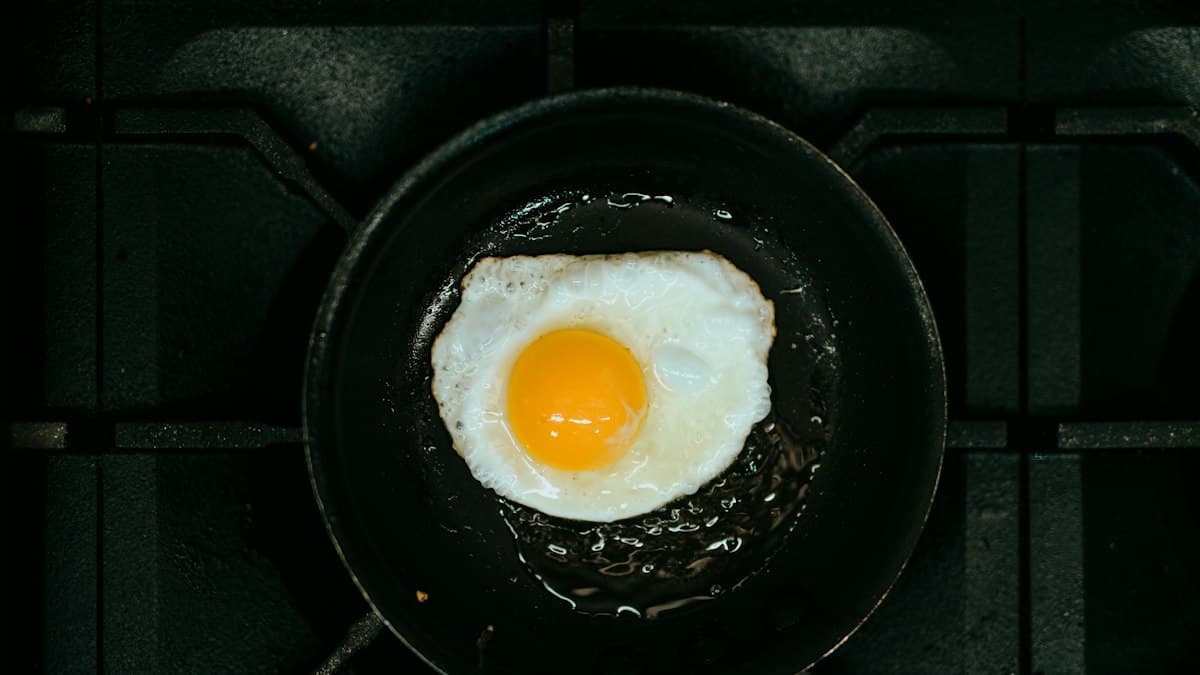
In egg cookery, fat is not simply a non-stick coating. It mediates heat transfer, influences how quickly egg proteins set, and defines the lingering aroma of every last bite. Extra virgin olive oil (EVOO) occupies a distinctive position in this role. The persistent belief that EVOO has a dangerously low smoke point does not hold up to scrutiny: according to data from the International Olive Council (IOC), high-quality EVOO has a smoke point of approximately 190–207°C — comfortably above the 150–180°C that frying an egg actually demands. The real variable is not temperature ceiling but thermal precision.
The oleic acid and polyphenols in olive oil are also relatively stable under heat. A study published by the American Chemical Society (ACS) reported that EVOO generates fewer harmful aldehydes during cooking than standard refined vegetable oils. That finding suggests there are reasons beyond flavour to choose EVOO for egg cookery, though it is too early to draw firm conclusions from a single line of research.
What follows is a method-by-method guide: fried, scrambled, and poached — three preparations, each with its own logic for oil selection, quantity, and timing.
Fried Eggs — Hot Pan, Measured Oil
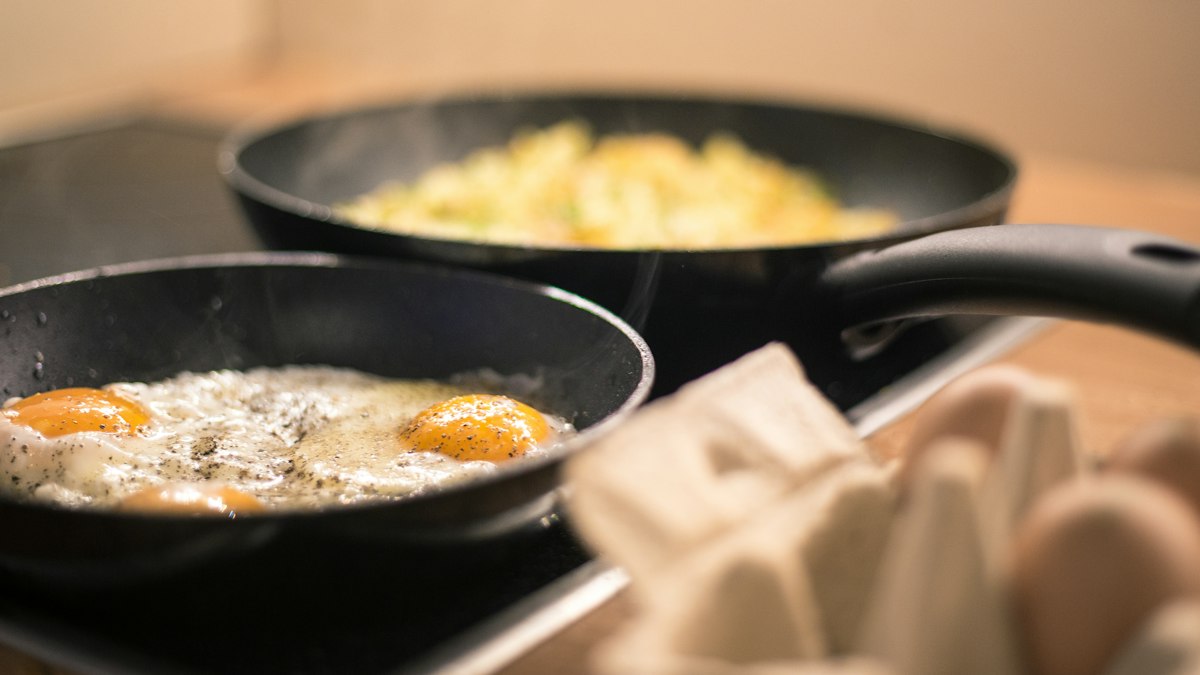
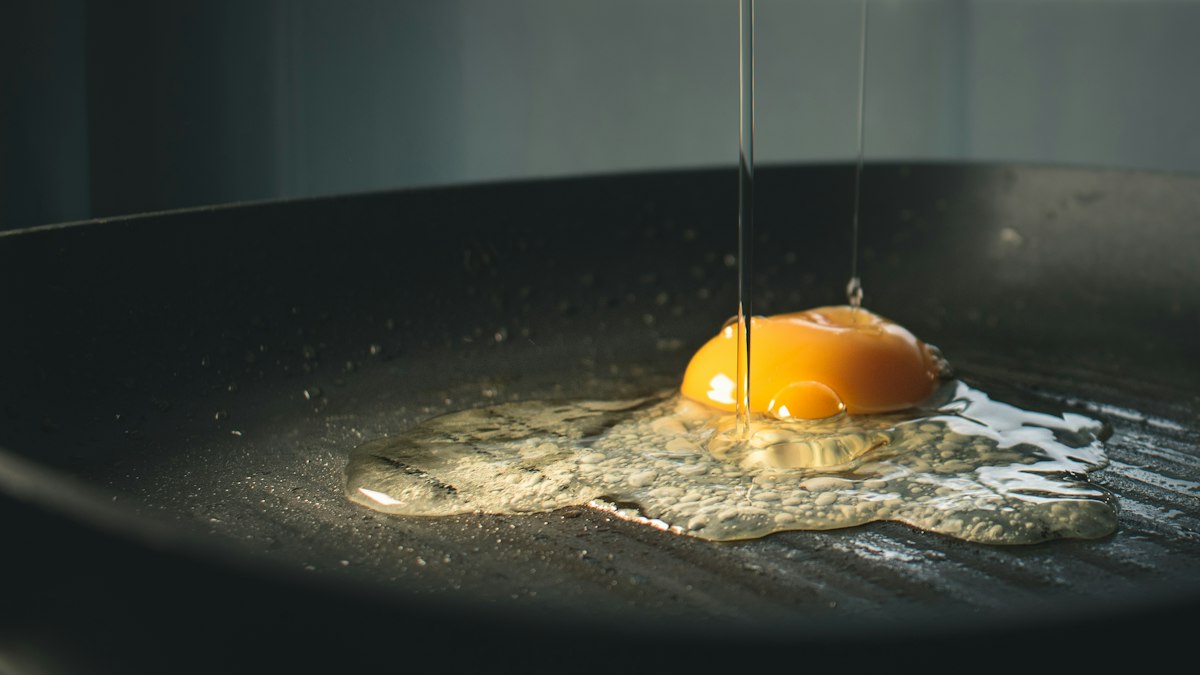
The most common mistake when frying an egg in olive oil is adding the oil before the pan is ready. The pan should reach medium to medium-high heat — around 160–170°C — before the oil goes in. Pouring oil into a cold pan and heating both together wastes aroma compounds on unnecessary exposure time.
For a single egg, roughly one to one-and-a-half tablespoons (15–22 ml) of oil is the right quantity. Less than that and the white will not cook evenly at the edges; more and the egg begins to shallow-fry, which changes the texture entirely. In southern Spanish home cooking, huevos fritos are made in a pan with a generous pour of olive oil — enough for the white's lacy edges to puff and crisp at an oil temperature of around 175°C. That is a deliberate textural goal, not excess.
On the flavour side, a fruity, assertive EVOO will produce a grassy, green finish that contrasts pleasantly with the richness of the yolk. A lighter EVOO gives a more subtle, slightly sweet result, while an early-harvest oil — picked before full ripeness — brings a herbal quality that suits a simple fried egg well.
Scrambled Eggs — Low Heat, Brief Contact
Of the three methods, scrambled eggs are where olive oil most directly controls texture. Where butter contributes richness through milk solids, EVOO acts differently: it coats egg proteins and gently slows the rate at which they tighten into curds. Heat the oil over low heat — keeping the pan below roughly 100–120°C — pour in the beaten eggs, and move them continuously with a silicone spatula. The result is moist, creamy curds rather than dry, rubbery chunks.
The critical discipline is time. Many cooks recommend pulling the pan off the heat just before the eggs look fully set, because residual heat completes the cooking. During those final seconds, olive oil continues to work between the curds, producing a smooth, glossy finish.
One tablespoon (about 15 ml) is sufficient for three to four eggs serving two people. At this scale, a mild or medium EVOO is the better choice: a strongly flavoured oil can overwhelm the eggs' own character. One additional note on seasoning — adding salt to beaten eggs before cooking accelerates protein cross-linking and produces a firmer texture. Salt added at the very end preserves that soft, flowing quality.
Poached Eggs — Oil at the Finish, Water Does the Work
Poached eggs are cooked entirely in water, so olive oil has no role in the cooking itself. Its contribution comes after. Once the egg is lifted from the water and lightly blotted dry, a drizzle of high-quality EVOO across the yolk acts as a sauce: the oil's aroma opens on contact with the residual heat, and its slight bitterness anchors what would otherwise be a mild, unstructured plate.
A small amount of white vinegar in the poaching water helps the white hold together rather than dispersing into the pot, because the acidity speeds protein coagulation. That is the only technical addition the water needs.
For the finishing drizzle, a full-bodied, peppery oil is the right call. Early-harvest Picual — a cultivar known for high polyphenol content and a pronounced peppery finish — adds a lively edge that a poached egg, plain by nature, genuinely benefits from. Early-harvest oils from Tuscany or Andalusia are frequently recommended for exactly this use.
Choosing the Right EVOO for Each Method
The three preparations call for different approaches. For fried eggs, use a medium-intensity EVOO at medium to medium-high heat (160–175°C), and allow enough oil to coat the pan properly; the oil's aroma should balance the crispness of the white and the richness of the yolk. For scrambled eggs, a mild EVOO and low heat are the priorities — the oil's job is textural, not aromatic, and a heavy flavour gets in the way. For poached eggs, no oil is needed during cooking; everything depends on the quality of the finishing drizzle, so this is the moment to reach for the best bottle on the shelf.
In every case, the starting point is an oil whose acidity and polyphenol content are stated on the label. Under the standards set by the International Olive Council (IOC) and national certification bodies, an EVOO must have acidity below 0.8% and, for quality-tier classification purposes, polyphenol levels above 250 mg/kg are a useful benchmark. Oils that meet those thresholds tend to carry cleaner flavour into the finished dish and, as ACS-published research has reported, may maintain a more stable chemical structure during cooking — though that evidence is still developing.
Egg dishes expose every variable because the ingredient itself is so simple. The oil's temperature, quantity, and the moment it enters the pan each leave a visible mark on the result. Treating olive oil as a flavour tool rather than a lubricant is the shift that turns an ordinary morning egg into something worth paying attention to.
Frequently asked questions
- Is olive oil good for frying eggs?
- Yes. According to the International Olive Council (IOC), high-quality extra virgin olive oil has a smoke point of roughly 190–207°C, which is well above the 150–180°C typically needed to fry an egg. The key is heating the pan first, then adding the oil once it reaches medium heat.
- Does olive oil affect the texture of scrambled eggs?
- It does. Unlike butter, EVOO coats egg proteins as they cook, slowing how quickly the curds set. Cooking over low heat — below about 120°C — and stirring continuously produces a creamier, silkier texture. About one tablespoon (15 ml) for three to four eggs is enough; too much makes the result greasy.
- When should you add olive oil to poached eggs?
- Poached eggs are cooked in water, so olive oil plays no role in the actual cooking. Its job is as a finishing drizzle: once the egg is drained and plated, a swirl of high-quality EVOO acts as a sauce, its aroma and slight bitterness complementing the soft yolk.
- Which EVOO is best for egg dishes — mild or robust?
- It depends on the preparation. A medium-intensity EVOO suits fried eggs, balancing crispness at the edges with the richness of the yolk. A mild oil is preferable for scrambled eggs so it doesn't overpower the delicate flavour. For poached eggs, a full-bodied, peppery oil — such as an early-harvest Picual — adds welcome intensity to what can otherwise be a plain dish.
Related reading
- The Mediterranean Art of Oil Poaching Fish: Ratios, Temperatures, and Cultivar Pairings
Oil poaching — gently cooking fish submerged in olive oil at low heat — is a cornerstone technique of Mediterranean kitchens. This guide covers everything from choosing the right EVOO to precise temperature ranges and the oil ratios that make the difference.
- Hummus, Shakshuka, Sabich: How Israeli Cooking Uses Olive Oil at Every Layer
From the finishing pour on hummus to the base of a shakshuka and the layered construction of a sabich, olive oil functions as a primary ingredient on the Israeli table — not a neutral medium. This guide traces how Levantine culinary tradition treats the oil itself as the point.
- Soy, Gochujang, Doenjang: Ratio Guides for Korean Jang Dressings with Extra Virgin Olive Oil
Combining extra virgin olive oil with Korea's fermented jang pastes opens unexpected flavor territory — but the ratios matter. This guide breaks down the optimal oil-to-jang proportions for soy sauce, gochujang, and doenjang, with practical applications for each.
- Matching Olive Oil Intensity to Your Ingredients: A Pairing Guide
Acidity and grade tell you whether an olive oil is good; intensity tells you where it belongs on the plate. This guide walks through the mild, medium, and intense tiers — and the cooking variables that shift the equation.
- Roasting Vegetables in Olive Oil: Oil Quantity and Temperature by Vegetable Type
Not every vegetable needs the same amount of olive oil or the same oven temperature. This guide breaks down the optimal combinations by moisture content, starch level, and structure — so roasted vegetables come out evenly cooked with genuine depth of flavor.
- A Drop of Science: Pairing Dark Chocolate with Extra Virgin Olive Oil
A drizzle of extra virgin olive oil over dark chocolate softens bitterness and amplifies aroma. From the molecular interactions of phenolic compounds to cultivar-by-cultivar pairing choices, OLEA explores this combination through the lens of culinary science.