Table
Pairing Olive Oil with Wine: A Guide to Matching Aromas, Bitterness, and Texture
Extra virgin olive oils differ markedly in acidity, bitterness, and fruitiness — and each profile calls for a different wine partner. This guide maps those sensory axes to white, red, and natural wines.
Translated from the Korean edition, originally published September 30, 2026 · read the original
Oil and Wine: Why They Belong in the Same Conversation
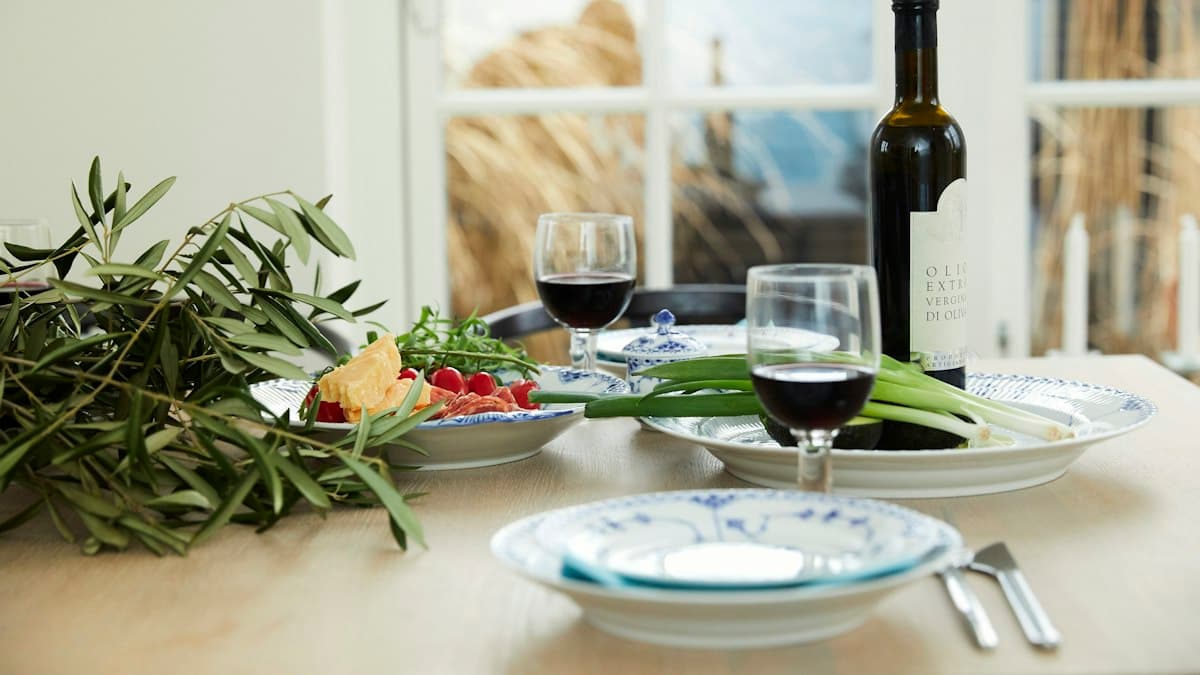
The language of wine tasting — fruity, herbal, tannic, acidic, long finish — turns out to be exactly the language used to evaluate extra virgin olive oil (EVOO). The International Olive Council (IOC) has officially adopted a sensory-evaluation vocabulary for olive oil that lists "green fruitiness," "bitterness," and "pungency" as the three core positive attributes. Two very different liquids sharing the same descriptive framework suggests they can hold a genuine conversation on the table as well.
High-end restaurants in Italy and Spain have already begun running olive oil carts alongside their wine lists. According to the 2023 Michelin Guide, several Barcelona restaurants now offer oil tasting as a standalone course, with sommeliers recommending oils in parallel with wine pairings. Reading olive oil and wine together is becoming a distinct discipline within contemporary food culture.
The Three Sensory Axes of Extra Virgin Olive Oil
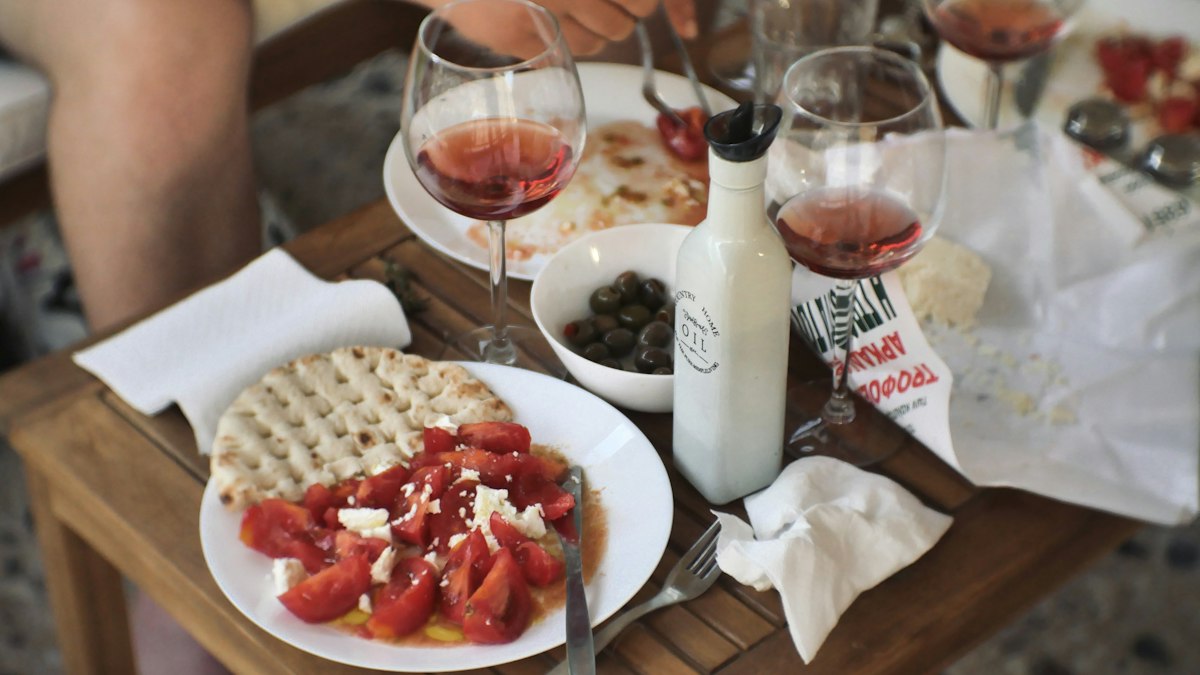
Before building a pairing strategy, it helps to understand how EVOO is structurally assessed. Three axes define the experience.
Acidity: Measured as free fatty acid content expressed as a percentage of oleic acid. The IOC grade threshold for extra virgin is 0.8% or below. Lower acidity means a fresher, more refined oil with a clean, light feel in the mouth; higher acidity tends to leave a heavy, slightly rough finish.
Bitterness and Pungency: Both attributes are proportional to polyphenol content. According to IOC data, oils richer in polyphenols show stronger bitterness on the palate and a more pronounced peppery sting at the back of the throat. Far from being defects, these are markers of freshness and quality.
Fruitiness: Divided into green fruitiness (green apple, fresh-cut grass, herbs) and ripe fruitiness (sun-dried tomato, butter, almond). Earlier harvests consistently yield stronger green fruitiness.
These three axes provide the scaffolding for every pairing decision that follows.
White Wine × Delicate Oils
Oils with low acidity and soft, ripe-fruit character pair naturally with white wines. Ojiblanca from the Málaga region, for instance, carries a buttery, almond-tinged profile that finds balance alongside medium-bodied whites such as Chardonnay or Vermentino. The guiding principle is straightforward: if the oil is too assertive, it will smother the floral aromatics that make a delicate white wine interesting. A relatively low-polyphenol oil in the ripe-fruit register is the safer choice.
High-acid whites — Riesling, Albariño — tell a different story. Their tartness enters into a lively dialogue with the grassy, herbaceous notes of an early-harvest oil, producing a pairing that calls to mind a clean herb vinaigrette, bright and refreshing without food in between.
Red Wine × High-Polyphenol Oils
Tannic reds — Nebbiolo, Cabernet Sauvignon, Syrah — call for oils with strong bitterness and pungency. Spanish Picual or Italian Moraiolo, with their intense green fruitiness and black-pepper finish, sit alongside a red wine's tannin architecture and build layers rather than overwhelming one another. The key principle is resonance, not collision.
Pairing a powerful tannic red with a mild, ripe-fruit oil tends to make the oil taste bland by comparison. Conversely, when both wine and oil are intense, a flavor-rich intermediary — bruschetta with black olive tapenade, or a braised lamb dish — serves as a useful buffer between them.

Natural Wine × Terroir-Driven Oils
Natural wines are often highly individual and may carry oxidative or fermentation-derived nuances. In this context, an oil's terroir becomes especially meaningful. Sibarita, an Andalusian cultivar with a refined yet complex aromatic profile, can find unexpected common ground with the oxidative character typical of orange and amber wines.
The oils to avoid here are those that have been over-refined or heat-treated. Stripped of their aromatic complexity, they make a natural wine's layered character feel one-dimensional by comparison. Only a genuinely fresh, polyphenol-rich EVOO can match the vitality of a natural wine's aroma. A 2023 report from the International Olive Oil Council (IOOC) noted that oils pressed within 24 hours of harvest retain approximately 30% more polyphenols than those processed later.
Tasting Order and Practical Tips
Sequence matters when enjoying olive oil and wine together. The most effective approach — borrowed from traditional olive oil tastings — is to place a small measure of oil on the tongue first, then bring the wine into the mouth and identify the point where both sensations meet. Reversing the order tends to backfire: the wine's tannins suppress the oil's more fragile aromas, leaving the oil tasting flat.
Temperature is equally important. Olive oil opens up aromatically between 16 and 18 °C; when it is too cold, the polyphenol-driven bitterness and pungency are dampened. If you are tasting alongside a chilled white wine, take the oil out of storage and let it rest at room temperature for a few minutes before serving.
Dressings involving vinegar or lemon juice already resonate with a wine's acidity, so the clearest way to focus the senses is simply to dip good bread into the oil and sip the wine alongside it — no additional recipe required. A quality bottle of EVOO and the right glass of wine are, on their own, a complete Mediterranean tasting experience.
Frequently asked questions
- Can you pair olive oil with wine?
- Yes. Extra virgin olive oil and wine share much of the same sensory vocabulary — fruitiness, bitterness, acidity, finish — which means their flavor profiles can be deliberately matched or contrasted, just as you would pair food and wine.
- Which olive oil goes best with white wine?
- Oils that are low in acidity and lean toward ripe-fruit notes — such as buttery, almond-tinged Ojiblanca — pair naturally with medium-bodied whites like Chardonnay or Vermentino. High-acid whites like Riesling or Albariño work well with early-harvest oils that carry green, grassy fruitiness.
- What kind of olive oil pairs with red wine?
- Tannic reds such as Nebbiolo, Cabernet Sauvignon, and Syrah match well with high-polyphenol oils — think Spanish Picual or Italian Moraiolo — whose intense green fruitiness and peppery finish build layers alongside the wine's tannin structure rather than clashing with it.
- How do you serve olive oil and wine together at a tasting?
- Place a small amount of oil on the tongue first, then take the wine into the mouth and find the point where both sensations overlap. Doing it the other way around — wine first, oil second — tends to let the tannins suppress the oil's more delicate aromas. Serve the oil between 16–18 °C for best aromatic expression.
- Which olive oil works with natural wine?
- Natural and amber wines often carry oxidative or fermentation-derived nuances, so they call for oils with genuine terroir complexity. A cultivar like Sibarita from Andalusia, with its layered, delicate aroma, can find unexpected harmony with the oxidative character of an orange wine. Avoid refined or heat-treated oils — their stripped-back aroma makes a natural wine's complexity feel flat by comparison.
Related reading
- Matching Olive Oil Intensity to Your Ingredients: A Pairing Guide
Acidity and grade tell you whether an olive oil is good; intensity tells you where it belongs on the plate. This guide walks through the mild, medium, and intense tiers — and the cooking variables that shift the equation.
- A Drop of Science: Pairing Dark Chocolate with Extra Virgin Olive Oil
A drizzle of extra virgin olive oil over dark chocolate softens bitterness and amplifies aroma. From the molecular interactions of phenolic compounds to cultivar-by-cultivar pairing choices, OLEA explores this combination through the lens of culinary science.
- Decanting vs. Direct Pour: How You Serve Olive Oil Shapes Its Aroma
Whether to transfer extra virgin olive oil into a decanter or pour straight from the bottle is not merely a matter of style. Oxygen exposure time and temperature shifts both affect the volatile compounds responsible for fresh, complex aroma.
- The Mediterranean Art of Oil Poaching Fish: Ratios, Temperatures, and Cultivar Pairings
Oil poaching — gently cooking fish submerged in olive oil at low heat — is a cornerstone technique of Mediterranean kitchens. This guide covers everything from choosing the right EVOO to precise temperature ranges and the oil ratios that make the difference.
- California vs. European Olive Oil: How Origin Shapes Flavor
California has spent three decades building a serious olive oil industry, but the state's climate, cultivar mix, and harvesting philosophy produce a flavor profile that differs meaningfully from Mediterranean benchmarks. Here is what those differences actually mean at the bottle.
- Egg Salad Without Mayonnaise: A Ratio Guide to EVOO Dressing
An extra virgin olive oil base can replace mayonnaise in egg salad entirely — yielding a cleaner, brighter flavor with a lighter texture. This guide covers the core oil-to-acid ratio, cultivar-by-cultivar flavor differences, and practical tips for texture and storage.