Table
Decanting vs. Direct Pour: How You Serve Olive Oil Shapes Its Aroma
Whether to transfer extra virgin olive oil into a decanter or pour straight from the bottle is not merely a matter of style. Oxygen exposure time and temperature shifts both affect the volatile compounds responsible for fresh, complex aroma.
Translated from the Korean edition, originally published September 22, 2026 · read the original
Why Serving Method Matters
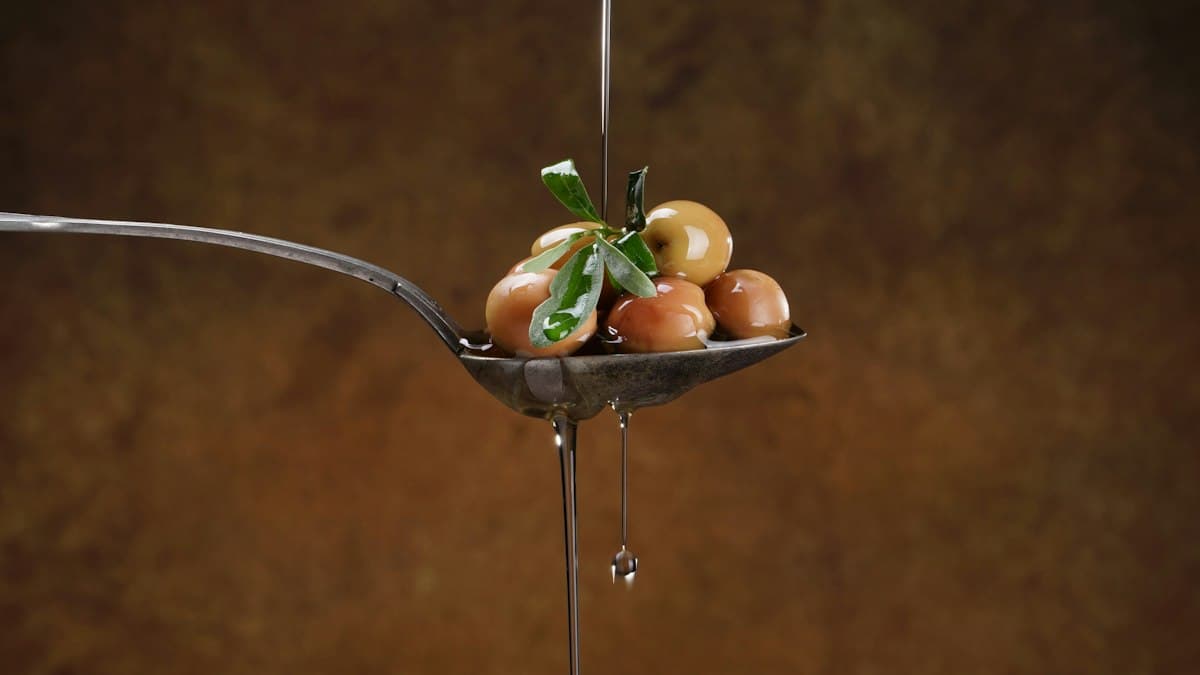
The moment a bottle of olive oil arrives at the table, the clock on its aroma starts running. Extra virgin olive oil (EVOO) is rich in volatile compounds — hexanal, (E)-2-hexenal, 1-penten-3-ol, and others — that produce its characteristic herbaceous, green-apple, and peppery notes. These compounds are acutely sensitive to both oxygen and heat. How the oil is handled in the minutes before it reaches the plate can produce a noticeable difference in the intensity and complexity of aroma on the first bite.
The practice of decanting — transferring a liquid to an open vessel to let it "breathe" — is well established in wine service, and some hosts apply the same logic to olive oil. But olive oil and wine respond to oxygen in fundamentally different ways. Understanding that difference is the starting point for any sound serving strategy.
Olive Oil and Oxygen: Not a Friendly Relationship
Wine can respond positively to a measured dose of oxygen: tannins soften, ester aromas open up. Olive oil behaves differently. According to IOC (International Olive Council) technical guidelines, EVOO oxidation is driven by three factors — light, heat, and air — and produces aldehydes and ketones that progressively mask the oil's fresh character.
The speed of that reaction increases with the amount of air in contact with the oil. ISO test-method documents in the ISO 660 series note that a higher headspace oxygen ratio is associated with a faster rise in peroxide value (PV). In practical terms, pouring oil into a wide-mouthed decanter — even briefly — enlarges the surface area exposed to air and can accelerate aroma loss even within a single service.
When Decanting Helps, and When It Hurts
Decanting is not categorically wrong. The right call depends on the context.
When the oil is too cold: EVOO stored below 15 °C becomes more viscous, and its volatile compounds struggle to reach the nose. In this case, transferring a small amount to a room-temperature vessel (18–22 °C) for up to five minutes can encourage those volatiles to become more expressive. Sensory evaluation data from the Valdearte Olive Oil Research Institute in Spain reports a meaningful difference in aroma intensity scores between oil at 15 °C and oil at 22 °C.
When turnover is fast: In a restaurant setting where oil is consumed within 10–15 minutes, pre-pouring into a glass vessel is operationally efficient. Even then, a UV-blocking dark container is preferable to clear glass.
When to avoid decanting entirely: High-quality single-cultivar EVOOs — a fresh Picual or Ojiblanca harvested within the past few months, for example — carry volatile aromatics as their primary distinction. Moving them into a wide vessel causes those delicate notes to dissipate rapidly. These oils are best served directly from the bottle, poured in small amounts as needed, to preserve aroma as long as possible.
A Four-Step Serving Routine
The following routine covers most home and professional serving scenarios.
Step 1 — Choose the right vessel: A small, narrow-spout pourer in dark glass or stainless steel is the first choice. Ceramic vessels block light effectively but must be inspected for cleanliness inside. Plastic containers carry a risk of compound migration during extended contact and are best avoided.
Step 2 — Minimise the quantity transferred: Pour only what will be used in a single serving. As a general guide, 30–60 ml covers two to four people. Any oil left in a serving vessel should be used promptly rather than returned to the original bottle.
Step 3 — Manage temperature, not the vessel: If the oil has been refrigerated, the safest way to bring it to serving temperature is to leave the sealed bottle at room temperature for 10–15 minutes. This avoids the additional oxygen exposure that comes with decanting.
Step 4 — Shorten exposure time: Do not leave the bottle or pourer uncapped on the table. An analysis report from Spain's CSIC Institute of Food Science notes that losses of volatile aroma compounds in open-air conditions can be detected within 30 minutes of opening. Cap or stopper the vessel between pours.
Serving Straight from the Bottle: What to Watch
Pouring directly from the original bottle is the safest approach for aroma preservation, but it is not risk-free. A wide bottle mouth lets air back in with every pour, and oxidation accumulates over repeated uses. Two practical countermeasures have gained traction in food-enthusiast communities internationally: narrow spout caps that limit air entry, and spray stoppers that flush the headspace with inert nitrogen after each pour.
Placement on the table also matters. Keeping the bottle where direct sunlight hits it accelerates chlorophyll-mediated photo-oxidation — a process reported in multiple food chemistry studies. A shaded spot or a cloth wrap suffices as a low-effort remedy.
One detail that is easy to overlook: residual oil left inside a pourer or decanter from a previous use can act as an oxidation catalyst for fresh oil added later. Washing the vessel thoroughly and allowing it to dry completely before each use is the simplest and most reliable habit for protecting aroma.
The Governing Principle: Minimise Exposure Time
The decanting-versus-direct-pour debate ultimately resolves to a single principle. Keep the oil's contact with air as brief as possible while ensuring it reaches an appropriate serving temperature. Unlike wine, EVOO does not treat oxygen as an ally. Aroma shifts begin during the brief journey from bottle to plate. If the goal is to deliver a fresh, layered aromatic experience all the way through a meal, a straightforward routine — pour small amounts, use them quickly, and keep the cap on — proves more effective than any premium decanter on the market.
Frequently asked questions
- Does decanting olive oil the same way you decant wine improve the flavor?
- No — the comparison does not hold. Wine can benefit from controlled oxygen exposure because it softens tannins and opens ester aromas. Extra virgin olive oil, however, begins lipid oxidation the moment it meets air, according to IOC technical guidelines. Broader oxygen contact accelerates the formation of aldehydes and ketones that mask fresh, grassy notes rather than developing them.
- At what temperature should extra virgin olive oil be served?
- Sensory evaluation data from the Valdearte Olive Oil Research Institute in Spain reports a meaningful difference in aroma intensity between 15 °C and 22 °C. The ideal serving range is 18–22 °C. If the bottle has been stored below 15 °C, leave it at room temperature for 10–15 minutes rather than transferring the oil to a decanter, which would increase oxygen exposure.
- How quickly does olive oil lose its aroma once the bottle is open?
- Quite quickly. An analysis report from Spain's CSIC Institute of Food Science notes that losses of volatile aroma compounds can be detected within 30 minutes of exposure to open air. Keeping the cap on and pouring only what you need at the moment is the most effective way to slow that loss.
- Is it ever acceptable to pour olive oil into a separate serving vessel?
- Yes, in specific situations. When oil has been stored cold and needs to reach serving temperature quickly, transferring a small amount — enough for one sitting — to a room-temperature vessel for no more than five minutes can help volatile aromas become more expressive. In a restaurant setting where oil turns over within 10–15 minutes, a dark glass pourer is practical. The key constraint in both cases is minimizing the quantity transferred and the time it sits exposed.
- What kind of pourer or decanter is safest for olive oil?
- A small, narrow-spout pourer made of dark glass or stainless steel is the safest choice. Dark glass blocks the UV light that accelerates chlorophyll-mediated photo-oxidation, a phenomenon reported across multiple food chemistry studies. Ceramic vessels block light well but must be scrupulously dry and clean inside. Plastic pourers are best avoided for any extended contact. Regardless of material, residual oil left in the vessel from a previous use can act as an oxidation catalyst for fresh oil, so the container should be thoroughly washed and fully dried before each use.
Related reading
- Matching Olive Oil Intensity to Your Ingredients: A Pairing Guide
Acidity and grade tell you whether an olive oil is good; intensity tells you where it belongs on the plate. This guide walks through the mild, medium, and intense tiers — and the cooking variables that shift the equation.
- Pairing Olive Oil with Wine: A Guide to Matching Aromas, Bitterness, and Texture
Extra virgin olive oils differ markedly in acidity, bitterness, and fruitiness — and each profile calls for a different wine partner. This guide maps those sensory axes to white, red, and natural wines.
- California vs. European Olive Oil: How Origin Shapes Flavor
California has spent three decades building a serious olive oil industry, but the state's climate, cultivar mix, and harvesting philosophy produce a flavor profile that differs meaningfully from Mediterranean benchmarks. Here is what those differences actually mean at the bottle.
- Bitter and Pungent: The Flavors That Signal a Healthy Olive Oil
The bitterness and pungency in extra virgin olive oil strike many first-time tasters as a flaw — but under the International Olive Council's sensory evaluation system, both are classified as positive attributes directly tied to polyphenol content.
- Fruity, Grassy, Nutty, Spicy: A Practical Guide to the EVOO Aroma Wheel
Extra virgin olive oil's aroma is far more structured than a simple 'olive smell.' Understanding the four core fragrance families — fruity, grassy, nutty, and spicy — changes how you shop for a bottle and how you cook with what's inside it.
- Set Up a Home Olive Oil Tasting: Lighting, Temperature, Glasses, and Tasting Notes
A professional-level olive oil tasting environment does not require special equipment. This guide walks through the exact setup — lighting, oil temperature, glass selection, and a simple scoresheet — that lets any curious cook build real sensory skills at home.