Table
Butter Country No More: How Scandinavia Learned to Cook with Olive Oil
Olive oil is reshaping Nordic kitchens — from Copenhagen's Michelin-starred restaurants to Swedish home pantries. This guide traces how EVOO found its place alongside smoked fish, fermented rye, and root vegetables in one of the world's most distinctive food cultures.
Translated from the Korean edition, originally published October 7, 2026 · read the original

When Butter Ruled the Kitchen
Scandinavia has long been butter, lard, and reindeer-fat territory. In climates defined by brutal winters and brief daylight, energy-dense animal fats were simply the most practical choice. That familiar picture, however, began to shift in the twenty-first century. In restaurant kitchens across Copenhagen, Stockholm, and Helsinki, extra virgin olive oil (EVOO) has claimed a confident place at the stove — and the shift is now spreading into home pantries.
According to a report by European food market research agency Promar International, olive oil imports to the four Nordic countries — Sweden, Denmark, Norway, and Finland — rose by approximately 34 percent between 2015 and 2023, with extra virgin grades accounting for more than 60 percent of that volume. The trend reads less like a health fad and more like a sign that quality awareness in the region has genuinely matured.
New Nordic Cuisine and the Arrival of EVOO
The new wave in Nordic cooking traces back to Copenhagen in the early 2000s and the New Nordic Cuisine movement. The Nordic chefs' manifesto, published in 2004, places local ingredients and seasonality at the top of every priority list — but it also embraces an openly curious philosophy toward high-quality ingredients from other cultures.
In that spirit, olive oil arrived not as a foreign intruder but as a quality partner. Danish Michelin-starred chefs now keep cultured butter and EVOO side by side, drawing on each for what it does best. A few drops of a grassy extra virgin over smoked salmon dressed with dill, for example, delivers fat richness and herbal brightness at the same time — a register that butter's creamy weight simply cannot replicate.

How EVOO Fits Scandinavian Ingredients
Nordic cooking is a layered conversation between salt (cured fish, fermented foods), acidity (pickles, sourdough), and bitterness (wild greens, rye). Olive oil plays two distinct roles within that flavor landscape.
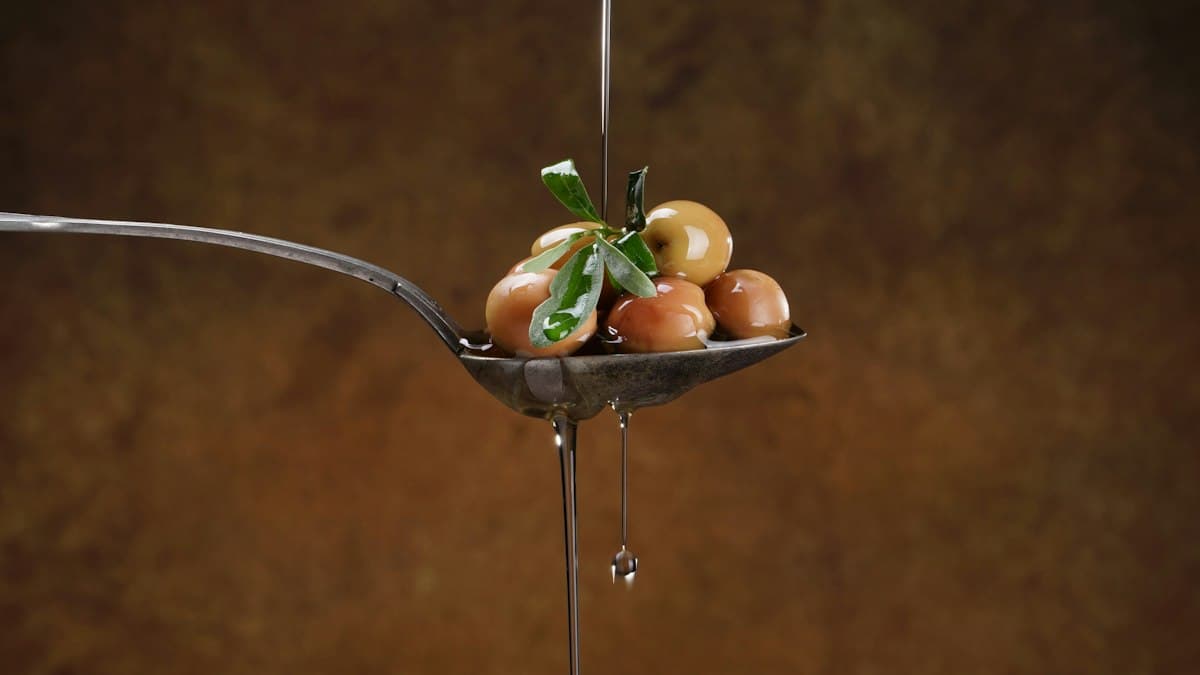
The first is buffer. EVOO's smooth fatty acids wrap around the sharp salt and sourness typical of fermented Nordic foods, rounding them into something more cohesive. A light pour of extra virgin over pickled herring (sill or sild) keeps the brine from cutting too hard, finishing the mouthful smoothly rather than sharply.
The second role is amplifier. Olive oil dissolves fat-soluble aromatic compounds exceptionally well. The essential-oil components in herbs common to Scandinavian cooking — dill, chervil, lavender, young pine shoots — become noticeably more vivid on the palate and nose when they bind with EVOO. Some Nordic chefs exploit this directly, infusing their own herb oils at low temperature and using them as finishing oils at the pass.
Root vegetables reward the same approach. Stirring a nutty, aromatic EVOO into a Swedish rutabaga purée or a Finnish turnip casserole at the final stage draws out the natural sweetness of the starch and adds a dimensional richness that butter achieves differently.
From Salad Dressing to Everyday Cooking
In Nordic homes, olive oil arrived first in the salad bowl. Its applications have since spread considerably. According to a 2022 household food consumption trend report by Swedish consumer research agency HUI Research, the share of Swedish households reporting that they use olive oil for cooking over heat — not just for dressings — more than doubled compared with 2017.
A bread-dipping habit is also taking hold. In bakery cafés across Denmark and Sweden, it is not unusual to find sourdough served with a pour of extra virgin for dipping — a quiet but telling migration of southern Mediterranean table customs northward.

Choosing the Right Cultivar for Nordic Dishes
Olive oil's aroma and flavor shift substantially with cultivar and origin. A few practical principles help when matching EVOO to Nordic cooking.
Cultivars with pronounced grassiness and bitterness suit dishes built around wild greens or heavily smoked ingredients. Softer, butterier profiles work better alongside delicate fish and root-vegetable purées. Spanish Andalusian Picual, with its intense polyphenol content and characteristic green-apple and tomato-leaf notes, adds a fresh counterpoint to smoked or cured components — the contrast is part of the appeal. Ojiblanca, by contrast, tends to carry gentle almond and apple aromas that merge naturally with the sweeter root-vegetable dishes that are central to Scandinavian home cooking.
One practical note from chefs working in the region: when handling ingredients with powerful fermented or smoked aromatics, finishing with olive oil after cooking — rather than heating the oil at the start — helps prevent aromatic clashes. The oil's own volatiles are preserved, and they interact with the dish on the plate rather than competing with it in the pan.
Sustainability as a Shared Language
There is a second point where Nordic food culture and olive oil culture converge: sustainability. The New Nordic Cuisine manifesto treats low environmental impact as a core criterion for ingredient selection. Traditional olive cultivation — particularly oil harvested from centuries-old trees in Andalusia or southern Italy — aligns with that principle through its capacity for carbon sequestration and ecosystem conservation.
According to data cited by the European Olive Oil Producers' Association (ASOLIVE), traditionally farmed olive orchards have been reported to sequester significantly more carbon per unit area than maize fields under comparable conditions. That framing resonates in Nordic restaurant circles, where a growing number of establishments list single-estate or direct-trade olive oils on their menus with full provenance notes — treating the oil as an ingredient with a story, not merely a condiment.
Scandinavia's long reign as butter-and-lard country has not ended; it has simply become more complicated. Olive oil has entered the conversation not as a replacement but as a complement — one that earns its place through quality, culinary logic, and a compatibility with the sustainability values Nordic food culture holds dear. That EVOO is extending its reach this far north may be the clearest evidence yet that it has become a genuinely universal culinary language.
Frequently asked questions
- Why are Nordic chefs using olive oil instead of butter?
- Butter and lard remain staples, but Scandinavian chefs — particularly those shaped by the New Nordic Cuisine movement — now reach for extra virgin olive oil when they want a different dimension of fat: lighter, more aromatic, and better at carrying herb flavors. Many kitchens use both, treating them as complementary rather than competing ingredients.
- Which olive oil cultivar works best with Scandinavian food?
- It depends on the dish. Picual, with its high polyphenol content and notes of green apple and tomato leaf, adds a fresh contrast to heavily smoked or cured ingredients. Ojiblanca, which tends toward almond and apple aromas, blends more gently with sweet root-vegetable dishes and delicate fish preparations.
- Does olive oil go well with fermented Nordic foods like pickled herring?
- Many Nordic cooks find that a small pour of extra virgin olive oil over pickled herring softens the sharpness of the brine without masking the fermented character. The oleic acid in EVOO acts as a buffer, rounding out aggressive salt and acidity rather than fighting them.
- How has home olive oil use changed in Scandinavia?
- According to a 2022 household food consumption trend report by Swedish consumer research agency HUI Research, the share of Swedish households using olive oil for cooking — not just salad dressing — more than doubled compared with 2017. Bread-dipping culture has also taken hold in Danish and Swedish bakery cafés.
- Does olive oil fit with the sustainability values of New Nordic Cuisine?
- The New Nordic Cuisine manifesto prioritizes ingredients with a low environmental impact. Traditional olive groves — particularly centuries-old trees in Andalusia or southern Italy — are associated with meaningful carbon sequestration. According to data cited by the European Olive Oil Producers' Association (ASOLIVE), traditionally farmed olive orchards have been reported to absorb significantly more carbon per unit area than maize fields, a point that resonates with Nordic chefs who specify provenance on their menus.
Related reading
- The Mediterranean Art of Oil Poaching Fish: Ratios, Temperatures, and Cultivar Pairings
Oil poaching — gently cooking fish submerged in olive oil at low heat — is a cornerstone technique of Mediterranean kitchens. This guide covers everything from choosing the right EVOO to precise temperature ranges and the oil ratios that make the difference.
- Hummus, Shakshuka, Sabich: How Israeli Cooking Uses Olive Oil at Every Layer
From the finishing pour on hummus to the base of a shakshuka and the layered construction of a sabich, olive oil functions as a primary ingredient on the Israeli table — not a neutral medium. This guide traces how Levantine culinary tradition treats the oil itself as the point.
- Matching Olive Oil Intensity to Your Ingredients: A Pairing Guide
Acidity and grade tell you whether an olive oil is good; intensity tells you where it belongs on the plate. This guide walks through the mild, medium, and intense tiers — and the cooking variables that shift the equation.
- Soy, Gochujang, Doenjang: Ratio Guides for Korean Jang Dressings with Extra Virgin Olive Oil
Combining extra virgin olive oil with Korea's fermented jang pastes opens unexpected flavor territory — but the ratios matter. This guide breaks down the optimal oil-to-jang proportions for soy sauce, gochujang, and doenjang, with practical applications for each.
- Fried, Scrambled, Poached: How Olive Oil Changes Every Style of Egg
Olive oil is more than a non-stick coating in egg cookery — it shapes texture, aroma, and the final bite. This guide breaks down the right oil, temperature, and timing for fried, scrambled, and poached eggs.
- Egg Salad Without Mayonnaise: A Ratio Guide to EVOO Dressing
An extra virgin olive oil base can replace mayonnaise in egg salad entirely — yielding a cleaner, brighter flavor with a lighter texture. This guide covers the core oil-to-acid ratio, cultivar-by-cultivar flavor differences, and practical tips for texture and storage.