Table
Keep an EVOO Tasting Journal for One Month — Your Palate Will Never Be the Same
A structured one-month tasting journal trains the senses to distinguish cultivar aromas, polyphenol intensity, and oxidation over time. This guide sets up the environment, the daily routine, and the five attributes worth recording every session.
Translated from the Korean edition, originally published July 24, 2026 · read the original
Why Keep a Tasting Journal at All
Wine enthusiasts have long kept vintage tasting notes, and the same logic applies to olive oil: the more entries you accumulate, the sharper your palate becomes. According to the International Olive Council (IOC) official sensory evaluation guidelines, trained panelists show a meaningful improvement in their ability to distinguish cultivar-specific aromas after a minimum of 20 repeated tasting sessions. The takeaway for everyday drinkers is that consistent record-keeping — not professional certification — is what moves the needle.
Extra virgin olive oil (EVOO) varies enormously in aroma and flavor depending on acidity, polyphenol content, harvest timing, and cultivar. Even two bottles of Picual from different growing regions or harvest years can taste noticeably different. Learning to capture those differences in words is the core purpose of a tasting journal.
Setting Up Your Tasting Environment
Environment comes before the first pour. The IOC standard tasting protocol calls for cobalt-blue opaque glass — the color prevents visual bias from the oil's hue from influencing perception. At home, a small tulip-shaped glass that concentrates aroma toward the nose works as a practical substitute.
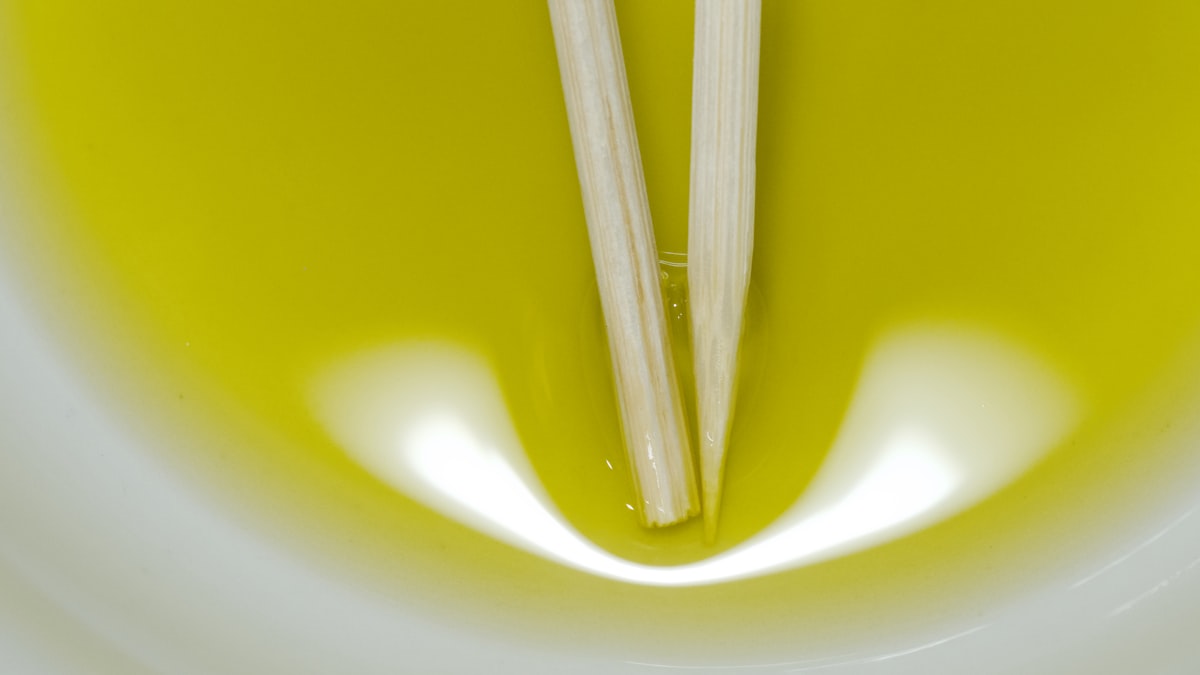
Timing matters too. Data from the Monell Chemical Senses Center indicates that olfactory fatigue is lower in mid-morning, and researchers have reported that aroma discrimination accuracy is higher between 10 a.m. and noon. Pour 15–20 mL of oil into the glass, then cup it in both hands so your body heat warms it to roughly 28 °C. That gentle warming activates volatile aromatic compounds and makes the aroma profile significantly more legible.
Designing a Four-Week Routine
A four-week structure builds comparative instinct naturally. In the first week, taste a single-cultivar oil every session and focus exclusively on getting its character into words. From the second week onward, introduce one additional cultivar per week. In the final week, return to the very first oil you opened. By the end of the month you will have a working vocabulary for at least three or four distinct cultivar profiles.
Each session records five attributes. Appearance covers color and viscosity: early-harvest oils lean green; late-harvest oils turn golden. First nose is taken with the glass completely still — bring it close and inhale without swirling. Describe what you smell in concrete objects: grass, tomato leaf, artichoke, green apple. Specific references are far more useful than vague adjectives when you flip back through the journal later. Second nose comes after swirling the glass five to ten times. Swirling often releases pepper or almond notes that were absent in the still pour. Palate records bitterness, pungency, and sweetness on a 1–5 scale. Both bitterness and pungency are recognized by the IOC as positive attributes associated with higher polyphenol content, so record their intensity without treating them as flaws. Finally, finish is the number of seconds the peppery catch at the back of the throat persists after swallowing.
Cultivar Profiles and Storage Notes
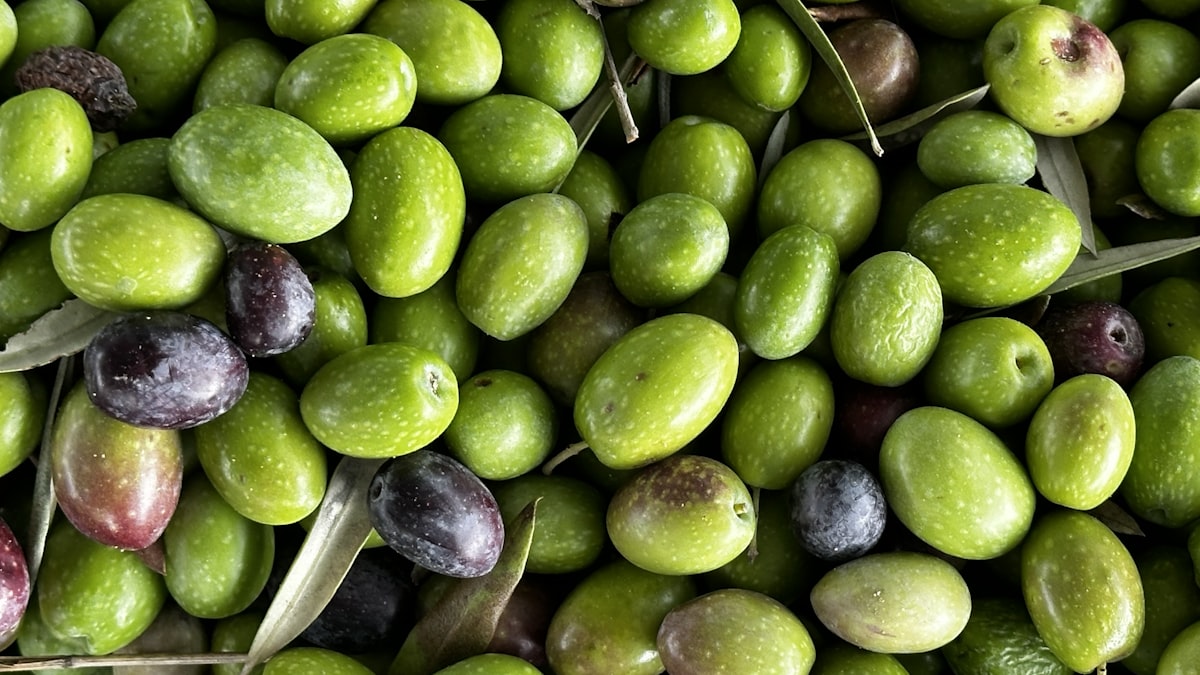
Each cultivar leaves a recognizable pattern across sessions. Picual tends toward strong bitterness and pungency, with tomato leaf and rosemary prominent in the aroma. Ojiblanca is typically brighter — green apple and almond notes come forward. Sibarita generally leans gentler, with a soft, grassy aroma and a mild finish. After a month of entries, those patterns start organizing themselves in your own language rather than in borrowed descriptions.
Alongside your sensory notes, record the harvest year, acidity figure, and the date you opened the bottle. According to guidance from the Andalusian producer cooperative, EVOO stored in a cool, dark environment at 14–18 °C maintains its best flavor quality within 30 to 45 days of opening. Tasting the same bottle at opening, at two weeks, and at four weeks gives you a direct, side-by-side sense of how oxidation reshapes the profile over time.
At the end of the month, open the journal to that first entry. An oil you described only as "nutty" on day one will likely read, by week four, as "strong green-apple aroma with a peppery catch that lingers for about three seconds." That shift in precision is the most concrete thing a month of tasting notes produces.
Frequently asked questions
- How many times do you need to taste olive oil before you can tell cultivars apart?
- According to the International Olive Council (IOC) official sensory evaluation guidelines, trained panelists show a meaningful improvement in their ability to distinguish cultivar-specific aromas after a minimum of 20 repeated tasting sessions. Consistent record-keeping accelerates that process even for non-professionals.
- What is the best time of day to taste olive oil?
- The IOC standard tasting protocol and data from the Monell Chemical Senses Center both suggest that mid-morning — roughly between 10 a.m. and noon — is optimal. Olfactory fatigue is lower at that point, which researchers have reported leads to higher accuracy in aroma identification.
- How long does an open bottle of extra virgin olive oil stay at its best?
- According to guidance from the Andalusian producer cooperative, EVOO stored in a cool, dark place between 14 °C and 18 °C maintains its best flavor quality within 30 to 45 days of opening. Tasting the same oil at opening, at two weeks, and at four weeks is a practical way to observe how oxidation changes the profile.
Related reading
- The EVOO Tasting Glossary: Every IOC Positive and Negative Attribute Explained
The International Olive Council's official sensory evaluation framework defines a precise vocabulary for tasting extra virgin olive oil — from fruity, bitter and pungent to rancid and musty. This guide walks through every key term, what causes it, and how to recognize it in the glass.
- California vs. European Olive Oil: How Origin Shapes Flavor
California has spent three decades building a serious olive oil industry, but the state's climate, cultivar mix, and harvesting philosophy produce a flavor profile that differs meaningfully from Mediterranean benchmarks. Here is what those differences actually mean at the bottle.
- Five Breads, Five Intensities: Pairing EVOO with Focaccia, Sourdough, and Beyond
From focaccia to whole wheat, each bread's crumb and crust calls for a different EVOO intensity. This guide adds one more variable: time of day.
- Matching EVOO Intensity to Fish: From Delicate White Flesh to Bold Oily Fish
The guiding principle for pairing extra virgin olive oil with fish is balance of intensity — from gentle single-cultivar oils for delicate white fish to high-polyphenol lines for bold, oily species.
- Bitter, Pungent, Fruity: The Three Words Every EVOO Taster Needs to Know
The three positive attributes at the heart of professional olive oil evaluation — fruitiness, bitterness, and pungency — are not arbitrary descriptors. Understanding exactly what they mean changes how you read a label, trace an origin, and choose a bottle.
- Ciabatta, Sourdough, Focaccia: Matching Bread Character to Olive Oil Intensity
Ciabatta, sourdough, and focaccia each bring a distinct fermentation profile, crumb structure, and crust to the table. Matching olive oil intensity to bread character lets both ingredients amplify each other rather than compete.
Tags
- tasting
- evoo
- sensory training
- cultivar
- olive oil guide